Request Demo
What is 17Α-Cyanomethyl-Estradiol used for?
15 June 2024
17α-Cyanomethyl-Estradiol is an intriguing compound that has garnered significant attention within the scientific and medical communities. This synthetic derivative of estradiol, a primary female sex hormone, is being studied for its unique properties and potential therapeutic applications. Although it does not yet have widely recognized trade names, it is an important subject of research due to its potential efficacy in various medical conditions. Key research institutions, including prominent universities and pharmaceutical companies, are investigating its effects on different biological targets, such as estrogen receptors (ERs) in the body. As a drug type, 17α-Cyanomethyl-Estradiol is classified as an estrogenic compound, which means it mimics the action of natural estrogens in the body. Researchers are particularly interested in its indications for conditions like estrogen deficiency, menopausal symptoms, and possibly even certain cancers. The research is still in its early stages, but initial findings are promising and warrant further investigation.
The mechanism of action of 17α-Cyanomethyl-Estradiol is centered around its interaction with estrogen receptors, specifically ERα and ERβ, which are distributed throughout various tissues in the body. When this compound binds to these receptors, it activates them, leading to a cascade of cellular events. This activation mimics the natural action of estradiol, promoting the regulation of gene expression and influencing numerous physiological processes such as reproductive system function, bone density maintenance, and cardiovascular health. However, 17α-Cyanomethyl-Estradiol may offer some advantages over natural estradiol. For instance, its synthetic nature allows for modifications that can potentially enhance its selectivity and potency. This could mean that it might have fewer side effects or provide more targeted therapeutic effects compared to traditional estrogen replacement therapies. Additionally, the cyanomethyl group attached to the molecule might confer unique properties that help it to resist metabolic breakdown, thereby increasing its duration of action within the body.
When it comes to using 17α-Cyanomethyl-Estradiol, the methods of administration are crucial for its effectiveness and patient compliance. Currently, researchers are exploring various modes of delivery, including oral tablets, transdermal patches, and injectable forms. Each method has its own set of advantages and challenges. Oral administration is generally convenient but may be subject to first-pass metabolism in the liver, potentially reducing its bioavailability. Transdermal patches can provide a steady release of the drug, enhancing its bioavailability and reducing the frequency of administration. Injectable forms might be used for more controlled and targeted delivery, particularly in clinical settings. The onset time for 17α-Cyanomethyl-Estradiol depends on the mode of administration and individual patient factors. Generally, it is expected to exert its effects within a few hours to a few days after administration. However, more research is needed to determine the optimal dosing regimens and frequency of administration to maximize its therapeutic benefits while minimizing potential risks.
As with any drug, 17α-Cyanomethyl-Estradiol is not without its side effects. Common side effects might include symptoms similar to those experienced with other estrogenic compounds, such as nausea, headaches, breast tenderness, and mood swings. More serious side effects could involve an increased risk of thromboembolic events, such as deep vein thrombosis or pulmonary embolism, particularly in individuals with predisposing factors. Contraindications for the use of 17α-Cyanomethyl-Estradiol are expected to be similar to those for other estrogen therapies. These might include a history of hormone-sensitive cancers like breast or uterine cancer, a history of cardiovascular disease, liver disease, or unexplained vaginal bleeding. It is essential for healthcare providers to thoroughly evaluate the patient's medical history and current health status before prescribing this drug. Ongoing monitoring is also crucial to promptly identify and manage any adverse effects that may arise during treatment.
The interaction of 17α-Cyanomethyl-Estradiol with other drugs is an important consideration for its safe and effective use. As it is metabolized primarily in the liver, drugs that induce or inhibit hepatic enzymes, particularly those of the cytochrome P450 family, could affect its metabolism. For example, enzyme inducers like rifampin or carbamazepine might reduce its plasma levels, potentially diminishing its therapeutic effects. Conversely, enzyme inhibitors such as ketoconazole or erythromycin could increase its plasma levels, raising the risk of side effects. Additionally, other hormone therapies, including progestins or selective estrogen receptor modulators (SERMs), could interact with 17α-Cyanomethyl-Estradiol, necessitating careful management and adjustment of dosages. It is also important to monitor the use of anticoagulants, as estrogens can affect blood clotting mechanisms, potentially altering the efficacy of these medications. Healthcare providers should conduct a thorough medication review for patients who are prescribed 17α-Cyanomethyl-Estradiol to identify and manage potential drug-drug interactions effectively.
In summary, 17α-Cyanomethyl-Estradiol represents a promising area of research in the field of estrogenic compounds, with potential applications in the treatment of various conditions associated with estrogen deficiency or imbalance. Its mechanism of action involves the activation of estrogen receptors, leading to beneficial physiological effects. However, careful consideration of its administration methods, side effects, contraindications, and interactions with other drugs is essential for its safe and effective use. As research progresses, it is hoped that this compound will offer a valuable addition to the therapeutic options available for managing estrogen-related conditions.
The mechanism of action of 17α-Cyanomethyl-Estradiol is centered around its interaction with estrogen receptors, specifically ERα and ERβ, which are distributed throughout various tissues in the body. When this compound binds to these receptors, it activates them, leading to a cascade of cellular events. This activation mimics the natural action of estradiol, promoting the regulation of gene expression and influencing numerous physiological processes such as reproductive system function, bone density maintenance, and cardiovascular health. However, 17α-Cyanomethyl-Estradiol may offer some advantages over natural estradiol. For instance, its synthetic nature allows for modifications that can potentially enhance its selectivity and potency. This could mean that it might have fewer side effects or provide more targeted therapeutic effects compared to traditional estrogen replacement therapies. Additionally, the cyanomethyl group attached to the molecule might confer unique properties that help it to resist metabolic breakdown, thereby increasing its duration of action within the body.
When it comes to using 17α-Cyanomethyl-Estradiol, the methods of administration are crucial for its effectiveness and patient compliance. Currently, researchers are exploring various modes of delivery, including oral tablets, transdermal patches, and injectable forms. Each method has its own set of advantages and challenges. Oral administration is generally convenient but may be subject to first-pass metabolism in the liver, potentially reducing its bioavailability. Transdermal patches can provide a steady release of the drug, enhancing its bioavailability and reducing the frequency of administration. Injectable forms might be used for more controlled and targeted delivery, particularly in clinical settings. The onset time for 17α-Cyanomethyl-Estradiol depends on the mode of administration and individual patient factors. Generally, it is expected to exert its effects within a few hours to a few days after administration. However, more research is needed to determine the optimal dosing regimens and frequency of administration to maximize its therapeutic benefits while minimizing potential risks.
As with any drug, 17α-Cyanomethyl-Estradiol is not without its side effects. Common side effects might include symptoms similar to those experienced with other estrogenic compounds, such as nausea, headaches, breast tenderness, and mood swings. More serious side effects could involve an increased risk of thromboembolic events, such as deep vein thrombosis or pulmonary embolism, particularly in individuals with predisposing factors. Contraindications for the use of 17α-Cyanomethyl-Estradiol are expected to be similar to those for other estrogen therapies. These might include a history of hormone-sensitive cancers like breast or uterine cancer, a history of cardiovascular disease, liver disease, or unexplained vaginal bleeding. It is essential for healthcare providers to thoroughly evaluate the patient's medical history and current health status before prescribing this drug. Ongoing monitoring is also crucial to promptly identify and manage any adverse effects that may arise during treatment.
The interaction of 17α-Cyanomethyl-Estradiol with other drugs is an important consideration for its safe and effective use. As it is metabolized primarily in the liver, drugs that induce or inhibit hepatic enzymes, particularly those of the cytochrome P450 family, could affect its metabolism. For example, enzyme inducers like rifampin or carbamazepine might reduce its plasma levels, potentially diminishing its therapeutic effects. Conversely, enzyme inhibitors such as ketoconazole or erythromycin could increase its plasma levels, raising the risk of side effects. Additionally, other hormone therapies, including progestins or selective estrogen receptor modulators (SERMs), could interact with 17α-Cyanomethyl-Estradiol, necessitating careful management and adjustment of dosages. It is also important to monitor the use of anticoagulants, as estrogens can affect blood clotting mechanisms, potentially altering the efficacy of these medications. Healthcare providers should conduct a thorough medication review for patients who are prescribed 17α-Cyanomethyl-Estradiol to identify and manage potential drug-drug interactions effectively.
In summary, 17α-Cyanomethyl-Estradiol represents a promising area of research in the field of estrogenic compounds, with potential applications in the treatment of various conditions associated with estrogen deficiency or imbalance. Its mechanism of action involves the activation of estrogen receptors, leading to beneficial physiological effects. However, careful consideration of its administration methods, side effects, contraindications, and interactions with other drugs is essential for its safe and effective use. As research progresses, it is hoped that this compound will offer a valuable addition to the therapeutic options available for managing estrogen-related conditions.
How to obtain the latest development progress of all drugs?
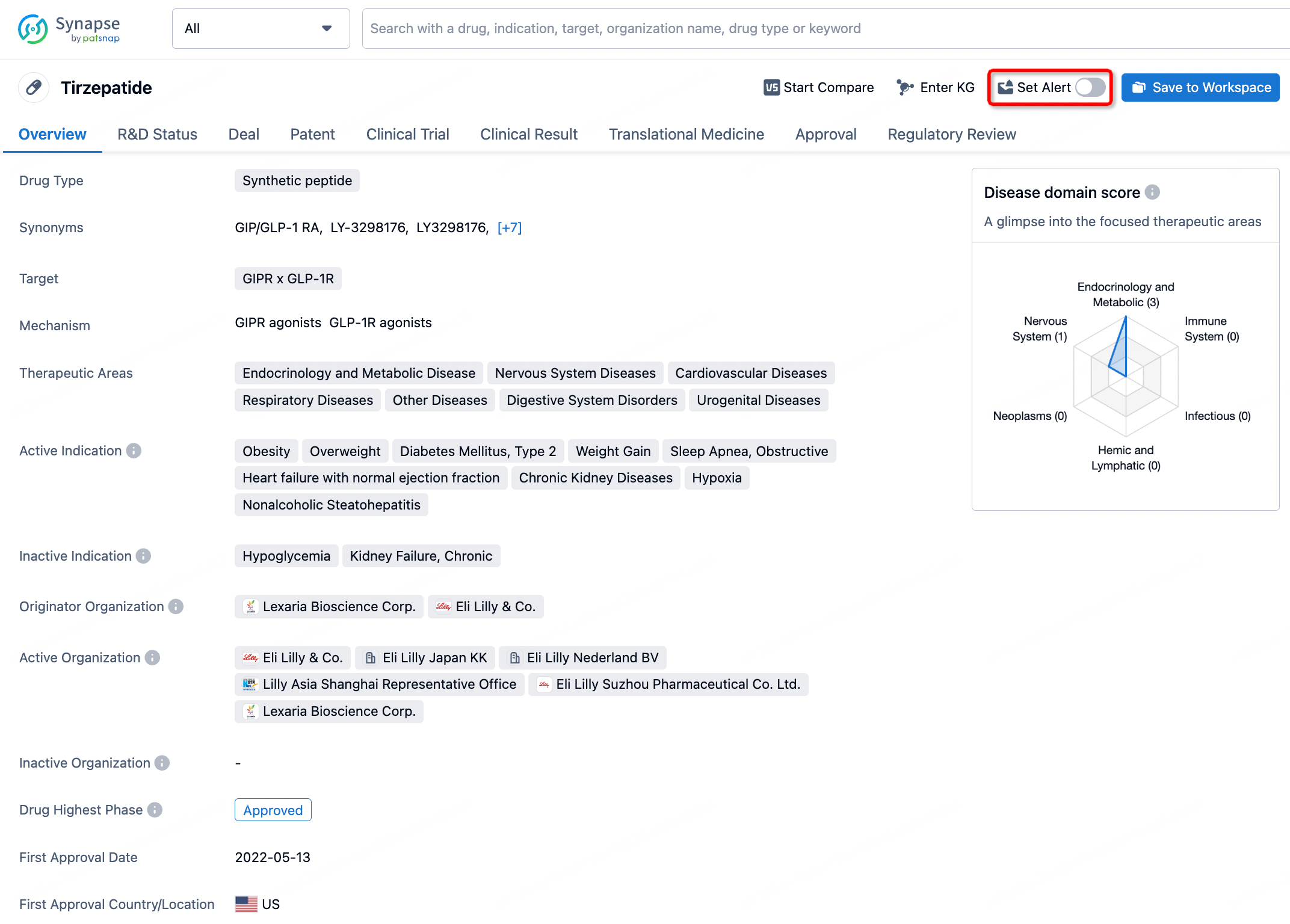
In the Synapse database, you can stay updated on the latest research and development advances of all drugs. This service is accessible anytime and anywhere, with updates available daily or weekly. Use the "Set Alert" function to stay informed. Click on the image below to embark on a brand new journey of drug discovery!


AI Agents Built for Biopharma Breakthroughs
Accelerate discovery. Empower decisions. Transform outcomes.
Get started for free today!
Accelerate Strategic R&D decision making with Synapse, PatSnap’s AI-powered Connected Innovation Intelligence Platform Built for Life Sciences Professionals.
Start your data trial now!
Synapse data is also accessible to external entities via APIs or data packages. Empower better decisions with the latest in pharmaceutical intelligence.