Request Demo
What is the mechanism of α-Hederin?
18 July 2024
α-Hederin is a saponin compound predominantly extracted from the leaves of Hedera helix, commonly known as English ivy. This natural compound has drawn significant attention in recent years due to its potential therapeutic applications in various medical fields. Understanding the mechanism of α-Hederin can elucidate how it functions and its potential benefits.
α-Hederin's mechanism of action involves several biochemical pathways, primarily focusing on its effects on cell membranes and its interaction with various cellular proteins. One of the pivotal mechanisms by which α-Hederin operates is its ability to interact with cholesterol-rich microdomains in cell membranes. These microdomains, often referred to as lipid rafts, play crucial roles in cell signaling and membrane fluidity. α-Hederin integrates into these lipid rafts, disrupting their normal function, which can lead to altered cell signaling and membrane permeability.
This disruption of lipid rafts has a significant downstream impact on cancer cells. α-Hederin has been found to induce apoptosis in various cancer cell lines. Apoptosis, or programmed cell death, is a mechanism that allows organisms to regulate cell proliferation and eliminate damaged or diseased cells. By disrupting lipid rafts, α-Hederin can activate pro-apoptotic pathways and inhibit anti-apoptotic proteins, leading to the death of cancerous cells. This makes α-Hederin a promising candidate for anticancer therapies.
Additionally, α-Hederin exhibits immunomodulatory effects. It can enhance the immune system's response by stimulating the production and activity of key immune cells such as macrophages and lymphocytes. This immunomodulatory action is particularly beneficial in combating infections, as a robust immune response is essential for the body to effectively eliminate pathogens.
Another crucial aspect of α-Hederin's mechanism is its anti-inflammatory properties. It can inhibit the production of pro-inflammatory cytokines, which are signaling molecules that promote inflammation. By reducing the levels of these cytokines, α-Hederin helps alleviate inflammation and can be beneficial in treating inflammatory conditions like asthma and chronic bronchitis.
Furthermore, α-Hederin has been shown to possess antifungal and antimicrobial activities. Its ability to disrupt microbial cell membranes can lead to the death of pathogenic microorganisms, providing a natural means of combating infections.
In conclusion, the mechanism of α-Hederin involves a multifaceted approach, targeting cell membranes, modulating immune responses, inducing apoptosis in cancer cells, and exhibiting anti-inflammatory and antimicrobial properties. These diverse mechanisms underscore the therapeutic potential of α-Hederin in treating a range of medical conditions, from cancer to infections. Research continues to delve deeper into the intricacies of α-Hederin's actions, promising new insights and potential applications in medicine.
α-Hederin's mechanism of action involves several biochemical pathways, primarily focusing on its effects on cell membranes and its interaction with various cellular proteins. One of the pivotal mechanisms by which α-Hederin operates is its ability to interact with cholesterol-rich microdomains in cell membranes. These microdomains, often referred to as lipid rafts, play crucial roles in cell signaling and membrane fluidity. α-Hederin integrates into these lipid rafts, disrupting their normal function, which can lead to altered cell signaling and membrane permeability.
This disruption of lipid rafts has a significant downstream impact on cancer cells. α-Hederin has been found to induce apoptosis in various cancer cell lines. Apoptosis, or programmed cell death, is a mechanism that allows organisms to regulate cell proliferation and eliminate damaged or diseased cells. By disrupting lipid rafts, α-Hederin can activate pro-apoptotic pathways and inhibit anti-apoptotic proteins, leading to the death of cancerous cells. This makes α-Hederin a promising candidate for anticancer therapies.
Additionally, α-Hederin exhibits immunomodulatory effects. It can enhance the immune system's response by stimulating the production and activity of key immune cells such as macrophages and lymphocytes. This immunomodulatory action is particularly beneficial in combating infections, as a robust immune response is essential for the body to effectively eliminate pathogens.
Another crucial aspect of α-Hederin's mechanism is its anti-inflammatory properties. It can inhibit the production of pro-inflammatory cytokines, which are signaling molecules that promote inflammation. By reducing the levels of these cytokines, α-Hederin helps alleviate inflammation and can be beneficial in treating inflammatory conditions like asthma and chronic bronchitis.
Furthermore, α-Hederin has been shown to possess antifungal and antimicrobial activities. Its ability to disrupt microbial cell membranes can lead to the death of pathogenic microorganisms, providing a natural means of combating infections.
In conclusion, the mechanism of α-Hederin involves a multifaceted approach, targeting cell membranes, modulating immune responses, inducing apoptosis in cancer cells, and exhibiting anti-inflammatory and antimicrobial properties. These diverse mechanisms underscore the therapeutic potential of α-Hederin in treating a range of medical conditions, from cancer to infections. Research continues to delve deeper into the intricacies of α-Hederin's actions, promising new insights and potential applications in medicine.
How to obtain the latest development progress of all drugs?
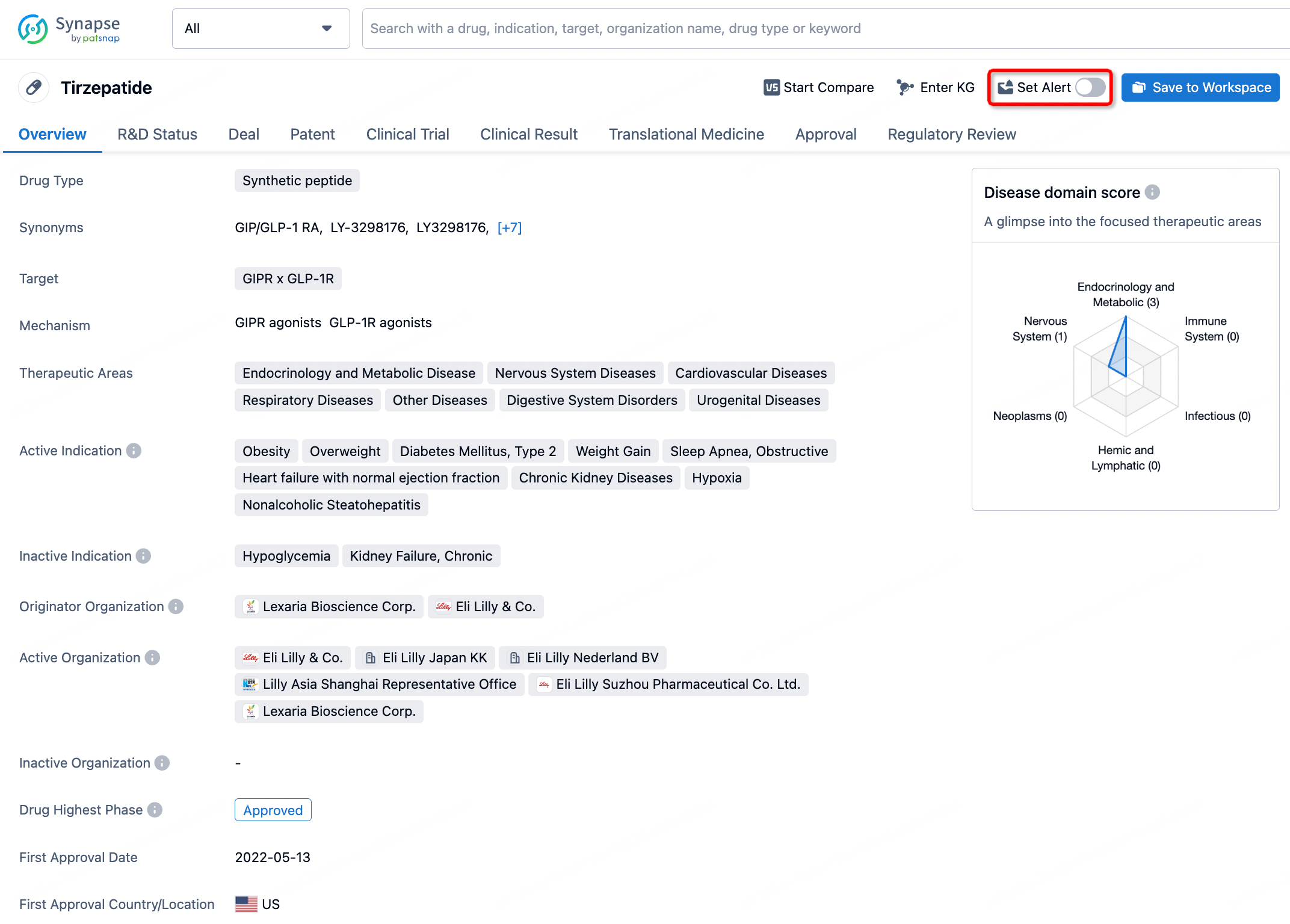
In the Synapse database, you can stay updated on the latest research and development advances of all drugs. This service is accessible anytime and anywhere, with updates available daily or weekly. Use the "Set Alert" function to stay informed. Click on the image below to embark on a brand new journey of drug discovery!


AI Agents Built for Biopharma Breakthroughs
Accelerate discovery. Empower decisions. Transform outcomes.
Get started for free today!
Accelerate Strategic R&D decision making with Synapse, PatSnap’s AI-powered Connected Innovation Intelligence Platform Built for Life Sciences Professionals.
Start your data trial now!
Synapse data is also accessible to external entities via APIs or data packages. Empower better decisions with the latest in pharmaceutical intelligence.