Request Demo
Last update 08 May 2025
CLEC16A
Last update 08 May 2025
Basic Info
Synonyms C-type lectin domain containing 16A, C-type lectin domain family 16 member A, CLEC16A + [3] |
Introduction Regulator of mitophagy through the upstream regulation of the RNF41/NRDP1-PRKN pathway. Mitophagy is a selective form of autophagy necessary for mitochondrial quality control. The RNF41/NRDP1-PRKN pathway regulates autophagosome-lysosome fusion during late mitophagy. May protect RNF41/NRDP1 from proteasomal degradation, RNF41/NRDP1 which regulates proteasomal degradation of PRKN. Plays a key role in beta cells functions by regulating mitophagy/autophagy and mitochondrial health. |
Analysis
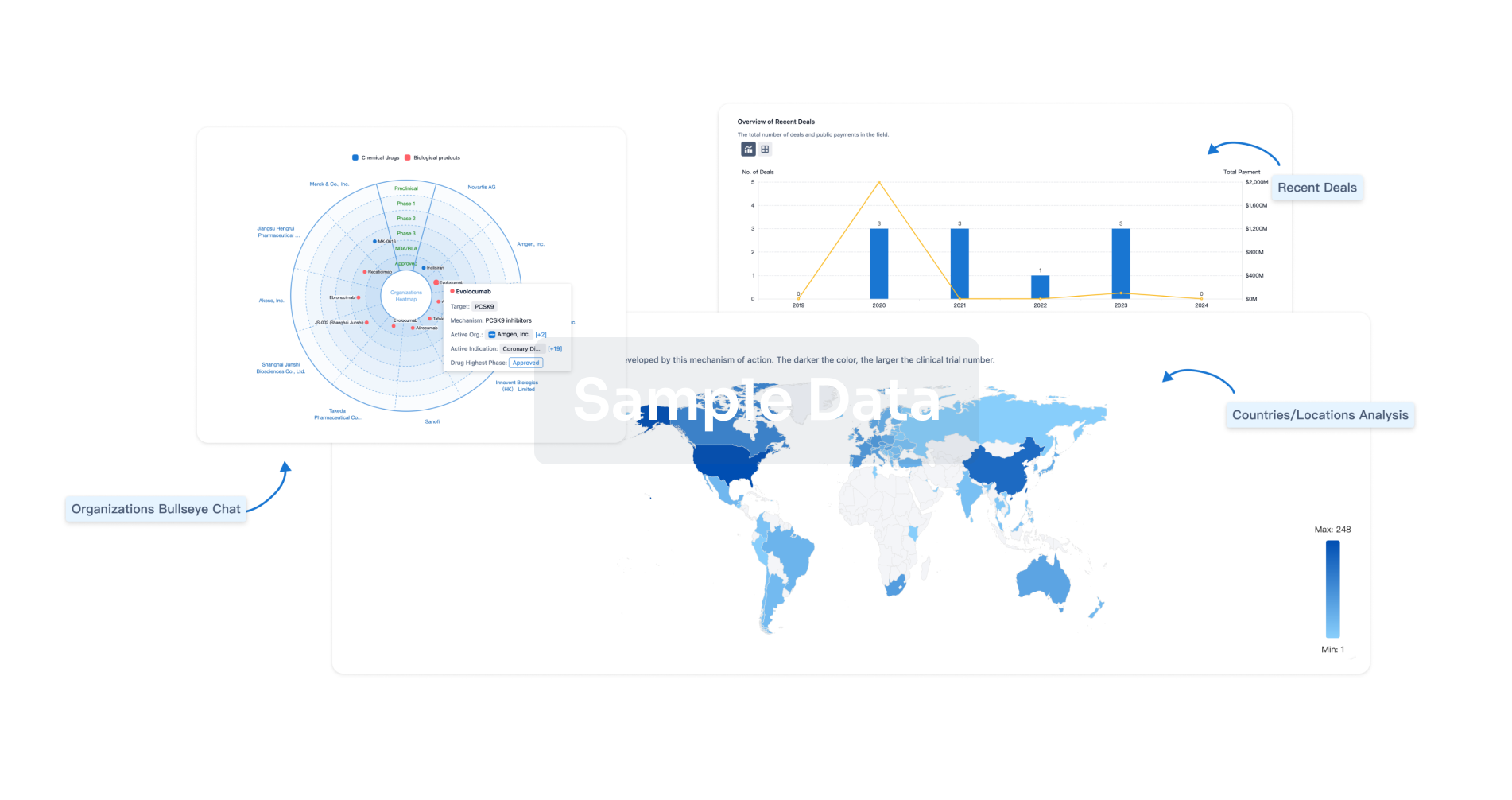
Perform a panoramic analysis of this field.
login
or
AI Agents Built for Biopharma Breakthroughs
Accelerate discovery. Empower decisions. Transform outcomes.
Get started for free today!
Accelerate Strategic R&D decision making with Synapse, PatSnap’s AI-powered Connected Innovation Intelligence Platform Built for Life Sciences Professionals.
Start your data trial now!
Synapse data is also accessible to external entities via APIs or data packages. Empower better decisions with the latest in pharmaceutical intelligence.
Bio
Bio Sequences Search & Analysis
Sign up for free
Chemical
Chemical Structures Search & Analysis
Sign up for free