Advancements in Mesothelin-Targeted CAR T Cell Therapy: From Preclinical to Phase I Clinical Trial
In the methods section, the researchers compared the cytotoxicity, proliferation, and cytokine production of human T cells engineered with the original and the new CAR T cells. They also tested the in vivo antitumor effects of these cells in mice with pleural mesothelioma, using bioluminescence imaging and survival analysis.
Results indicate that both types of CAR T cells showed specific cytotoxicity and cytokine secretion in vitro, but the new CAR T cells were more effective in eradicating tumors and enhancing survival in mice. Additionally, the new CAR T cells demonstrated resistance to tumor reestablishment upon repeated challenges.
A table in the results section details the characteristics of both CAR T-cell constructs, including target specificity, costimulatory domain, and mutations in the CD3z domain. It also presents in vitro and in vivo results, such as transduction range, cytotoxicity, accumulation, and cytokine levels, as well as tumor eradication times and survival data.
The conclusion highlights that due to their safety, effectiveness in eliminating tumors, and persistence, the new CAR T cells are poised for IND submission and a phase I clinical trial for patients with pleural mesothelioma. The findings also suggest potential for further investigation into other solid tumors that express mesothelin.
The citation information is provided, indicating the study's presentation at the Annual Meeting of the American Association for Cancer Research in 2020.
How to Use Synapse Database to Search and Analyze Translational Medicine Data?
The transational medicine section of the Synapse database supports searches based on fields such as drug, target, and indication, covering the T0-T3 stages of translation. Additionally, it offers a historical conference search function as well as filtering options, view modes, translation services, and highlights summaries, providing you with a unique search experience.
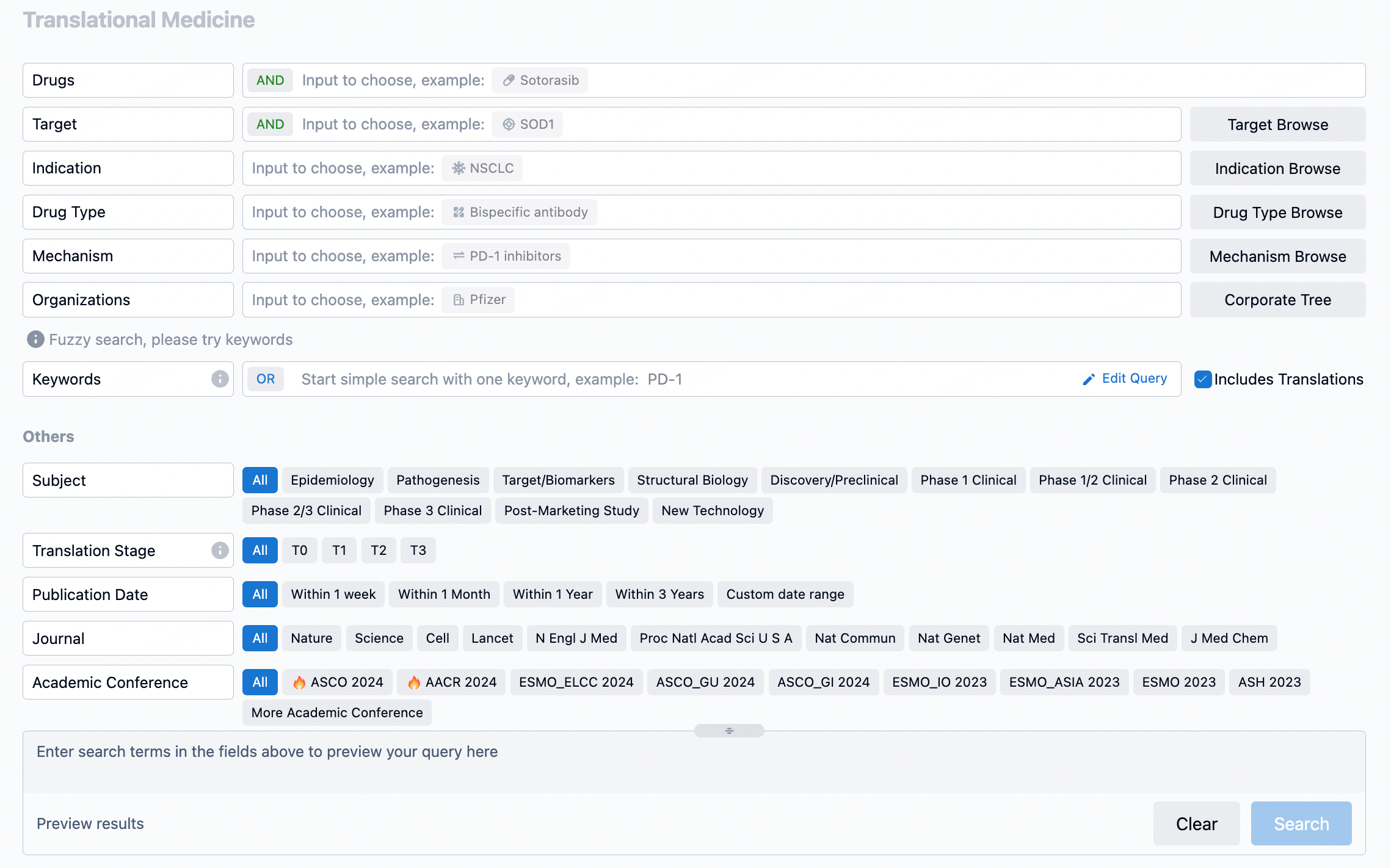
Taking obesity as an example, select "obesity" under the indication category and click search to enter the Translational Medicine results list page. By clicking on the title, you can directly navigate to the original page.
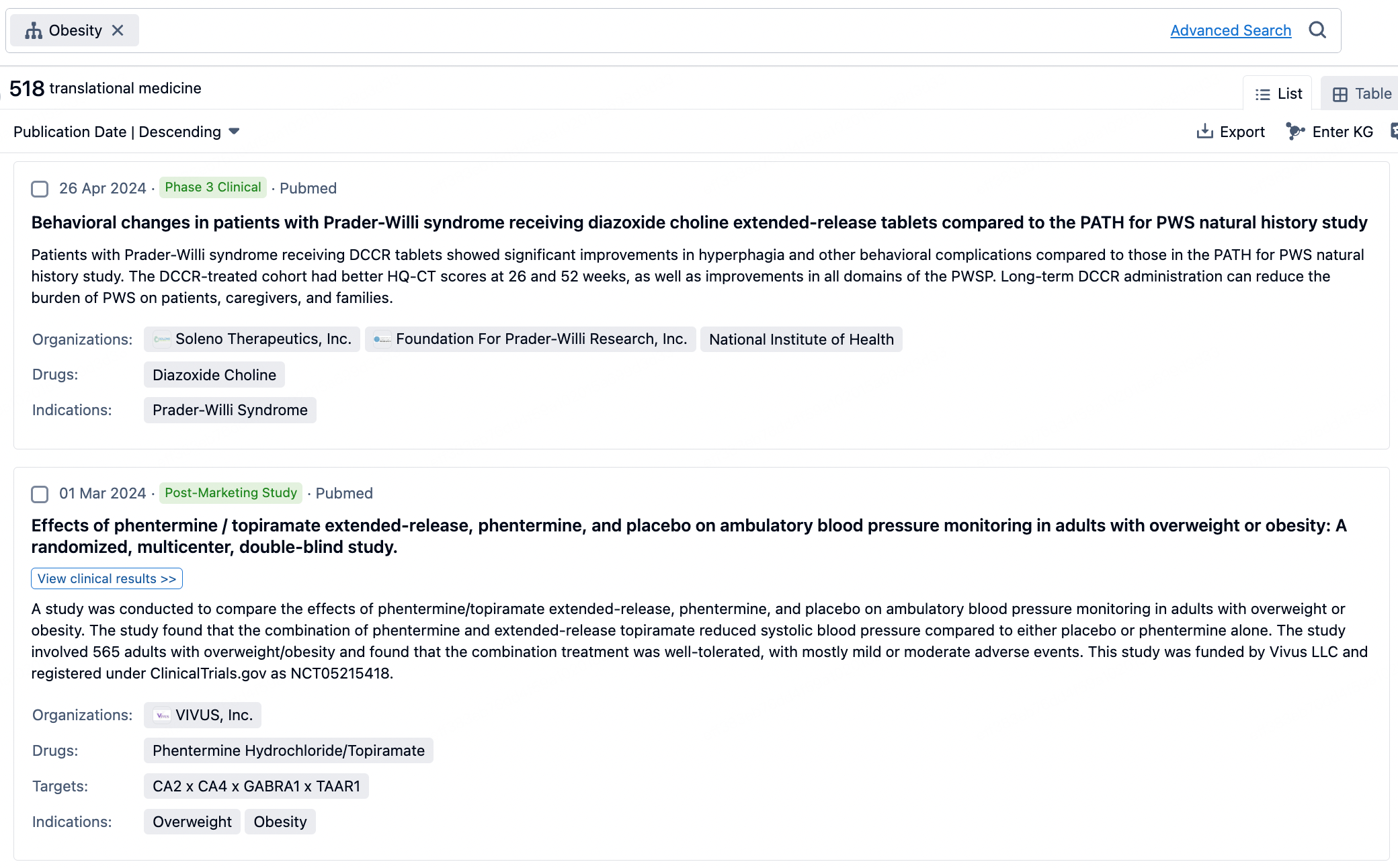
By clicking the analysis button, you can observe that GLP-1R treatment for obesity has gained significant attention over the past three years, with preclinical research still ongoing in 2023. Additionally, there are emerging potential targets, such as GDF15, among others.
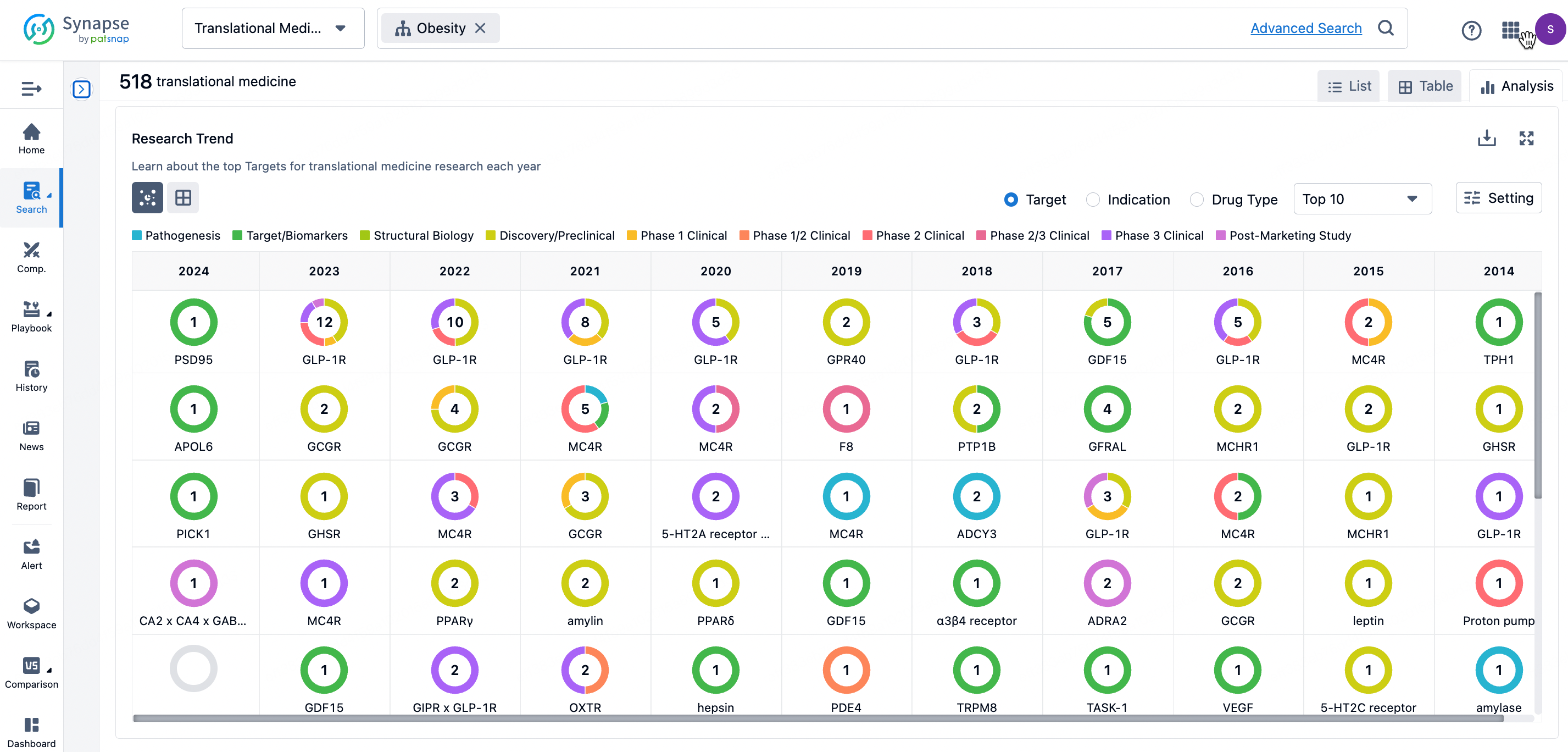
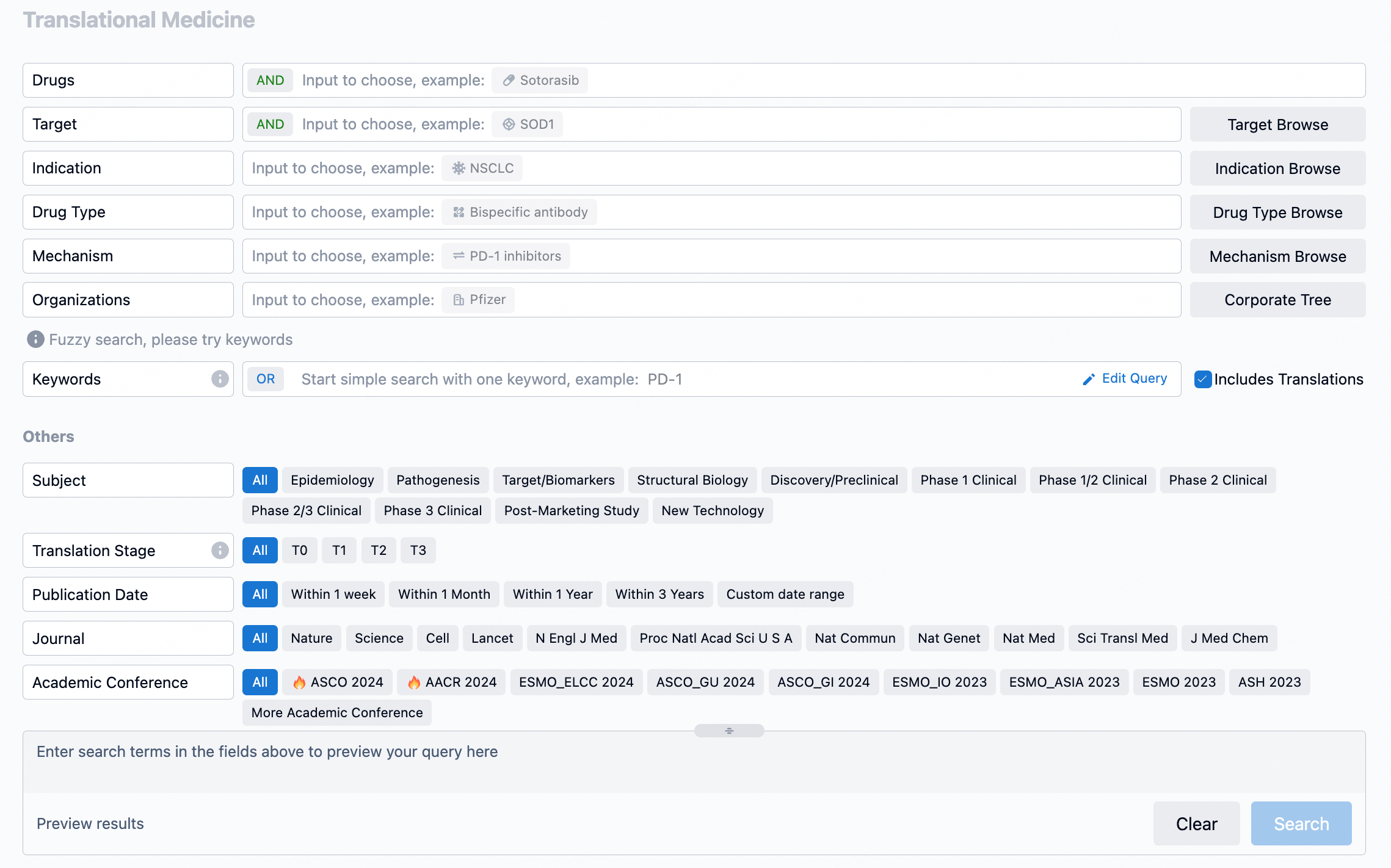
Click on the image below to go directly to the Translational Medicine search interface.