Advancements in Thrombocytopenia Therapy: The Development and Potential of SB-497115 as a TPO Receptor Agonist
A high-throughput assay using STAT-activated reporter genes in BAF-3/TPO-R cells identified diazo naphthalenesulfonic acids from a 260,000 compound library as new TPO-R agonists. Structural modifications led to the creation of hydrazino naphthalenesulfonates, which showed comparable efficacy to TPO in cell-based assays, including a luciferase reporter gene and proliferation in a TPO receptor-dependent manner. These compounds also induced similar signal-transduction responses to TPO, such as JAK2 and STAT-5 activation, and promoted differentiation of megakaryocytes in human bone marrow cultures. The most potent compounds had EC50 values between 10-100 nM but lacked oral bioavailability due to their polar sulfonic acid groups.
Molecular modeling guided the development of biphenyl carboxylates, which showed favorable pharmacokinetic profiles, including oral bioavailability. Among over 200 analogs, SB-497115 was chosen for clinical trials due to its optimal biological and pharmacokinetic properties. It demonstrated full efficacy in BAF-3/TPO-R cell proliferation (EC50 = 30 nM) and increased CD41+ cells, indicating megakaryocyte differentiation (EC50 = 100 nM). Oral bioavailability in rats, dogs, and monkeys was 26%, 83%, and 89%, respectively.
SB-497115, a TPO mimetic with a molecular weight of 442, validates the use of JAK/STAT-based assays for drug discovery. It is the first small, non-peptidyl molecule shown to selectively activate a cytokine receptor, as evidenced by increased platelet counts in human volunteers during Phase I clinical trials. Ongoing evaluations are assessing SB-497115's potential in treating human thrombocytopenia.
How to Use Synapse Database to Search and Analyze Translational Medicine Data?
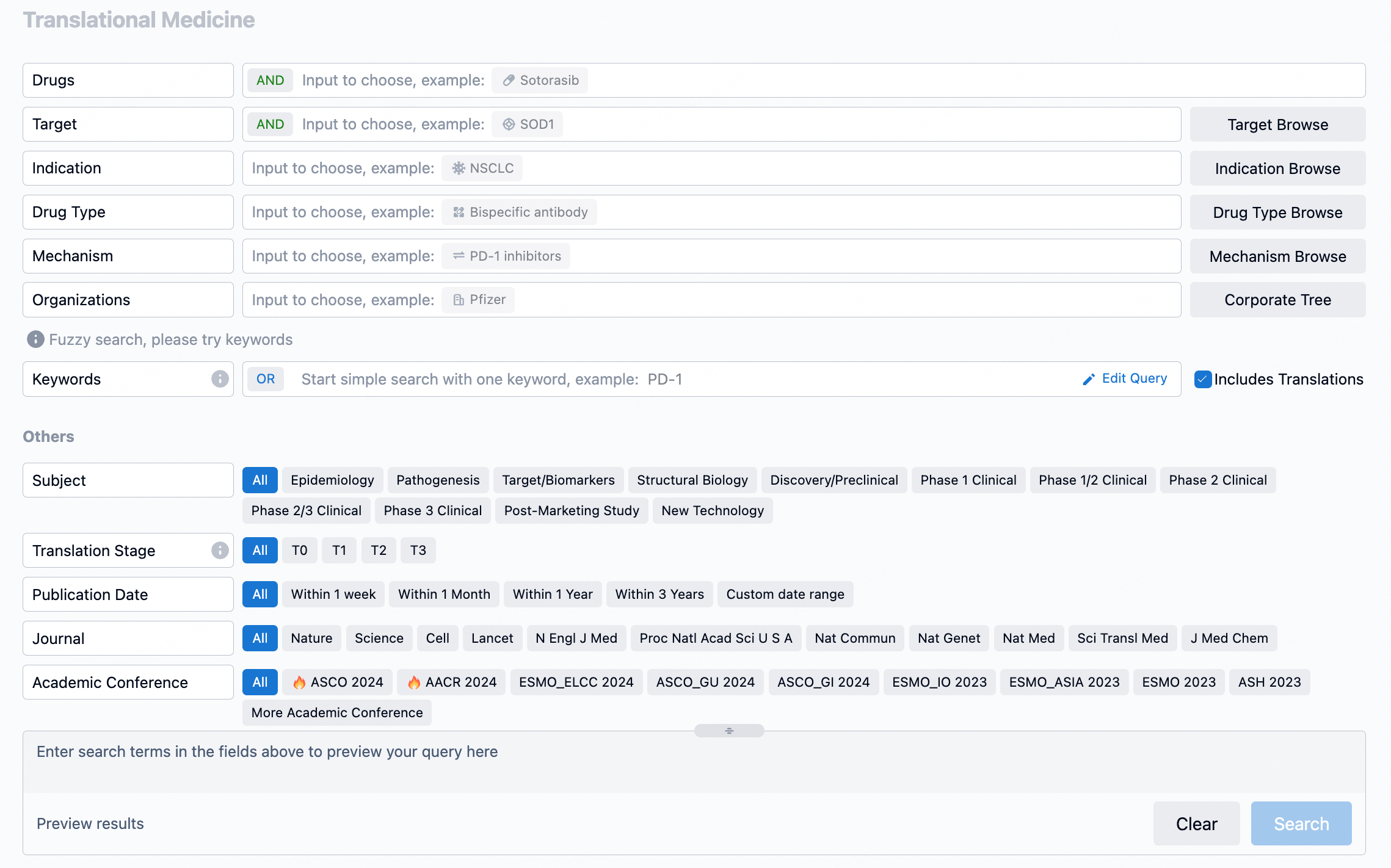
The transational medicine section of the Synapse database supports searches based on fields such as drug, target, and indication, covering the T0-T3 stages of translation. Additionally, it offers a historical conference search function as well as filtering options, view modes, translation services, and highlights summaries, providing you with a unique search experience.
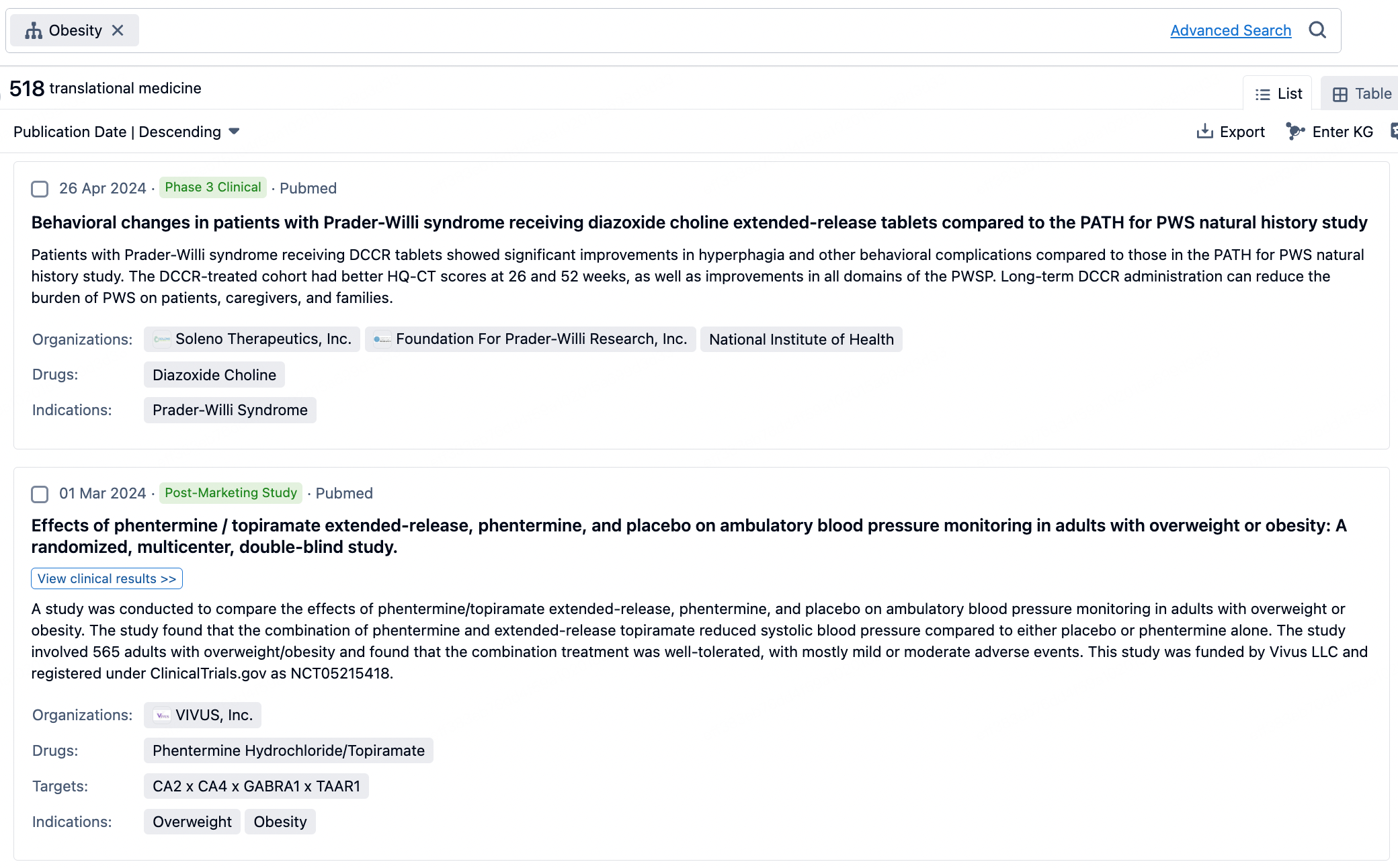
Taking obesity as an example, select "obesity" under the indication category and click search to enter the Translational Medicine results list page. By clicking on the title, you can directly navigate to the original page.
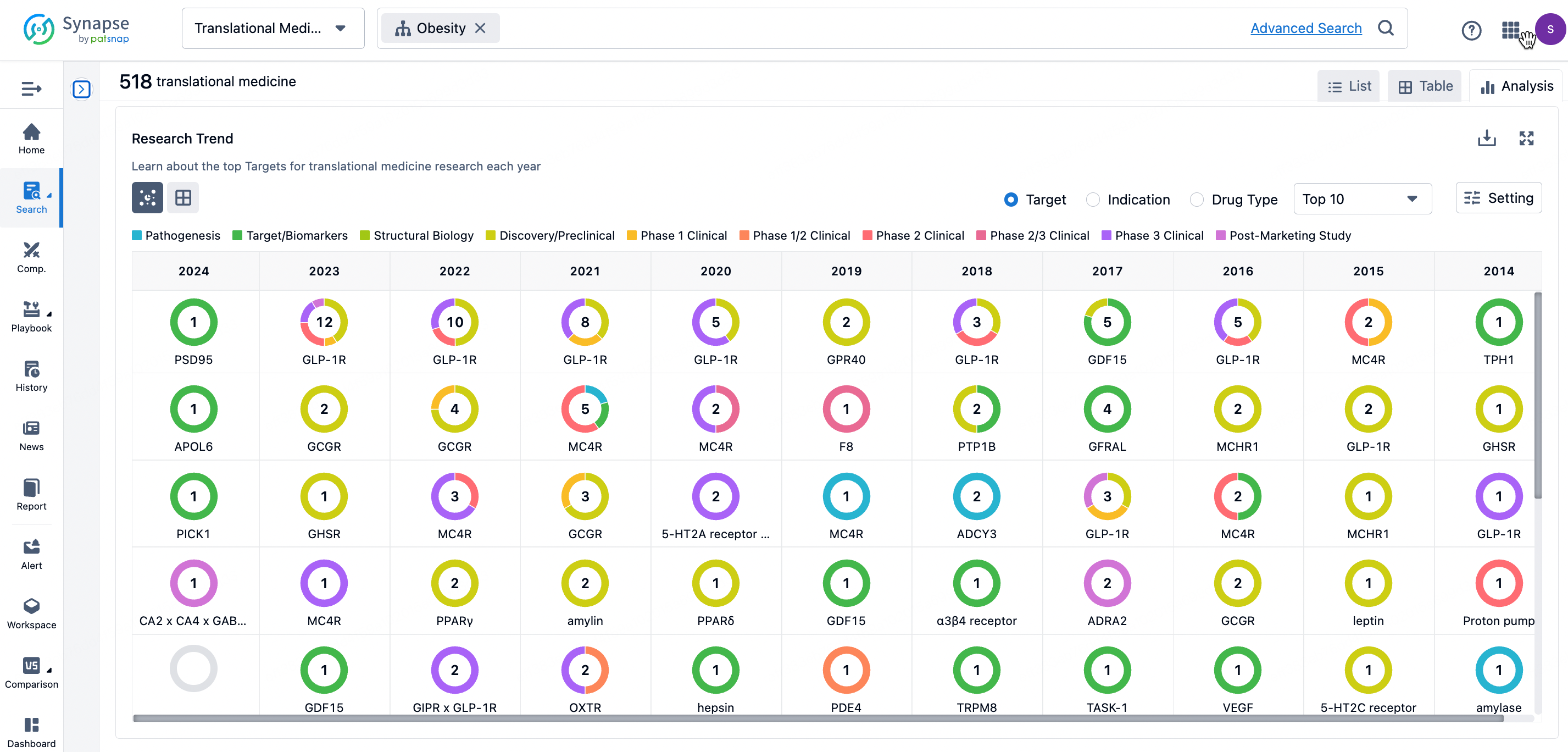
By clicking the analysis button, you can observe that GLP-1R treatment for obesity has gained significant attention over the past three years, with preclinical research still ongoing in 2023. Additionally, there are emerging potential targets, such as GDF15, among others.
Click on the image below to go directly to the Translational Medicine search interface.