Assessing RPC1063: A Potent S1P1R Agonist's Preclinical Safety Evaluation
The lowest doses were set to a pharmacologically active dose (PAD), which resulted in approximately a 50% decrease in ALC. The PAD was identified as 0.2 mg/kg/day for rats and 0.1 or 0.15 mg/kg/day for monkeys. No adverse effects were observed at this PAD, with the only findings being mild and reversible histopathological changes in the lung and kidney.
Clinical chemistry results were normal, with no liver parameter changes. The maximum concentration (Cmax) and area under the curve (AUC) of RPC1063 at the no observed adverse effect levels (NOAEL) in animals were more than 150 times higher than the clinical exposures at a dose that resulted in about a 70% reduction in ALC.
In contrast to RPC1063, chronic toxicology data for the non-selective S1PR modulator fingolimod showed fibrotic changes in multiple species, which were not seen with RPC1063. This difference is attributed to fingolimod's S1P3R agonist activity, which is linked to fibrotic events.
The conclusion of the study was that RPC1063 demonstrated a favorable preclinical safety profile, with the lack of fibrotic changes aligning with its selective action on S1P1R. Several individuals involved in the study received personal compensation and held stock or stock options in Receptos, Inc., the company developing RPC1063.
How to Use Synapse Database to Search and Analyze Translational Medicine Data?
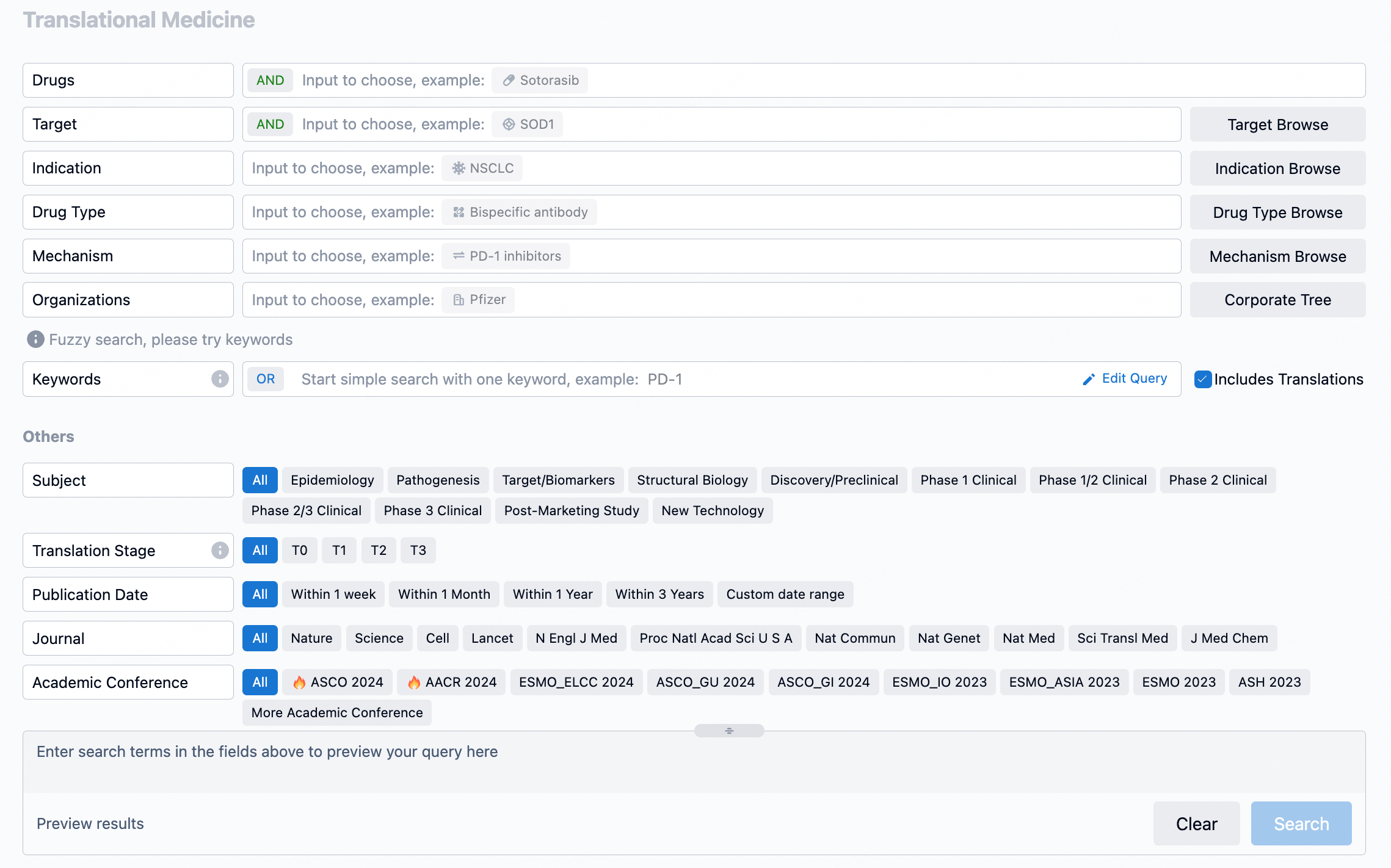
The transational medicine section of the Synapse database supports searches based on fields such as drug, target, and indication, covering the T0-T3 stages of translation. Additionally, it offers a historical conference search function as well as filtering options, view modes, translation services, and highlights summaries, providing you with a unique search experience.
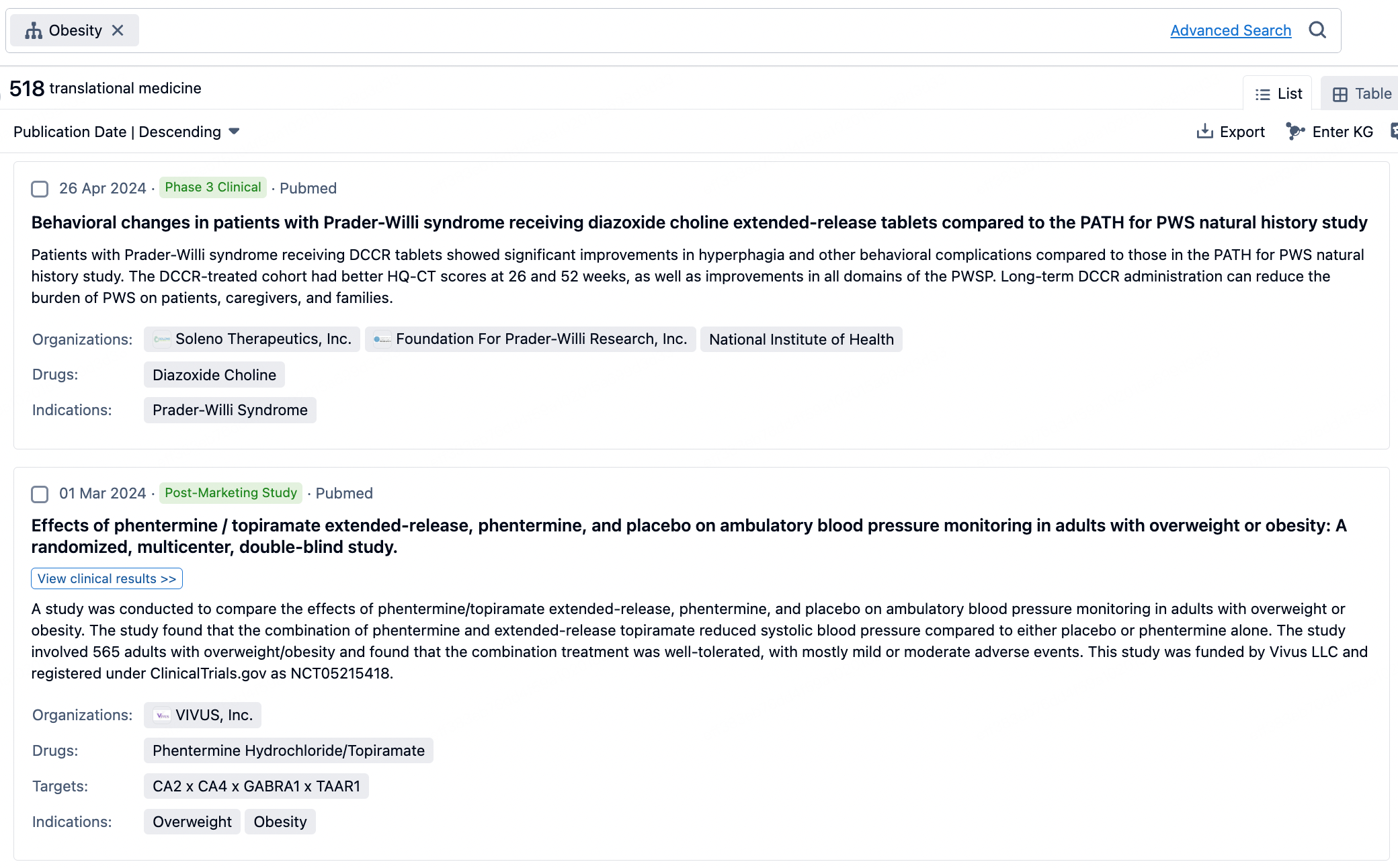
Taking obesity as an example, select "obesity" under the indication category and click search to enter the Translational Medicine results list page. By clicking on the title, you can directly navigate to the original page.
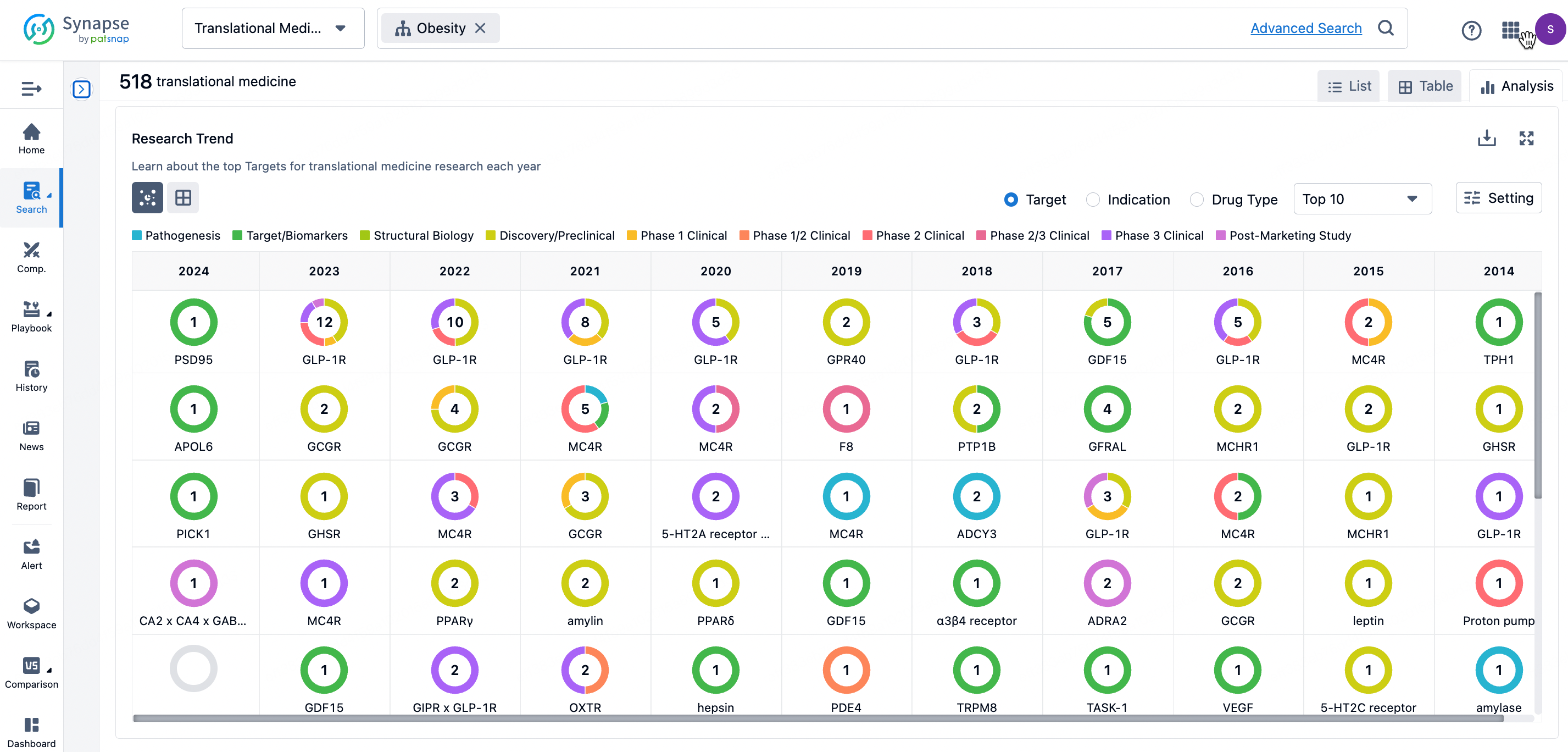
By clicking the analysis button, you can observe that GLP-1R treatment for obesity has gained significant attention over the past three years, with preclinical research still ongoing in 2023. Additionally, there are emerging potential targets, such as GDF15, among others.
Click on the image below to go directly to the Translational Medicine search interface.