Efficient Pancreatic Cancer Treatment: Targeting CDK7 with a Novel Oral Inhibitor
The results highlighted the discovery of TGN-1062, a reversible CDK7 inhibitor with high selectivity and an IC50 of 33 nM. It showed a significant sensitivity in pancreatic cancer cell lines with a GI50 of less than 0.4 μM and effectively reduced the phosphorylation of RNA Pol II and c-Myc expression in MiaPaca2 cells. TGN-1062 also exhibited good oral bioavailability in mouse models. Further refinement led to TGN-1069, which maintained potency against CDK7 and demonstrated even greater selectivity over CDK2 and CDK5.
In conclusion, the researchers successfully developed a novel, selective, and orally bioavailable CDK7 inhibitor, with TGN-1069 emerging as a promising preclinical candidate. This compound is currently being evaluated for its effects on kinome profiling, super-enhancer binding protein activities, ADME-Tox properties, and efficacy in pancreatic cancer models. The study was presented at the American Association for Cancer Research Annual Meeting in 2019.
How to Use Synapse Database to Search and Analyze Translational Medicine Data?
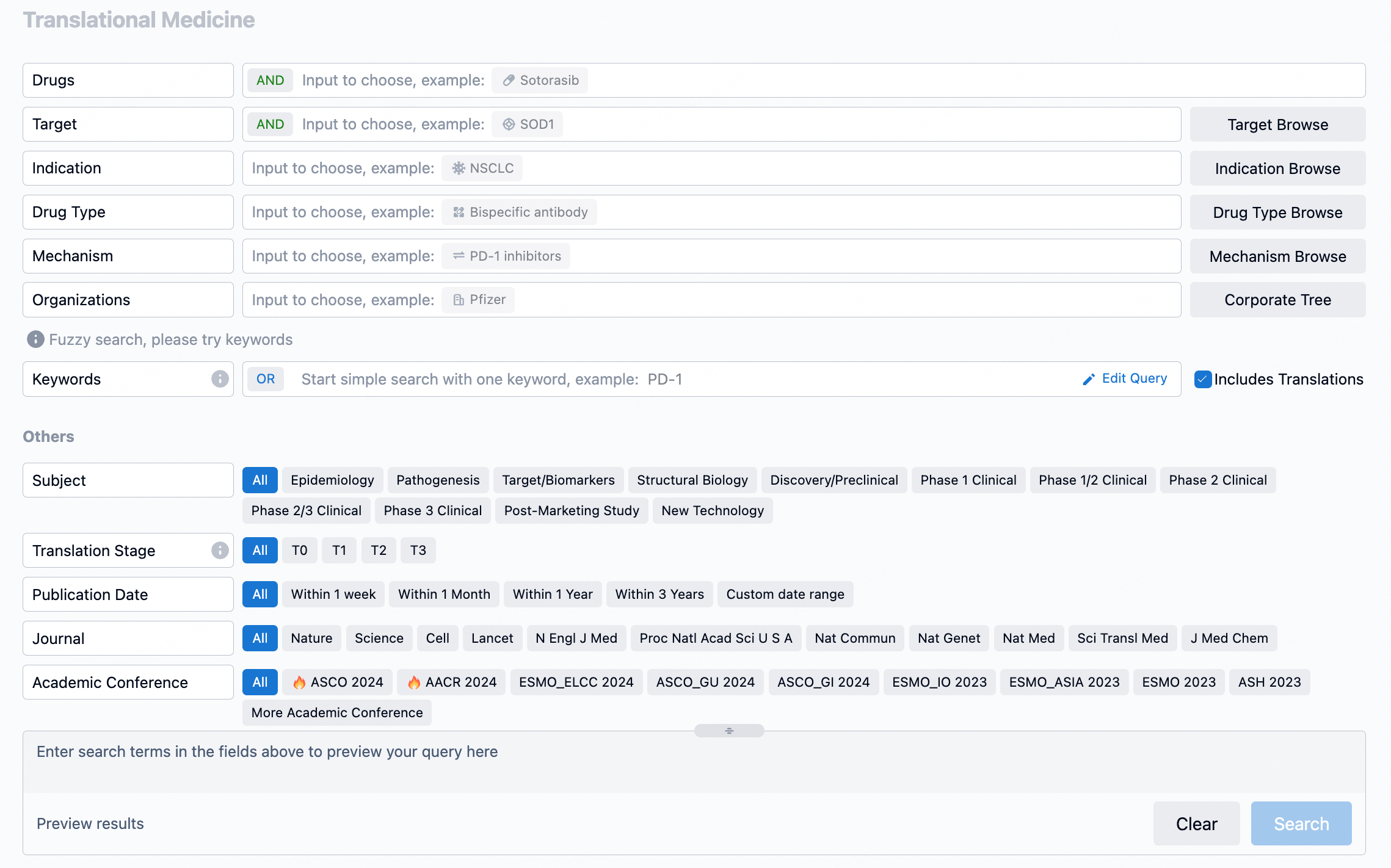
The transational medicine section of the Synapse database supports searches based on fields such as drug, target, and indication, covering the T0-T3 stages of translation. Additionally, it offers a historical conference search function as well as filtering options, view modes, translation services, and highlights summaries, providing you with a unique search experience.
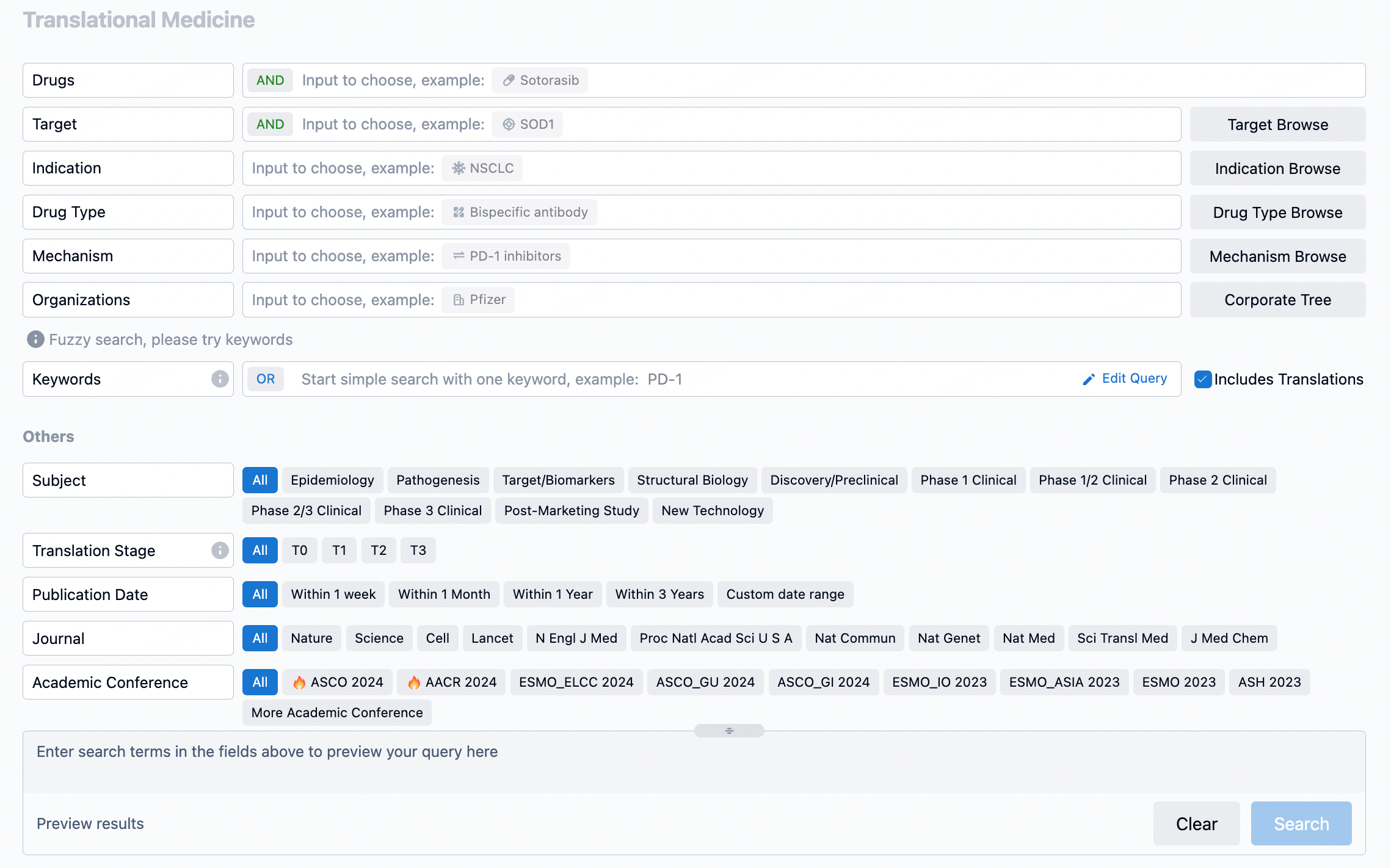
Taking obesity as an example, select "obesity" under the indication category and click search to enter the Translational Medicine results list page. By clicking on the title, you can directly navigate to the original page.
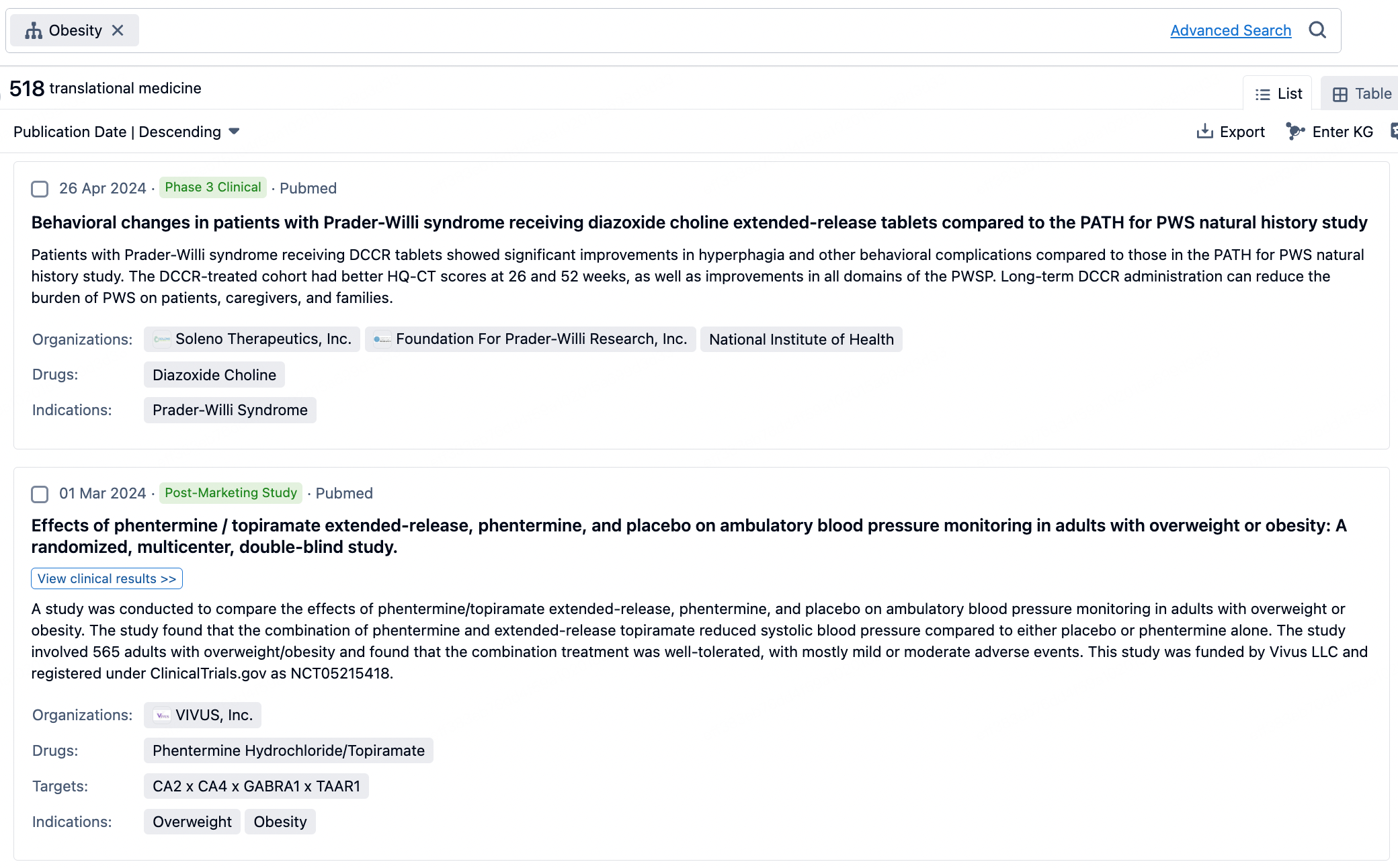
By clicking the analysis button, you can observe that GLP-1R treatment for obesity has gained significant attention over the past three years, with preclinical research still ongoing in 2023. Additionally, there are emerging potential targets, such as GDF15, among others.
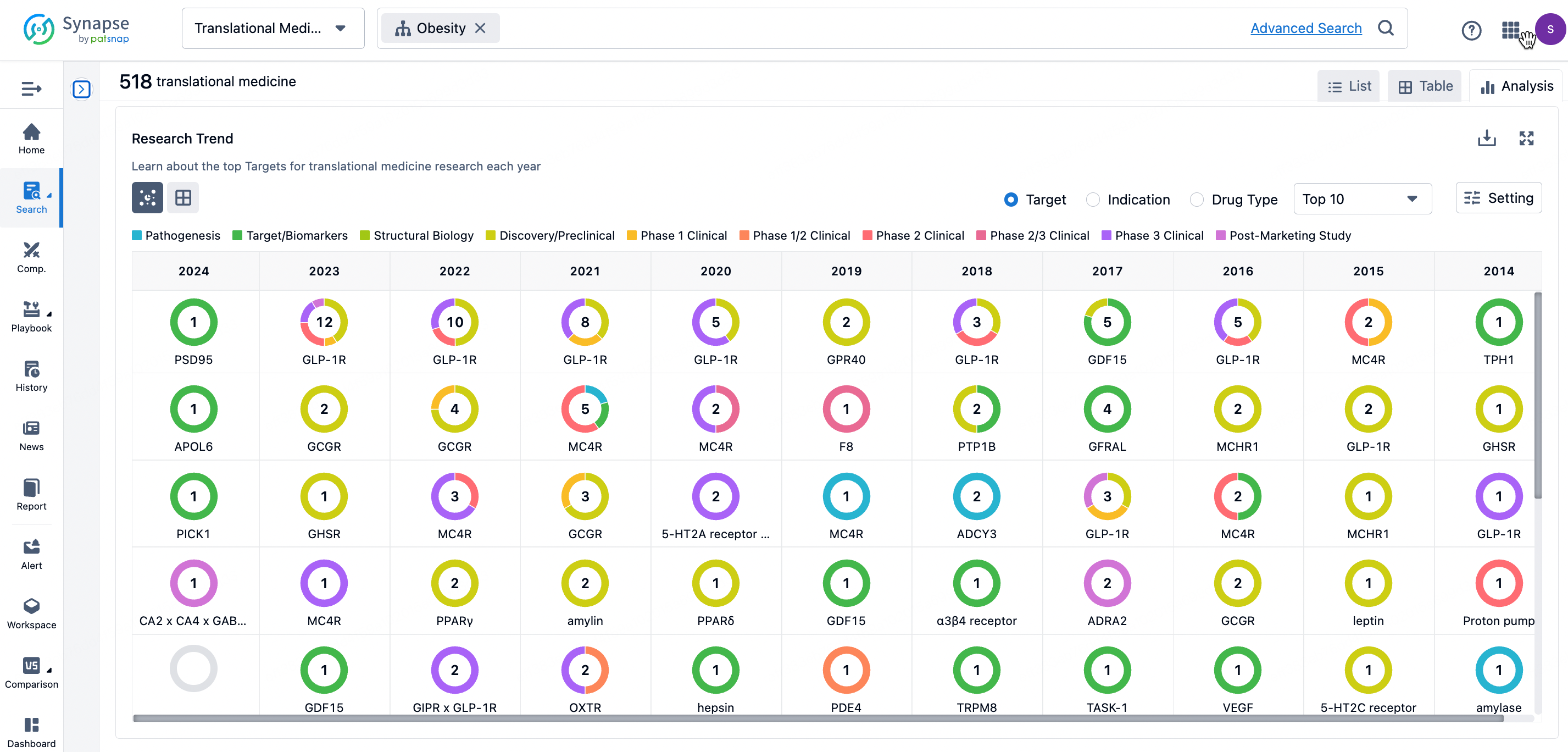
Click on the image below to go directly to the Translational Medicine search interface.