Emerging RET Inhibitors: Overcoming Resistance in RET-Altered Cancers
While there are multi-kinase inhibitors capable of targeting RET G810 mutations, they are ineffective against V804 mutations and can cause off-target side effects that reduce their effectiveness. A new series of potent and selective next-generation RET inhibitors has been identified to meet the needs of patients who relapse after treatment with selective RET inhibitors.
The potency of these inhibitors was tested in engineered HEK293 cell lines with various RET mutations, including M918T, KIF5B-RET fusion, and resistance mutations G810S and V804M. One molecule, LOX-18228, showed strong activity against all tested RET mutations with low nanomolar IC50 values. It also displayed high selectivity for RET over a panel of other kinases and was effective against a range of receptors, transporters, and enzymes at a 10 μM concentration. Additionally, LOX-18228 had a favorable hERG IC50 value and promising in vitro ADME properties, indicating good potential for in vivo exposure with low clearance rates across different species and high intestinal permeability.
In animal models, LOX-18228 showed high oral bioavailability and was effective in reducing tumor growth in patient-derived xenograft (PDX) models with RET G810S and V804M mutations, leading to complete regression or significant tumor growth inhibition at specific doses. These findings indicate that LOX-18228 and related compounds are promising candidates for next-generation RET inhibitors, which could potentially extend the duration of disease control for patients with RET-altered cancers who have developed resistance to existing treatments. Plans for an Investigational New Drug (IND) application are underway for 2021.
How to Use Synapse Database to Search and Analyze Translational Medicine Data?
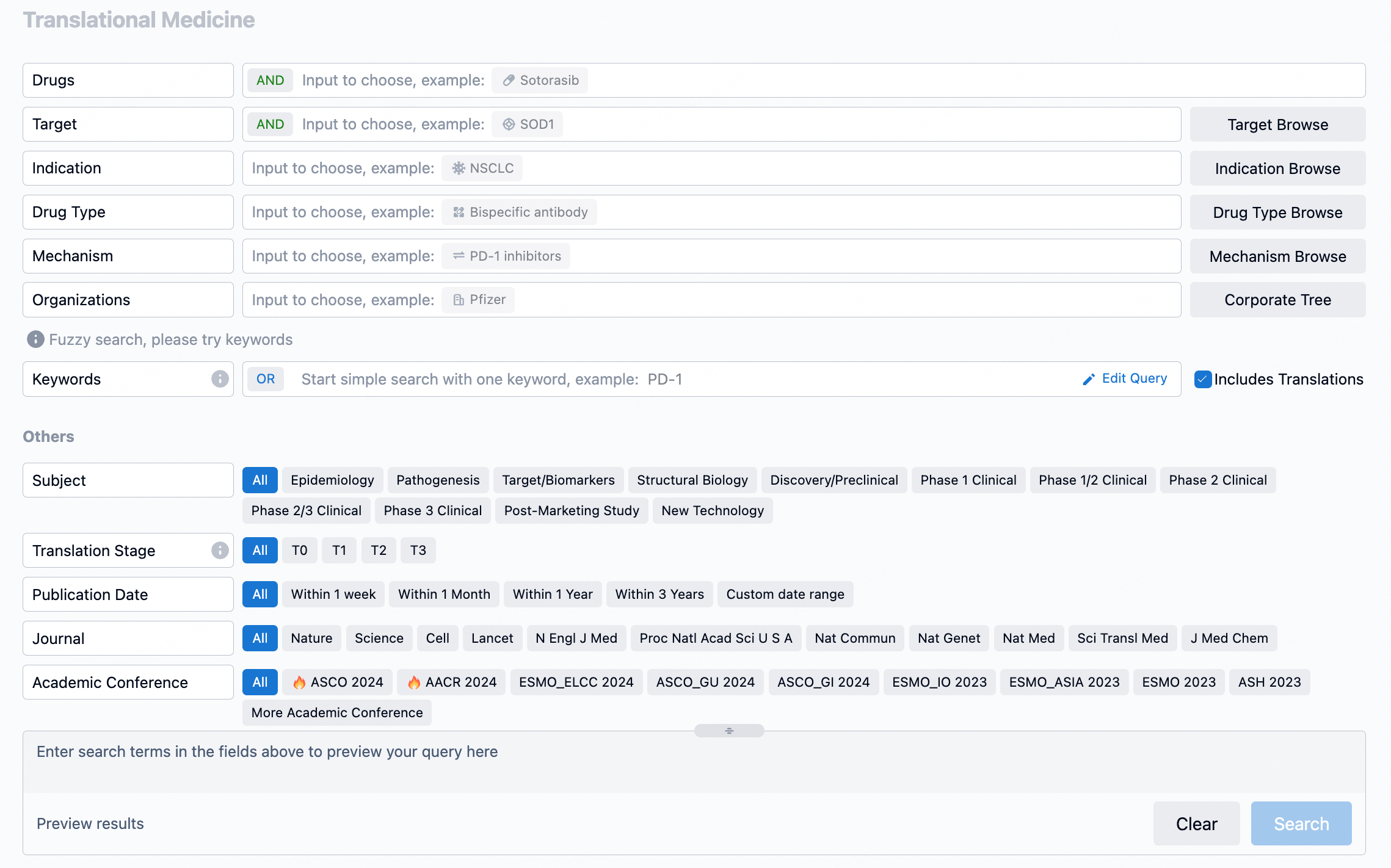
The transational medicine section of the Synapse database supports searches based on fields such as drug, target, and indication, covering the T0-T3 stages of translation. Additionally, it offers a historical conference search function as well as filtering options, view modes, translation services, and highlights summaries, providing you with a unique search experience.
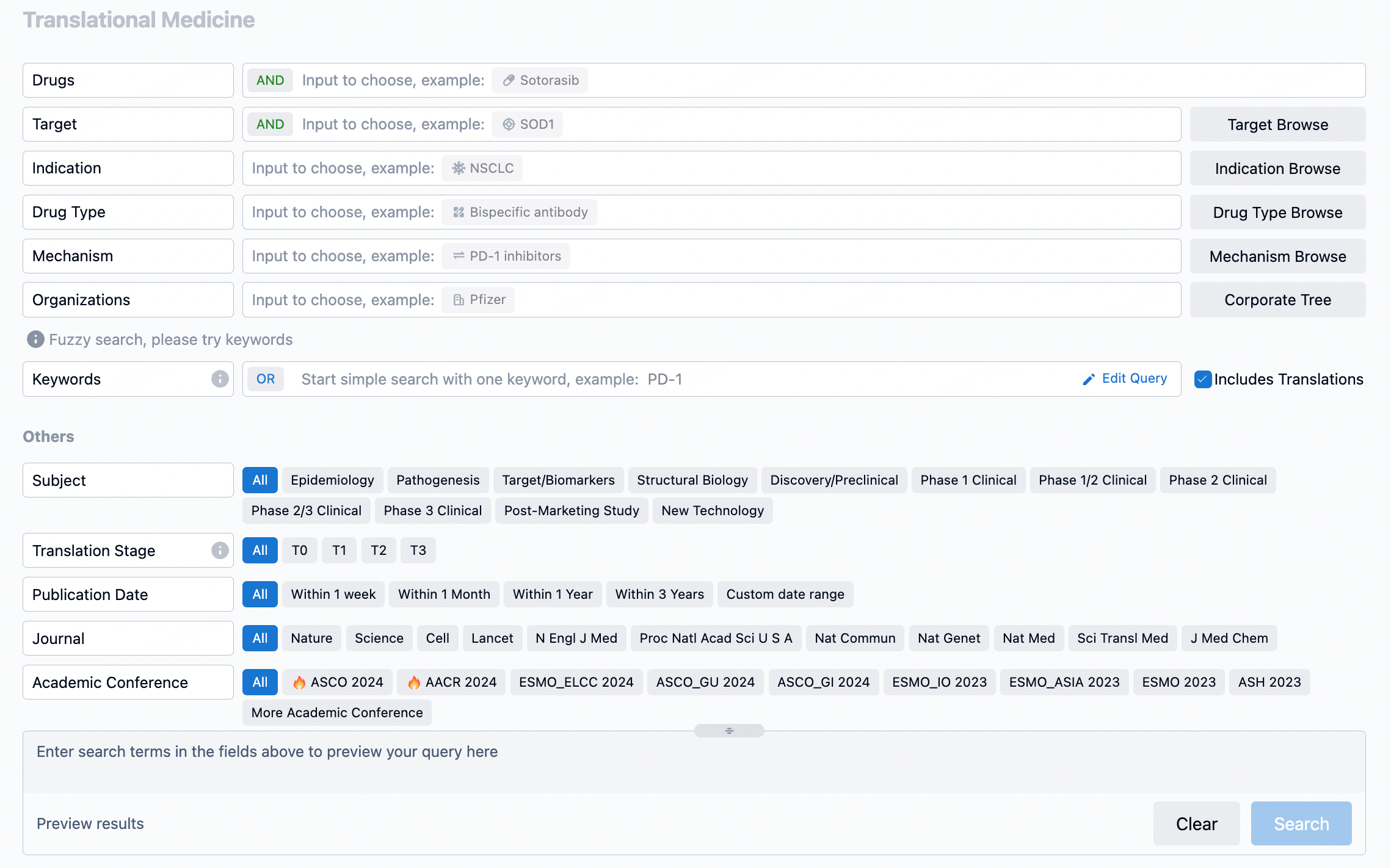
Taking obesity as an example, select "obesity" under the indication category and click search to enter the Translational Medicine results list page. By clicking on the title, you can directly navigate to the original page.
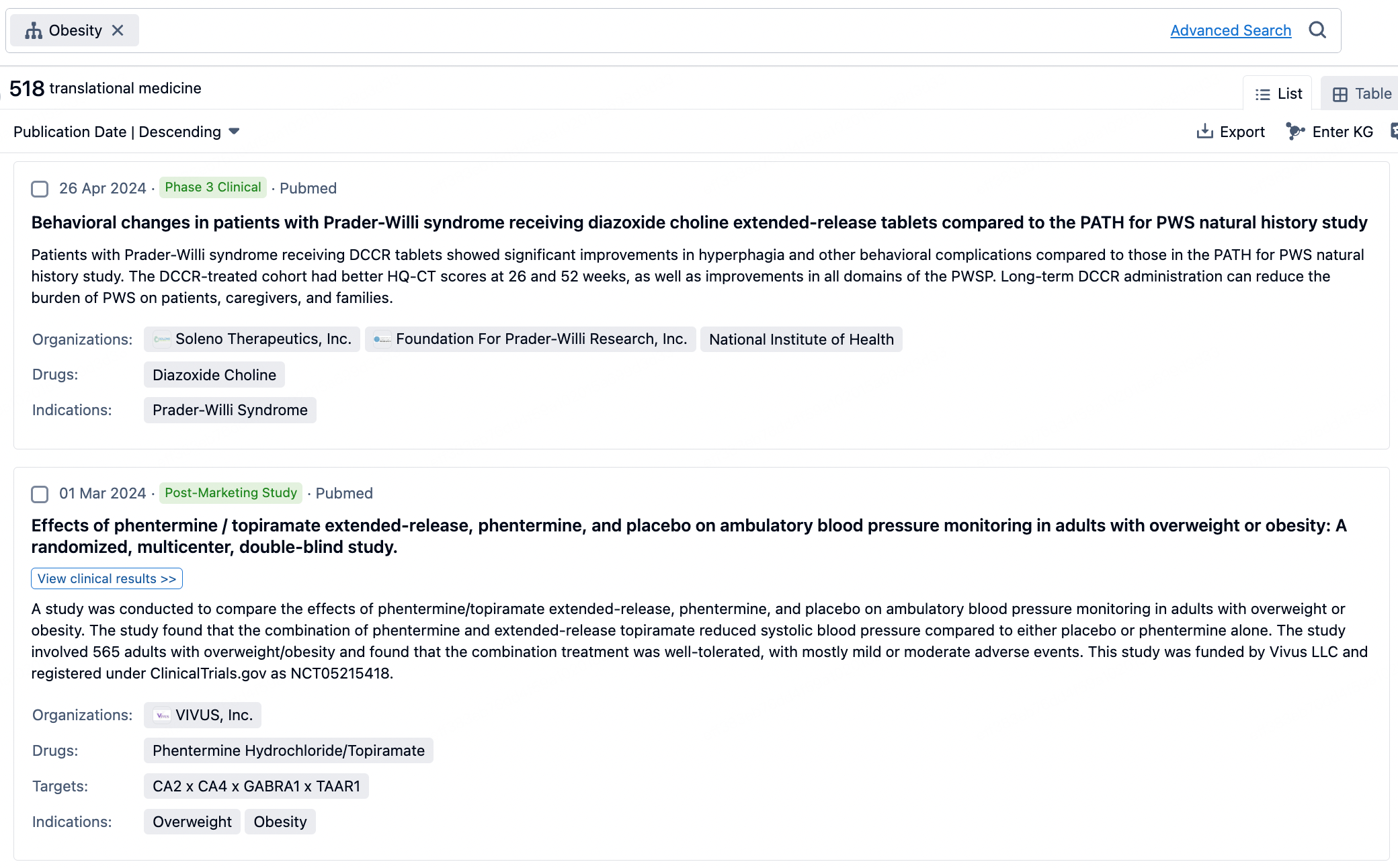
By clicking the analysis button, you can observe that GLP-1R treatment for obesity has gained significant attention over the past three years, with preclinical research still ongoing in 2023. Additionally, there are emerging potential targets, such as GDF15, among others.
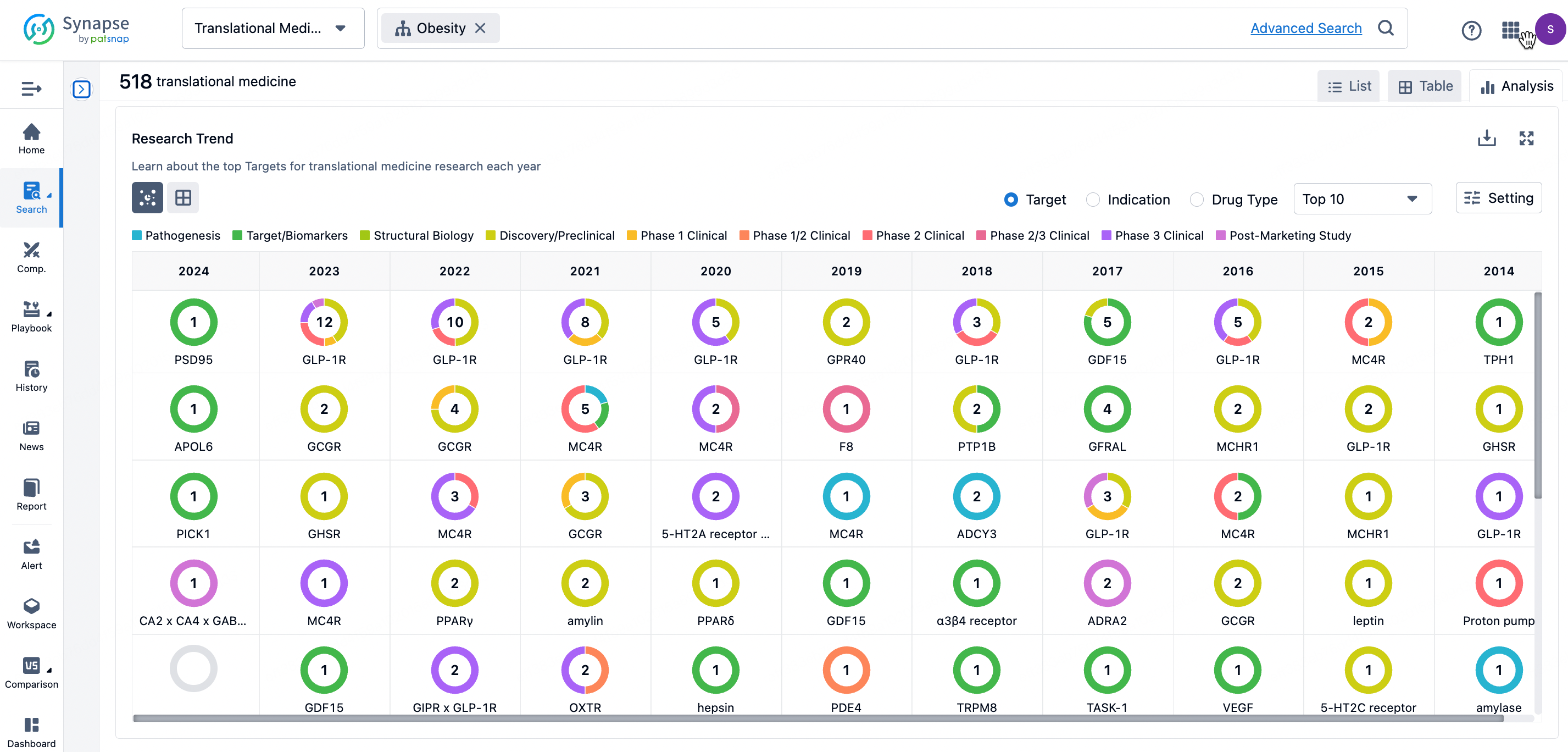
Click on the image below to go directly to the Translational Medicine search interface.