Endogenous Metabolite of Tramiprosate and ALZ-801: Inhibitor of Beta Amyloid Oligomerization in Alzheimer's Disease
The research aimed to identify 3-SPA in CSF samples from elderly patients with memory deficits, quantify its levels in AD patients from a phase III trial, evaluate its anti-Aβ42 oligomer activity, and characterize its pharmacokinetics and brain penetration. CSF samples from 64 drug-naive patients with cognitive deficits and six AD patients treated with tramiprosate were analyzed using liquid chromatography-tandem mass spectrometry and ion-mobility spectrometry-mass spectrometry.
The study confirmed 3-SPA's presence in CSF with a mean concentration of 11.7 nM in cognitive deficit patients and 135 nM in AD patients treated with tramiprosate. In vitro studies showed 3-SPA's multi-ligand interaction with Aβ42 monomers, inhibiting the formation of small oligomers. Rat studies demonstrated 3-SPA's 100% oral bioavailability and 25% brain penetration.
The conclusion highlights 3-SPA's endogenous presence in CSF, its increased levels in AD patients treated with tramiprosate, and its potent anti-Aβ oligomer activity. The metabolite's oral availability and brain penetration in rats suggest that higher CSF concentrations of 3-SPA after ALZ-801 or tramiprosate administration may be due to its CNS penetration. The data indicate that 3-SPA could be an endogenous agent with potential to stabilize Aβ monomer conformational flexibility, inhibiting misfolding and toxic oligomer formation, thus preventing AD's initial pathogenic step. The clinical improvements observed in AD patients with the ε4 allele in phase III studies may be partly due to the metabolite's therapeutic effects. The protective and therapeutic potential of 3-SPA in AD and other neurodegenerative disorders requires further exploration.
How to Use Synapse Database to Search and Analyze Translational Medicine Data?
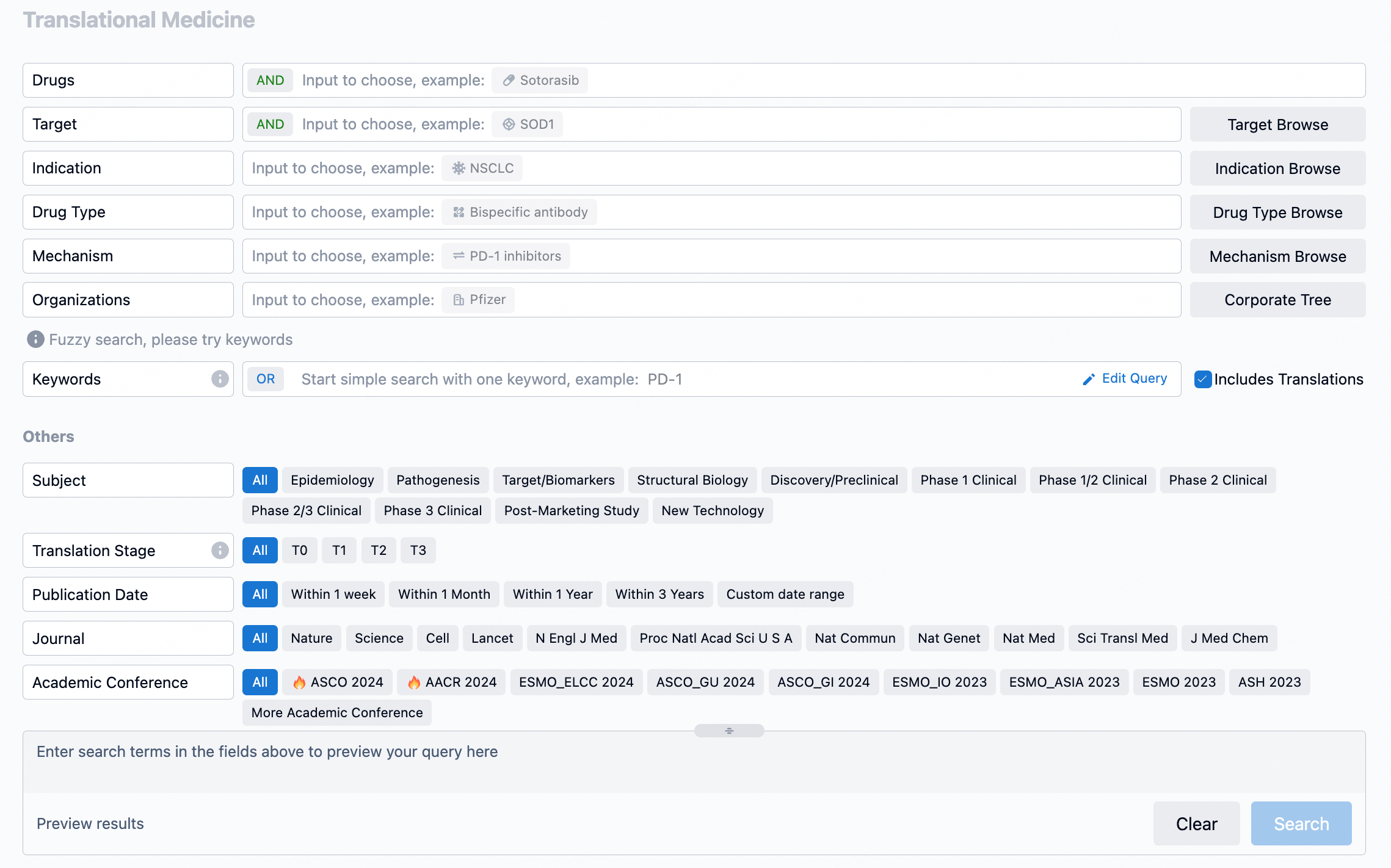
The transational medicine section of the Synapse database supports searches based on fields such as drug, target, and indication, covering the T0-T3 stages of translation. Additionally, it offers a historical conference search function as well as filtering options, view modes, translation services, and highlights summaries, providing you with a unique search experience.
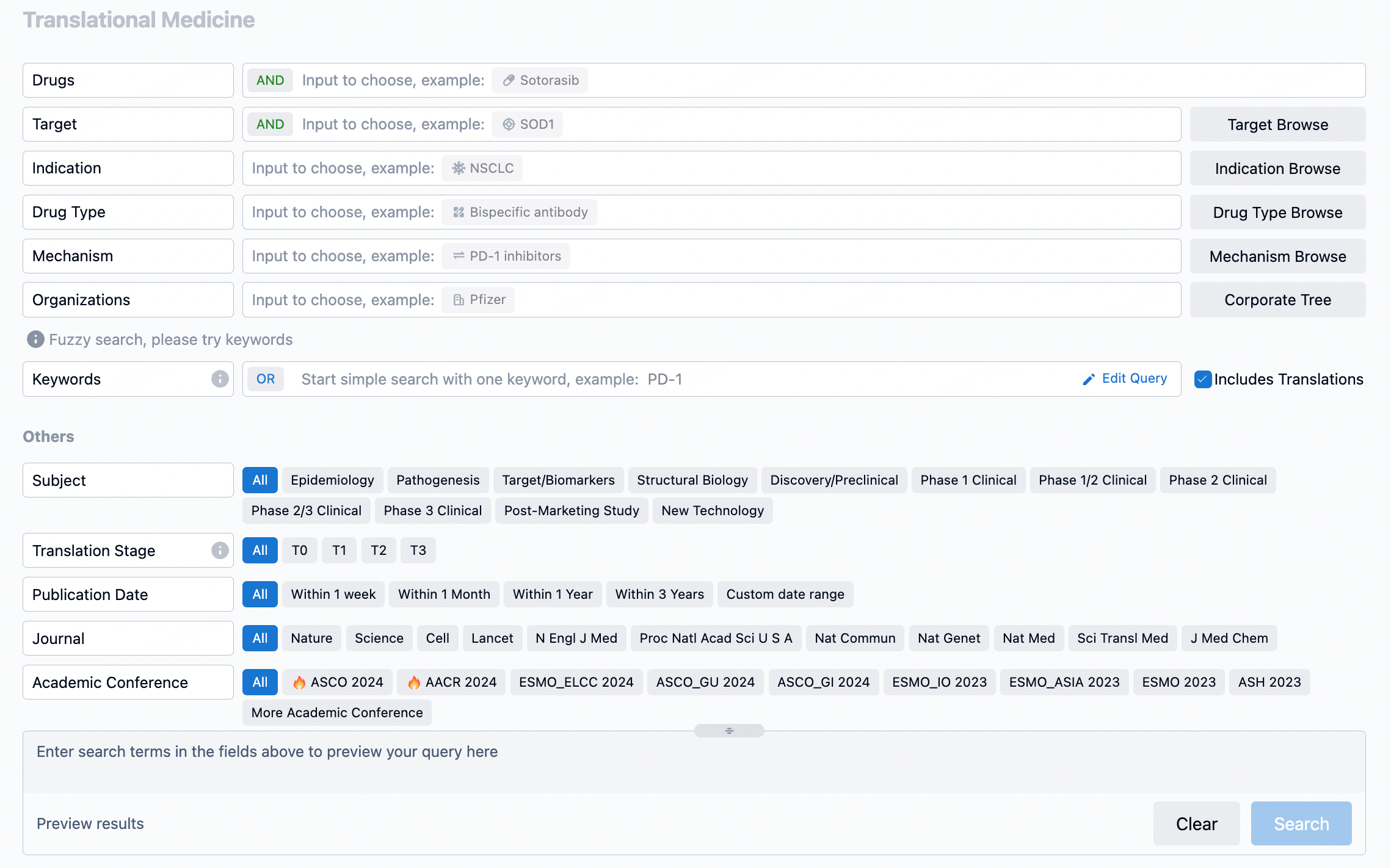
Taking obesity as an example, select "obesity" under the indication category and click search to enter the Translational Medicine results list page. By clicking on the title, you can directly navigate to the original page.
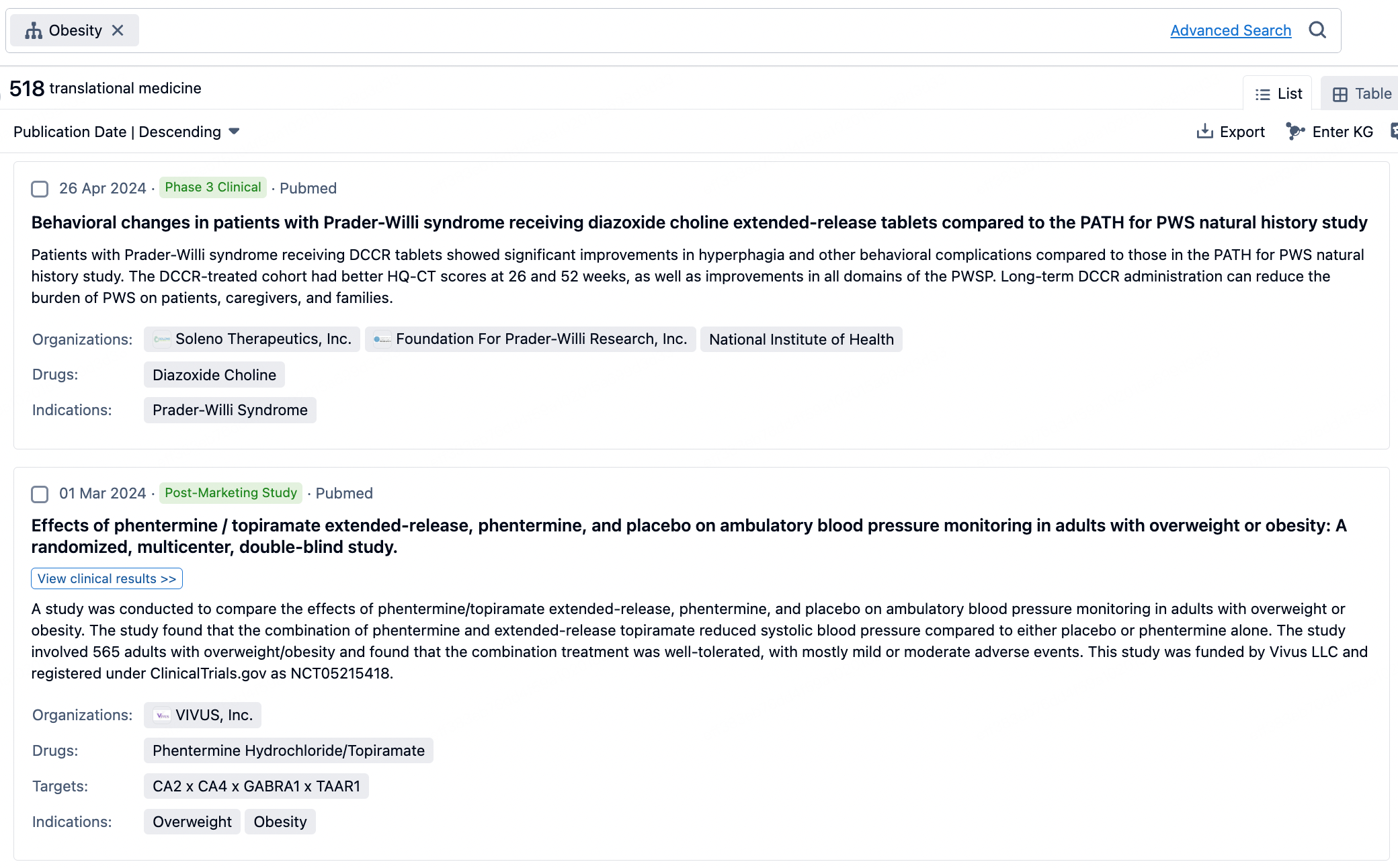
By clicking the analysis button, you can observe that GLP-1R treatment for obesity has gained significant attention over the past three years, with preclinical research still ongoing in 2023. Additionally, there are emerging potential targets, such as GDF15, among others.
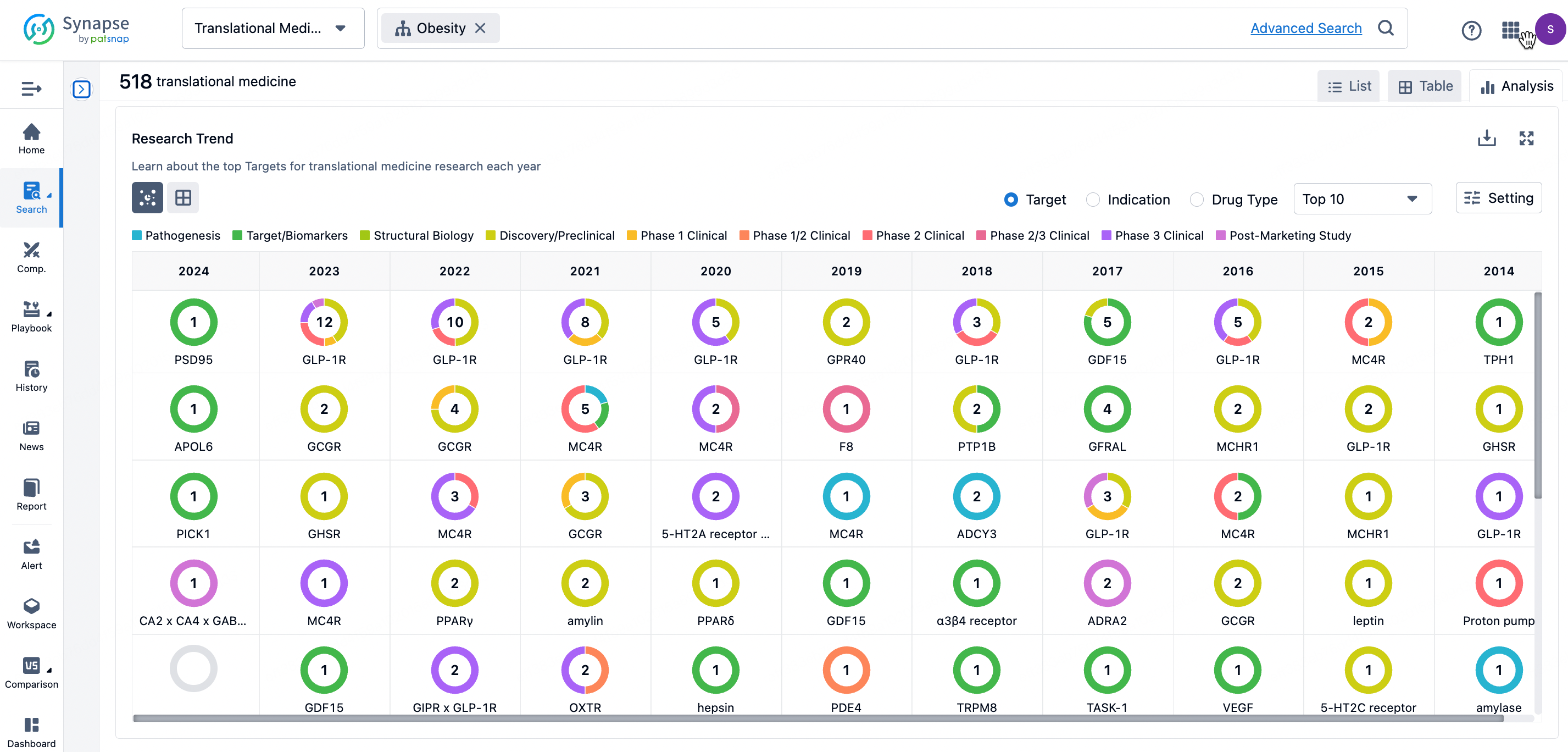
Click on the image below to go directly to the Translational Medicine search interface.