Enhanced Ovarian Cancer Therapy with UltraCAR-T: Rapidly Manufactured Multigenic CAR-T Cells
A novel approach, the UltraCAR-T platform, has been introduced to address these issues. It uses a non-viral gene transfer method based on the Sleeping Beauty transposon system to efficiently deliver multiple genes, thereby accelerating the manufacturing process. This allows for the rapid production of UltraCAR-T cells at a medical center's facility and their return to the patient within a day of gene transfer.
The PRGN-3005 UltraCAR-T cells are engineered to co-express a CAR targeting MUC16, a protein highly present in ovarian tumors, membrane-bound IL-15 for enhanced survival and expansion, and a safety mechanism for controlled therapy. The cells were produced using a non-viral system and their transgene expression was validated through flow cytometry and western blotting. In vitro tests showed that PRGN-3005 cells were highly cytotoxic against MUC16-positive ovarian cancer cells.
These cells also displayed a stem-cell-like memory phenotype, improved survival without additional cytokines, and no autonomous proliferation without MUC16, highlighting the benefits of membrane-bound IL-15 on cell phenotype and longevity. The safety switch was proven effective in eliminating the cells through antibody-dependent cell-mediated cytotoxicity (ADCC).
In vivo studies using a MUC16-positive ovarian cancer model in mice demonstrated that a single dose of PRGN-3005 led to rapid expansion and a significant increase in UltraCAR-T cells, particularly the T stem cell memory population. The treatment showed a pronounced anti-tumor effect, leading to complete tumor regression in all treated mice, outperforming conventional CAR-T cells.
The FDA has granted approval for an Investigational New Drug (IND) application, and the PRGN-3005 Phase I clinical trial for advanced ovarian cancer is currently underway. The study's findings suggest that PRGN-3005 UltraCAR-T cells, with their enhanced efficacy and rapid manufacturing process, offer a promising new avenue for the treatment of ovarian cancer.
How to Use Synapse Database to Search and Analyze Translational Medicine Data?
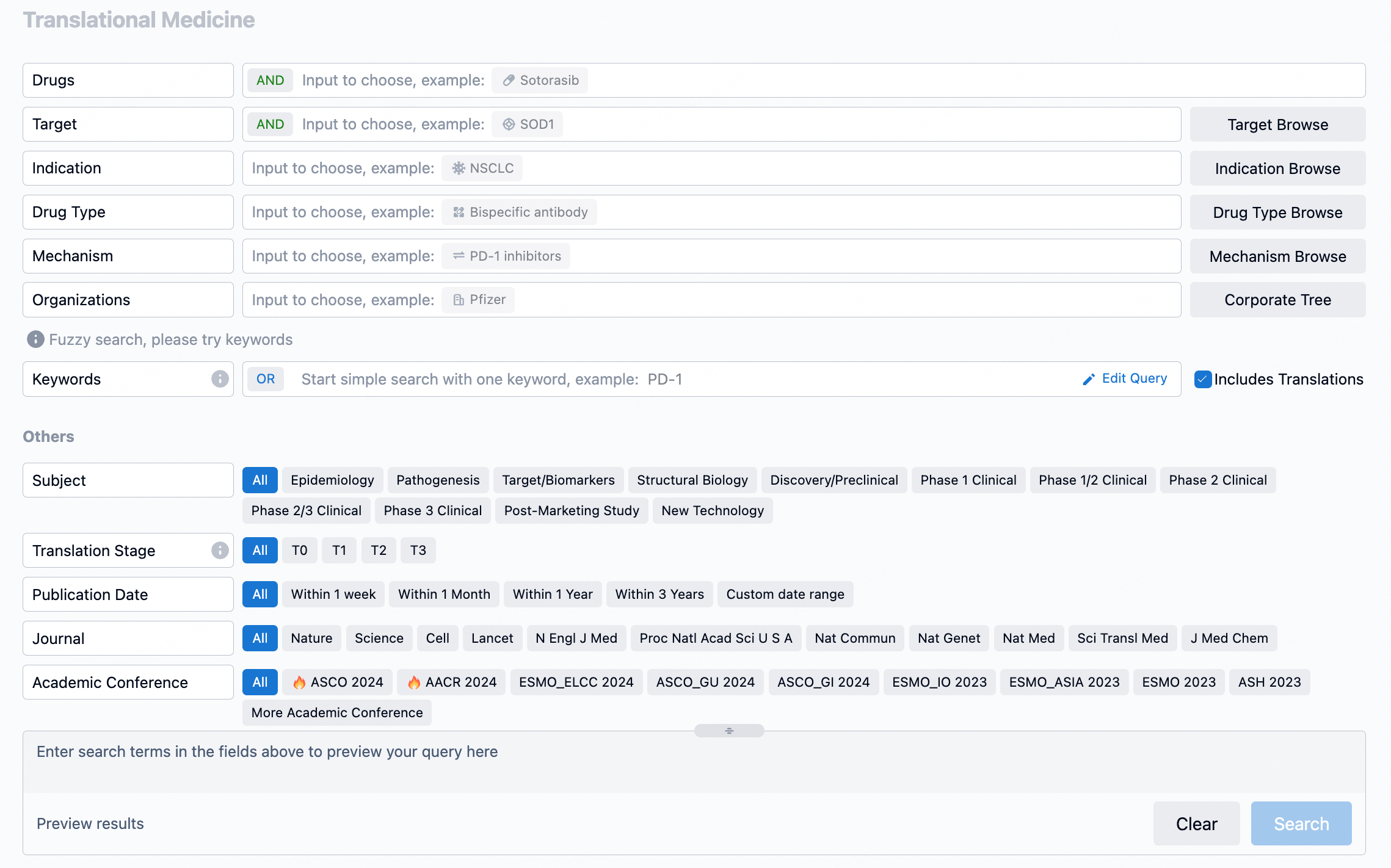
The transational medicine section of the Synapse database supports searches based on fields such as drug, target, and indication, covering the T0-T3 stages of translation. Additionally, it offers a historical conference search function as well as filtering options, view modes, translation services, and highlights summaries, providing you with a unique search experience.
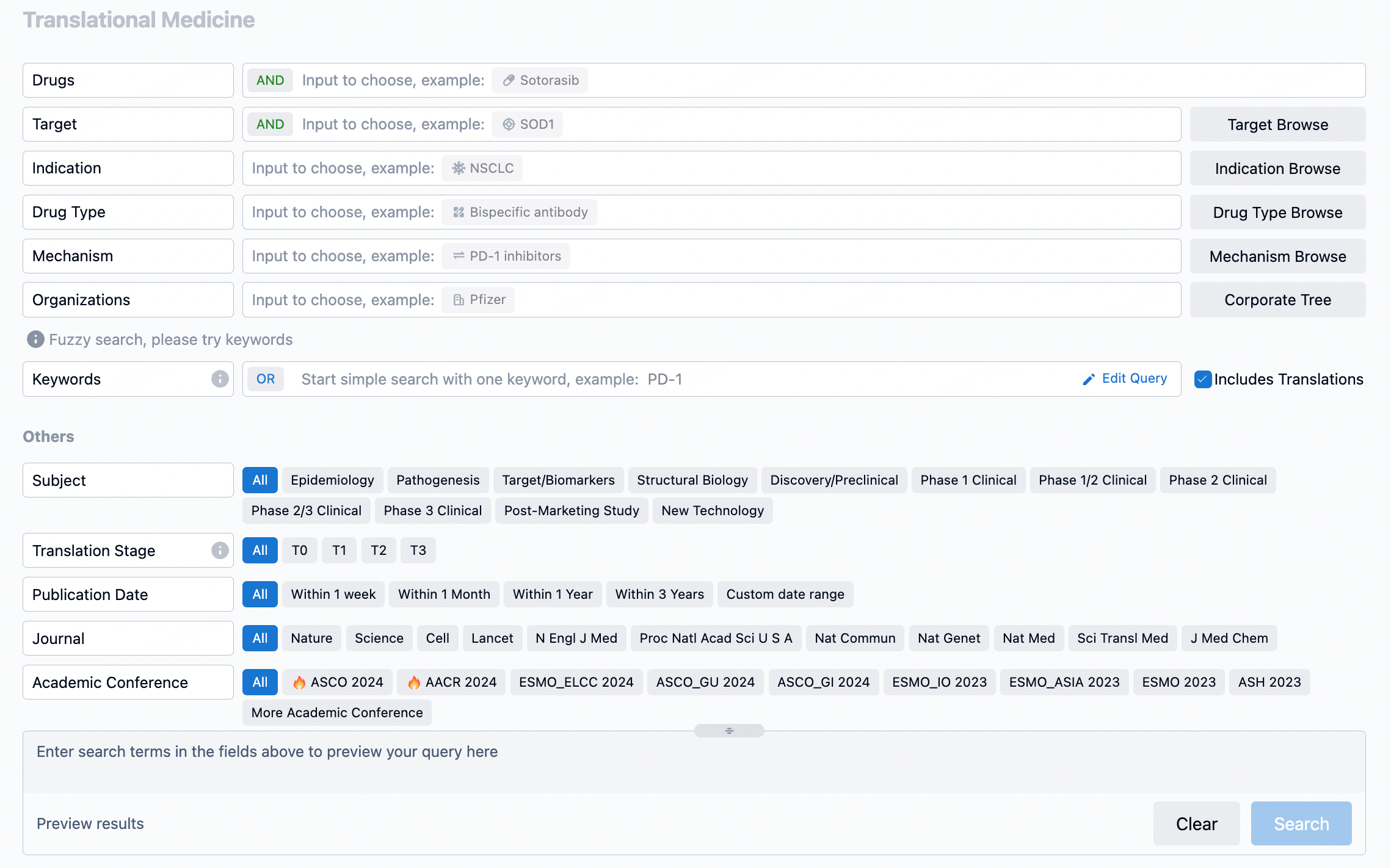
Taking obesity as an example, select "obesity" under the indication category and click search to enter the Translational Medicine results list page. By clicking on the title, you can directly navigate to the original page.
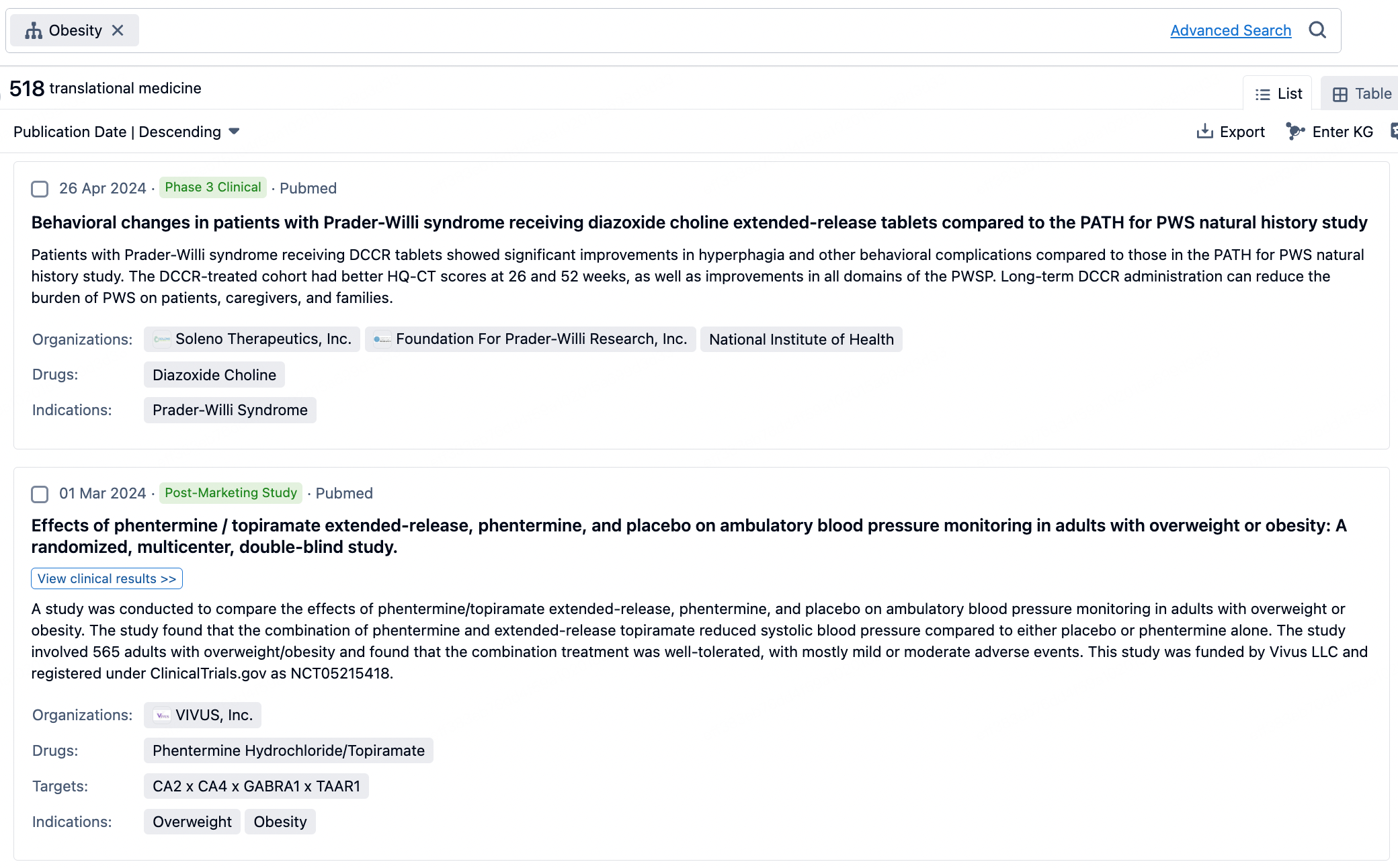
By clicking the analysis button, you can observe that GLP-1R treatment for obesity has gained significant attention over the past three years, with preclinical research still ongoing in 2023. Additionally, there are emerging potential targets, such as GDF15, among others.
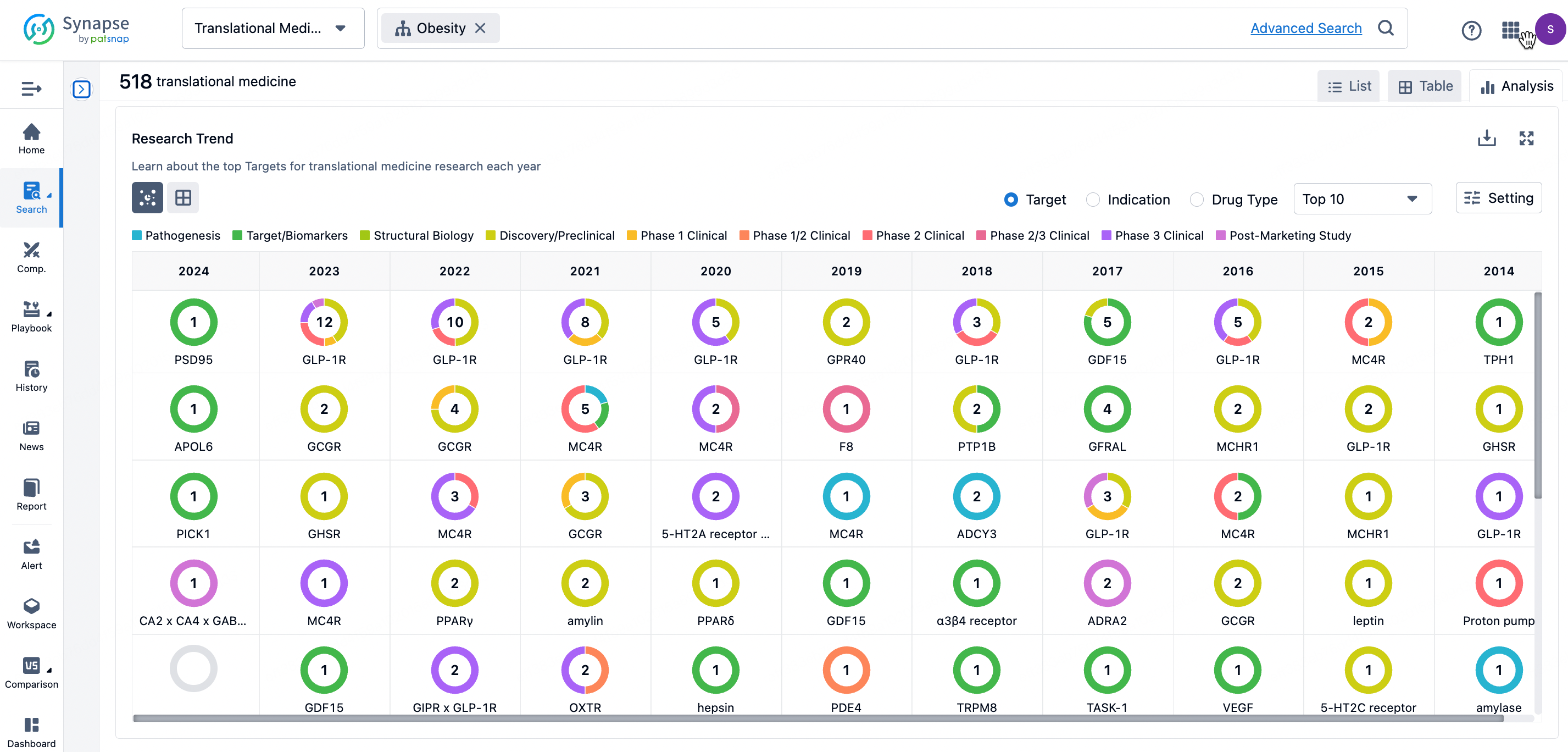
Click on the image below to go directly to the Translational Medicine search interface.