Enhanced Targeting of Cholecystokinin-2 Receptor in MTC with ^177^Lu-DOTA-PP-F11N: The Role of Protease Inhibitors in Vivo Distribution
The in vitro stability of the analogs was tested against various endoproteases, and their interaction with human MTC MZ-CRC-1 cells and A431-CCK2R(+) cells was evaluated. Biodistribution studies, both with and without the protease inhibitors phosphoramidon and thiorphan, were conducted in dual xenografts. Autoradiography and NanoSPECT/CT imaging were used to assess the biodistribution and uptake of 177Lu-DOTA-PP-F11N, and SPECT/CT images were acquired from a metastatic MTC patient.
Results indicated that 177Lu-DOTA-PP-F11N is less susceptible to neprilysins, a type of endoprotease, compared to other analogs. While intracellular cysteine proteases like cathepsin-L may play a role in degrading gastrin analogs, the uptake of all radiotracers was higher in MZ-CRC-1 tumors due to a higher number of binding sites. Notably, 177Lu-DOTA-PP-F11N showed almost double the uptake in MZ-CRC-1 tumors compared to 177Lu-DOTA-PP-F11. The coadministration of protease inhibitors significantly increased the uptake of 177Lu-DOTA-MG11 in CCK2R(+) tumors and the stomach, with a less pronounced effect on 177Lu-DOTA-PP-F11 and no significant influence on 177Lu-DOTA-PP-F11N.
Preliminary clinical data revealed high accumulation of 177Lu-DOTA-PP-F11N in tumors, stomach, kidneys, and colon. The study concludes that 177Lu-DOTA-PP-F11N performs as well as 177Lu-DOTA-MG11 without the need for protease inhibitors, suggesting that using single compounds without additives is preferable. The stomach, along with the kidneys, is highlighted as a potential dose-limiting organ in treatment.
How to Use Synapse Database to Search and Analyze Translational Medicine Data?
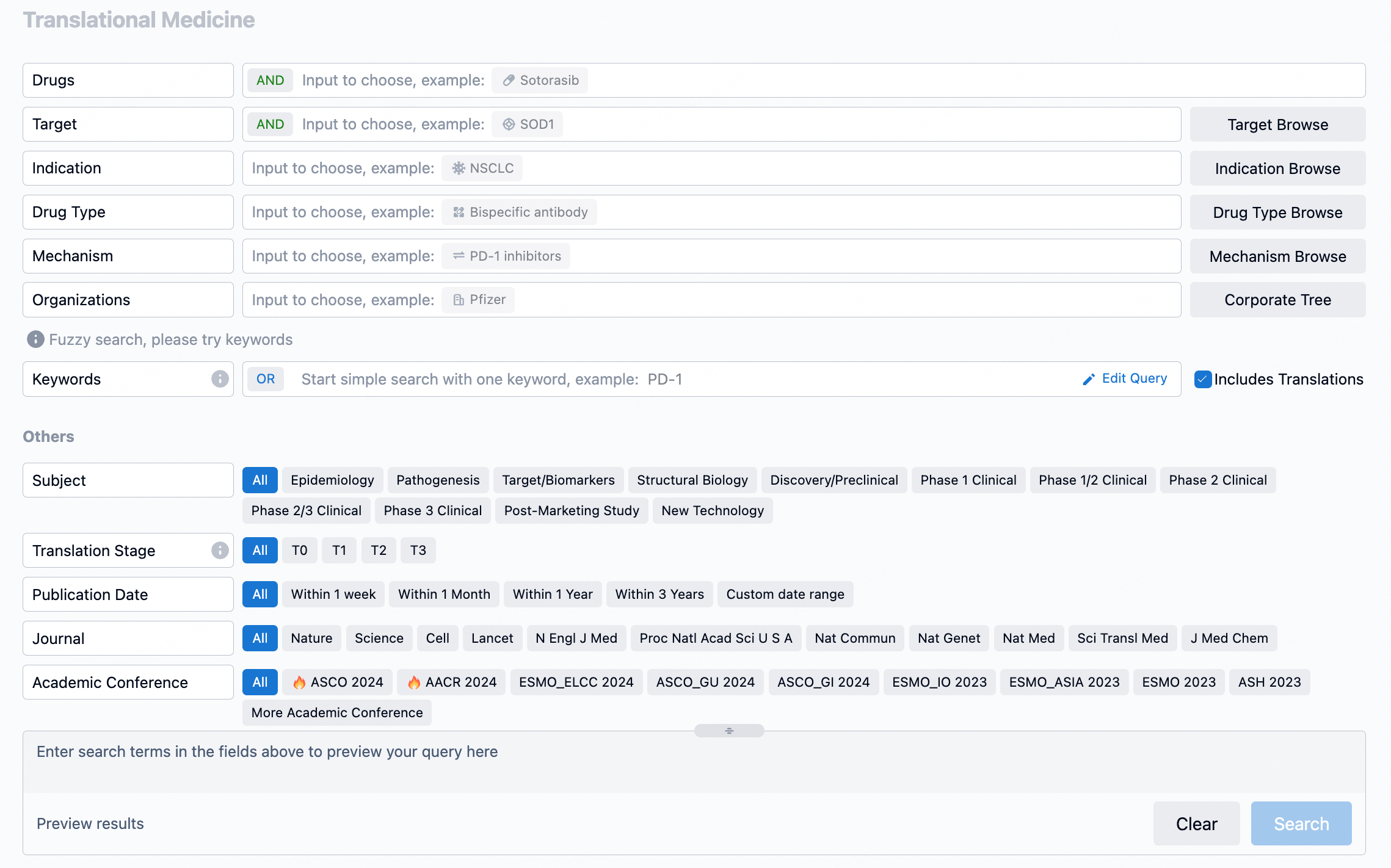
The transational medicine section of the Synapse database supports searches based on fields such as drug, target, and indication, covering the T0-T3 stages of translation. Additionally, it offers a historical conference search function as well as filtering options, view modes, translation services, and highlights summaries, providing you with a unique search experience.
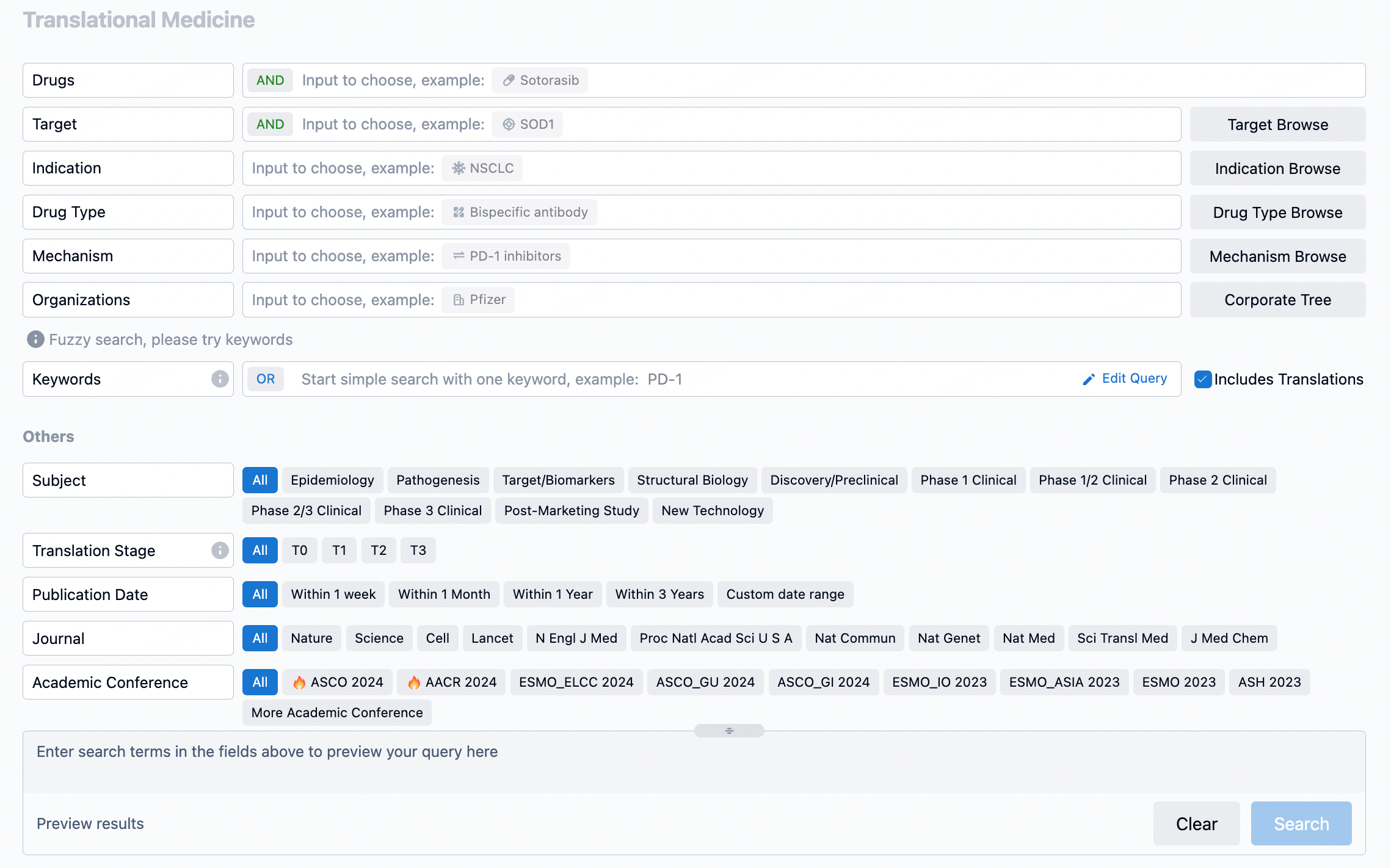
Taking obesity as an example, select "obesity" under the indication category and click search to enter the Translational Medicine results list page. By clicking on the title, you can directly navigate to the original page.
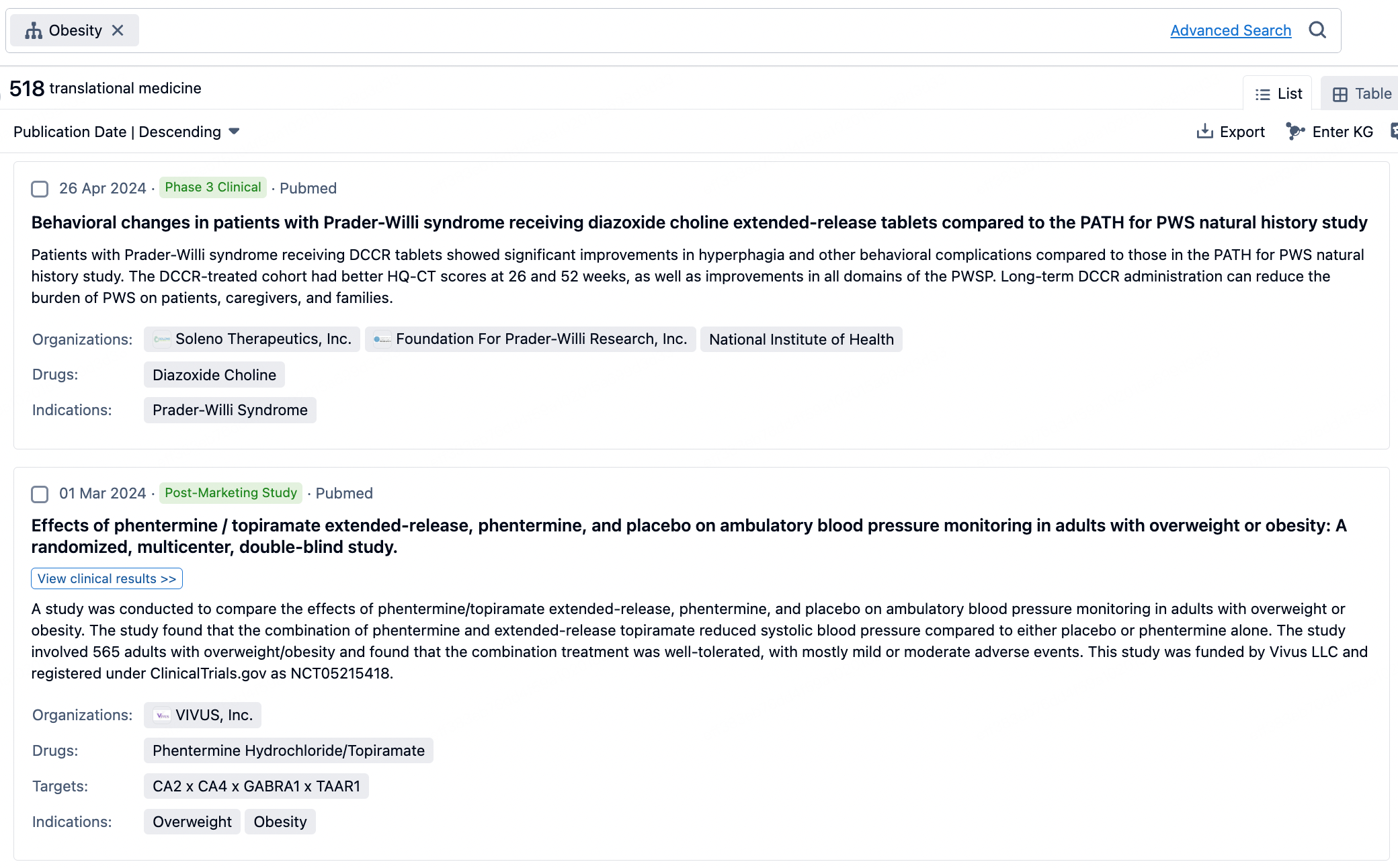
By clicking the analysis button, you can observe that GLP-1R treatment for obesity has gained significant attention over the past three years, with preclinical research still ongoing in 2023. Additionally, there are emerging potential targets, such as GDF15, among others.
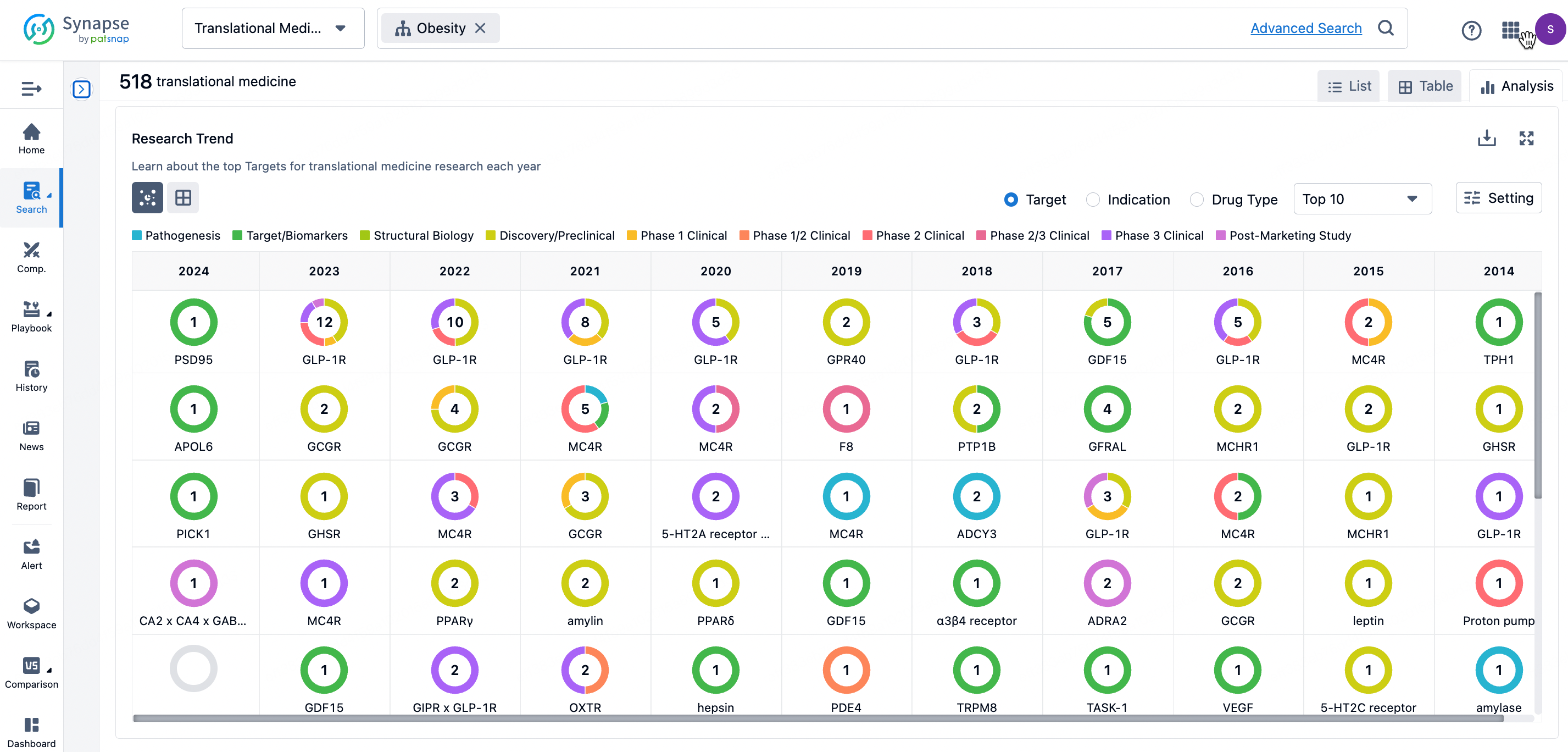
Click on the image below to go directly to the Translational Medicine search interface.