Enhancing T-Cell Responses: The Development and Potential of MGD013 in Cancer Therapy
The methodology involved generating and selecting mAbs against PD-1 and LAG-3 for DART conversion, based on their binding, biophysical properties, and ability to block their respective receptor/ligand axes and re-activate T cells. The lead mAbs were humanized and showed restricted lymphocyte expression in human tissues with overlapping expression in TILs. The humanized mAbs were combined to create MGD013, a DART protein that exhibits favorable biophysical and manufacturing traits.
MGD013 specifically binds with high affinity to both PD-1 and LAG-3, as well as to target-expressing cell lines and chronically activated T cells. It effectively blocks the interactions of PD-1/PD-L1, PD-1/PD-L2, and LAG-3/HLA (MHC-II) and inhibits PD-1 signaling. The functional characterization of MGD013 showed increased cytokine secretion upon antigenic re-challenge of previously stimulated T cells, surpassing the effects of blocking either PD-1 or LAG-3 alone. Moreover, MGD013 induced a greater cytokine response than the combination of equivalent doses of nivolumab and 25F7, both of which are undergoing clinical testing. Cynomolgus monkey pharmacokinetic studies indicated that MGD013 has a prolonged circulating half-life, consistent with Fc-bearing molecules.
The conclusion of the study is that MGD013, by blocking both PD-1 and LAG-3 pathways, enhances T-cell responses more than single or combined mAb blockade. The favorable pharmacokinetic profile in cynomolgus monkeys supports the further clinical development of MGD013. The research was presented at the 107th Annual Meeting of the American Association for Cancer Research and published in the Cancer Research journal.
How to Use Synapse Database to Search and Analyze Translational Medicine Data?
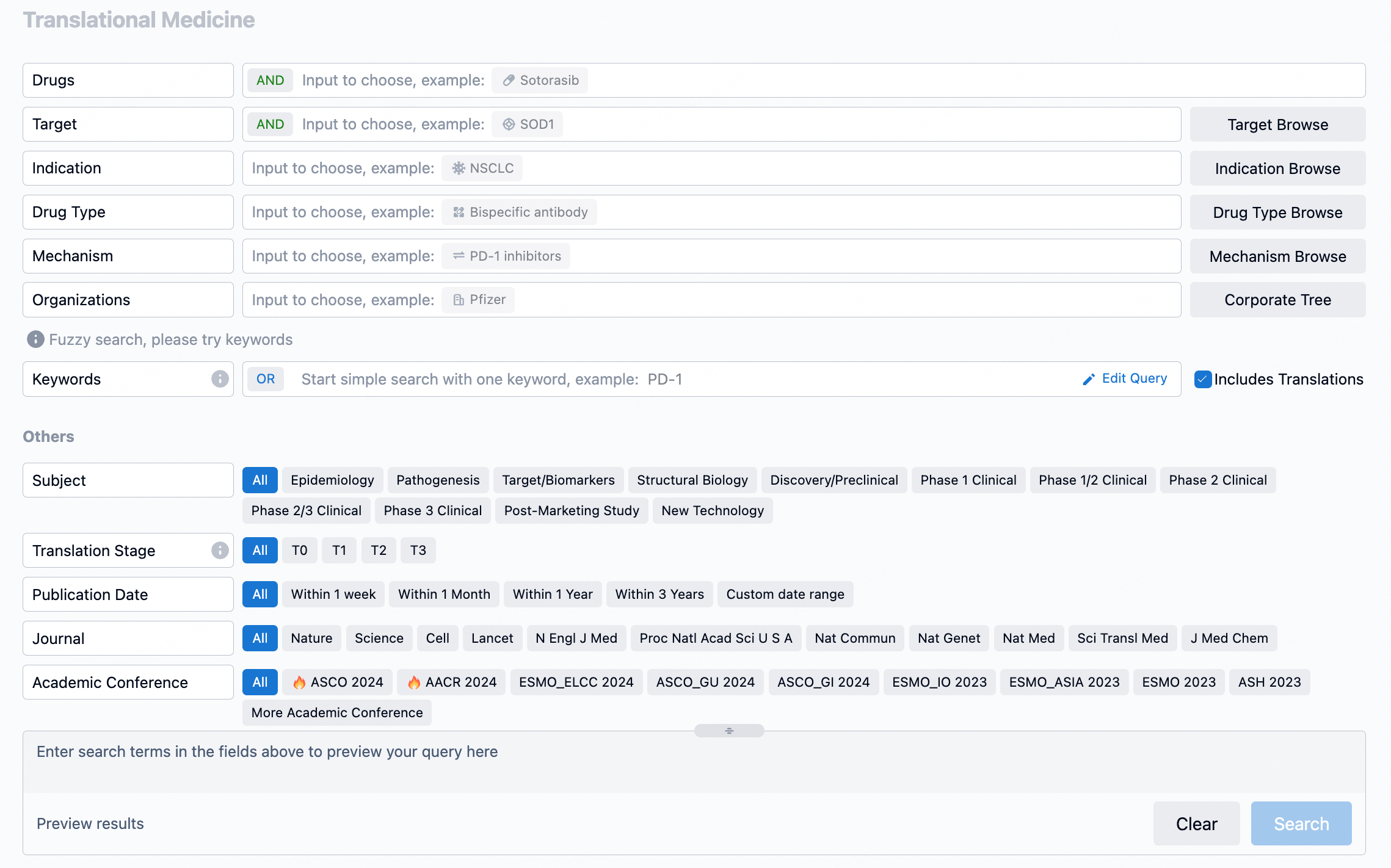
The transational medicine section of the Synapse database supports searches based on fields such as drug, target, and indication, covering the T0-T3 stages of translation. Additionally, it offers a historical conference search function as well as filtering options, view modes, translation services, and highlights summaries, providing you with a unique search experience.
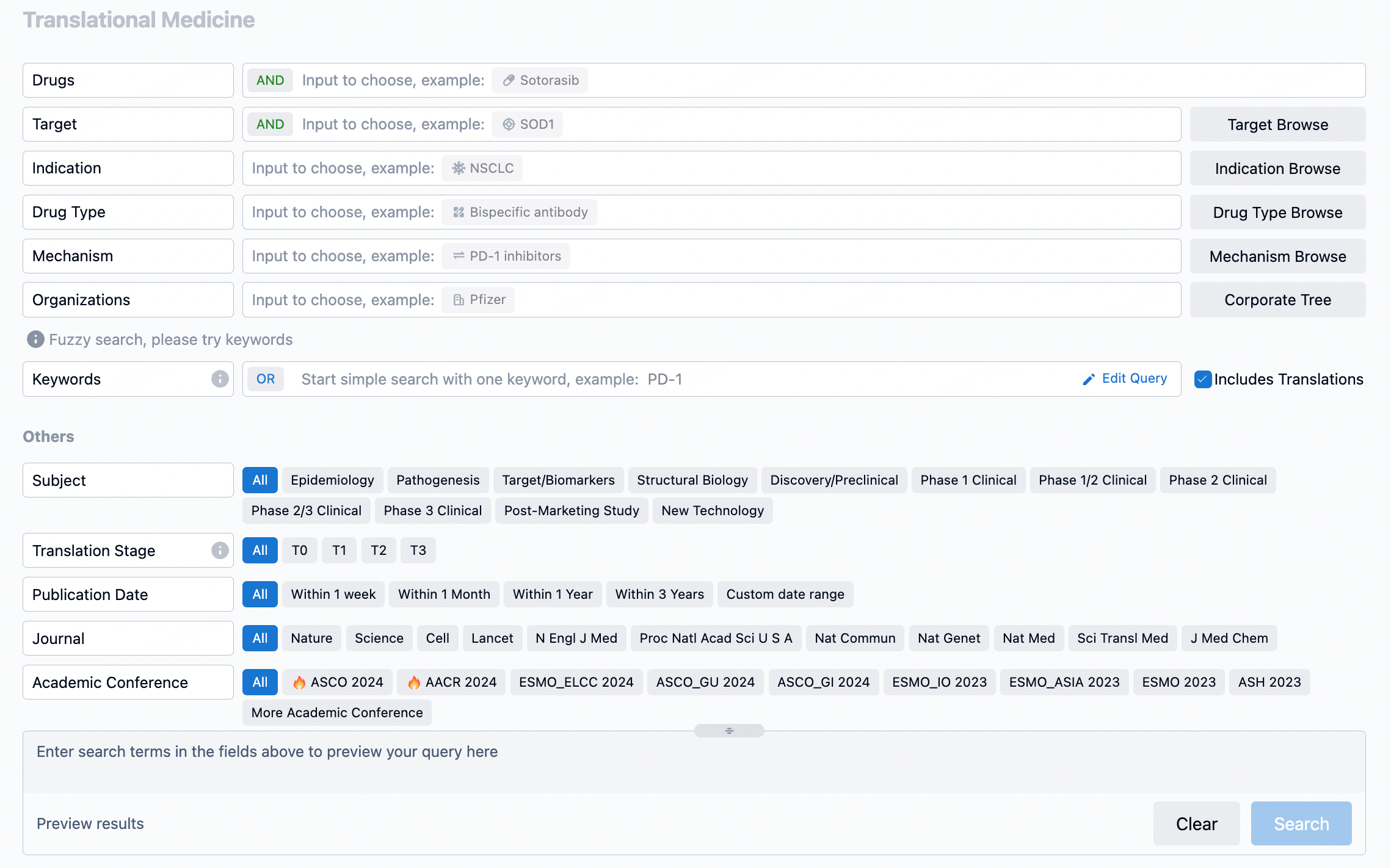
Taking obesity as an example, select "obesity" under the indication category and click search to enter the Translational Medicine results list page. By clicking on the title, you can directly navigate to the original page.
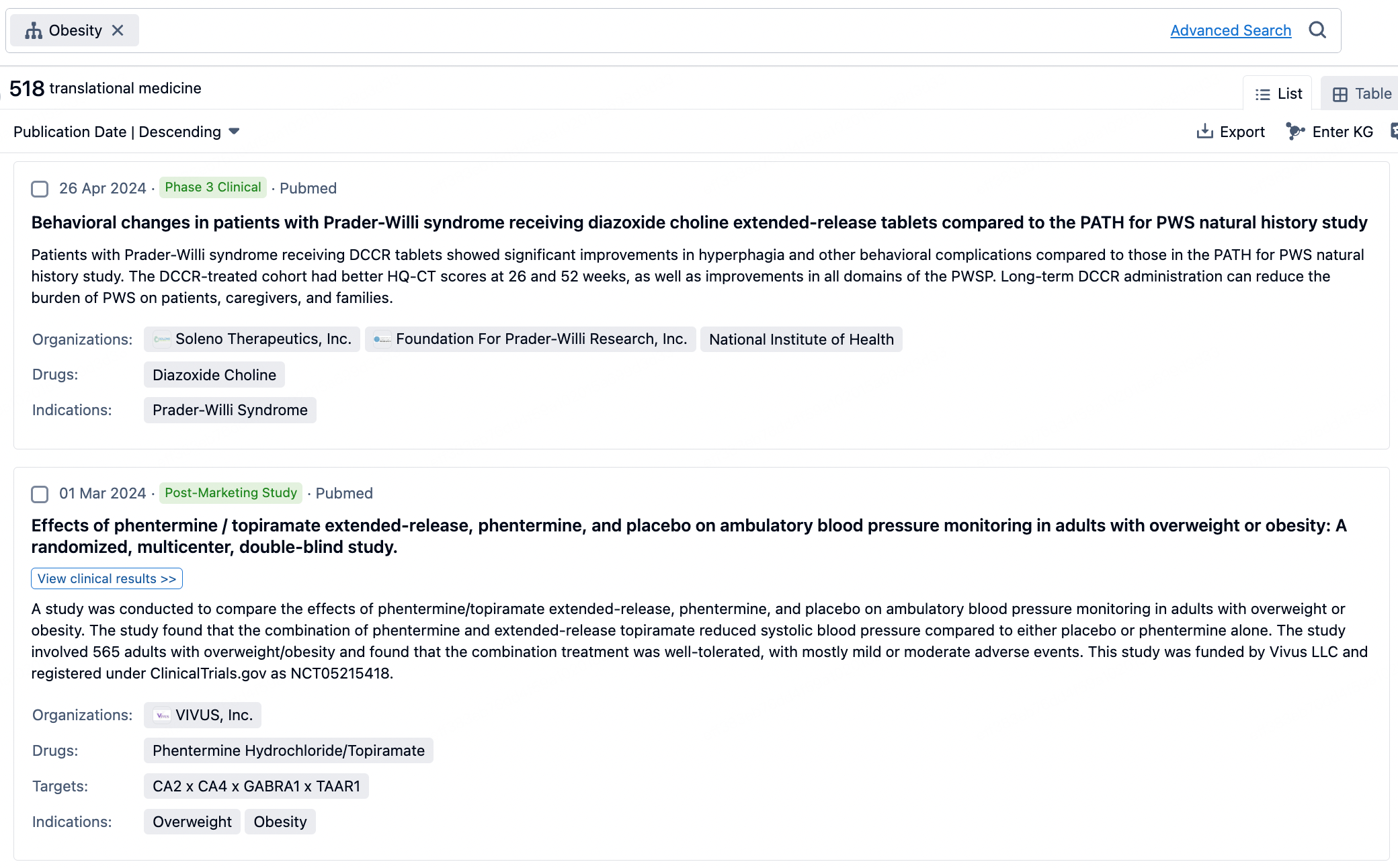
By clicking the analysis button, you can observe that GLP-1R treatment for obesity has gained significant attention over the past three years, with preclinical research still ongoing in 2023. Additionally, there are emerging potential targets, such as GDF15, among others.
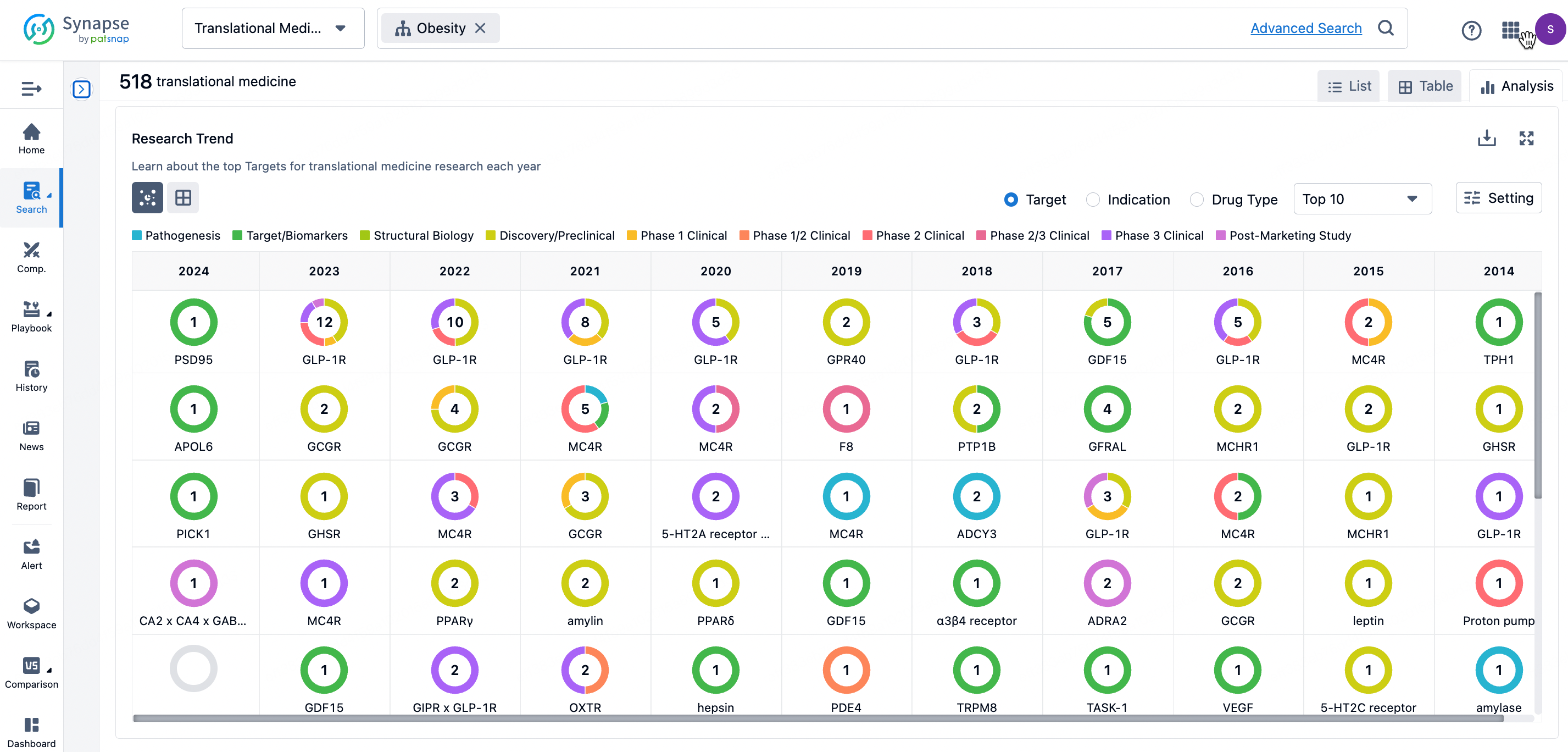
Click on the image below to go directly to the Translational Medicine search interface.