Exploring EG-011: A Promising Small Molecule for Lymphoma Treatment
In the in vitro assays, EG-011 showed a median IC50 of 2.25 μM across 62 lymphoma cell lines, with a subset of 21 cell lines exhibiting even higher sensitivity. Notably, 11 germinal center B cell diffuse large B cell lymphomas (DLBCL) were particularly responsive. EG-011 did not affect solid tumor cell lines. Primary acute lymphoblastic leukemia (ALL) samples displayed varying degrees of sensitivity, with seven showing sensitivity and five resistance.
In vivo studies using a mouse model indicated that EG-011 could delay tumor growth and reduce tumor weight. The compound was found to be synergistic with several FDA-approved drugs, enhancing their anti-cancer effects in all tested cell lines.
These findings suggest that EG-011 is a promising candidate for further preclinical investigation due to its selective activity against lymphoma and its potential to complement existing treatments.
How to Use Synapse Database to Search and Analyze Translational Medicine Data?
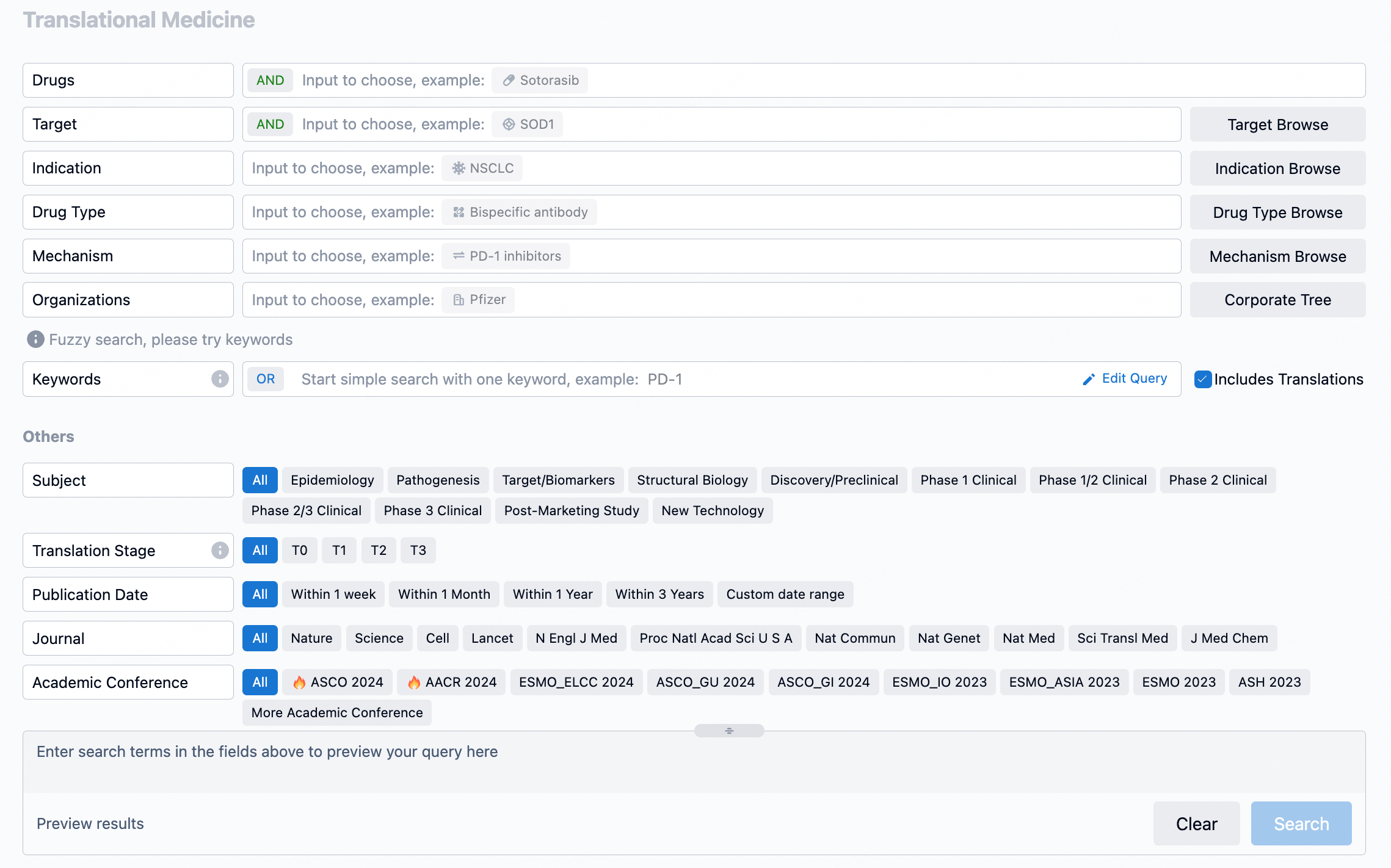
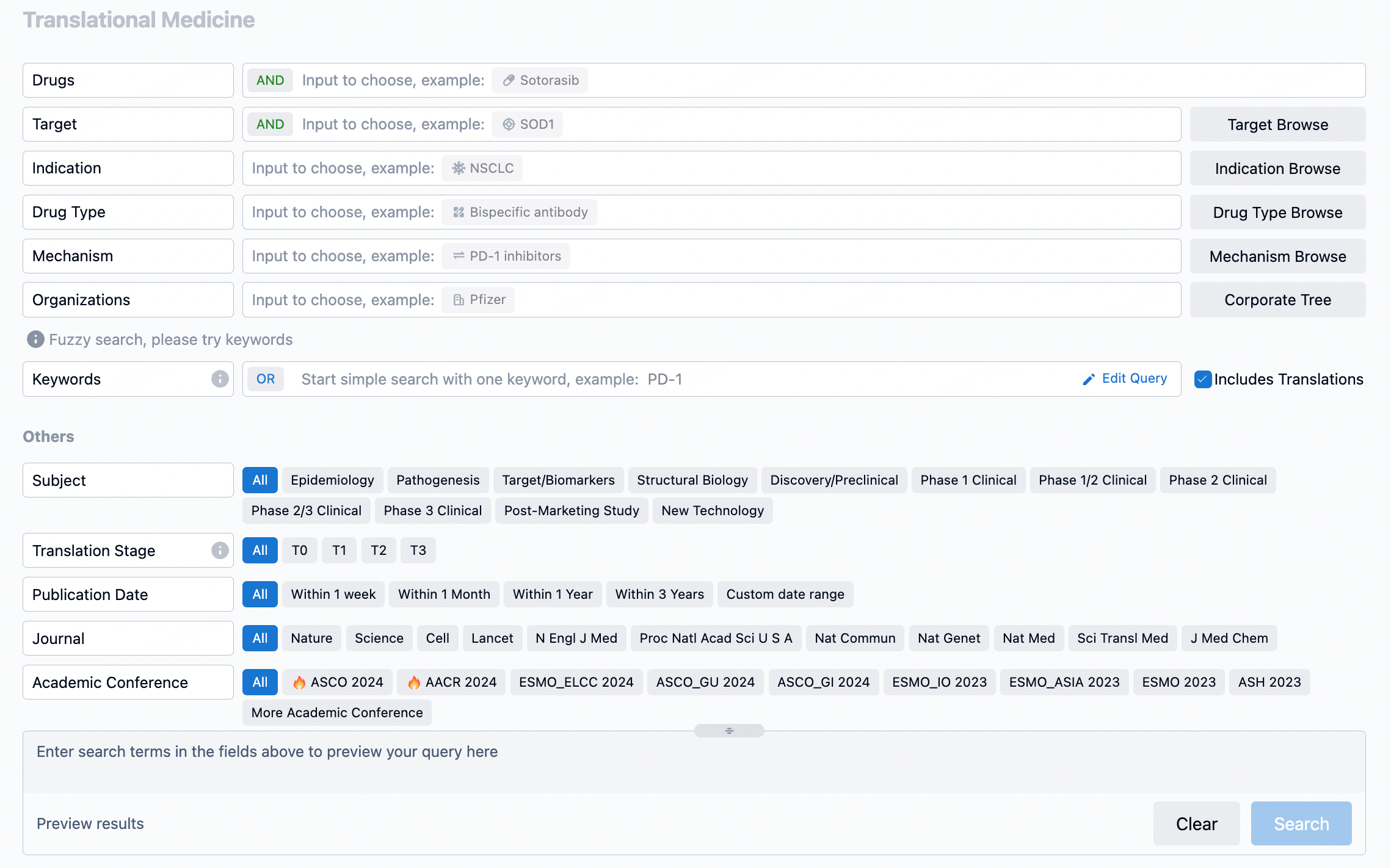
The transational medicine section of the Synapse database supports searches based on fields such as drug, target, and indication, covering the T0-T3 stages of translation. Additionally, it offers a historical conference search function as well as filtering options, view modes, translation services, and highlights summaries, providing you with a unique search experience.
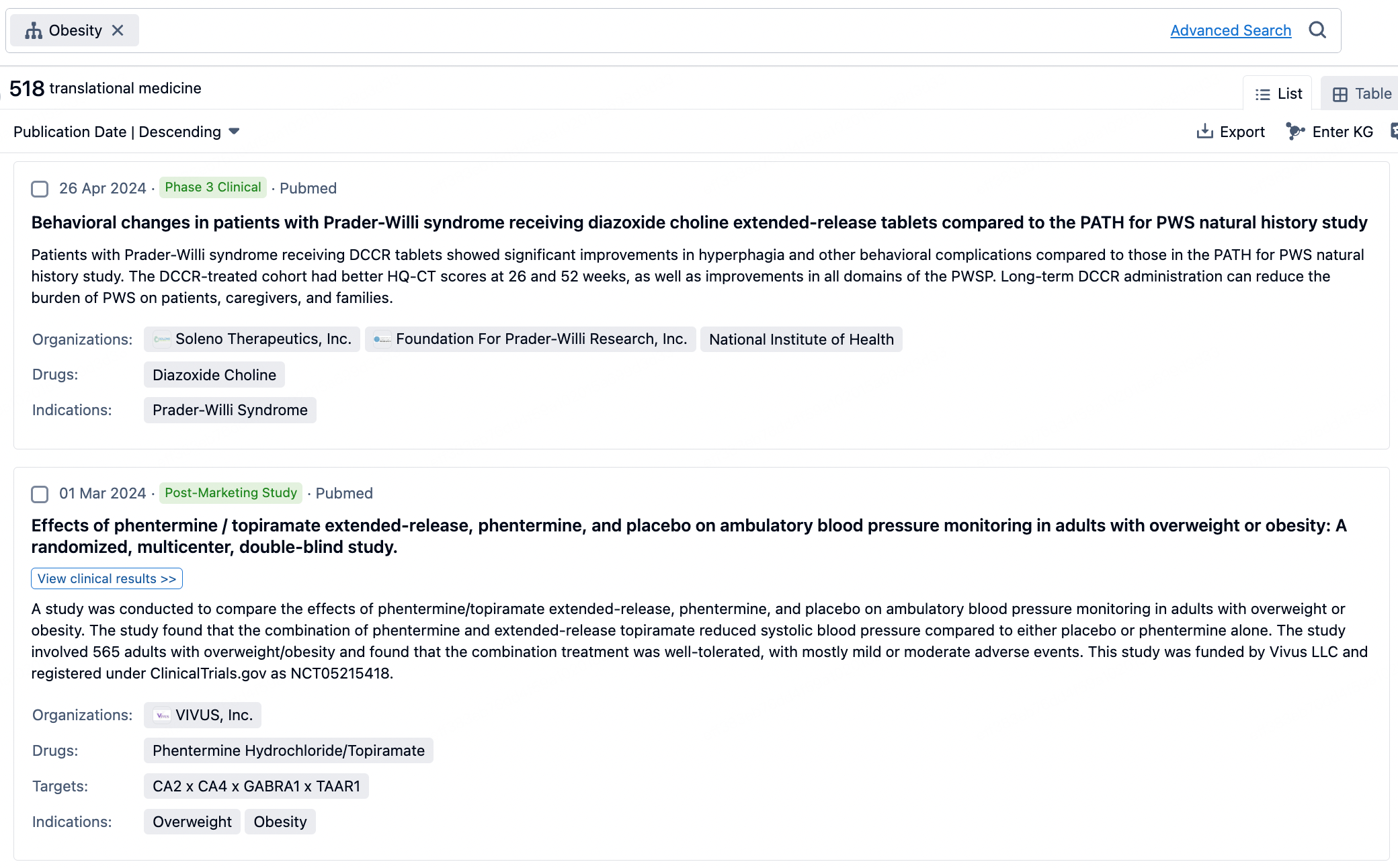
Taking obesity as an example, select "obesity" under the indication category and click search to enter the Translational Medicine results list page. By clicking on the title, you can directly navigate to the original page.
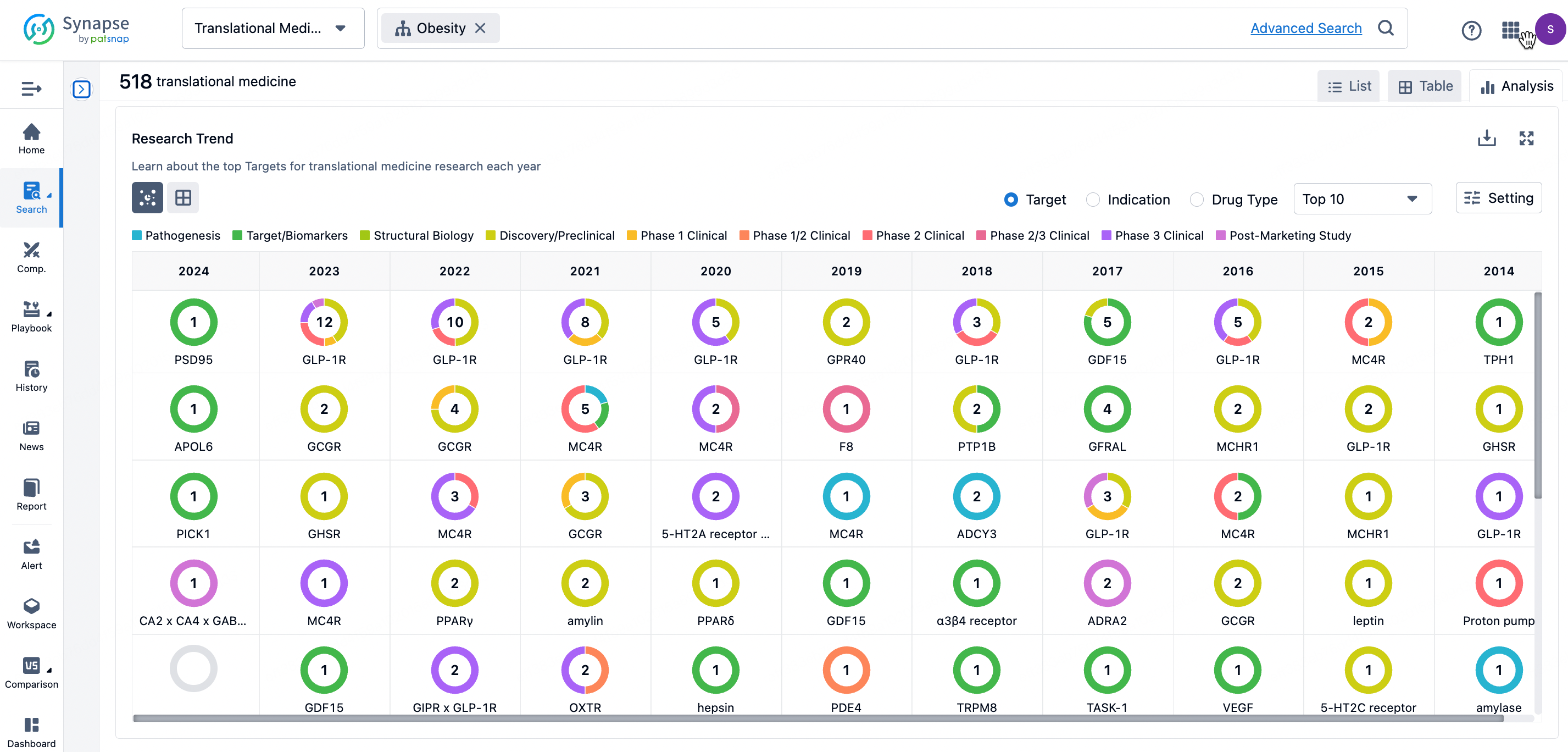
By clicking the analysis button, you can observe that GLP-1R treatment for obesity has gained significant attention over the past three years, with preclinical research still ongoing in 2023. Additionally, there are emerging potential targets, such as GDF15, among others.
Click on the image below to go directly to the Translational Medicine search interface.