Exploring the Synergy of CB-618 and Meropenem: Insights from In Vitro Pharmacokinetic-Pharmacodynamic Studies
Data from the dose fractionation studies were used along with a Klebsiella pneumoniae strain to examine the correlation between the change in log10 CFU/ml at 24 hours and various measures of CB-618 exposure, including the area under the concentration-time curve over 24 hours (AUC0–24), the maximum concentration (Cmax), and the time that CB-618 levels remained above a certain threshold, all in conjunction with meropenem administered at 2 g every 8 hours.
The exposure measures that showed the strongest association with CB-618's efficacy when used with meropenem were the AUC0–24 and Cmax. By using the AUC0–24 adjusted to the CB-618-potentiated meropenem MIC value, the study evaluated the relationship between the change from baseline in log10 CFU/ml at 24 hours and the AUC0–24/MIC ratio using data from five challenge isolates. The AUC0–24/MIC ratio that corresponded to bacterial stasis and 1- and 2-log10 CFU/ml reductions from baseline at 24 hours were identified as 27.3, 86.1, and 444.8, respectively. These findings provide a pharmacokinetic and pharmacodynamic foundation for assessing potential dosing strategies for CB-618 in combination with meropenem in future research.
How to Use Synapse Database to Search and Analyze Translational Medicine Data?
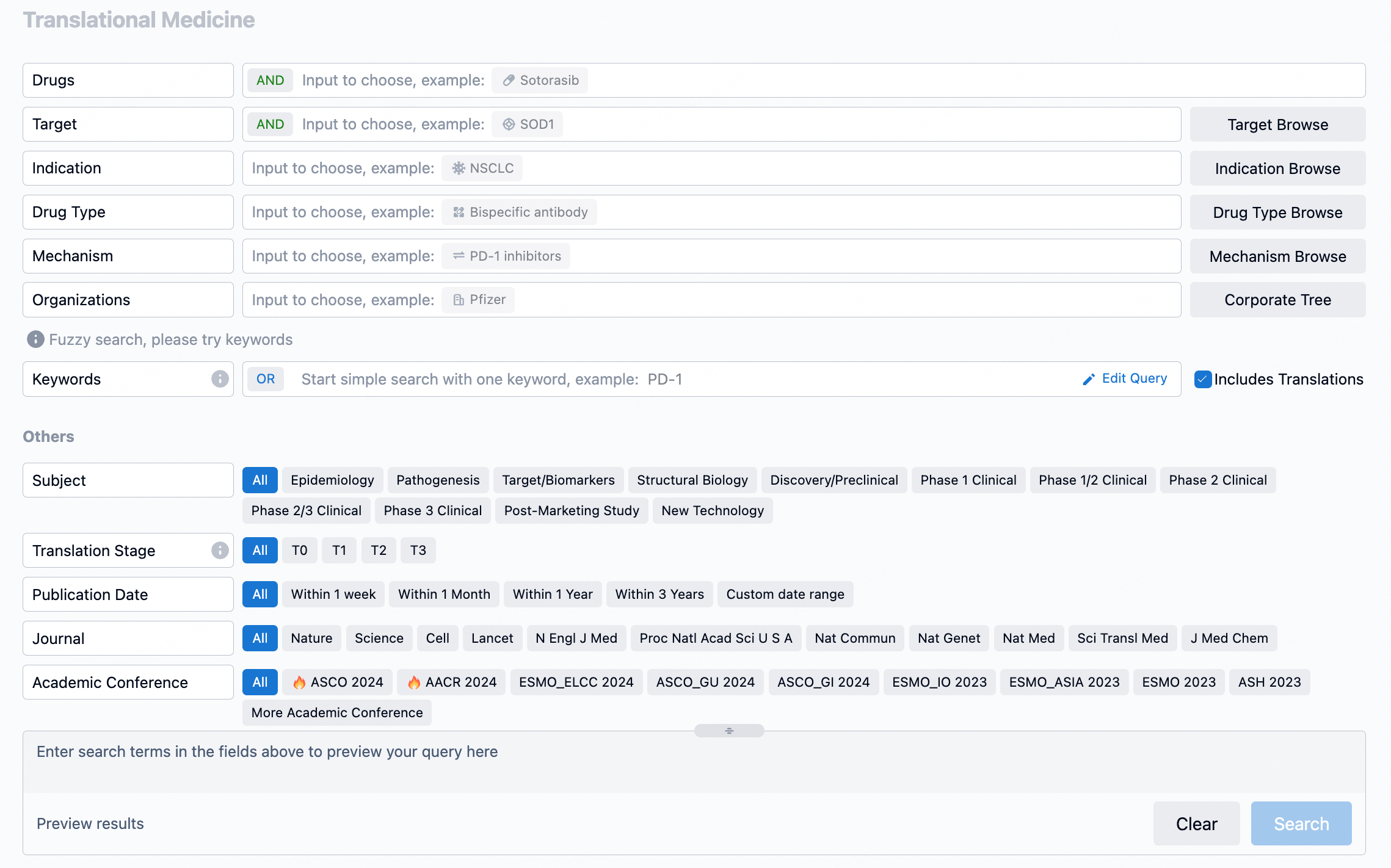
The transational medicine section of the Synapse database supports searches based on fields such as drug, target, and indication, covering the T0-T3 stages of translation. Additionally, it offers a historical conference search function as well as filtering options, view modes, translation services, and highlights summaries, providing you with a unique search experience.
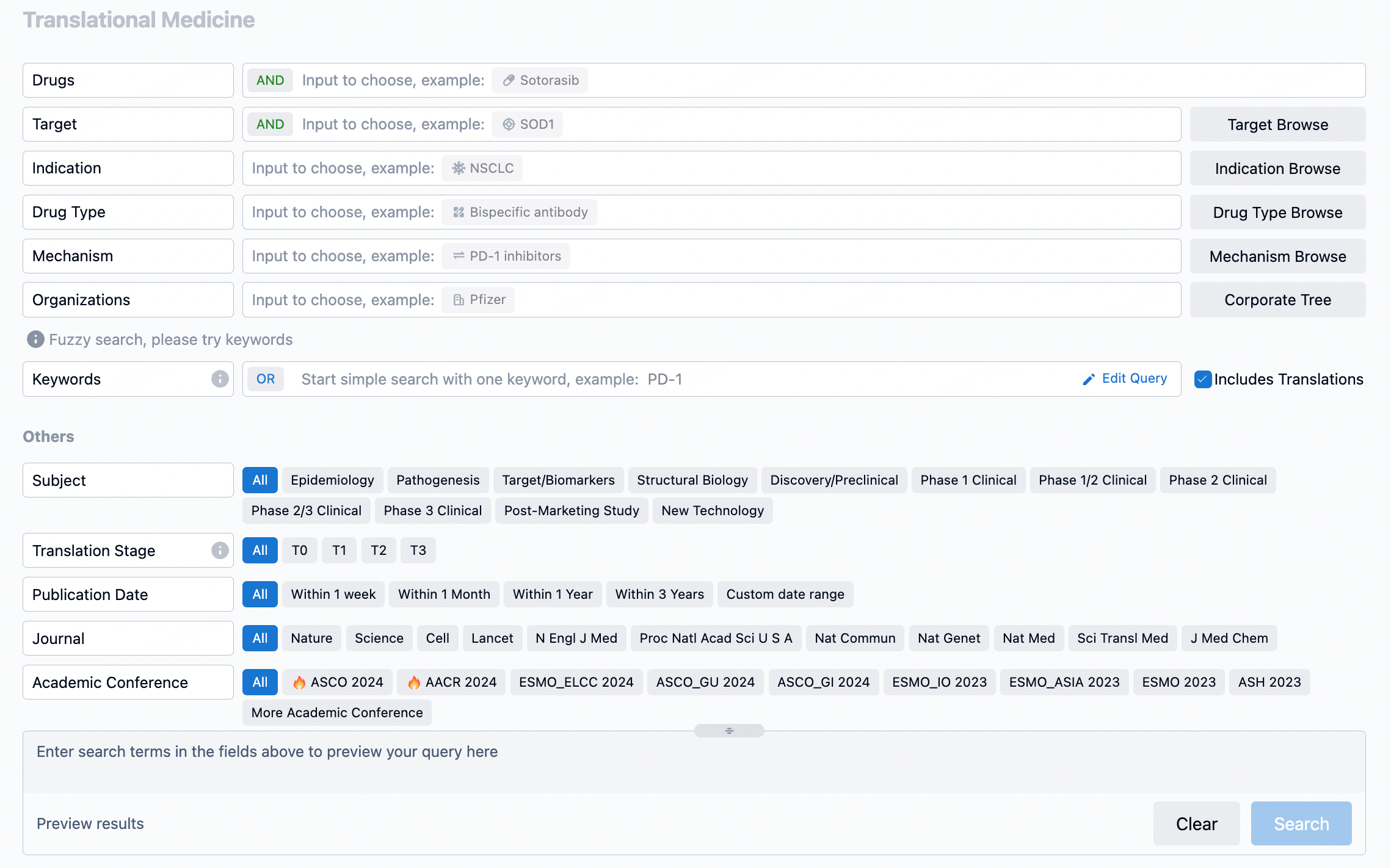
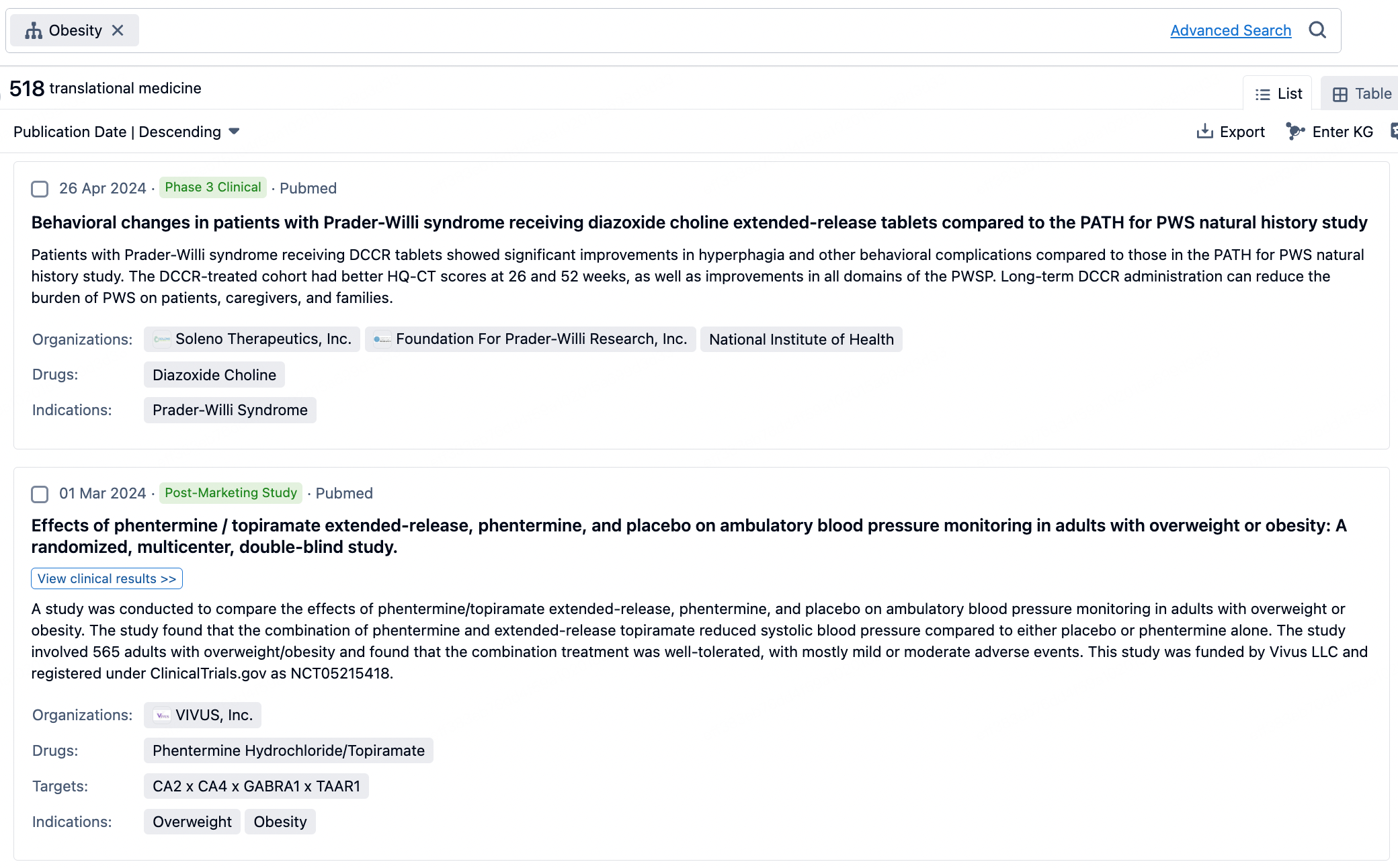
Taking obesity as an example, select "obesity" under the indication category and click search to enter the Translational Medicine results list page. By clicking on the title, you can directly navigate to the original page.
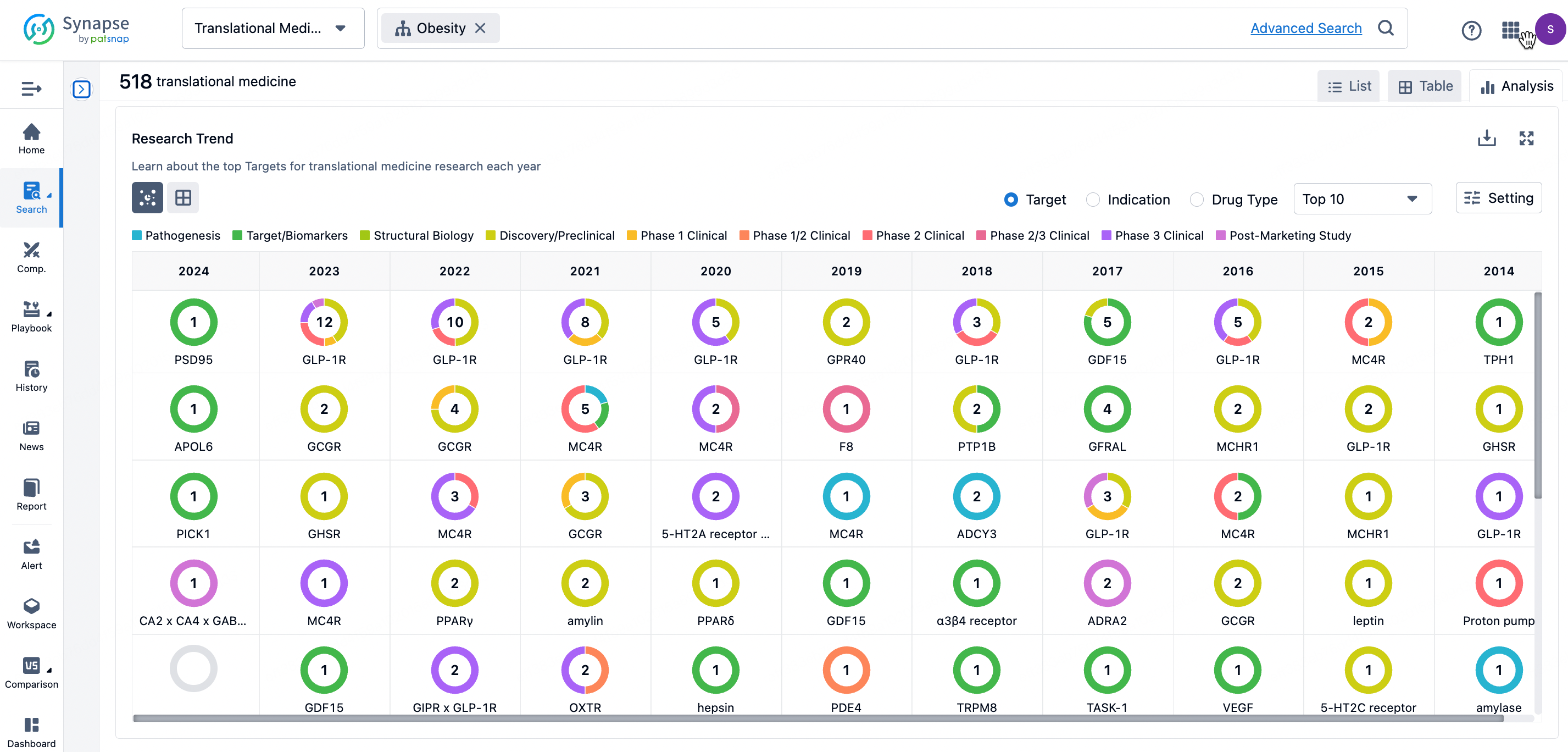
By clicking the analysis button, you can observe that GLP-1R treatment for obesity has gained significant attention over the past three years, with preclinical research still ongoing in 2023. Additionally, there are emerging potential targets, such as GDF15, among others.
Click on the image below to go directly to the Translational Medicine search interface.