FF-10502-01: A Promising Pyrimidine Analogue for Pancreatic Cancer Treatment
The study involved ten PANC PDX tumors, the majority of which exhibited resistance to gemcitabine. Mice bearing these tumors were treated with varying doses of FF-10502-01, nab-paclitaxel, or gemcitabine, alone or in combination, over a 28-day period. Tumor measurements and animal weights were monitored, and statistical analysis was performed to assess treatment efficacy.
Results indicated that FF-10502-01, both as a monotherapy and in combination with nab-paclitaxel, was significantly more effective in suppressing tumor growth than the control group. Notably, this effect was observed regardless of the tumors' resistance to gemcitabine. In certain models, FF-10502-01 demonstrated superior tumor growth inhibition compared to gemcitabine, even when combined with nab-paclitaxel. Additionally, FF-10502-01 was better tolerated, with less associated weight loss.
In conclusion, FF-10502-01 has shown to be a potent new agent for PANC, with greater efficacy and better tolerability than gemcitabine-based treatments in PDX models. The compound is currently in Phase 1 clinical trials.
How to Use Synapse Database to Search and Analyze Translational Medicine Data?
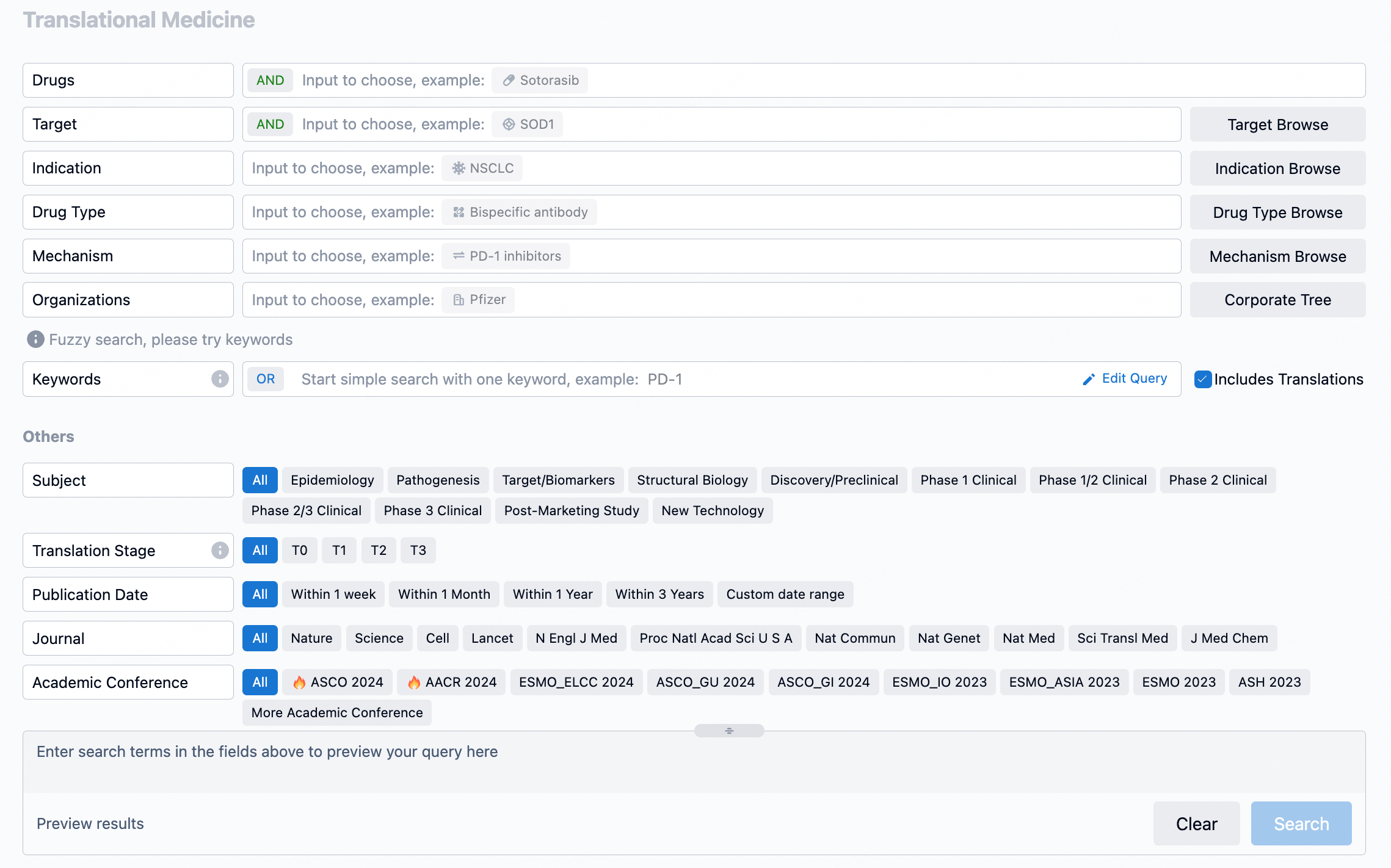
The transational medicine section of the Synapse database supports searches based on fields such as drug, target, and indication, covering the T0-T3 stages of translation. Additionally, it offers a historical conference search function as well as filtering options, view modes, translation services, and highlights summaries, providing you with a unique search experience.
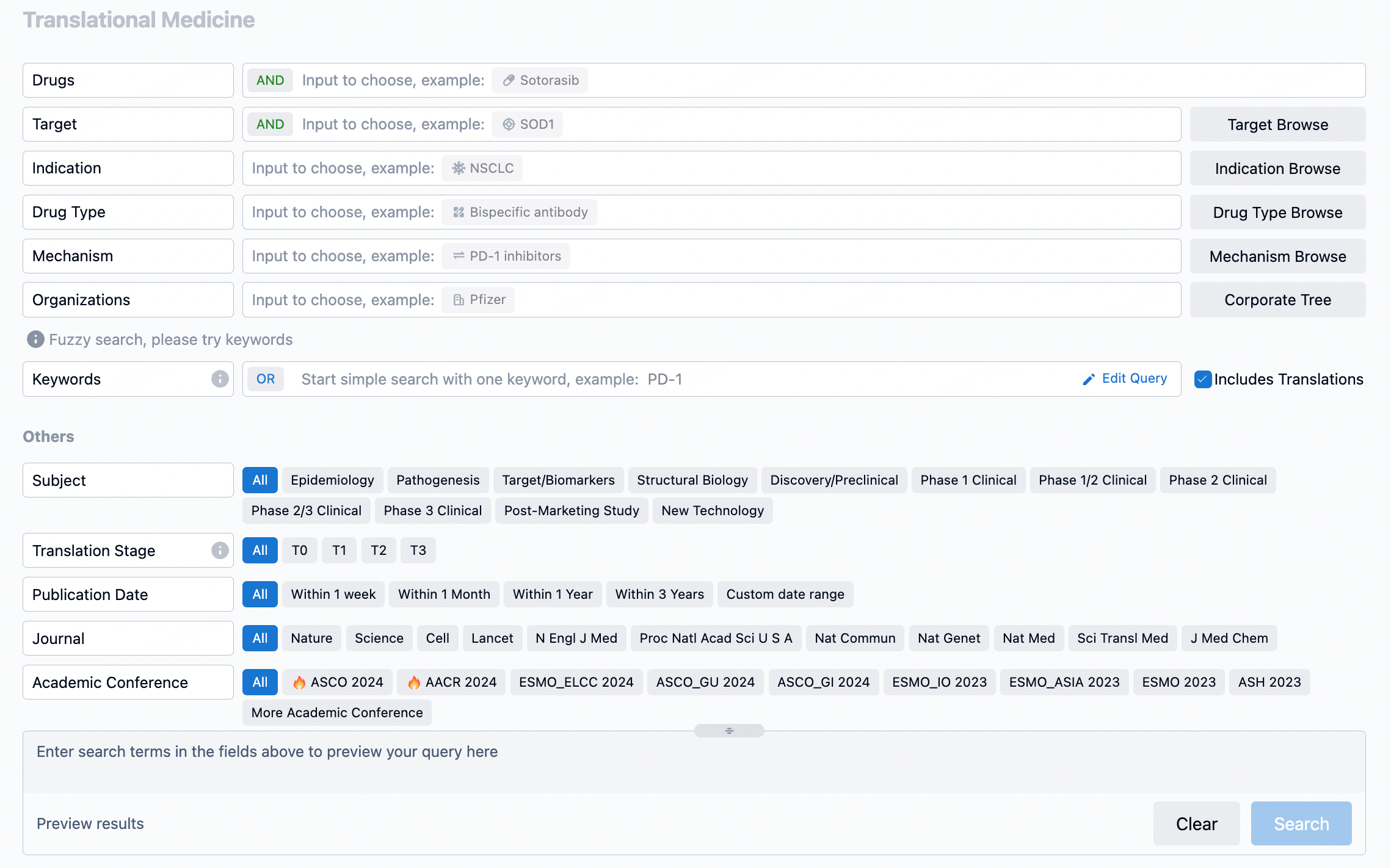
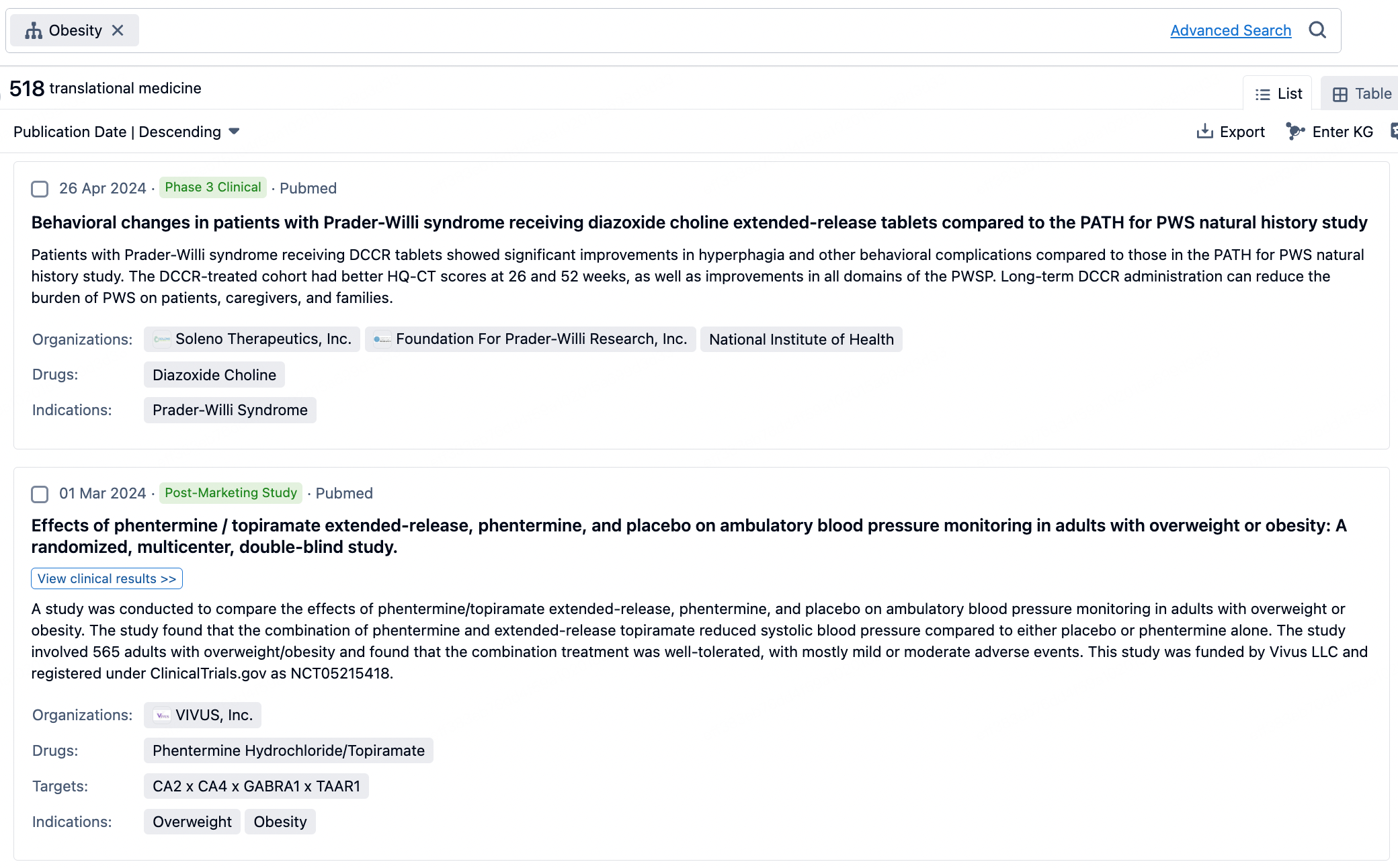
Taking obesity as an example, select "obesity" under the indication category and click search to enter the Translational Medicine results list page. By clicking on the title, you can directly navigate to the original page.
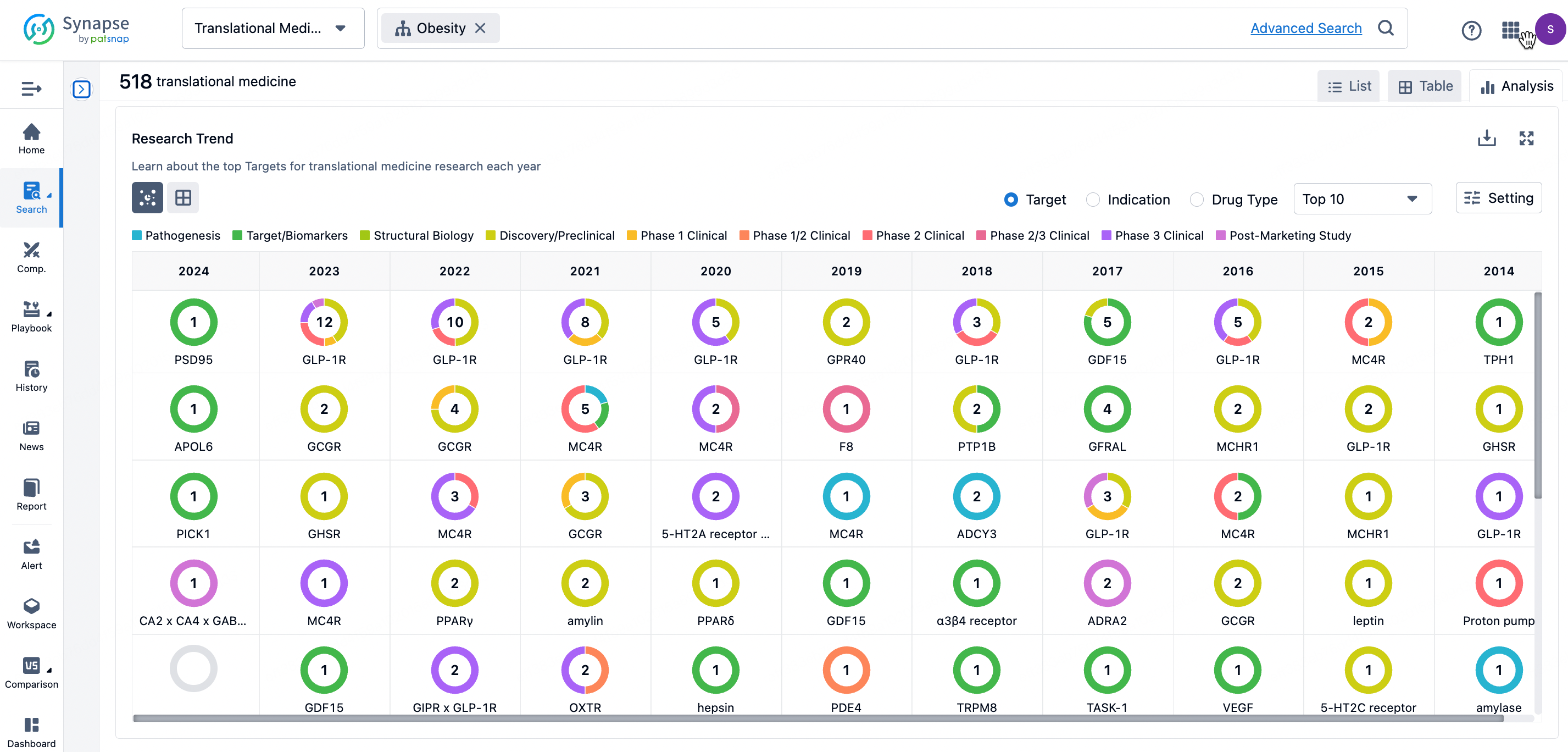
By clicking the analysis button, you can observe that GLP-1R treatment for obesity has gained significant attention over the past three years, with preclinical research still ongoing in 2023. Additionally, there are emerging potential targets, such as GDF15, among others.
Click on the image below to go directly to the Translational Medicine search interface.