Global Assessment of High-Proportion Cefepime-Tazobactam's Antimicrobial Efficacy Against Gram-Negative Isolates
The effectiveness of cefepime-tazobactam was found to be similar to meropenem, which had a susceptibility rate of 96.7%, and superior to piperacillin-tazobactam, with a rate of 87.7%. In the United States, all Enterobacteriaceae species except Klebsiella pneumoniae showed over 99.0% inhibition at the ≤8/8 μg/ml concentration. Notably, the prevalence of the ESBL-screening-positive phenotype was highest among Escherichia coli isolates in China (66.3%) and K. pneumoniae isolates in Latin America (58.0%). Cefepime-tazobactam at the same concentration inhibited 98.7% of ESBL-positive E. coli strains and 71.3% of K. pneumoniae strains. In contrast, meropenem showed limited activity against ESBL-positive K. pneumoniae strains, with a susceptibility rate of 69.6%.
Furthermore, cefepime-tazobactam was found to be active against Enterobacter spp., including ceftazidime-nonsusceptible isolates, with a high inhibition rate of 96.1% at the ≤8/8 μg/ml concentration. The activity against Pseudomonas aeruginosa was also comparable to that of meropenem and piperacillin-tazobactam, with inhibition rates of 82.4% and 91.6% at the ≤8/8 and ≤16/8 μg/ml concentrations, respectively.
Overall, the study indicates that cefepime-tazobactam exhibits a high level of activity against P. aeruginosa and Enterobacteriaceae strains, including ESBL-positive E. coli strains and ceftazidime-nonsusceptible Enterobacter spp. These findings support the continued clinical development of the cefepime-tazobactam combination.
How to Use Synapse Database to Search and Analyze Translational Medicine Data?
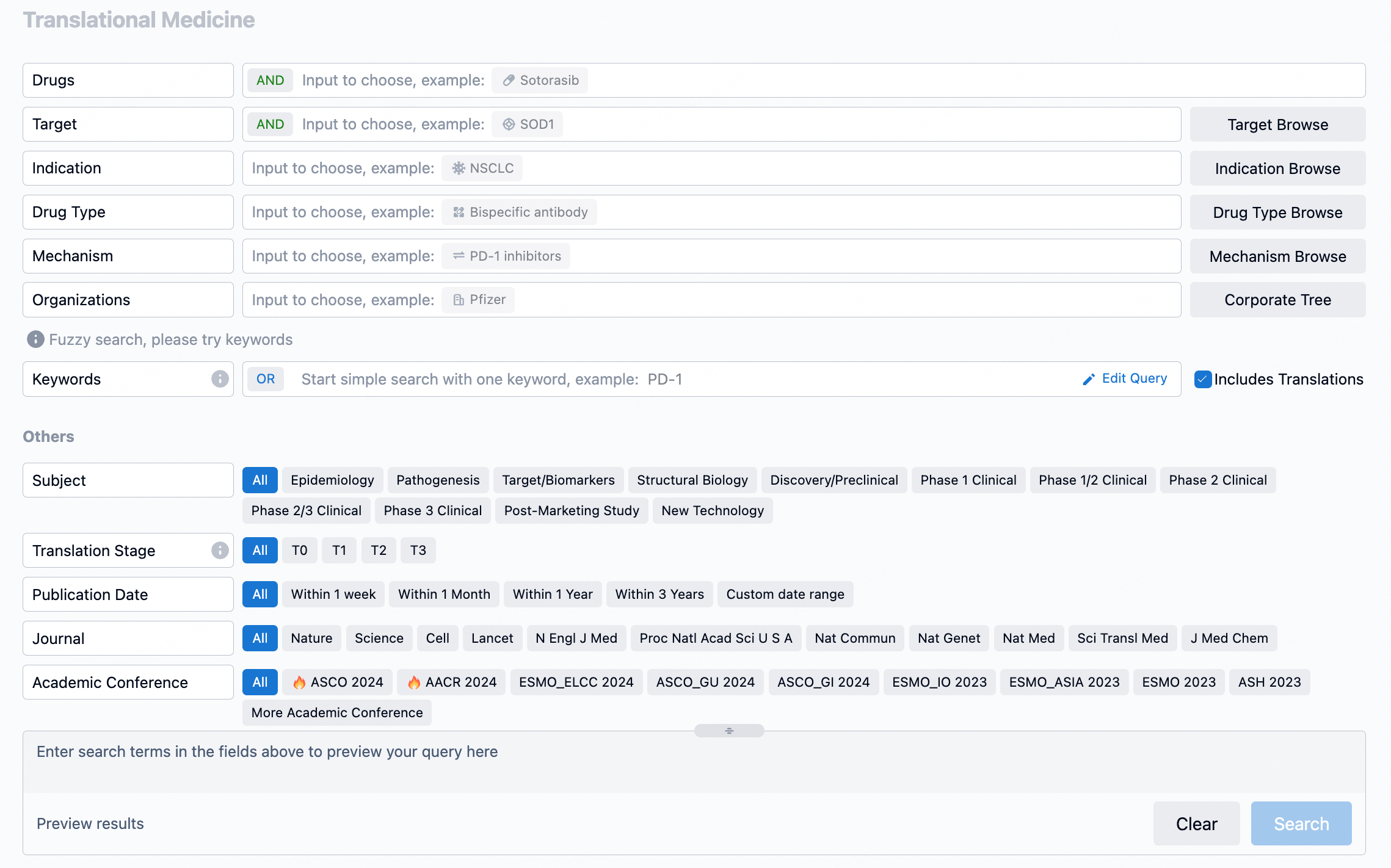
The transational medicine section of the Synapse database supports searches based on fields such as drug, target, and indication, covering the T0-T3 stages of translation. Additionally, it offers a historical conference search function as well as filtering options, view modes, translation services, and highlights summaries, providing you with a unique search experience.
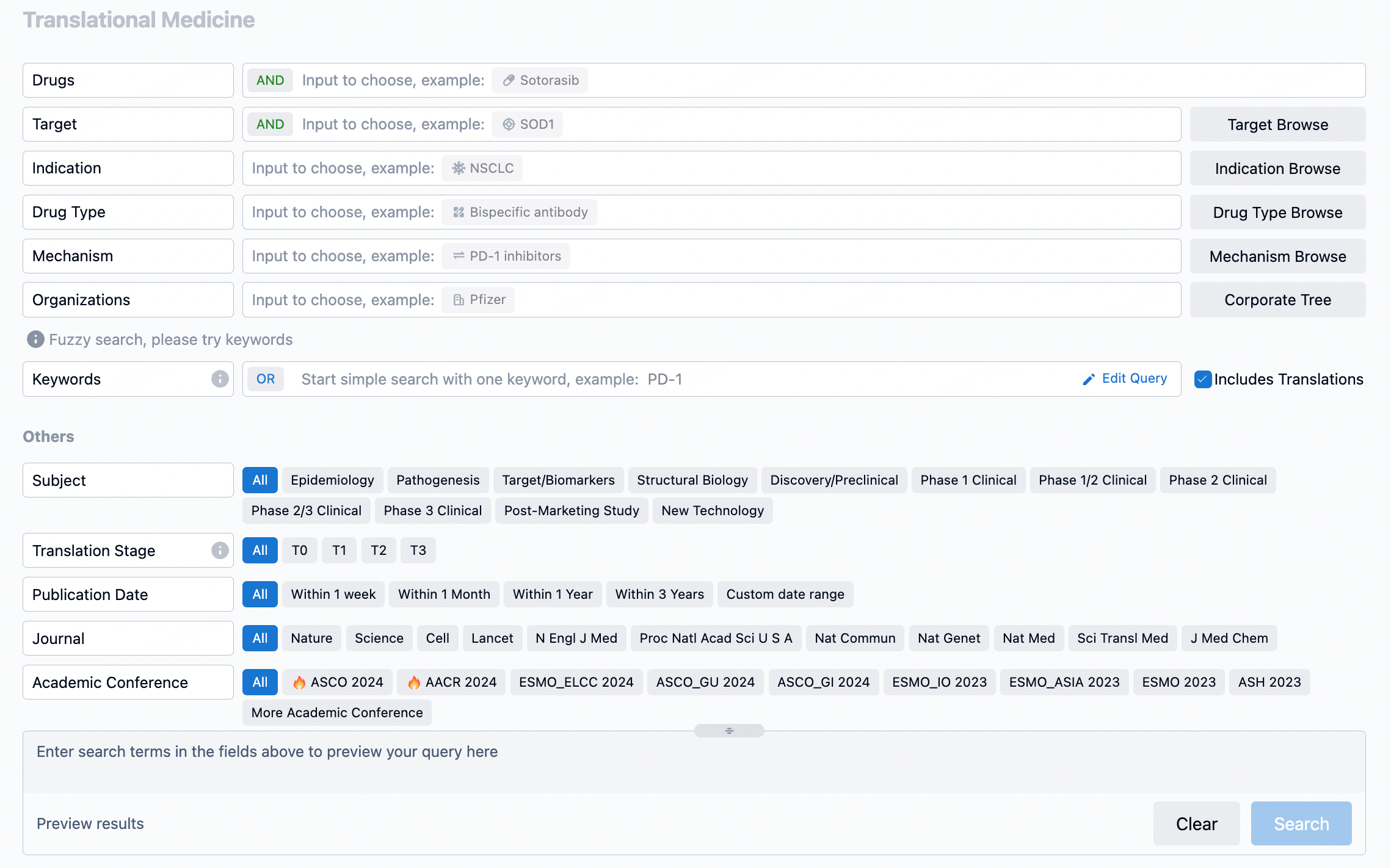
Taking obesity as an example, select "obesity" under the indication category and click search to enter the Translational Medicine results list page. By clicking on the title, you can directly navigate to the original page.
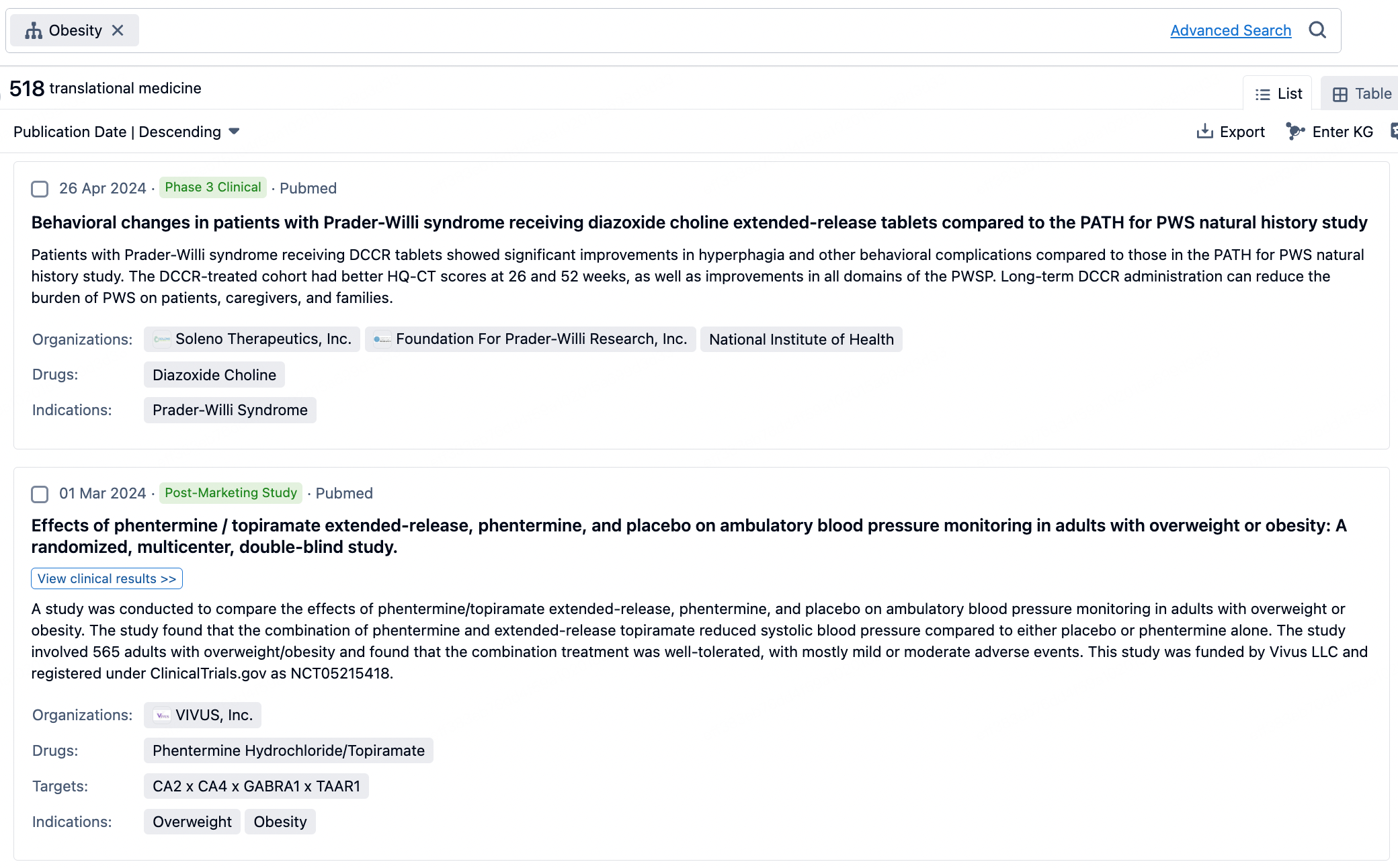
By clicking the analysis button, you can observe that GLP-1R treatment for obesity has gained significant attention over the past three years, with preclinical research still ongoing in 2023. Additionally, there are emerging potential targets, such as GDF15, among others.
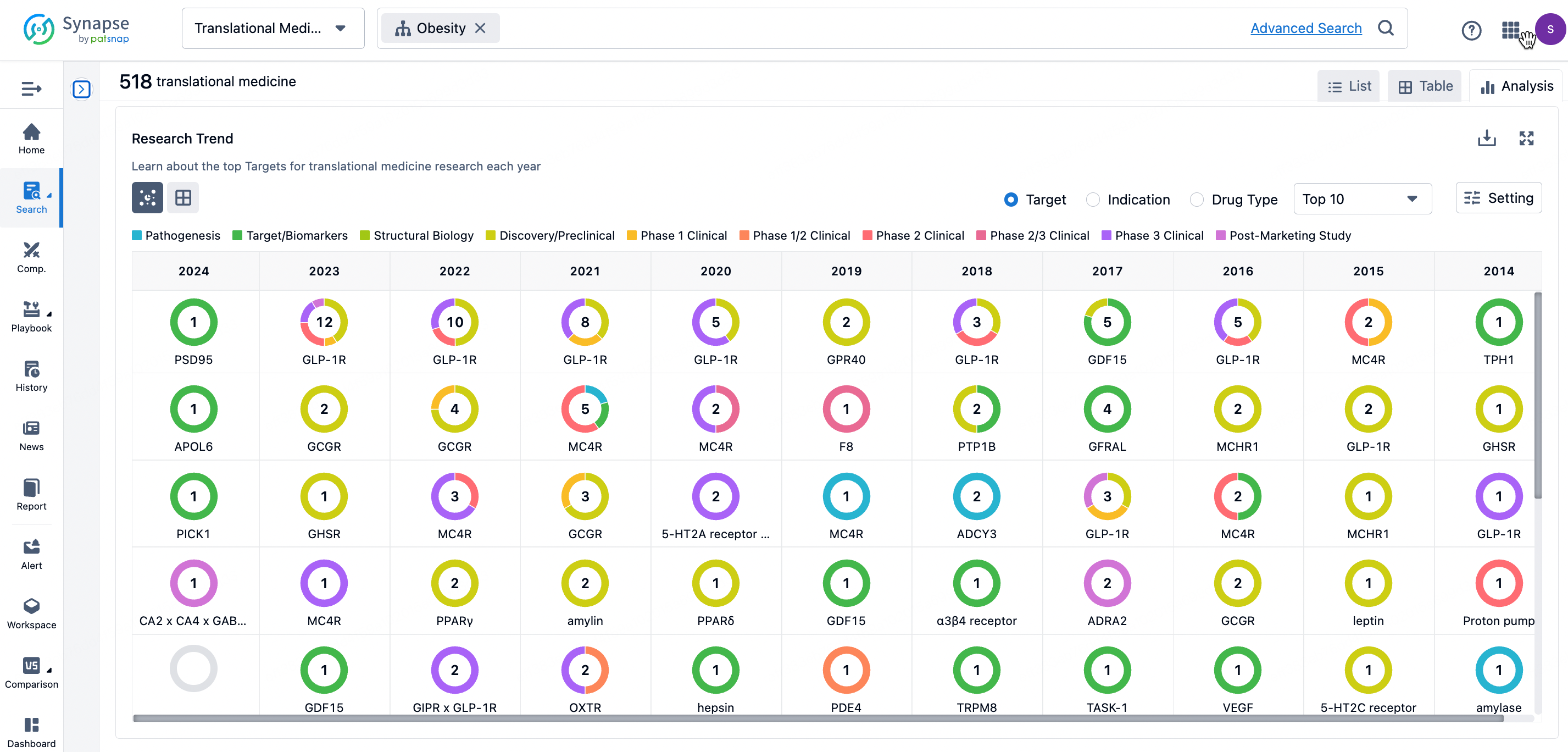
Click on the image below to go directly to the Translational Medicine search interface.