Harnessing Allogeneic Anti-CD22 CAR-T Cells: A Promising Pre-Clinical Approach for B-Cell Acute Lymphoblastic Leukemia
The engineered T-cells, termed UCART22, express an anti-CD22 CAR and a safety ligand, RQR8, which allows for the control of T-cell activity with rituximab. To minimize the risk of alloreactivity, the expression of the T-cell receptor (TCR) is eliminated through gene editing. The study measured CD22 expression levels in patient samples and B-ALL cell lines, revealing higher expression in certain cell lines.
In vitro experiments demonstrated that UCART22 cells exhibited significant cytotoxic activity against B-ALL cells, which correlated with the level of CD22 expression. Additionally, cytokine secretion assays showed that UCART22 cells produced high levels of IFNγ, TNFα, IL-5, IL-17A, and IL-17F in response to CD22-positive B-ALL stimulation.
Animal studies involving immune-compromised mice with Daudi cell implants, a CD22-positive Burkitt's lymphoma cell line, showed that UCART22 treatment reduced disease burden and extended survival in a dose-dependent manner. Further studies using patient-derived xenografts are underway and will provide additional evidence for the potential of UCART22 in B-ALL immunotherapy.
How to Use Synapse Database to Search and Analyze Translational Medicine Data?
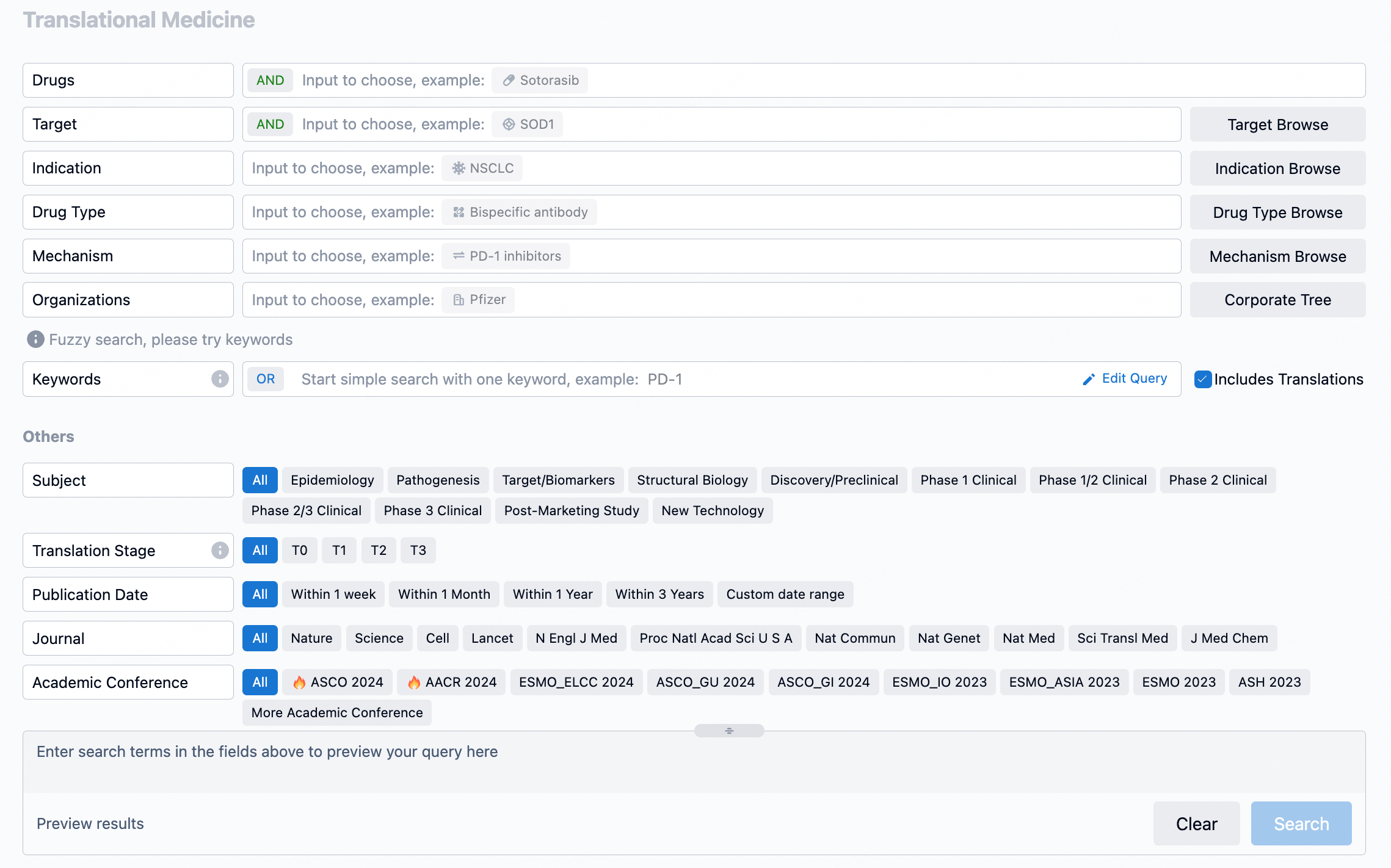
The transational medicine section of the Synapse database supports searches based on fields such as drug, target, and indication, covering the T0-T3 stages of translation. Additionally, it offers a historical conference search function as well as filtering options, view modes, translation services, and highlights summaries, providing you with a unique search experience.
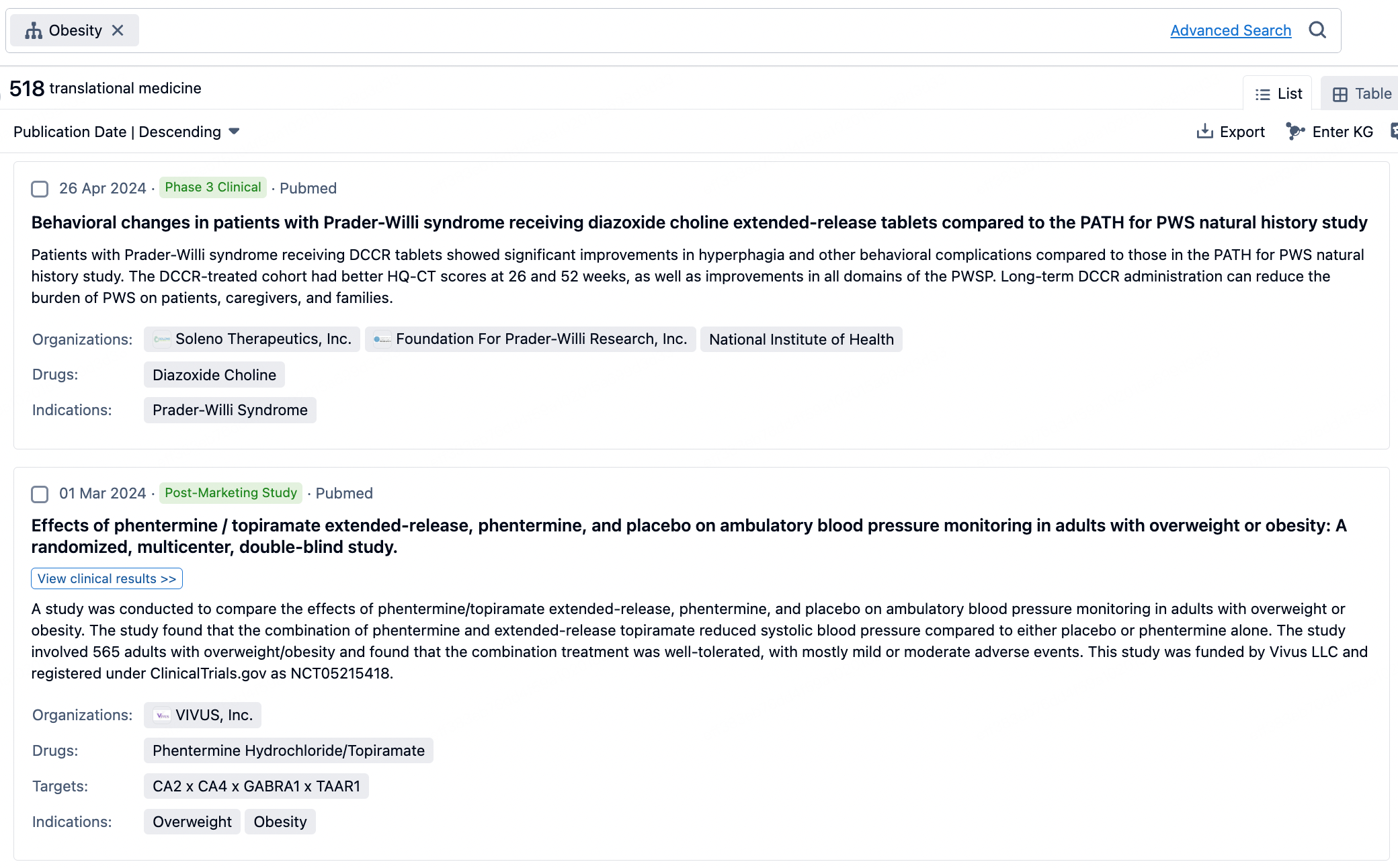
Taking obesity as an example, select "obesity" under the indication category and click search to enter the Translational Medicine results list page. By clicking on the title, you can directly navigate to the original page.
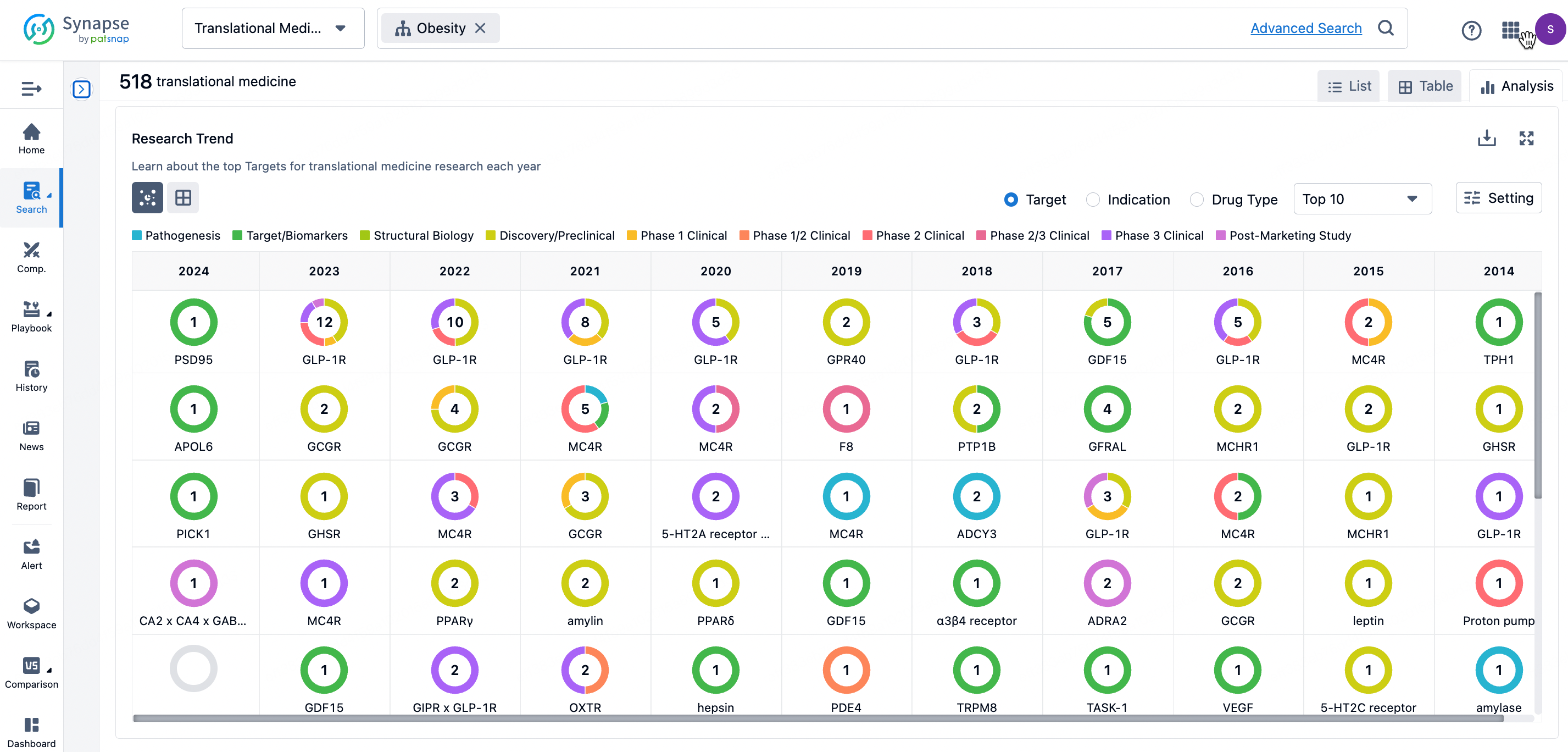
By clicking the analysis button, you can observe that GLP-1R treatment for obesity has gained significant attention over the past three years, with preclinical research still ongoing in 2023. Additionally, there are emerging potential targets, such as GDF15, among others.
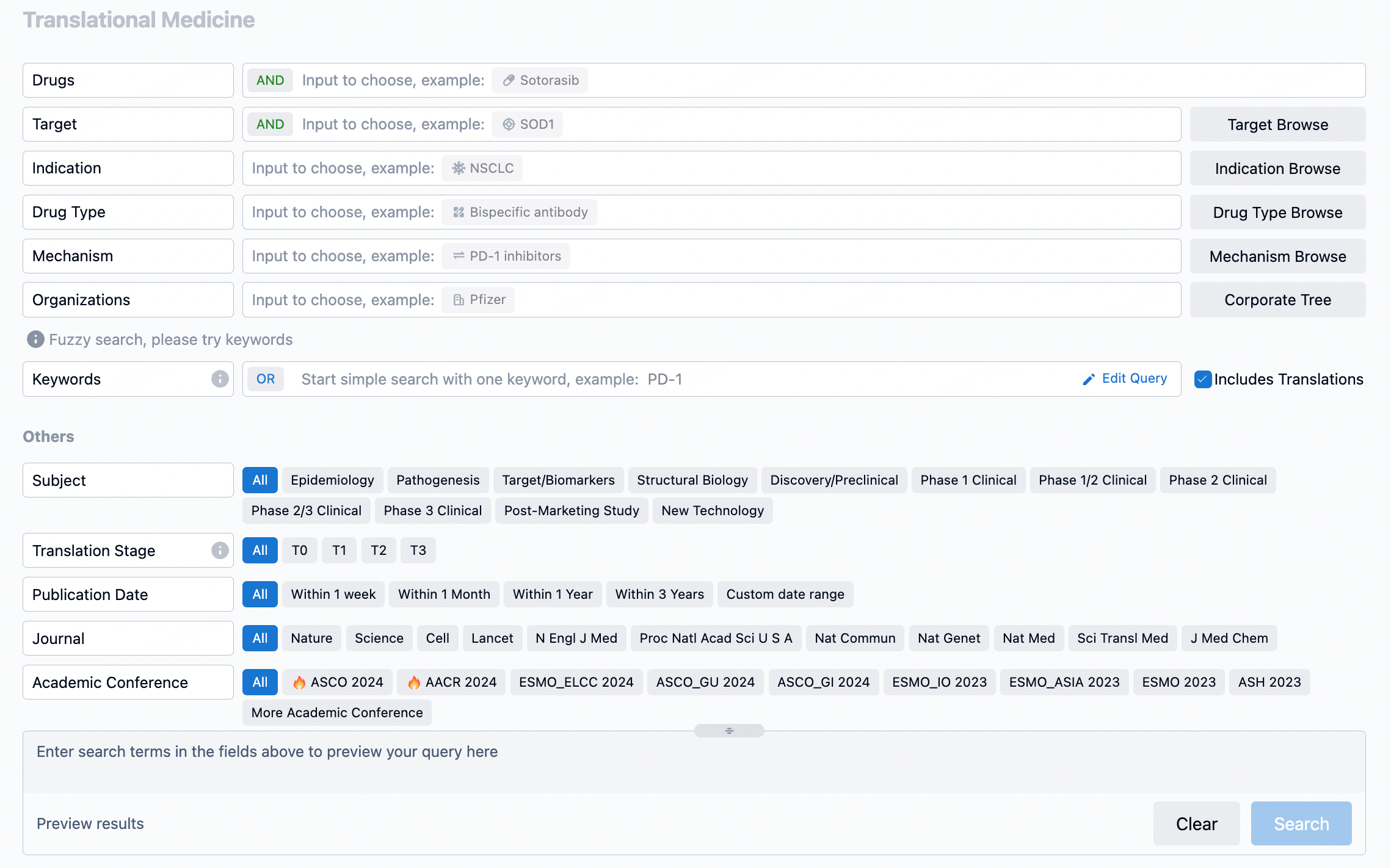
Click on the image below to go directly to the Translational Medicine search interface.