Harnessing Engineered Toxin Bodies for HER2 Positive Cancer Therapy
In the context of HER2 positive breast cancer, current treatments such as monoclonal antibodies, antibody-drug conjugates, and tyrosine kinase inhibitors have shown benefits, but resistance issues often lead to patient relapse. Despite this, the continued expression of HER2 in relapsed patients offers opportunities for the development of new HER2-targeted therapies.
MT-5111 is an ETB that targets HER2 with high potency and is engineered to overcome common resistance mechanisms to existing HER2 therapies. It has been designed to mitigate resistance through various means, including reducing the anti-drug antibody response and innate receptor signaling, which facilitates repeated dosing.
This ETB binds to a unique site on the HER2 protein, different from that targeted by trastuzumab and T-DM1, and has shown effectiveness against both sensitive and resistant HER2 positive cell lines. The distinct binding site allows MT-5111 to be used in combination with trastuzumab or T-DM1 without competition, and its large cytotoxic payload is not affected by drug efflux resistance mechanisms.
Pre-clinical studies have shown MT-5111's effectiveness, even against T-DM1-resistant cell lines, and suggest that it can be co-administered with other HER2-targeted agents for a dual-targeted approach. The data from in vitro and in vivo studies will be presented, showcasing MT-5111's potential in treating breast cancer and other HER2 overexpressing malignancies. Clinical trials for MT-5111 are planned to start in 2018.
The abstract was presented at the American Association for Cancer Research Annual Meeting in 2018 by Brigitte Brieschke and colleagues, highlighting the innovative approach of Engineered Toxin Bodies in combating HER2 positive cancers.
How to Use Synapse Database to Search and Analyze Translational Medicine Data?
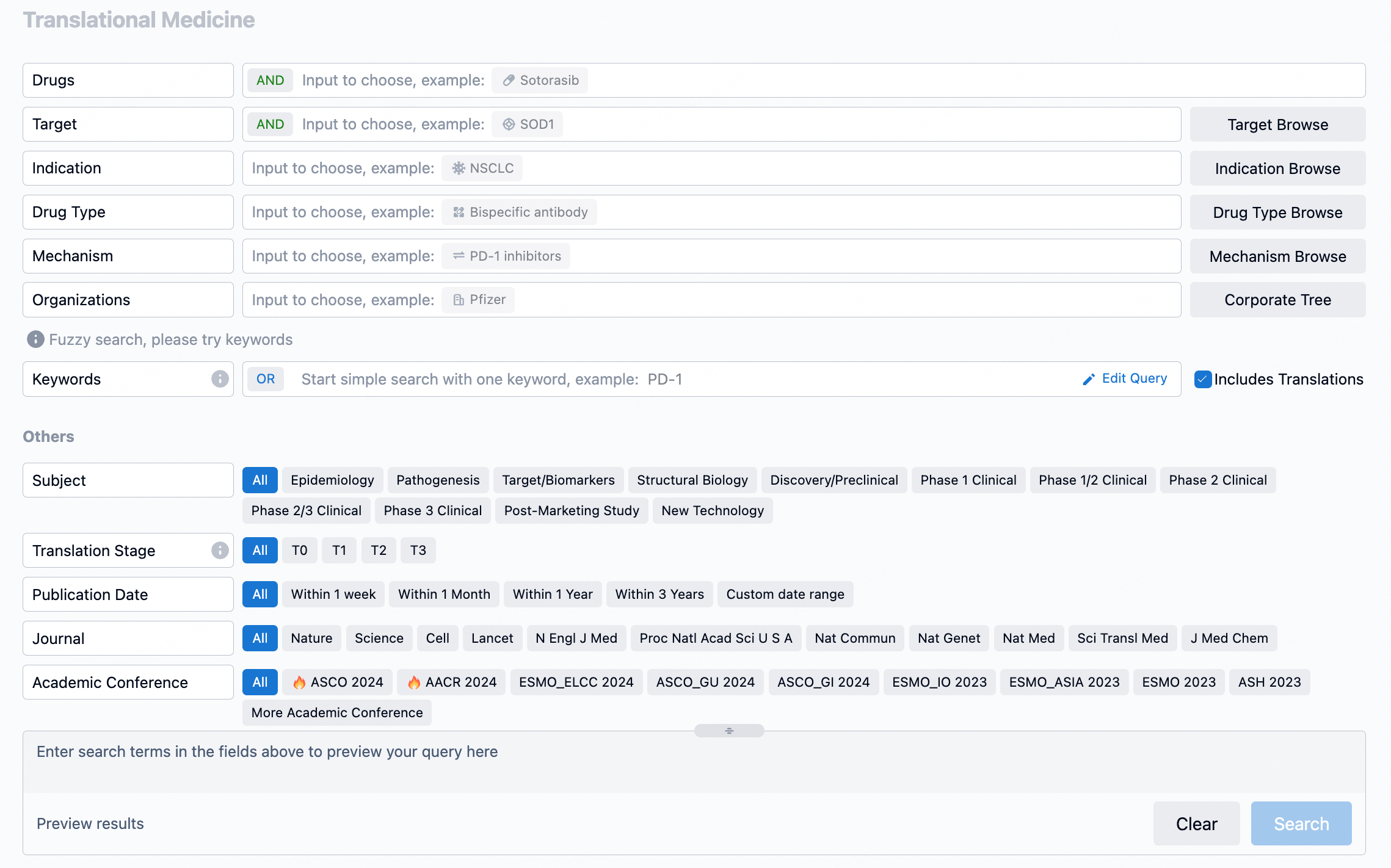
The transational medicine section of the Synapse database supports searches based on fields such as drug, target, and indication, covering the T0-T3 stages of translation. Additionally, it offers a historical conference search function as well as filtering options, view modes, translation services, and highlights summaries, providing you with a unique search experience.
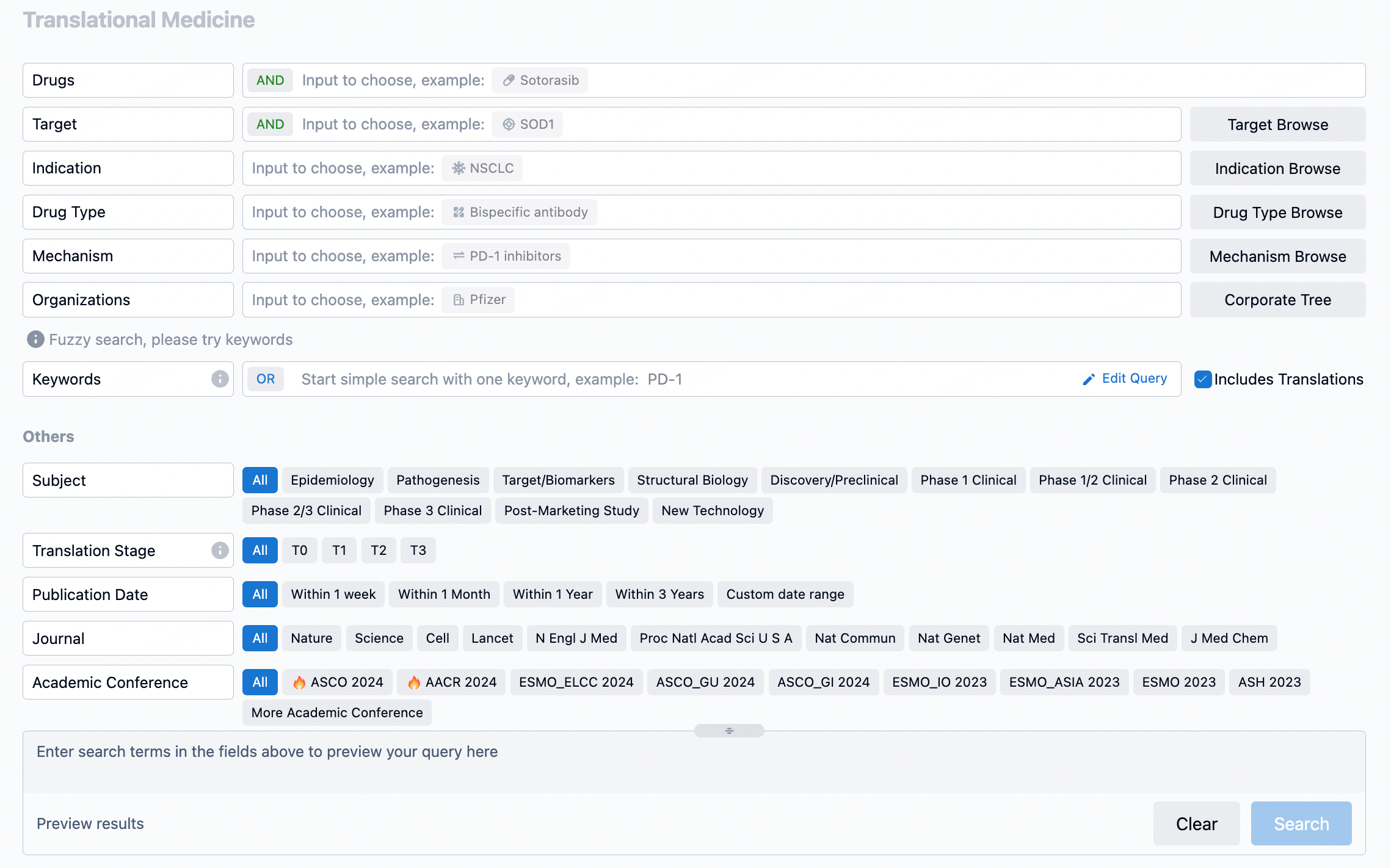
Taking obesity as an example, select "obesity" under the indication category and click search to enter the Translational Medicine results list page. By clicking on the title, you can directly navigate to the original page.
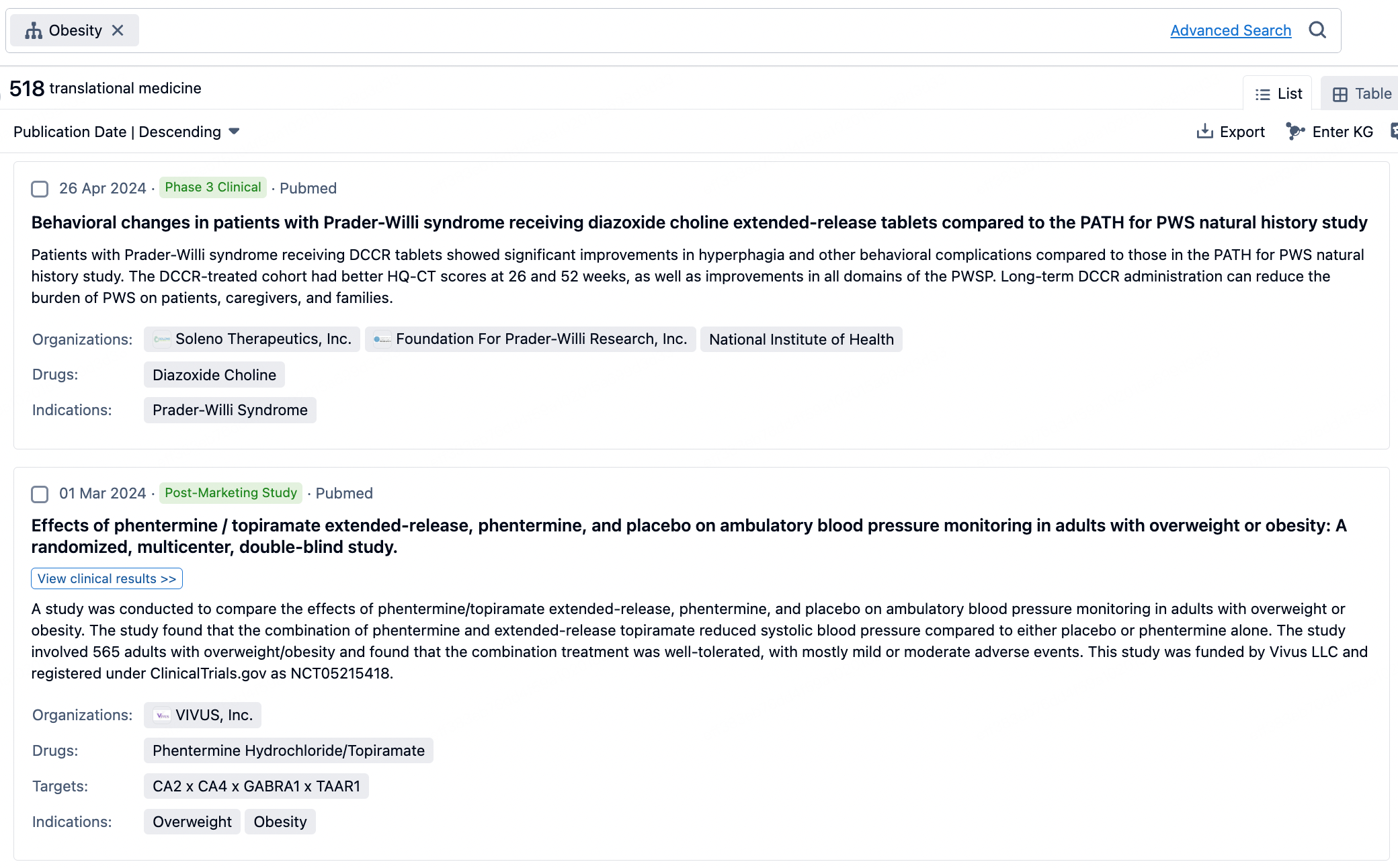
By clicking the analysis button, you can observe that GLP-1R treatment for obesity has gained significant attention over the past three years, with preclinical research still ongoing in 2023. Additionally, there are emerging potential targets, such as GDF15, among others.
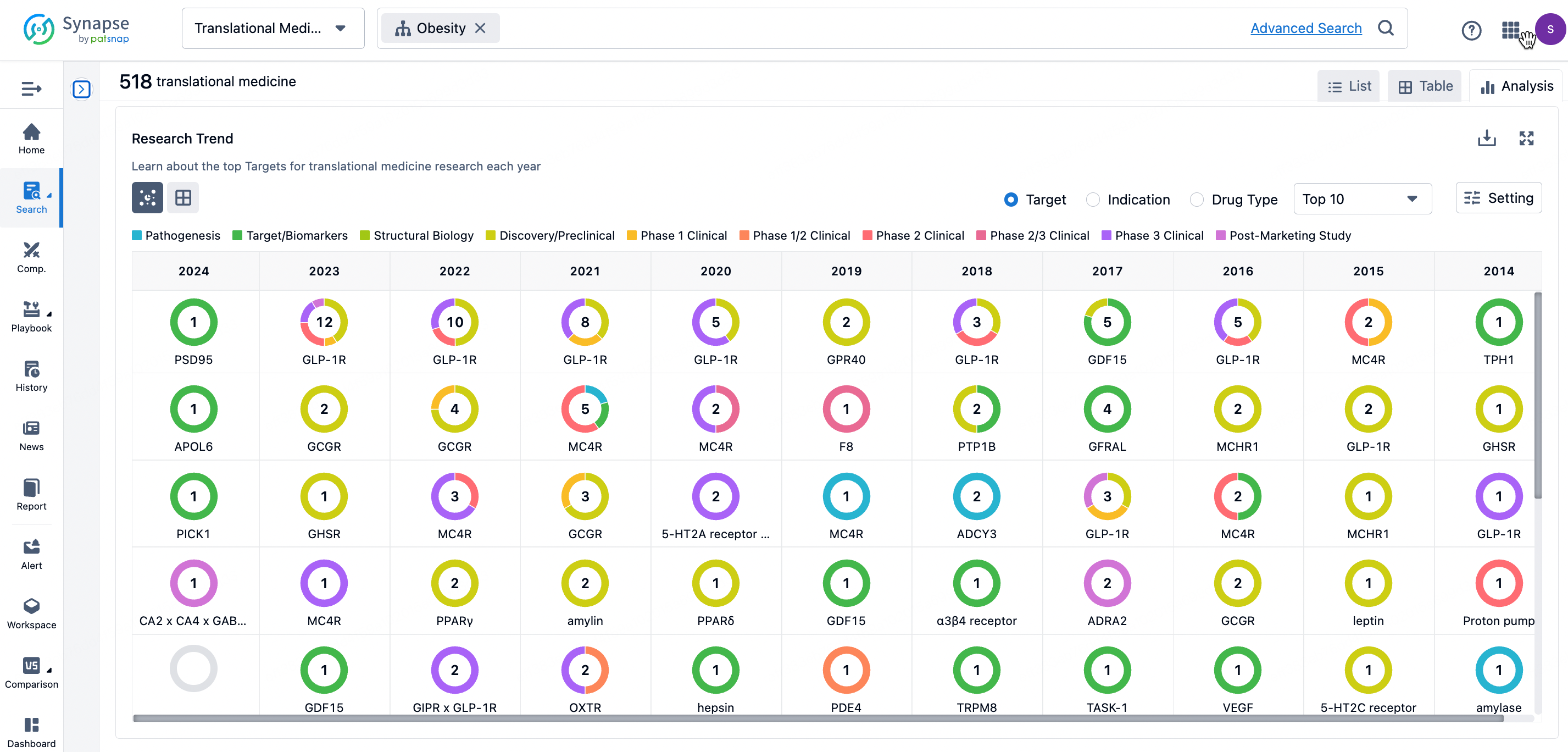
Click on the image below to go directly to the Translational Medicine search interface.