Harnessing Long-Lived Bispecific Antibodies for Potent T Cell-Mediated Elimination of Human B Cell Malignancies: Preclinical Insights
We created a series of optimized bispecific antibodies and selected two, XmAb13676 and XmAb13677, for further testing based on their RTCC performance against the CD20+ Ramos B cell line. These antibodies demonstrated potent T cell activation and B cell killing with respective EC50 values of approximately 53 ng/ml and 2 ng/ml. In vivo studies in mice showed that these antibodies had a prolonged serum half-life of around 6.7 days.
Further efficacy studies were conducted in cynomolgus monkeys using different doses of the antibodies. Post-treatment, there was a significant activation of T cells and a substantial depletion of CD40+ B cells, with the high-dose groups showing the most pronounced effect. The depletion was sustained over the study period, and T cell activation markers indicated a sustained response. Additionally, the antibodies induced a rapid redistribution of T cells from the blood, with populations returning to normal levels within days post-treatment. Depletion of CD40+ cells in lymph nodes and bone marrow was substantial and, in some cases, did not recover even after 29 days.
These findings indicate that the bispecific antibodies are effective in activating and directing T cells to eliminate CD20+ B cells in both the blood and lymphoid tissues. The results from the primate studies support the potential of these antibodies for clinical trials in patients with CD20+ B cell leukemias and lymphomas.
How to Use Synapse Database to Search and Analyze Translational Medicine Data?
The transational medicine section of the Synapse database supports searches based on fields such as drug, target, and indication, covering the T0-T3 stages of translation. Additionally, it offers a historical conference search function as well as filtering options, view modes, translation services, and highlights summaries, providing you with a unique search experience.
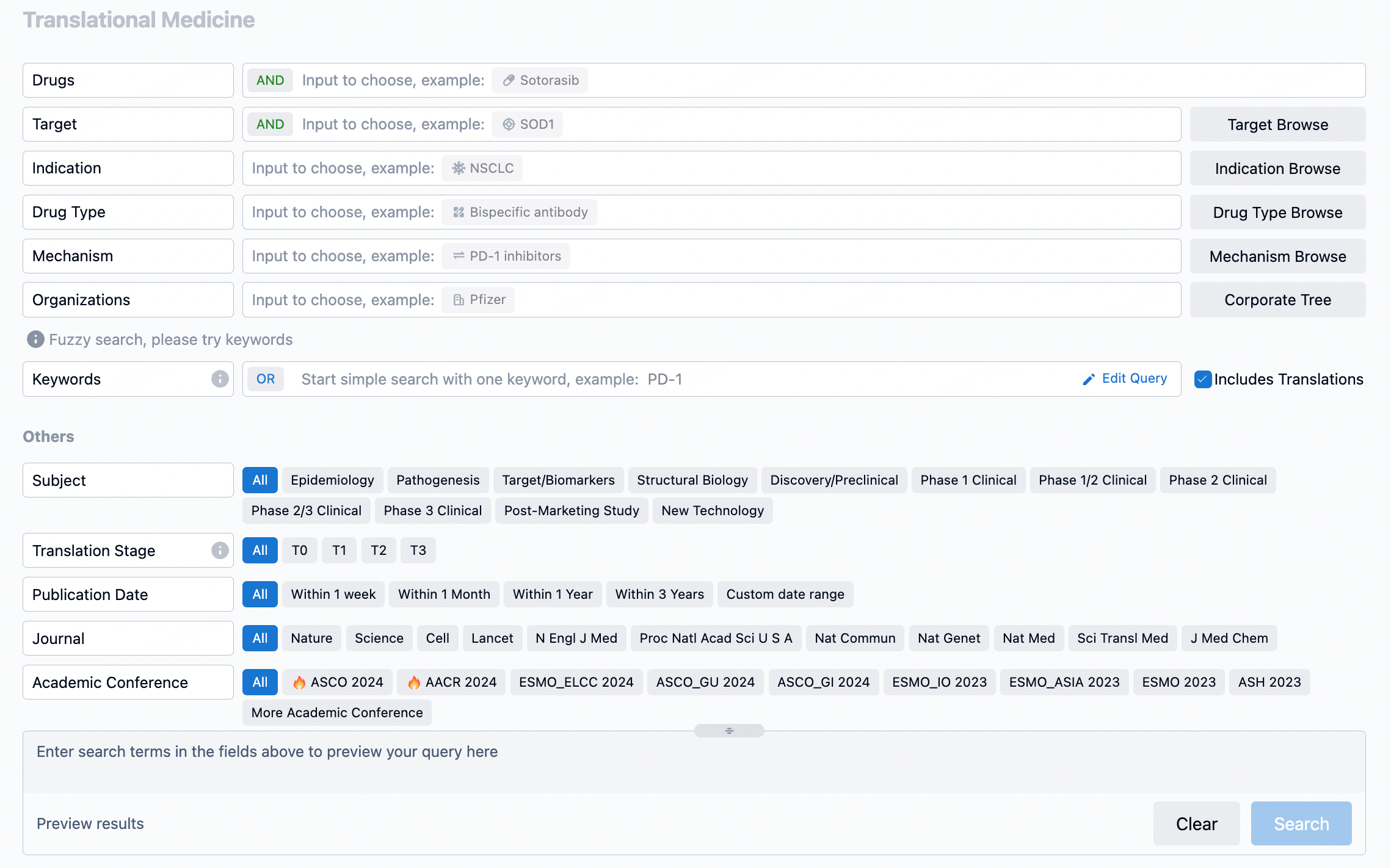
Taking obesity as an example, select "obesity" under the indication category and click search to enter the Translational Medicine results list page. By clicking on the title, you can directly navigate to the original page.
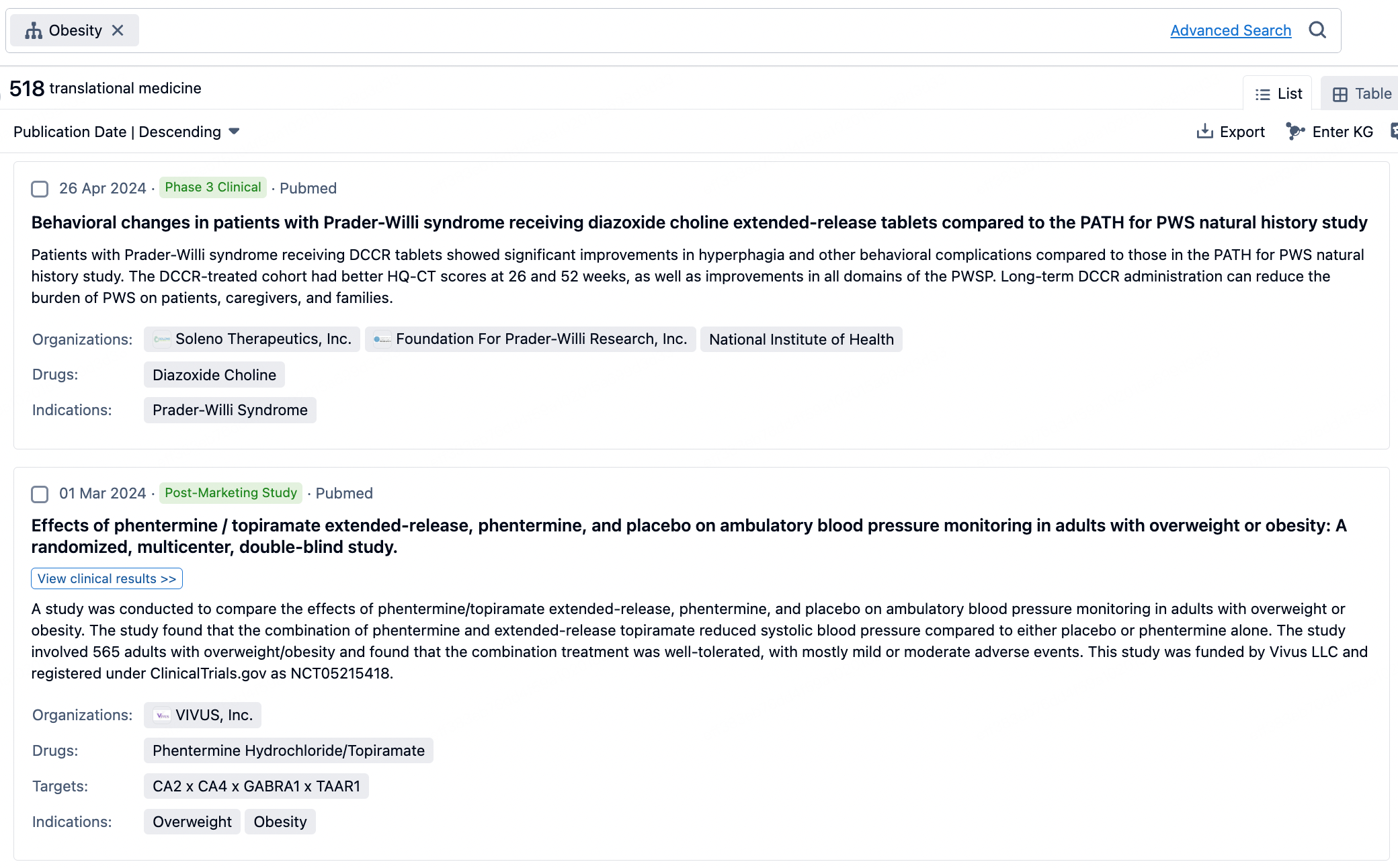
By clicking the analysis button, you can observe that GLP-1R treatment for obesity has gained significant attention over the past three years, with preclinical research still ongoing in 2023. Additionally, there are emerging potential targets, such as GDF15, among others.
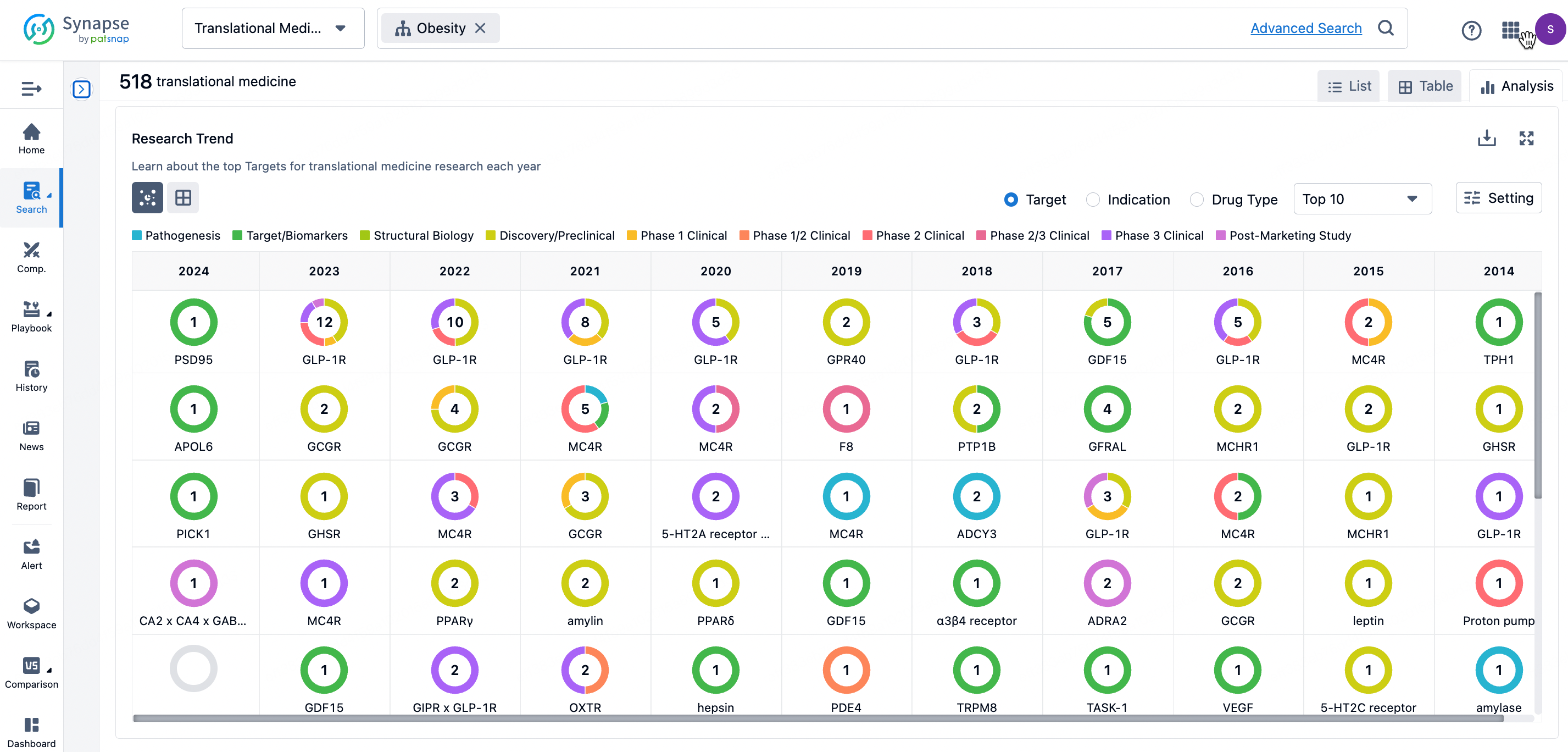
Click on the image below to go directly to the Translational Medicine search interface.