Harnessing the Potential of ALLO-715: Advancing Allogeneic BCMA CAR T Therapy with an Off-Switch for Multiple Myeloma
The ALLO-715 CAR T cells were engineered using a second-generation CAR construct with a novel single chain variable fragment (scFv) that has a high affinity for BCMA. The cells were modified to reduce the risk of graft-versus-host disease and to make them resistant to a lymphodepleting agent. In vitro tests showed that these cells expanded robustly and maintained a phenotype that is associated with a high proliferative potential.
In long-term killing assays, ALLO-715 cells demonstrated significant expansion and potent cytotoxic activity against target cell lines, without showing signs of exhaustion or reduced activity over an extended period. The efficacy of these cells was also not compromised by high concentrations of soluble BCMA, which can affect other BCMA-specific CARs.
When tested in MM xenograft mouse models, ALLO-715 showed high efficacy at a single dose. The administration of adeno-associated viruses (AAV) to express human IL-7 and IL-15 further enhanced the expansion and antitumor activity of the CAR T cells.
Tissue cross-reactivity studies revealed that ALLO-715 had a limited expression pattern, with reactivity observed in lymphoid tissues and BCMA-expressing cell lines, but not in other tissues.
Manufacturing of BCMA CAR T cells was conducted using a proprietary process that preserved cell expansion, viability, phenotype, and in vivo antitumor efficacy.
The findings suggest that ALLO-715 could be a promising novel therapy for MM and other BCMA-positive cancers. The disclosures indicate that several authors are affiliated with companies involved in the development and production of CAR T cell therapies.
How to Use Synapse Database to Search and Analyze Translational Medicine Data?
The transational medicine section of the Synapse database supports searches based on fields such as drug, target, and indication, covering the T0-T3 stages of translation. Additionally, it offers a historical conference search function as well as filtering options, view modes, translation services, and highlights summaries, providing you with a unique search experience.
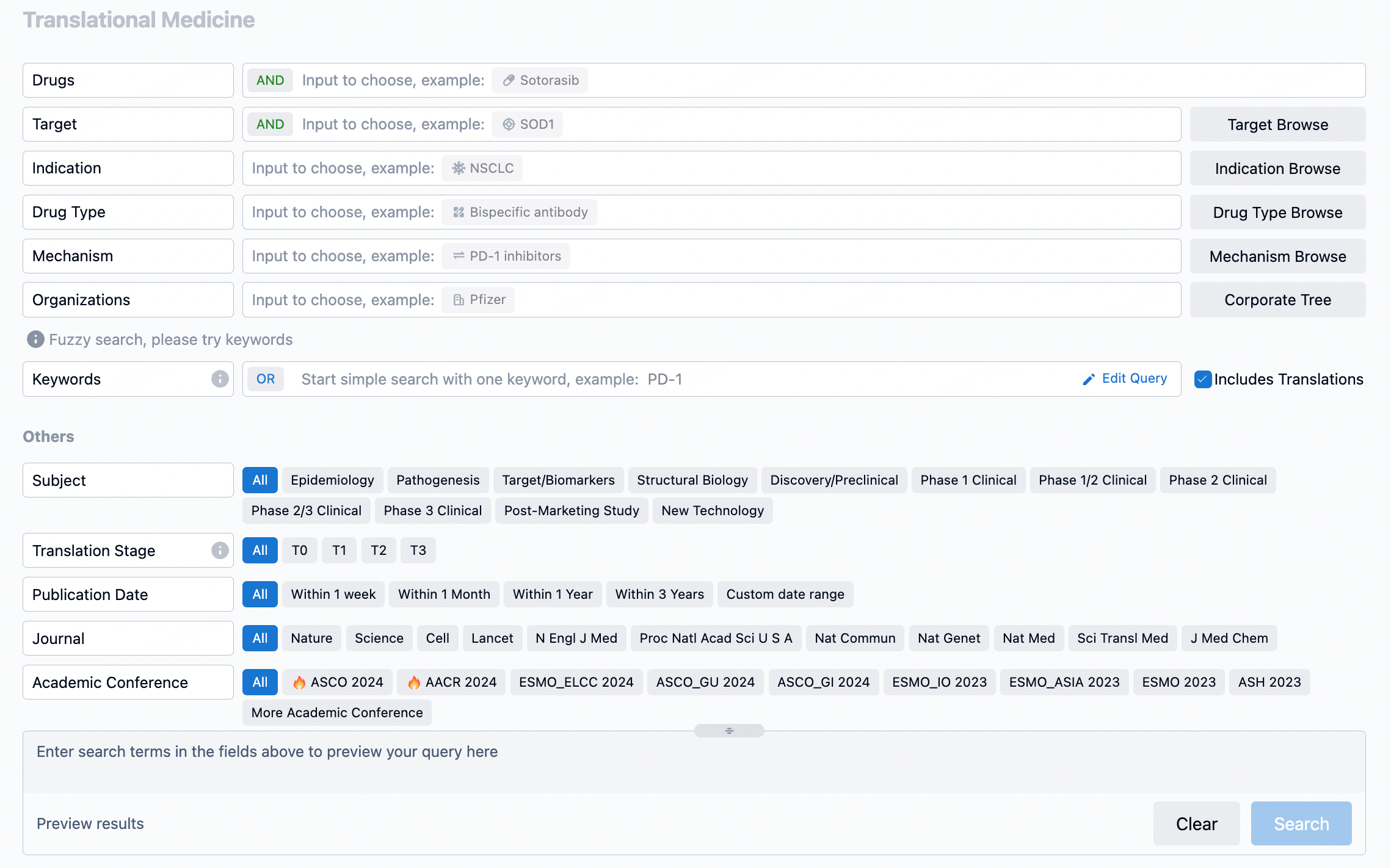
Taking obesity as an example, select "obesity" under the indication category and click search to enter the Translational Medicine results list page. By clicking on the title, you can directly navigate to the original page.
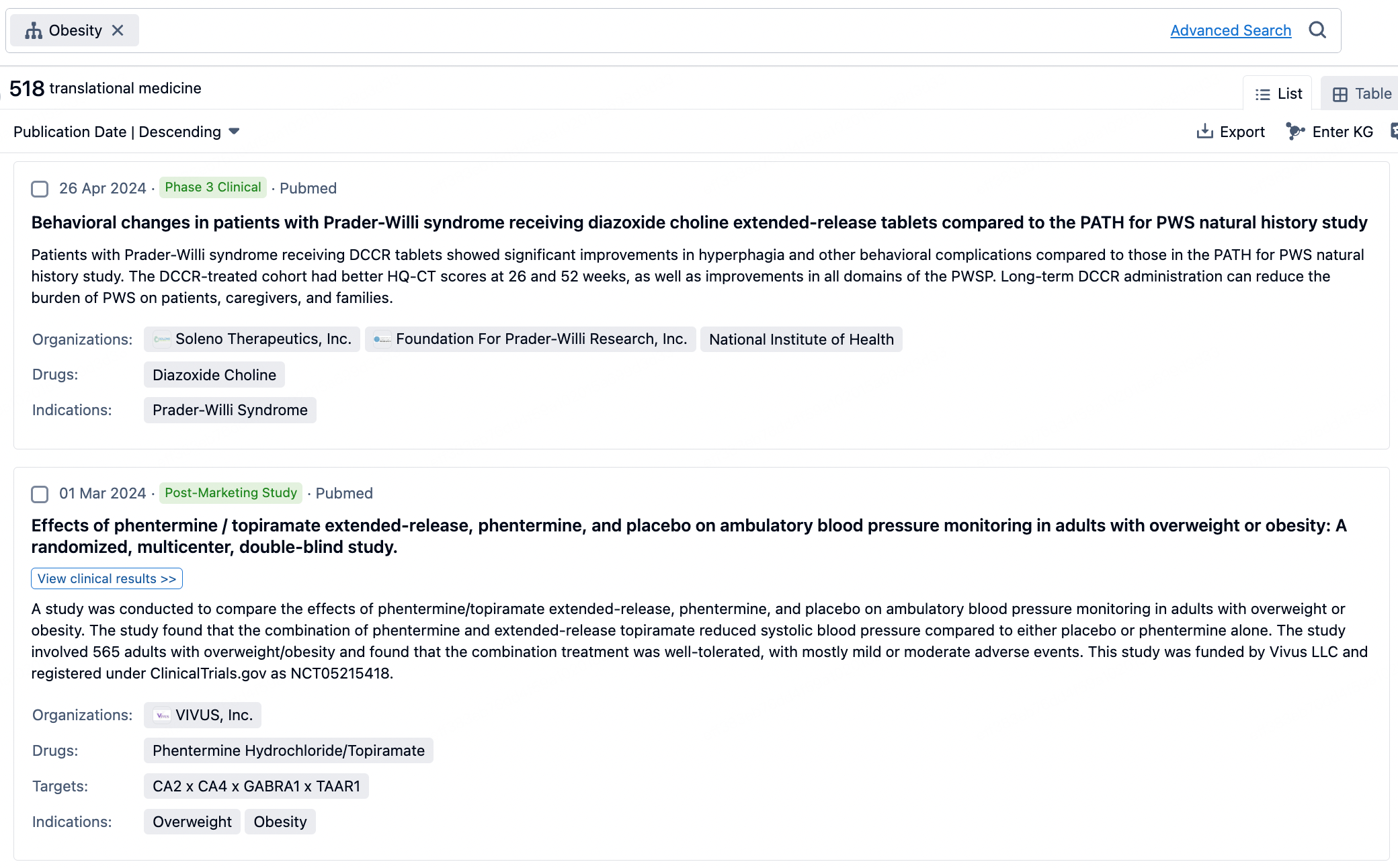
By clicking the analysis button, you can observe that GLP-1R treatment for obesity has gained significant attention over the past three years, with preclinical research still ongoing in 2023. Additionally, there are emerging potential targets, such as GDF15, among others.
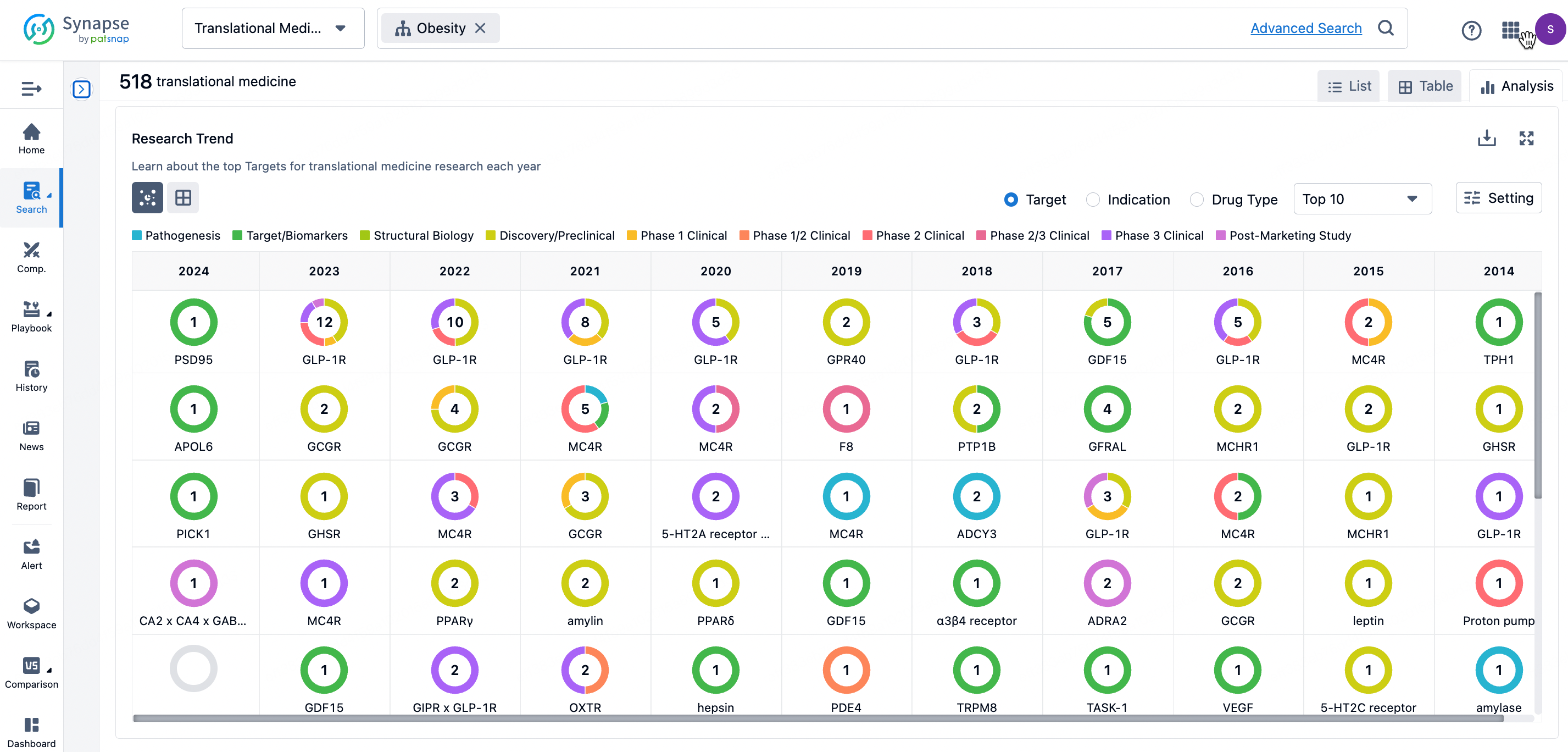
Click on the image below to go directly to the Translational Medicine search interface.