Harnessing the Power of REGN5458: A Comparative Analysis of BCMAxCD3 Bispecific Antibody and BCMA CAR T Cells in Combating Multiple Myeloma
The approach of harnessing a patient's T cells to target cancer cells has shown potential. This can be achieved either through bispecific antibodies that engage both a tumor antigen and the CD3 receptor on T cells, facilitating T cell activation and destruction of cancer cells, or through CAR T cell therapy, where the patient's T cells are modified to express receptors (CARs) that target tumor antigens.
REGN5458 is a novel bispecific antibody that targets both BCMA and CD3. In laboratory studies, it has been shown to effectively activate T cells and cause the death of myeloma cells with varying BCMA expression levels. It also induces a cytotoxic effect on primary human plasma cells. Like certain inhibitors, REGN5458 increases the surface expression of BCMA on myeloma cells.
In animal models, even low doses of REGN5458 significantly hindered the growth of both high and low BCMA-expressing tumors. The drug also reduced tumor burden in aggressive, systemic models and showed efficacy in immunocompetent mice engineered to express human CD3. Furthermore, REGN5458 was well-tolerated in non-human primates, causing a mild inflammatory response and depleting BCMA-positive plasma cells in the bone marrow.
Comparative studies with BCMA-specific CAR T cells revealed that REGN5458 and the CAR T cells had similar in vitro cytotoxicity against myeloma cells. However, REGN5458 demonstrated a rapid therapeutic effect, clearing tumors within days, while CAR T cells required a longer period to traffic to the tumor site and expand before showing anti-tumor activity.
The results underscore the strong preclinical anti-tumor potential of REGN5458, which is on par with CAR T cells, and support the case for advancing REGN5458 to clinical trials for MM patients.
How to Use Synapse Database to Search and Analyze Translational Medicine Data?
The transational medicine section of the Synapse database supports searches based on fields such as drug, target, and indication, covering the T0-T3 stages of translation. Additionally, it offers a historical conference search function as well as filtering options, view modes, translation services, and highlights summaries, providing you with a unique search experience.
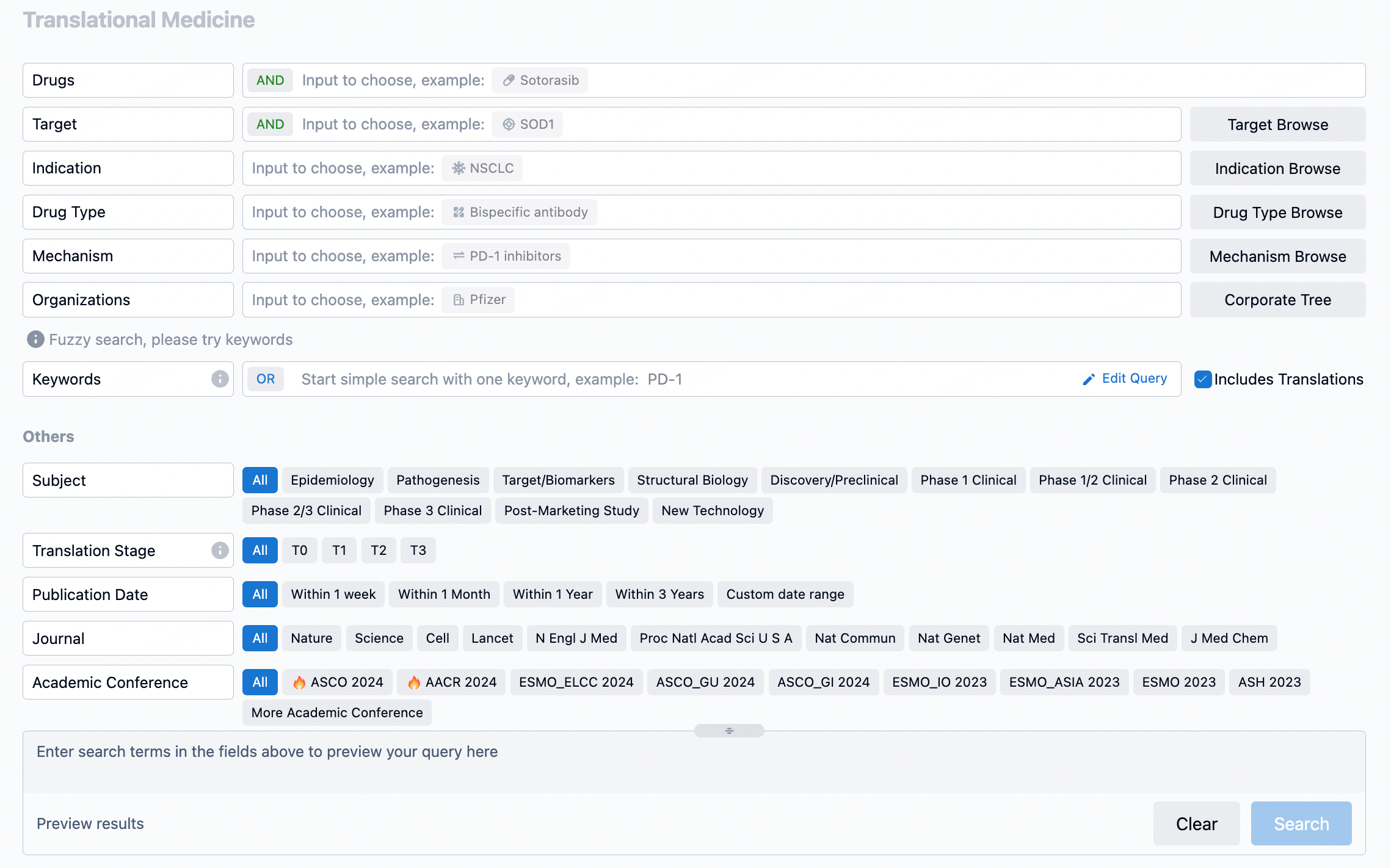
Taking obesity as an example, select "obesity" under the indication category and click search to enter the Translational Medicine results list page. By clicking on the title, you can directly navigate to the original page.
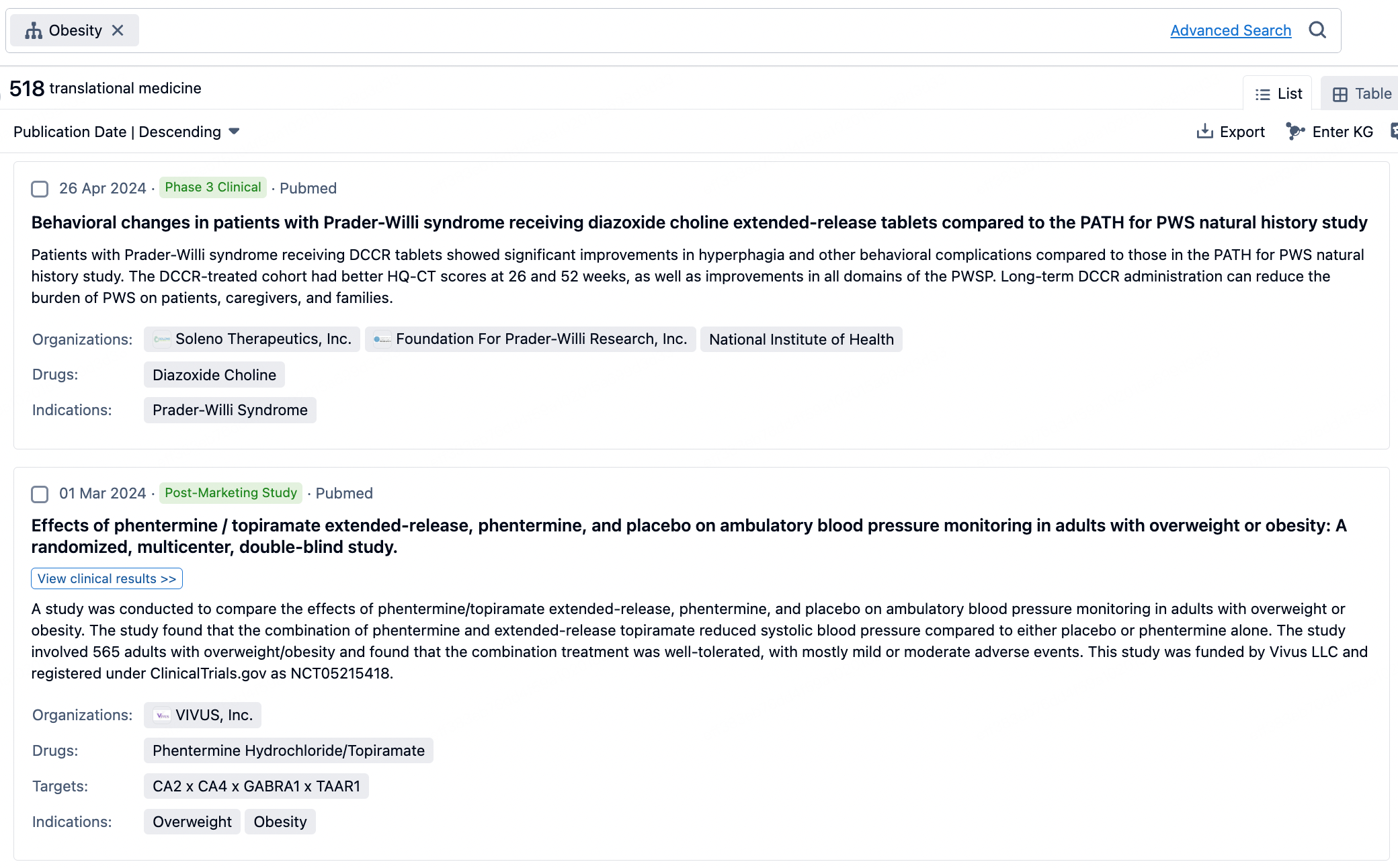
By clicking the analysis button, you can observe that GLP-1R treatment for obesity has gained significant attention over the past three years, with preclinical research still ongoing in 2023. Additionally, there are emerging potential targets, such as GDF15, among others.
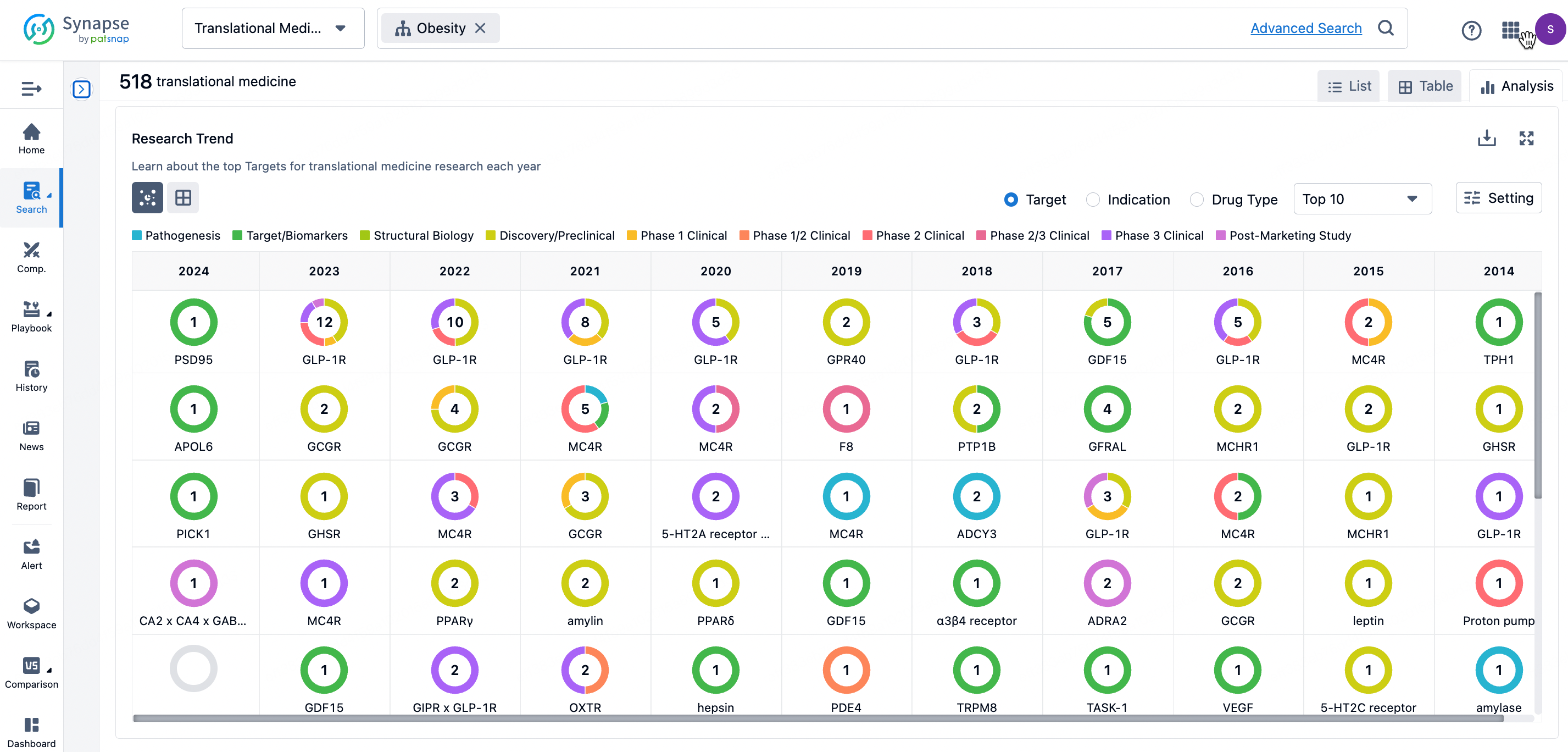
Click on the image below to go directly to the Translational Medicine search interface.