Harnessing the Power of TAS0728: A Dual Approach to HER2-Targeted Therapy in Overexpressing Tumor Models
In the study, TAS0728 was given to mice for 14 days to determine its plasma concentration and pharmacokinetic properties. The drug was also administered to mice with N87 xenografts to assess its pharmacodynamic effects, with tumor tissues examined through Western blot analysis. The drug's antitumor efficacy was tested in BT-474 and N87 xenograft models as a single agent, and its combination with trastuzumab or T-DM1 was studied in the 4-1ST xenograft model. The study monitored tumor volume and body weight changes.
The results indicate that TAS0728 has favorable oral pharmacokinetics and significantly inhibits HER2 and HER3 phosphorylation in tumor tissues. TAS0728 was found to be highly effective at doses of 30 and 60 mg/kg/day in the N87 and BT474 models, with minimal impact on body weight. Furthermore, TAS0728 at 15 mg/kg/day significantly enhanced the antitumor effects of trastuzumab or T-DM1 in the 4-1ST model.
The study concludes that TAS0728 is effective as a standalone treatment and when combined with HER2-targeting antibodies such as trastuzumab and T-DM1, providing a basis for its use in treating tumors with HER2 overexpression.
Reference: Irie H, Oguchi K, Ito K, et al. "TAS0728, a HER2-selective covalent inhibitor, shows significant antitumor activity as a monotherapy and in combination with anti-HER2 antibodies in models of HER2-overexpressing tumors." Mol Cancer Ther 2018;17(1 Suppl):Abstract nr B179.
How to Use Synapse Database to Search and Analyze Translational Medicine Data?
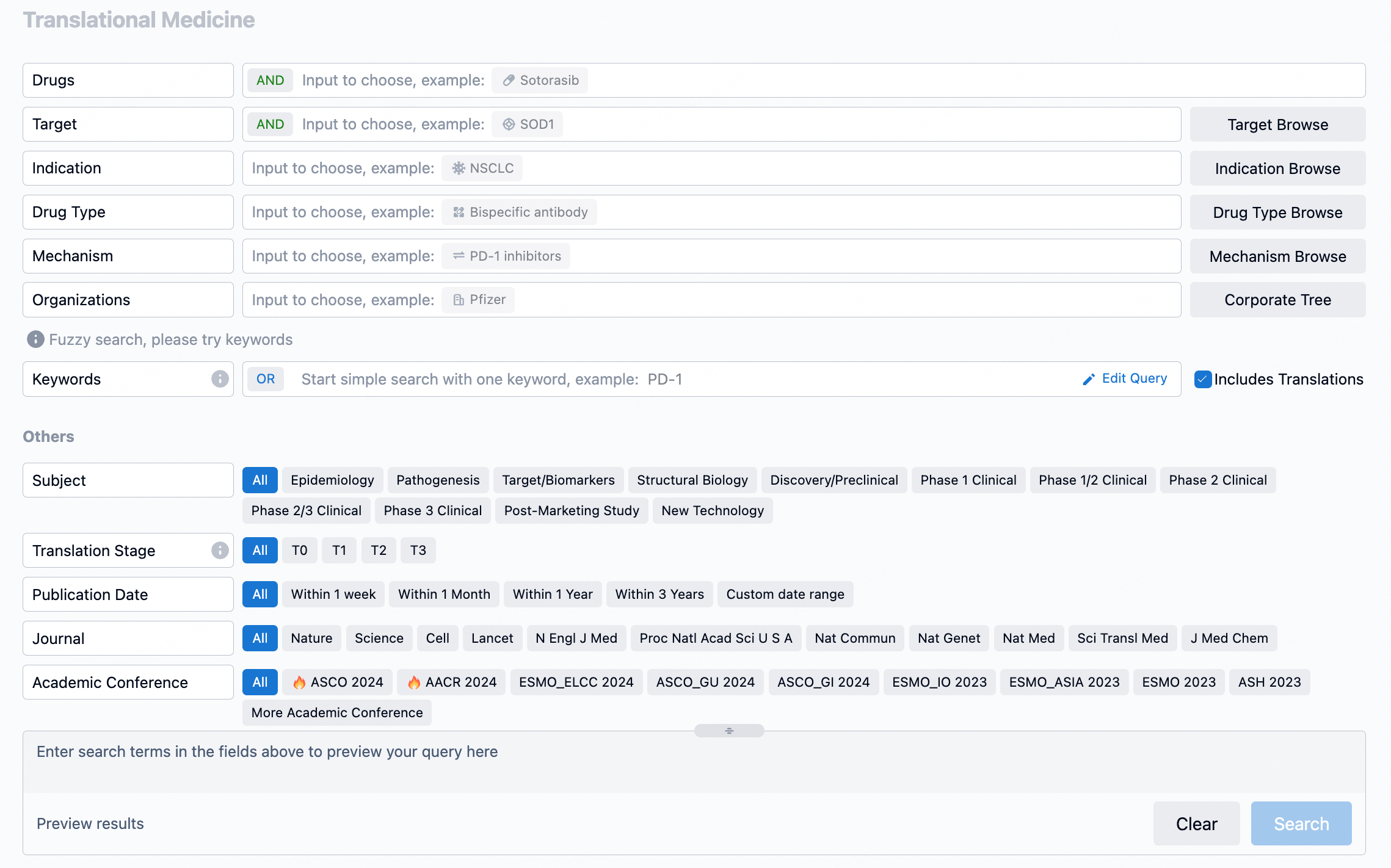
The transational medicine section of the Synapse database supports searches based on fields such as drug, target, and indication, covering the T0-T3 stages of translation. Additionally, it offers a historical conference search function as well as filtering options, view modes, translation services, and highlights summaries, providing you with a unique search experience.
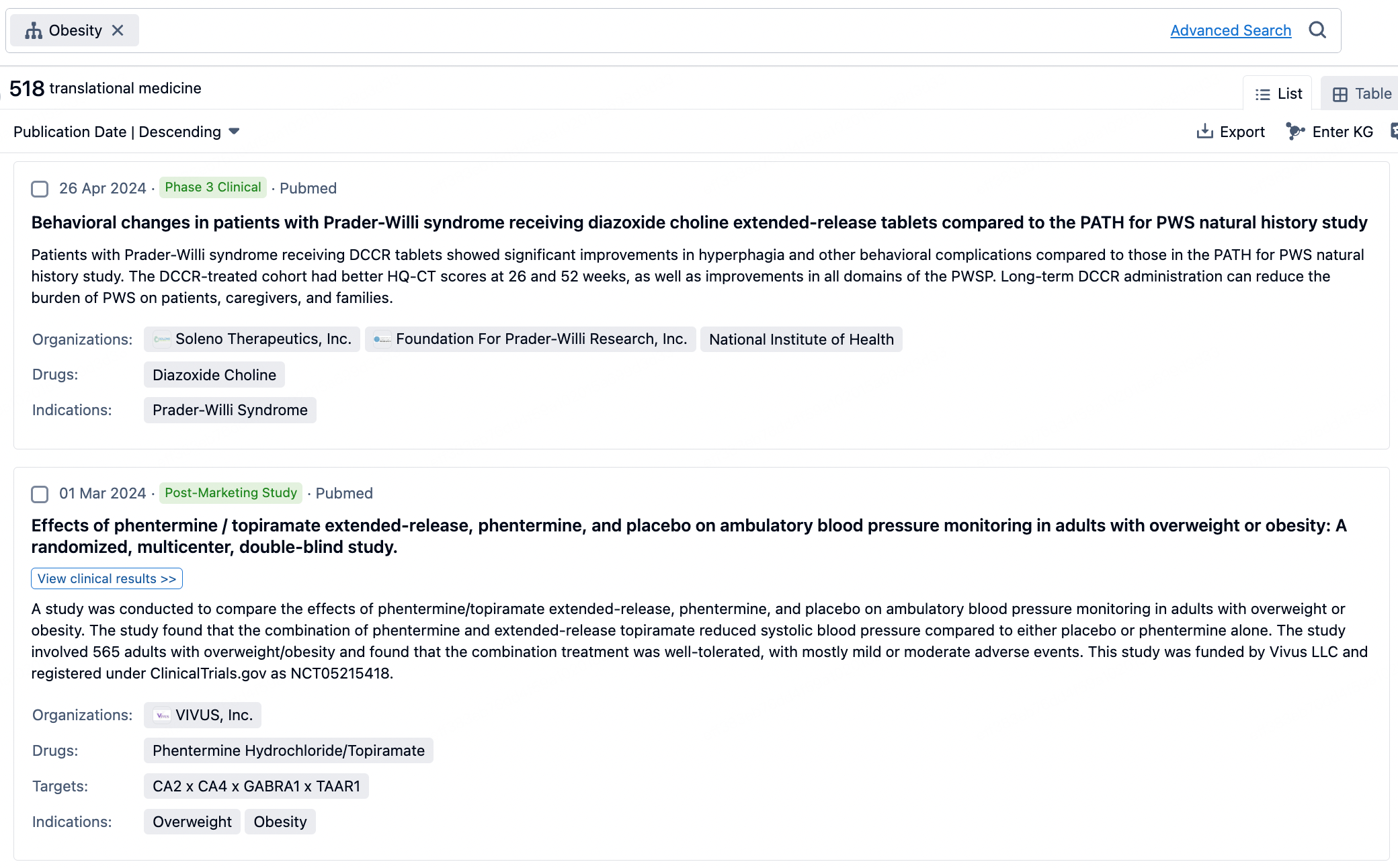
Taking obesity as an example, select "obesity" under the indication category and click search to enter the Translational Medicine results list page. By clicking on the title, you can directly navigate to the original page.
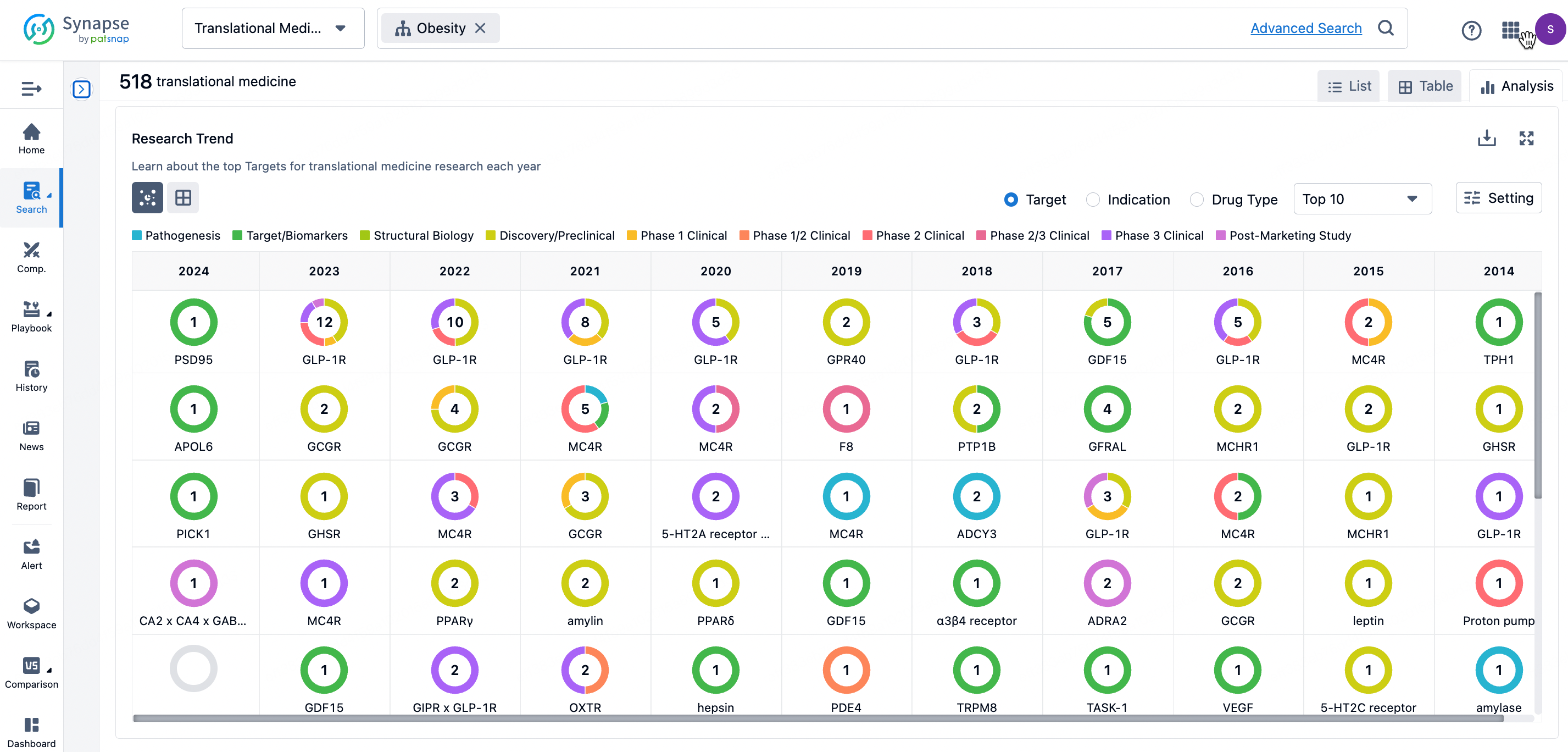
By clicking the analysis button, you can observe that GLP-1R treatment for obesity has gained significant attention over the past three years, with preclinical research still ongoing in 2023. Additionally, there are emerging potential targets, such as GDF15, among others.
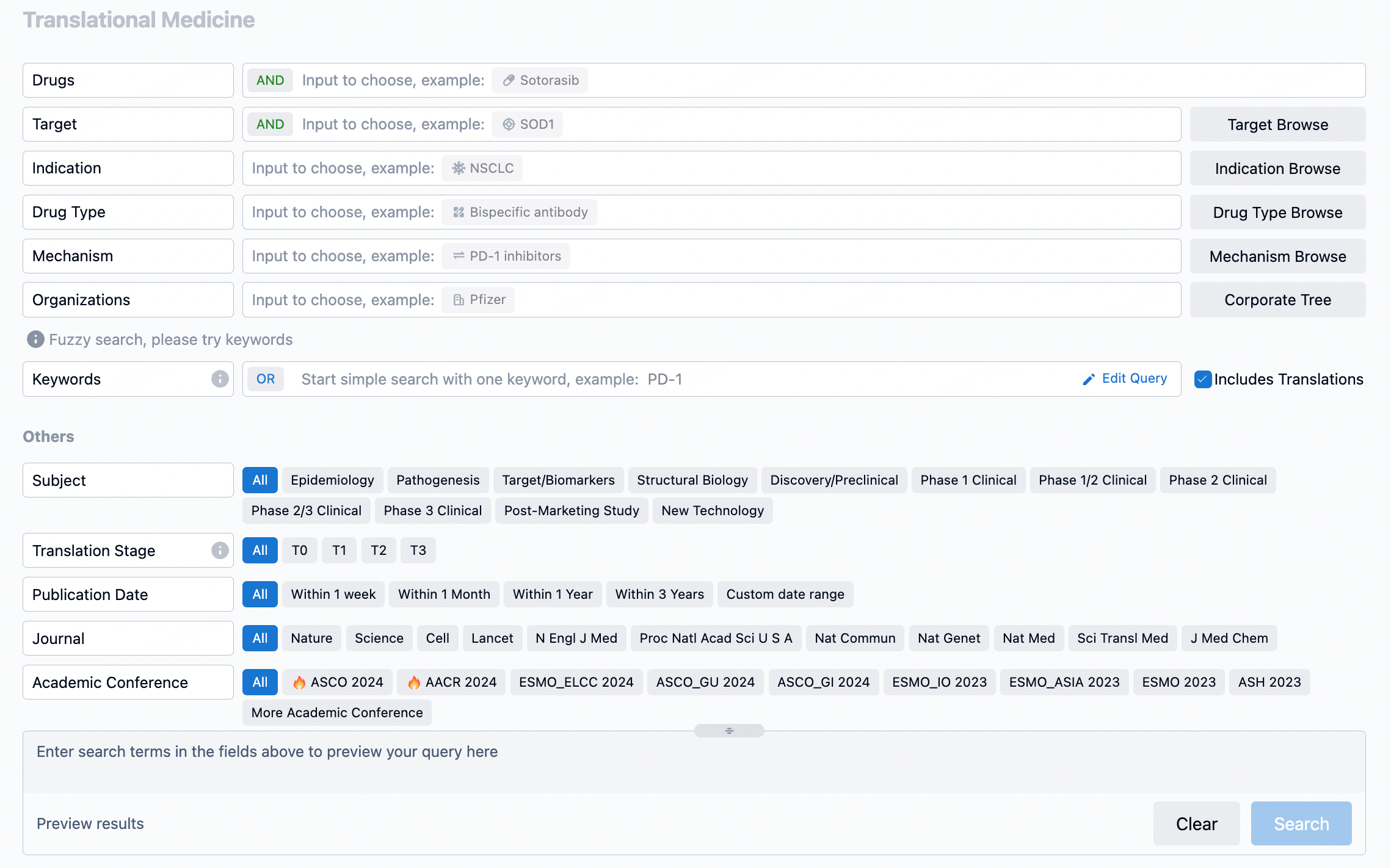
Click on the image below to go directly to the Translational Medicine search interface.