Harnessing Viral Nanoparticles for Targeted Cancer Therapy
In the realm of PDT, AU-011, an HPV-NP conjugated with IR700 dye, was developed. Upon exposure to 690 nm near-infrared light, AU-011 generates reactive oxygen species that are lethal to bound cells. In vitro studies revealed that AU-011 has a higher binding capacity and is more potent than Trastuzumab-IR700, with an IC50 value of 5.6 pM compared to 1.6 nM for Trastuzumab-IR700. The effectiveness of AU-011 was also confirmed in a range of uveal melanoma cell lines. With the FDA approval of 690 nm light for PDT in ophthalmology, in vivo studies for AU-011 in uveal melanoma are currently in progress, indicating a promising path towards clinical development.
How to Use Synapse Database to Search and Analyze Translational Medicine Data?
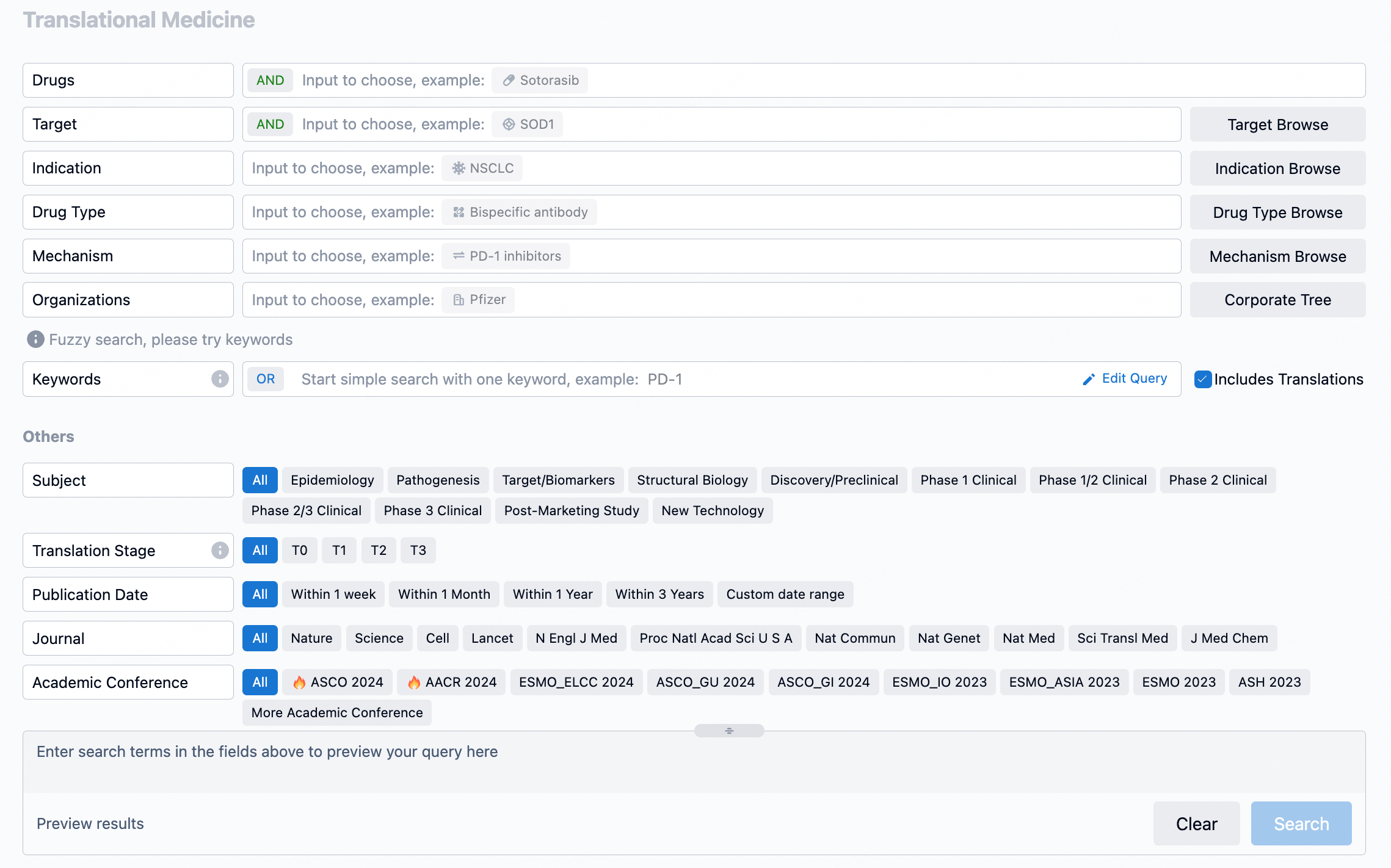
The transational medicine section of the Synapse database supports searches based on fields such as drug, target, and indication, covering the T0-T3 stages of translation. Additionally, it offers a historical conference search function as well as filtering options, view modes, translation services, and highlights summaries, providing you with a unique search experience.
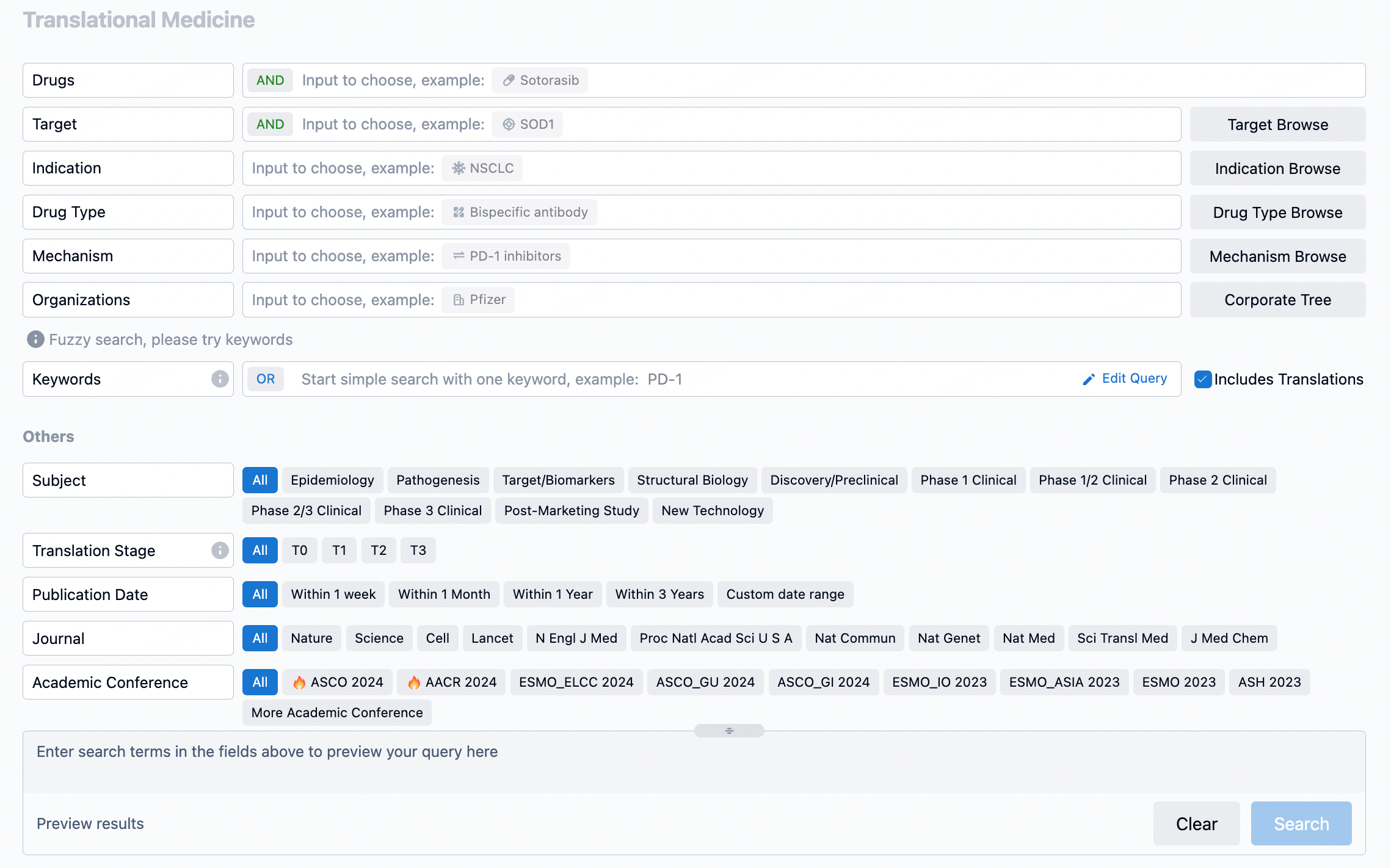
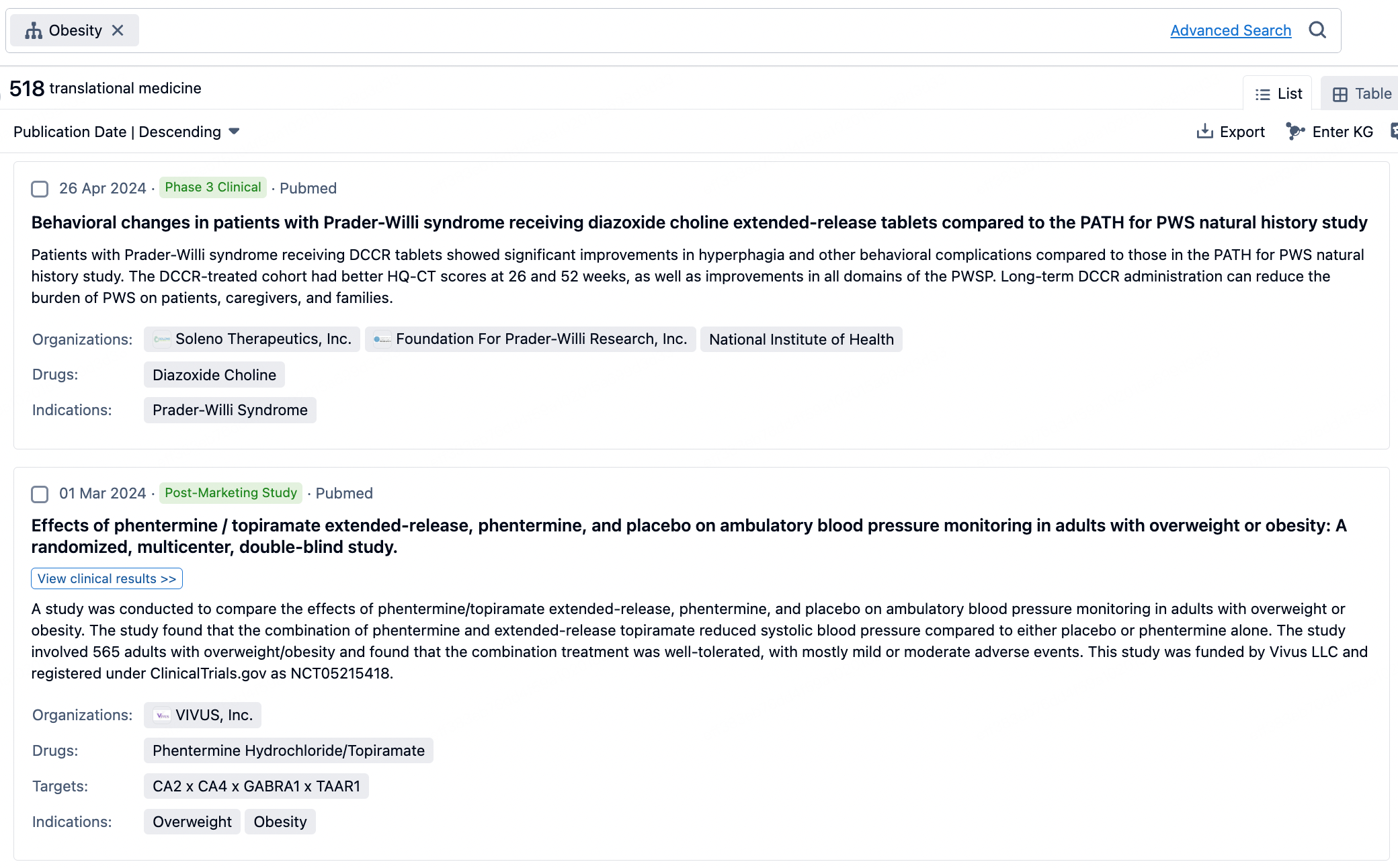
Taking obesity as an example, select "obesity" under the indication category and click search to enter the Translational Medicine results list page. By clicking on the title, you can directly navigate to the original page.
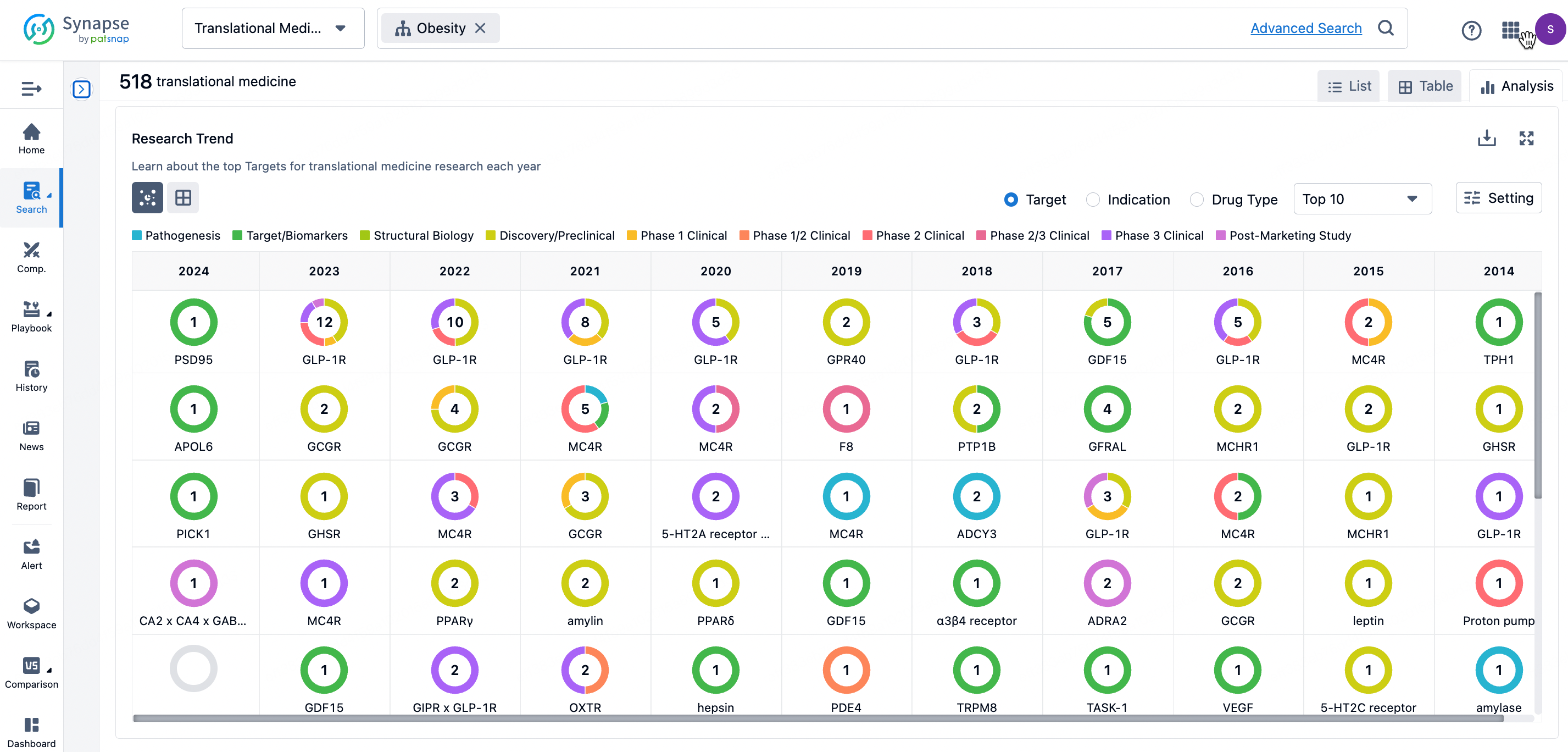
By clicking the analysis button, you can observe that GLP-1R treatment for obesity has gained significant attention over the past three years, with preclinical research still ongoing in 2023. Additionally, there are emerging potential targets, such as GDF15, among others.
Click on the image below to go directly to the Translational Medicine search interface.