Request Demo
How are computers used in drug design?
21 May 2025
Computers play a pivotal role in the field of drug design, revolutionizing how new pharmaceuticals are developed. This integration of technology and science has led to more efficient, cost-effective, and targeted drug discovery processes. Below, we delve into various aspects of how computers contribute to drug design.
The Rise of Computational Drug Design
Traditional drug design was a time-consuming and costly endeavor, involving significant trial and error. However, the advent of computational drug design has transformed this landscape, using computer modeling to predict how molecules will interact in the body. This approach accelerates the identification of promising drug candidates and optimizes their properties before they are synthesized and tested in the laboratory.
Molecular Modeling and Simulation
Molecular modeling is a cornerstone of computational drug design, involving the creation of three-dimensional models of molecules and their interactions with biological targets. These models help researchers understand the structural and chemical properties that govern the efficacy and safety of a potential drug. Simulations can predict how a molecule will behave in the human body, allowing scientists to refine drug candidates before proceeding to costly experimental phases.
Virtual Screening for Drug Candidates
One of the powerful tools in computational drug design is virtual screening. This process involves the use of computer algorithms to scan vast libraries of chemical compounds, identifying those most likely to bind to a target protein. By filtering out less promising candidates, virtual screening significantly reduces the time and resources needed to develop new drugs. It allows researchers to focus their efforts on the most promising compounds, increasing the chances of success in later stages of drug development.
Structure-Based Drug Design
Structure-based drug design relies on the detailed knowledge of the three-dimensional structure of a biological target, typically a protein. This information, often obtained through techniques like X-ray crystallography or NMR spectroscopy, is used to design molecules that will fit precisely into the target site. Computers aid in visualizing these interactions, suggesting modifications to improve binding affinity and selectivity. This process enables the creation of drugs that are more effective and have fewer side effects.
Computational Chemistry and Machine Learning
Advancements in computational chemistry, combined with the power of machine learning, have further refined drug design methodologies. Machine learning algorithms can analyze complex datasets, identify patterns, and predict the biological activity of compounds. These insights guide researchers in designing molecules with optimal properties, streamlining the development of new therapeutics.
Pharmacokinetics and Pharmacodynamics Simulations
Understanding how a drug behaves within the body is crucial for its success. Computers are used to simulate pharmacokinetics (how a drug is absorbed, distributed, metabolized, and excreted) and pharmacodynamics (how a drug affects the body). These simulations provide insights into dosage, delivery mechanisms, and potential side effects, allowing for the refinement of drug candidates to improve their therapeutic profiles.
The Role of Artificial Intelligence in Drug Discovery
Artificial intelligence (AI) is becoming increasingly significant in drug discovery, offering the ability to analyze complex biological data and generate novel hypotheses. AI can identify potential drug targets, predict drug interactions, and even design new molecules with desired properties. This capability accelerates the drug discovery process and opens new avenues for treating diseases previously considered challenging or impossible to address.
Challenges and Future Directions
Despite the advancements, computational drug design faces challenges, including the need for highly accurate models and the integration of diverse data types. Ongoing research aims to improve the precision of simulations and develop more sophisticated algorithms. As technology evolves, the potential for computers to further transform drug design is immense, promising more personalized and effective treatments in the future.
In conclusion, computers have become indispensable in drug design, offering tools and techniques that enhance the efficiency and effectiveness of the drug discovery process. As computational power and methodologies continue to advance, the pharmaceutical industry stands to benefit from even more groundbreaking innovations, ultimately improving healthcare outcomes worldwide.
The Rise of Computational Drug Design
Traditional drug design was a time-consuming and costly endeavor, involving significant trial and error. However, the advent of computational drug design has transformed this landscape, using computer modeling to predict how molecules will interact in the body. This approach accelerates the identification of promising drug candidates and optimizes their properties before they are synthesized and tested in the laboratory.
Molecular Modeling and Simulation
Molecular modeling is a cornerstone of computational drug design, involving the creation of three-dimensional models of molecules and their interactions with biological targets. These models help researchers understand the structural and chemical properties that govern the efficacy and safety of a potential drug. Simulations can predict how a molecule will behave in the human body, allowing scientists to refine drug candidates before proceeding to costly experimental phases.
Virtual Screening for Drug Candidates
One of the powerful tools in computational drug design is virtual screening. This process involves the use of computer algorithms to scan vast libraries of chemical compounds, identifying those most likely to bind to a target protein. By filtering out less promising candidates, virtual screening significantly reduces the time and resources needed to develop new drugs. It allows researchers to focus their efforts on the most promising compounds, increasing the chances of success in later stages of drug development.
Structure-Based Drug Design
Structure-based drug design relies on the detailed knowledge of the three-dimensional structure of a biological target, typically a protein. This information, often obtained through techniques like X-ray crystallography or NMR spectroscopy, is used to design molecules that will fit precisely into the target site. Computers aid in visualizing these interactions, suggesting modifications to improve binding affinity and selectivity. This process enables the creation of drugs that are more effective and have fewer side effects.
Computational Chemistry and Machine Learning
Advancements in computational chemistry, combined with the power of machine learning, have further refined drug design methodologies. Machine learning algorithms can analyze complex datasets, identify patterns, and predict the biological activity of compounds. These insights guide researchers in designing molecules with optimal properties, streamlining the development of new therapeutics.
Pharmacokinetics and Pharmacodynamics Simulations
Understanding how a drug behaves within the body is crucial for its success. Computers are used to simulate pharmacokinetics (how a drug is absorbed, distributed, metabolized, and excreted) and pharmacodynamics (how a drug affects the body). These simulations provide insights into dosage, delivery mechanisms, and potential side effects, allowing for the refinement of drug candidates to improve their therapeutic profiles.
The Role of Artificial Intelligence in Drug Discovery
Artificial intelligence (AI) is becoming increasingly significant in drug discovery, offering the ability to analyze complex biological data and generate novel hypotheses. AI can identify potential drug targets, predict drug interactions, and even design new molecules with desired properties. This capability accelerates the drug discovery process and opens new avenues for treating diseases previously considered challenging or impossible to address.
Challenges and Future Directions
Despite the advancements, computational drug design faces challenges, including the need for highly accurate models and the integration of diverse data types. Ongoing research aims to improve the precision of simulations and develop more sophisticated algorithms. As technology evolves, the potential for computers to further transform drug design is immense, promising more personalized and effective treatments in the future.
In conclusion, computers have become indispensable in drug design, offering tools and techniques that enhance the efficiency and effectiveness of the drug discovery process. As computational power and methodologies continue to advance, the pharmaceutical industry stands to benefit from even more groundbreaking innovations, ultimately improving healthcare outcomes worldwide.
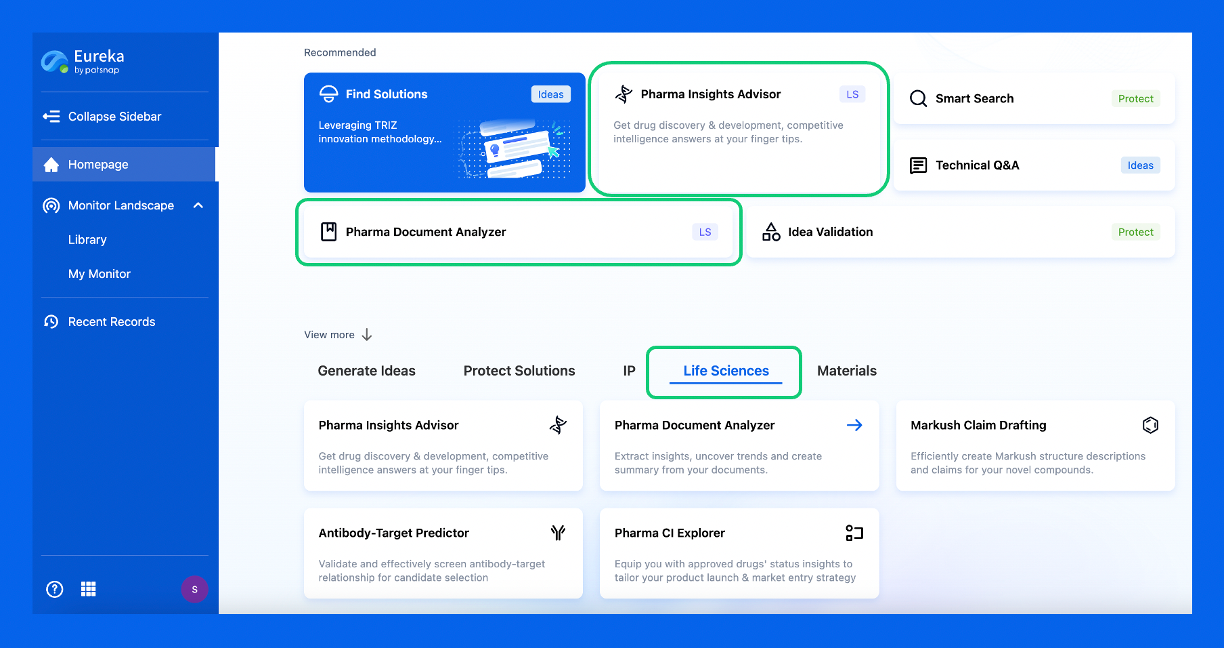
Discover Eureka LS: AI Agents Built for Biopharma Efficiency
Stop wasting time on biopharma busywork. Meet Eureka LS - your AI agent squad for drug discovery.
▶ See how 50+ research teams saved 300+ hours/month
From reducing screening time to simplifying Markush drafting, our AI Agents are ready to deliver immediate value. Explore Eureka LS today and unlock powerful capabilities that help you innovate with confidence.
AI Agents Built for Biopharma Breakthroughs
Accelerate discovery. Empower decisions. Transform outcomes.
Get started for free today!
Accelerate Strategic R&D decision making with Synapse, PatSnap’s AI-powered Connected Innovation Intelligence Platform Built for Life Sciences Professionals.
Start your data trial now!
Synapse data is also accessible to external entities via APIs or data packages. Empower better decisions with the latest in pharmaceutical intelligence.