Request Demo
How can bioinformatics predict off-target effects of drugs?
29 May 2025
Understanding Off-Target Effects in Drug Discovery
In the realm of drug discovery, off-target effects pose a significant challenge. While a drug is designed to interact with a specific biological target, it can sometimes interact with other unintended targets, leading to unexpected side effects. These off-target effects can influence the therapeutic efficacy and safety of a drug, making it crucial to predict them early in the drug development process. This is where bioinformatics, a field that combines biology, computer science, and information technology, comes into play.
The Role of Bioinformatics in Drug Development
Bioinformatics provides powerful tools and techniques to analyze large datasets, enabling researchers to predict potential off-target effects. By leveraging computational models, bioinformatics can help identify unintended interactions between a drug and various biomolecules within the body. This predictive capability is invaluable in drug development, allowing for the design of safer and more effective therapeutic agents.
Databases and In Silico Models
One of the key approaches in bioinformatics is the use of databases that store vast amounts of biological and chemical information. These databases include data on gene sequences, protein structures, metabolic pathways, and known drug interactions. By analyzing this data, bioinformaticians can predict how a new drug might interact with off-target molecules.
In silico modeling is another critical tool. These computational models simulate the interaction between a drug and its potential targets, both intended and unintended. Molecular docking, for example, predicts how a drug molecule will bind to a target protein. By analyzing these interactions, researchers can identify potential off-target effects before a drug is synthesized and tested in the lab.
Machine Learning and Predictive Analytics
Machine learning, a subset of artificial intelligence, is increasingly used in bioinformatics to predict off-target effects. By training algorithms on existing data of known drug-target interactions, machine learning models can learn to predict new interactions. These models can identify patterns and relationships in complex datasets that are not immediately apparent, providing insights into which off-target proteins a drug might interact with.
Predictive analytics also play a crucial role. This involves using statistical techniques and algorithms to analyze current and historical data to make predictions about future outcomes. In the context of drug development, predictive analytics can forecast the likelihood of off-target effects based on the chemical structure of the drug and its known interactions.
Integrating Genomic Data
With the advent of next-generation sequencing technologies, integrating genomic data has become a pivotal aspect of predicting off-target effects. By analyzing a patient’s genome, researchers can identify genetic variations that might influence drug metabolism and response. This personalized approach helps in predicting which off-target effects are more likely to occur in specific populations or individuals.
Furthermore, genomic data can provide insights into the expression patterns of potential off-target proteins. By understanding how these proteins are regulated in different tissues or under various conditions, bioinformatics can predict where and when off-target interactions are most likely to occur.
Challenges and Future Perspectives
Despite the advancements, predicting off-target effects using bioinformatics is not without challenges. The complexity of biological systems and the vast diversity of chemical compounds make it difficult to predict all possible interactions accurately. Moreover, the quality and completeness of available data can limit the effectiveness of predictive models.
However, as bioinformatics continues to evolve, with improvements in data collection, processing, and analysis, the accuracy of these predictions is expected to improve. Future developments may include more sophisticated algorithms, better integration of multi-omics data, and more refined models that can simulate the dynamic nature of biological systems.
Conclusion
Bioinformatics plays an indispensable role in predicting off-target effects of drugs, helping to ensure the development of safer and more efficacious therapeutics. By leveraging databases, computational models, machine learning, and genomic data, researchers can identify potential off-target interactions early in the drug development process. As the field continues to evolve, it holds the promise of transforming drug discovery, minimizing adverse effects, and paving the way for personalized medicine.
In the realm of drug discovery, off-target effects pose a significant challenge. While a drug is designed to interact with a specific biological target, it can sometimes interact with other unintended targets, leading to unexpected side effects. These off-target effects can influence the therapeutic efficacy and safety of a drug, making it crucial to predict them early in the drug development process. This is where bioinformatics, a field that combines biology, computer science, and information technology, comes into play.
The Role of Bioinformatics in Drug Development
Bioinformatics provides powerful tools and techniques to analyze large datasets, enabling researchers to predict potential off-target effects. By leveraging computational models, bioinformatics can help identify unintended interactions between a drug and various biomolecules within the body. This predictive capability is invaluable in drug development, allowing for the design of safer and more effective therapeutic agents.
Databases and In Silico Models
One of the key approaches in bioinformatics is the use of databases that store vast amounts of biological and chemical information. These databases include data on gene sequences, protein structures, metabolic pathways, and known drug interactions. By analyzing this data, bioinformaticians can predict how a new drug might interact with off-target molecules.
In silico modeling is another critical tool. These computational models simulate the interaction between a drug and its potential targets, both intended and unintended. Molecular docking, for example, predicts how a drug molecule will bind to a target protein. By analyzing these interactions, researchers can identify potential off-target effects before a drug is synthesized and tested in the lab.
Machine Learning and Predictive Analytics
Machine learning, a subset of artificial intelligence, is increasingly used in bioinformatics to predict off-target effects. By training algorithms on existing data of known drug-target interactions, machine learning models can learn to predict new interactions. These models can identify patterns and relationships in complex datasets that are not immediately apparent, providing insights into which off-target proteins a drug might interact with.
Predictive analytics also play a crucial role. This involves using statistical techniques and algorithms to analyze current and historical data to make predictions about future outcomes. In the context of drug development, predictive analytics can forecast the likelihood of off-target effects based on the chemical structure of the drug and its known interactions.
Integrating Genomic Data
With the advent of next-generation sequencing technologies, integrating genomic data has become a pivotal aspect of predicting off-target effects. By analyzing a patient’s genome, researchers can identify genetic variations that might influence drug metabolism and response. This personalized approach helps in predicting which off-target effects are more likely to occur in specific populations or individuals.
Furthermore, genomic data can provide insights into the expression patterns of potential off-target proteins. By understanding how these proteins are regulated in different tissues or under various conditions, bioinformatics can predict where and when off-target interactions are most likely to occur.
Challenges and Future Perspectives
Despite the advancements, predicting off-target effects using bioinformatics is not without challenges. The complexity of biological systems and the vast diversity of chemical compounds make it difficult to predict all possible interactions accurately. Moreover, the quality and completeness of available data can limit the effectiveness of predictive models.
However, as bioinformatics continues to evolve, with improvements in data collection, processing, and analysis, the accuracy of these predictions is expected to improve. Future developments may include more sophisticated algorithms, better integration of multi-omics data, and more refined models that can simulate the dynamic nature of biological systems.
Conclusion
Bioinformatics plays an indispensable role in predicting off-target effects of drugs, helping to ensure the development of safer and more efficacious therapeutics. By leveraging databases, computational models, machine learning, and genomic data, researchers can identify potential off-target interactions early in the drug development process. As the field continues to evolve, it holds the promise of transforming drug discovery, minimizing adverse effects, and paving the way for personalized medicine.
Discover Eureka LS: AI Agents Built for Biopharma Efficiency
Stop wasting time on biopharma busywork. Meet Eureka LS - your AI agent squad for drug discovery.
▶ See how 50+ research teams saved 300+ hours/month
From reducing screening time to simplifying Markush drafting, our AI Agents are ready to deliver immediate value. Explore Eureka LS today and unlock powerful capabilities that help you innovate with confidence.
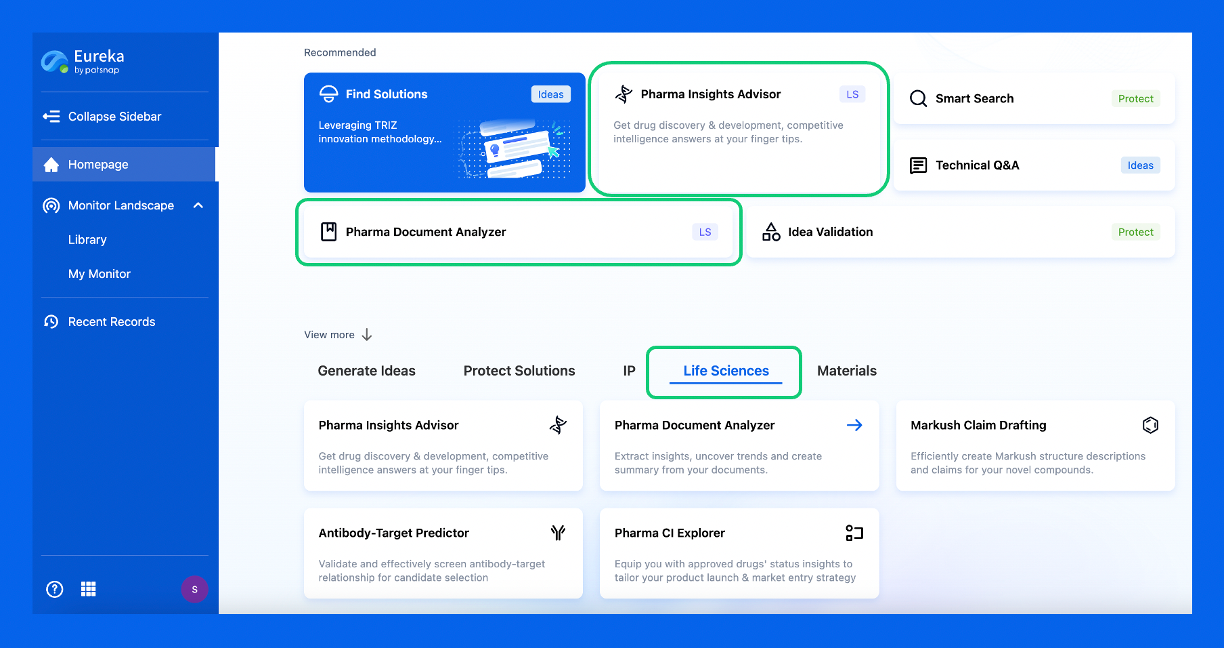
AI Agents Built for Biopharma Breakthroughs
Accelerate discovery. Empower decisions. Transform outcomes.
Get started for free today!
Accelerate Strategic R&D decision making with Synapse, PatSnap’s AI-powered Connected Innovation Intelligence Platform Built for Life Sciences Professionals.
Start your data trial now!
Synapse data is also accessible to external entities via APIs or data packages. Empower better decisions with the latest in pharmaceutical intelligence.