Request Demo
How to use bioinformatics in precision medicine?
29 May 2025
Introduction to Bioinformatics in Precision Medicine
Precision medicine is revolutionizing healthcare by tailoring medical treatment to the individual characteristics of each patient. This approach relies heavily on understanding the genetic, environmental, and lifestyle factors that contribute to various diseases. Bioinformatics, which combines biology, computer science, and information technology, plays a crucial role in analyzing and interpreting vast amounts of biological data, thereby enabling precision medicine.
Understanding Genetic Variability
One of the primary ways bioinformatics contributes to precision medicine is through the analysis of genetic variability. Human DNA is complex and contains numerous variations that can influence health and disease. Bioinformatics tools are used to sequence genomes, identify genetic variants, and understand how these variants affect the function of genes. By analyzing the genetic makeup of individuals, bioinformatics can help identify markers for disease predisposition, drug response, and potential treatment targets.
Data Integration and Interpretation
Bioinformatics is critical for integrating and interpreting data from multiple sources, including genomic, transcriptomic, proteomic, and metabolomic data. This integration allows researchers to build comprehensive models of disease mechanisms and progression. Bioinformatics software platforms facilitate the visualization and interpretation of complex datasets, enabling healthcare professionals to make informed decisions about patient care. By correlating genetic data with clinical outcomes, bioinformatics helps predict disease risk and treatment efficacy, ensuring that patients receive the most effective therapies.
Personalized Drug Development
Traditional drug development often follows a one-size-fits-all approach, which can lead to suboptimal treatment outcomes. Bioinformatics enables the identification of molecular targets and the design of personalized therapeutics. By understanding the genetic basis of diseases and the molecular interactions within cells, researchers can develop drugs that specifically target individual genetic profiles. This personalized approach increases the likelihood of successful treatment while minimizing side effects.
Biomarker Discovery and Validation
Biomarkers are critical for diagnosing diseases, predicting outcomes, and monitoring treatment responses. Bioinformatics plays a vital role in discovering and validating biomarkers by analyzing large datasets to identify statistically significant associations between genetic variations and disease phenotypes. Through bioinformatics, researchers can pinpoint specific biomarkers that indicate the presence or progression of a disease, enabling earlier and more accurate diagnoses.
Challenges and Future Directions
While bioinformatics holds promise for advancing precision medicine, there are challenges that need to be addressed. Data privacy and ethical considerations are paramount, as genetic data is sensitive and requires secure handling. Additionally, the integration of bioinformatics into clinical practice requires collaboration between biologists, computer scientists, clinicians, and policymakers. Future advancements in bioinformatics technology, including machine learning and artificial intelligence, are expected to further enhance the precision and efficiency of data analysis, driving the field forward.
Conclusion
Bioinformatics is an essential component of precision medicine, providing the tools and methodologies needed to analyze and interpret complex biological data. By understanding genetic variability, integrating diverse datasets, and developing personalized therapeutics, bioinformatics enables healthcare professionals to deliver tailored medical treatments that improve patient outcomes. As technology continues to evolve, the role of bioinformatics in precision medicine will undoubtedly expand, offering new insights into disease mechanisms and treatment strategies.
Precision medicine is revolutionizing healthcare by tailoring medical treatment to the individual characteristics of each patient. This approach relies heavily on understanding the genetic, environmental, and lifestyle factors that contribute to various diseases. Bioinformatics, which combines biology, computer science, and information technology, plays a crucial role in analyzing and interpreting vast amounts of biological data, thereby enabling precision medicine.
Understanding Genetic Variability
One of the primary ways bioinformatics contributes to precision medicine is through the analysis of genetic variability. Human DNA is complex and contains numerous variations that can influence health and disease. Bioinformatics tools are used to sequence genomes, identify genetic variants, and understand how these variants affect the function of genes. By analyzing the genetic makeup of individuals, bioinformatics can help identify markers for disease predisposition, drug response, and potential treatment targets.
Data Integration and Interpretation
Bioinformatics is critical for integrating and interpreting data from multiple sources, including genomic, transcriptomic, proteomic, and metabolomic data. This integration allows researchers to build comprehensive models of disease mechanisms and progression. Bioinformatics software platforms facilitate the visualization and interpretation of complex datasets, enabling healthcare professionals to make informed decisions about patient care. By correlating genetic data with clinical outcomes, bioinformatics helps predict disease risk and treatment efficacy, ensuring that patients receive the most effective therapies.
Personalized Drug Development
Traditional drug development often follows a one-size-fits-all approach, which can lead to suboptimal treatment outcomes. Bioinformatics enables the identification of molecular targets and the design of personalized therapeutics. By understanding the genetic basis of diseases and the molecular interactions within cells, researchers can develop drugs that specifically target individual genetic profiles. This personalized approach increases the likelihood of successful treatment while minimizing side effects.
Biomarker Discovery and Validation
Biomarkers are critical for diagnosing diseases, predicting outcomes, and monitoring treatment responses. Bioinformatics plays a vital role in discovering and validating biomarkers by analyzing large datasets to identify statistically significant associations between genetic variations and disease phenotypes. Through bioinformatics, researchers can pinpoint specific biomarkers that indicate the presence or progression of a disease, enabling earlier and more accurate diagnoses.
Challenges and Future Directions
While bioinformatics holds promise for advancing precision medicine, there are challenges that need to be addressed. Data privacy and ethical considerations are paramount, as genetic data is sensitive and requires secure handling. Additionally, the integration of bioinformatics into clinical practice requires collaboration between biologists, computer scientists, clinicians, and policymakers. Future advancements in bioinformatics technology, including machine learning and artificial intelligence, are expected to further enhance the precision and efficiency of data analysis, driving the field forward.
Conclusion
Bioinformatics is an essential component of precision medicine, providing the tools and methodologies needed to analyze and interpret complex biological data. By understanding genetic variability, integrating diverse datasets, and developing personalized therapeutics, bioinformatics enables healthcare professionals to deliver tailored medical treatments that improve patient outcomes. As technology continues to evolve, the role of bioinformatics in precision medicine will undoubtedly expand, offering new insights into disease mechanisms and treatment strategies.
Discover Eureka LS: AI Agents Built for Biopharma Efficiency
Stop wasting time on biopharma busywork. Meet Eureka LS - your AI agent squad for drug discovery.
▶ See how 50+ research teams saved 300+ hours/month
From reducing screening time to simplifying Markush drafting, our AI Agents are ready to deliver immediate value. Explore Eureka LS today and unlock powerful capabilities that help you innovate with confidence.
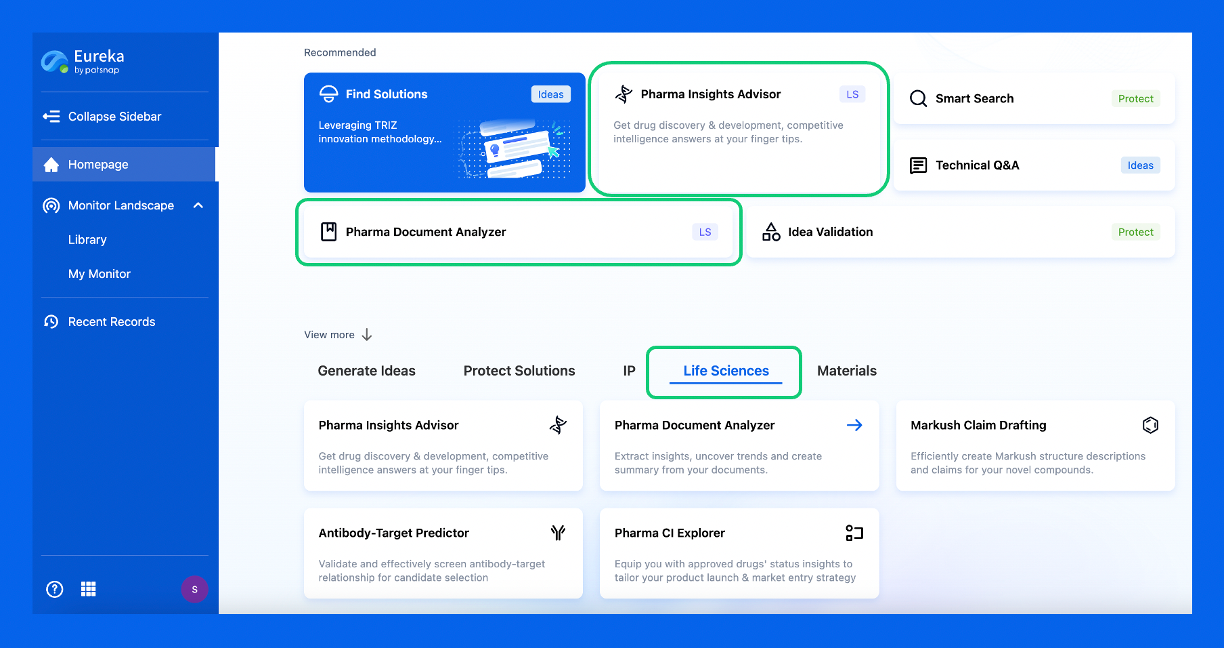
AI Agents Built for Biopharma Breakthroughs
Accelerate discovery. Empower decisions. Transform outcomes.
Get started for free today!
Accelerate Strategic R&D decision making with Synapse, PatSnap’s AI-powered Connected Innovation Intelligence Platform Built for Life Sciences Professionals.
Start your data trial now!
Synapse data is also accessible to external entities via APIs or data packages. Empower better decisions with the latest in pharmaceutical intelligence.