Modulating Tumor Microenvironment with YS-ON-001: Enhancing Anti-Cancer Immunity as Monotherapy and in Combination with PD-1 Inhibitor
In a series of experiments, the compound's anti-tumor effects were evaluated through systemic or intratumoral administration, either alone or in combination with a PD-1 antagonist, across various cancer models, such as pancreatic and hepatocellular carcinoma. The tumors were implanted in mice, with YS-ON-001 being administered via intramuscular (IM) injections every other day or intratumorally twice a week. Concurrently, a murine PD-1 antibody was administered intraperitoneally once a week.
The results indicated that YS-ON-001 monotherapy, when administered IM, led to a marked increase in the infiltration of CD4+ and CD8+ T cells, NK and NKT cells within the tumor microenvironment, while simultaneously reducing Tregs and MDSCs and increasing the M1/M2 ratio. This resulted in significant tumor growth inhibition across more than 10 cancer models. The combination of IM YS-ON-001 with anti-PD1 further enhanced the anti-tumor efficacy, particularly in 4T1 breast cancer and LLC2 lung cancer models, compared to anti-PD1 monotherapy alone.
Importantly, surviving mice that were treated with IM YS-ON-001 and showed no visible tumors were resistant to tumor rechallenge, suggesting the development of long-term anti-tumor immunity. Both intratumoral YS-ON-001 and anti-PD-1 monotherapy significantly suppressed tumor growth at both the injected and uninjected sites, with the combination therapy further amplifying this suppressive effect.
The study concludes that YS-ON-001, when delivered systemically or intratumorally, effectively modulates the immune response within the tumor microenvironment, increasing the presence of anti-tumor cells and decreasing pro-tumor cells, leading to substantial tumor growth inhibition. The combination with PD-1 antibodies significantly enhances the efficacy of these antibodies, providing a robust basis for the further clinical development of YS-ON-001 as a standalone therapy or in combination with checkpoint inhibitors.
The findings were presented by Zhongkai Shi, Yuan Liu, and Yi Zhang at the American Association for Cancer Research Annual Meeting in 2019, as detailed in the abstract published in Cancer Research.
How to Use Synapse Database to Search and Analyze Translational Medicine Data?
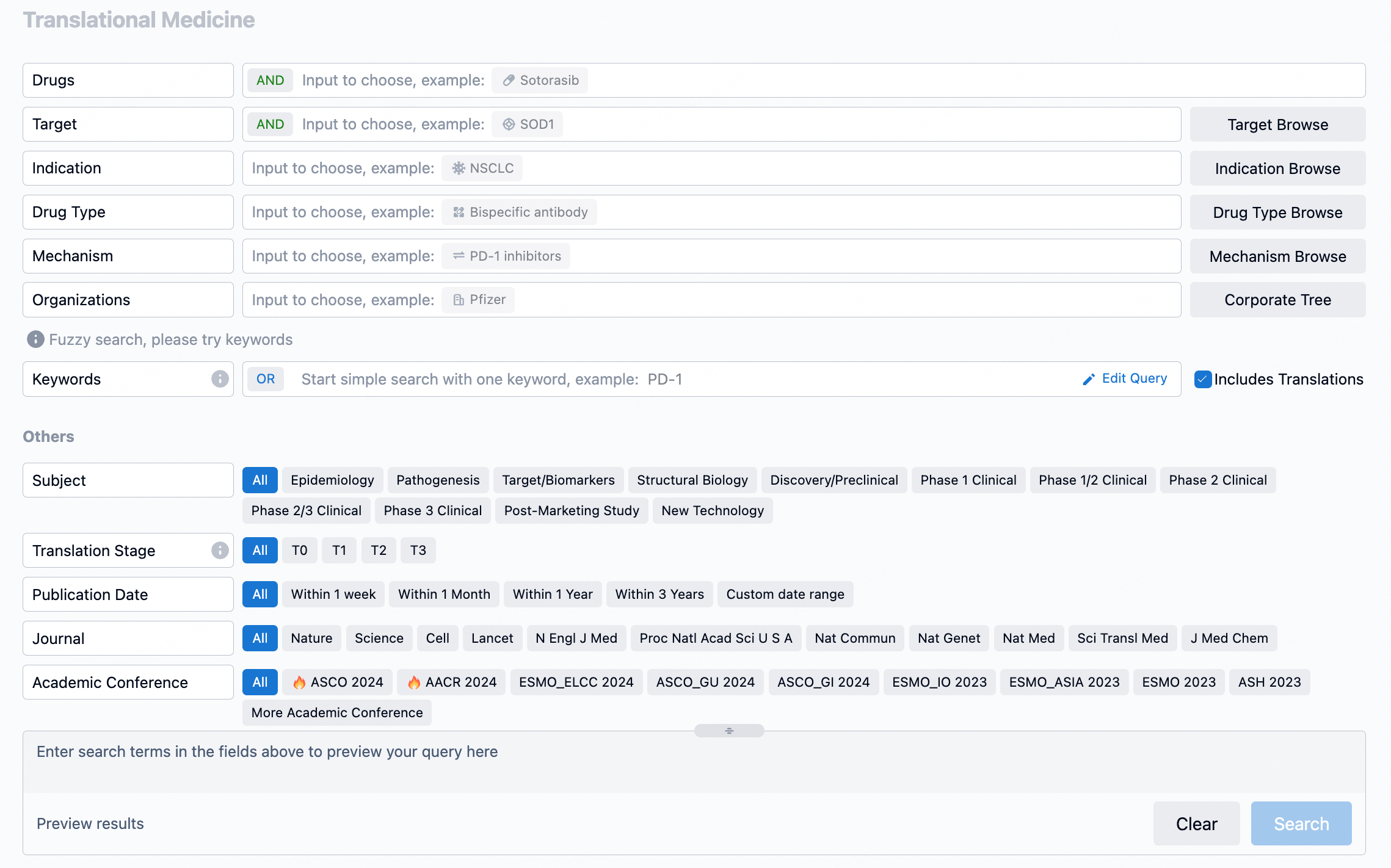
The transational medicine section of the Synapse database supports searches based on fields such as drug, target, and indication, covering the T0-T3 stages of translation. Additionally, it offers a historical conference search function as well as filtering options, view modes, translation services, and highlights summaries, providing you with a unique search experience.
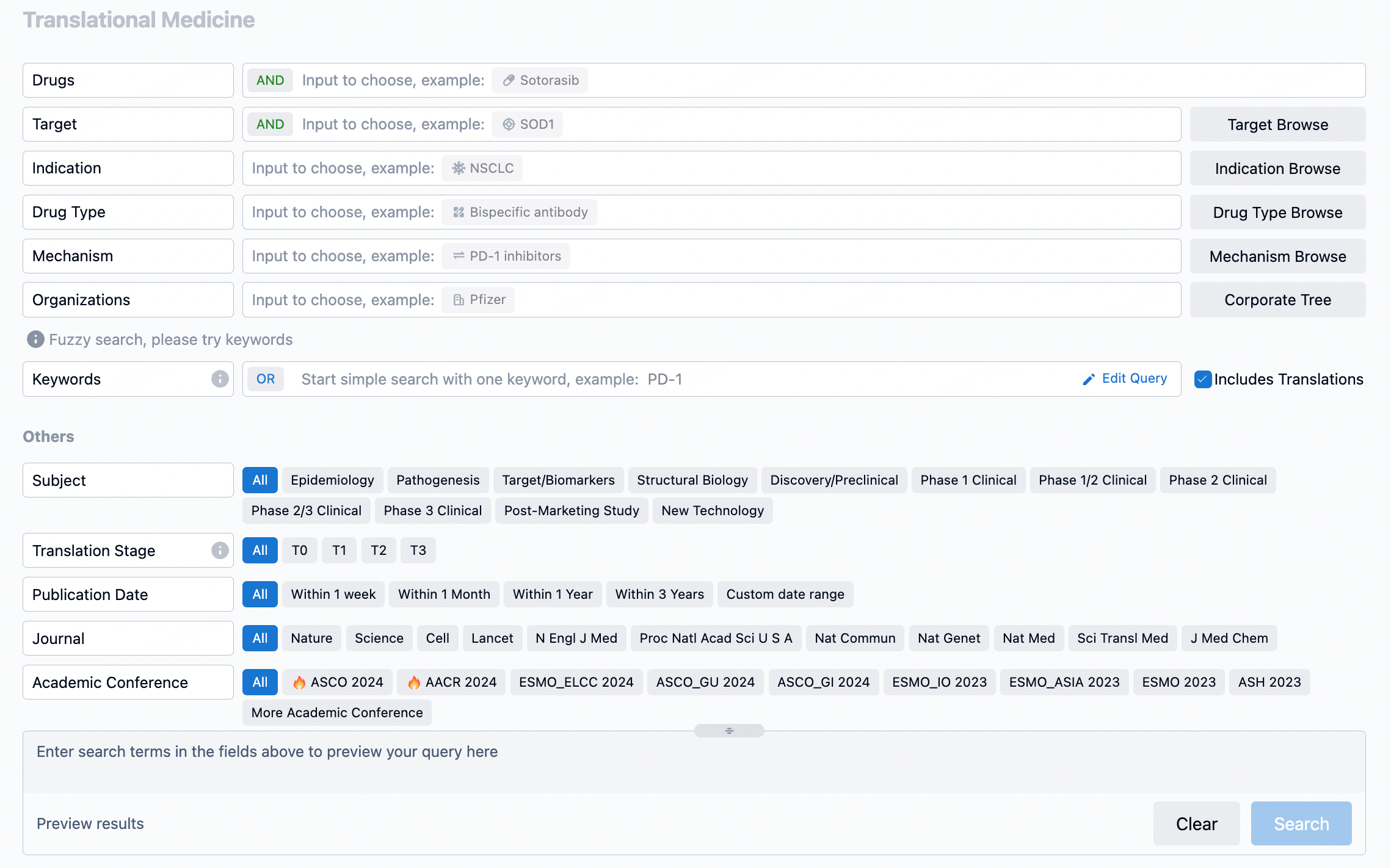
Taking obesity as an example, select "obesity" under the indication category and click search to enter the Translational Medicine results list page. By clicking on the title, you can directly navigate to the original page.
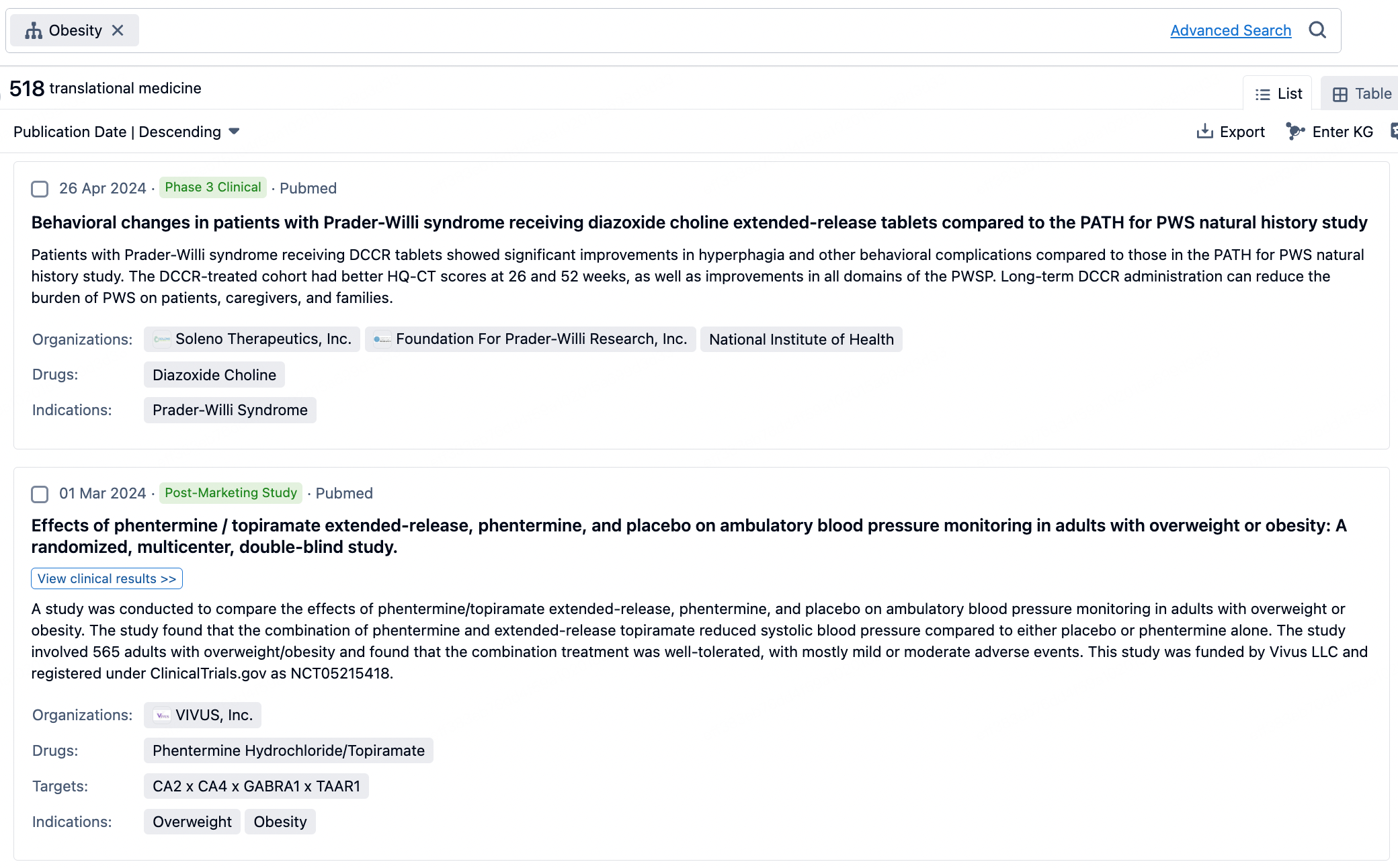
By clicking the analysis button, you can observe that GLP-1R treatment for obesity has gained significant attention over the past three years, with preclinical research still ongoing in 2023. Additionally, there are emerging potential targets, such as GDF15, among others.
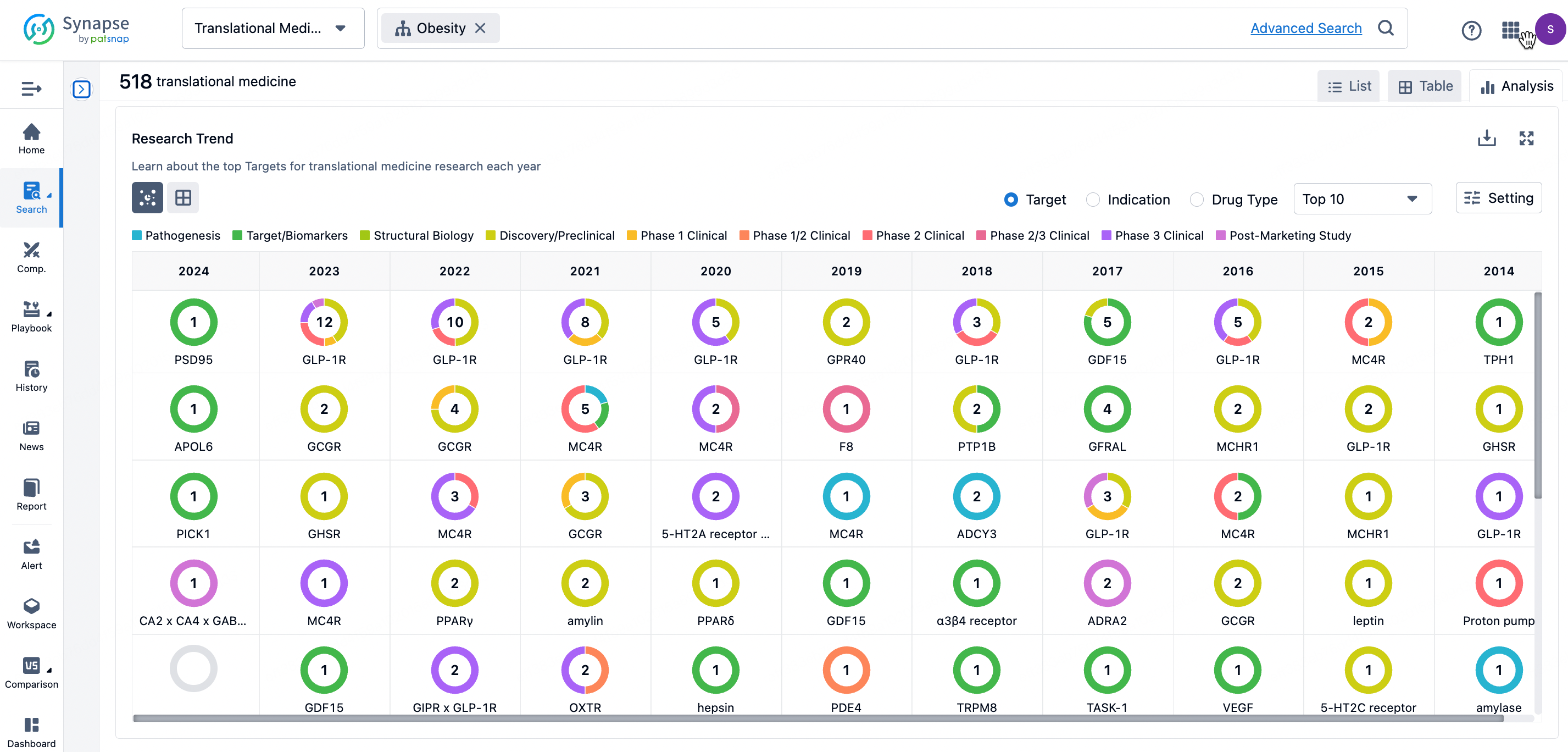
Click on the image below to go directly to the Translational Medicine search interface.