Optimizing 11C-CUMI-101 PET Imaging for Serotonin 1A Receptor: A Comprehensive Analysis
Two adult male baboons underwent positron emission tomography (PET) scans, receiving an intravenous injection of 11C-CUMI-101. Data were collected for 120 minutes using a 3D mode. The study evaluated four distinct modeling approaches, including iterative and noniterative kinetic models, basis pursuit, and likelihood estimation in graphical analysis (LEGA). The outcome measure was the binding potential (BPF), which is a ratio of the maximum number of binding sites to the dissociation constant. Full quantification of BPF was achieved using arterial blood sampling and a metabolite-corrected arterial input function. The performance of each model was assessed using six metrics, including reproducibility, reliability, identifiability, and time stability, across six different scanning durations. Additionally, the study examined the effects of administering the 5-HT1A antagonist WAY100635 and the 5-HT1A agonist 8-OH-DPAT.
The results indicated that all metabolites were more polar than 11C-CUMI-101, with no significant changes observed in blocking studies. The free fraction was found to be 59% with a 3% margin of error. The study concluded that 100 minutes of scanning time was sufficient, and for region-of-interest (ROI) analysis, the LEGA model provided the most accurate results. The median test-retest percentage difference for BPF across all regions was 11.15% with a 4.82% margin of error. The metrics for reproducibility, variance, reliability, and identifiability were 2.66, 6.07, 0.43, and 0.59, respectively. The administration of WAY100635 and 8-OH-DPAT led to average reductions in BPF values of 87% and 76%, respectively, across ROIs.
The study concluded that, given its measurable free fraction, high affinity and selectivity, adequate blood-brain barrier penetration, and favorable plasma and brain kinetics, 11C-CUMI-101 is a promising candidate for imaging high-affinity 5-HT1ARs in humans.
How to Use Synapse Database to Search and Analyze Translational Medicine Data?
The transational medicine section of the Synapse database supports searches based on fields such as drug, target, and indication, covering the T0-T3 stages of translation. Additionally, it offers a historical conference search function as well as filtering options, view modes, translation services, and highlights summaries, providing you with a unique search experience.
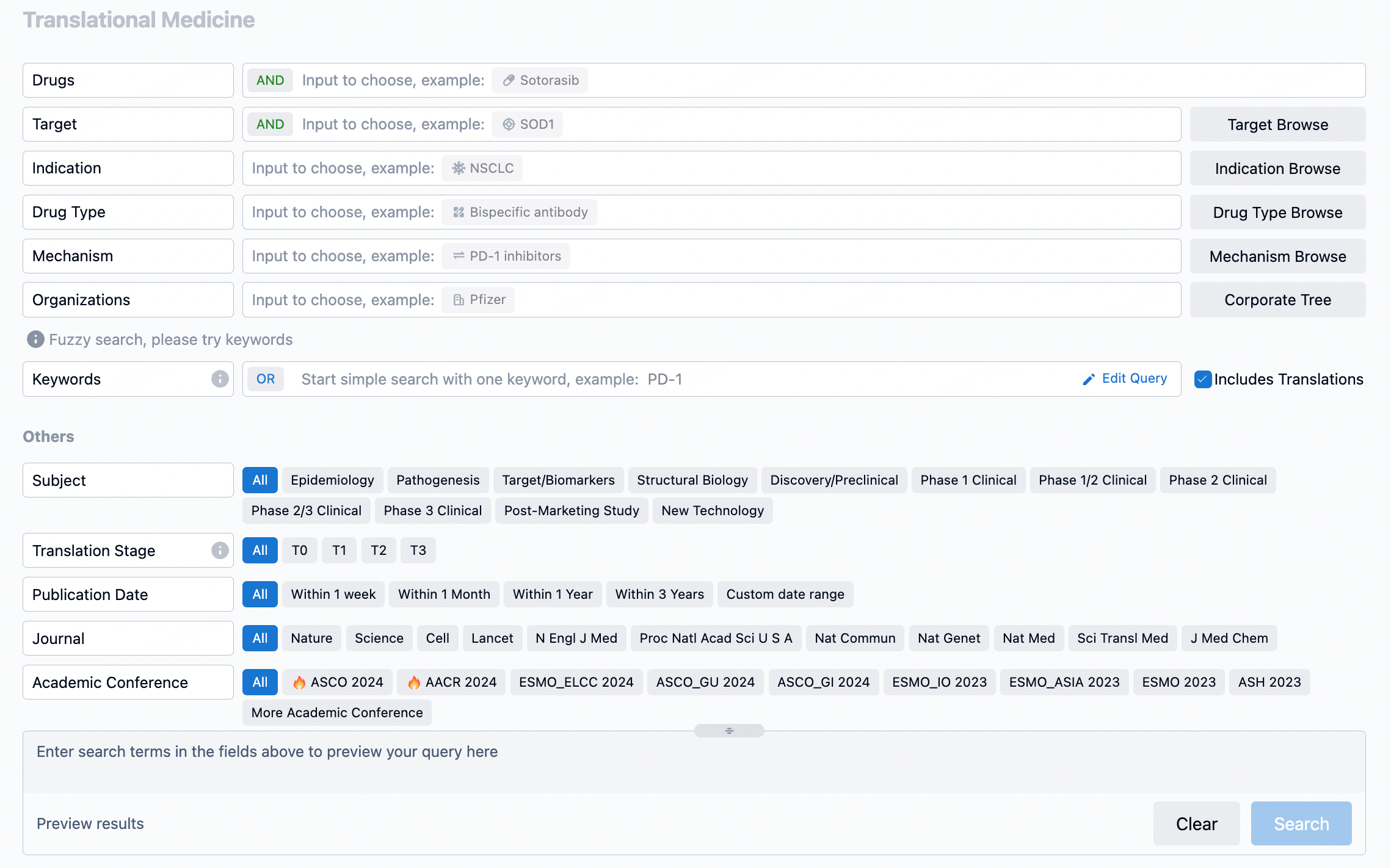
Taking obesity as an example, select "obesity" under the indication category and click search to enter the Translational Medicine results list page. By clicking on the title, you can directly navigate to the original page.
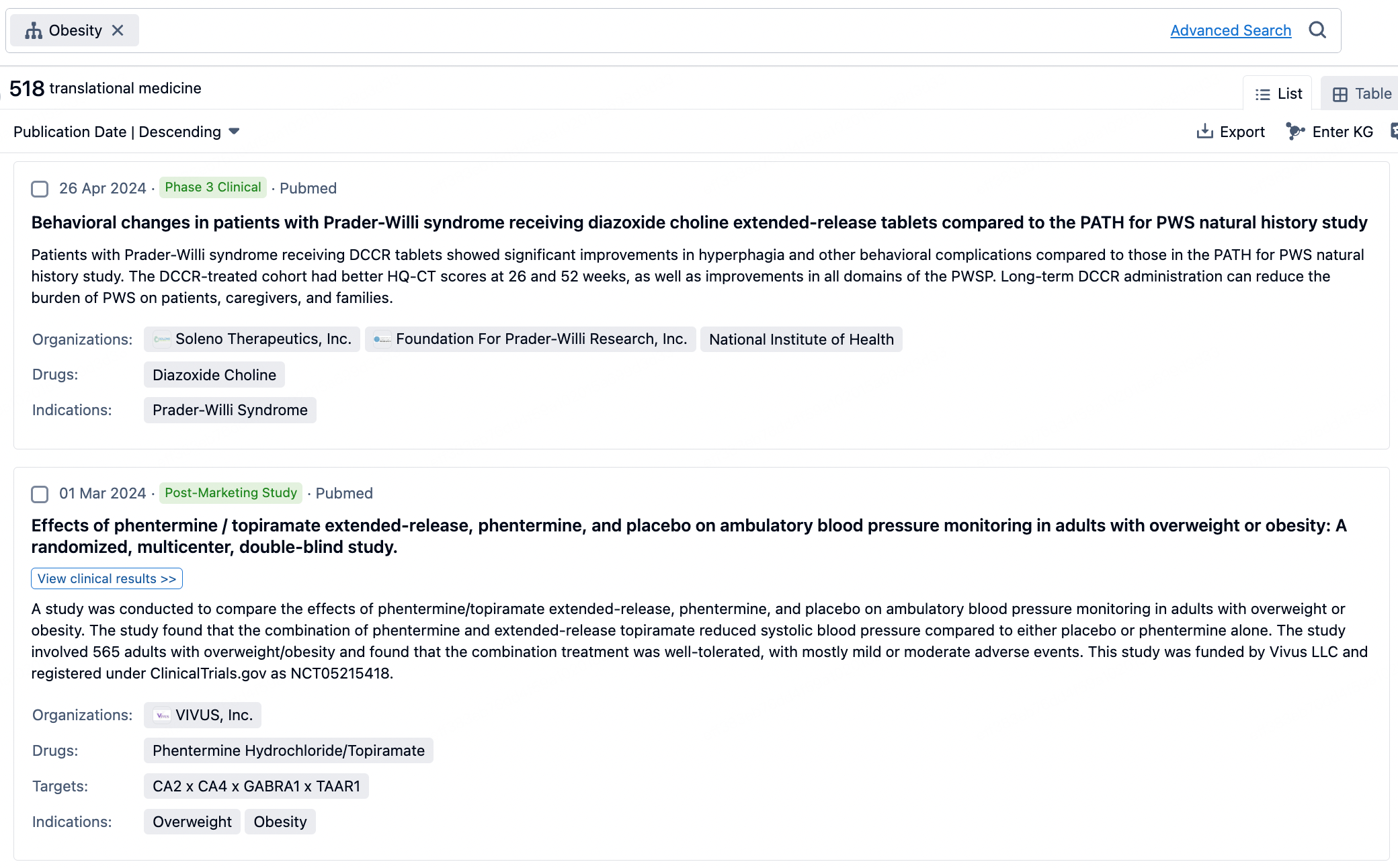
By clicking the analysis button, you can observe that GLP-1R treatment for obesity has gained significant attention over the past three years, with preclinical research still ongoing in 2023. Additionally, there are emerging potential targets, such as GDF15, among others.
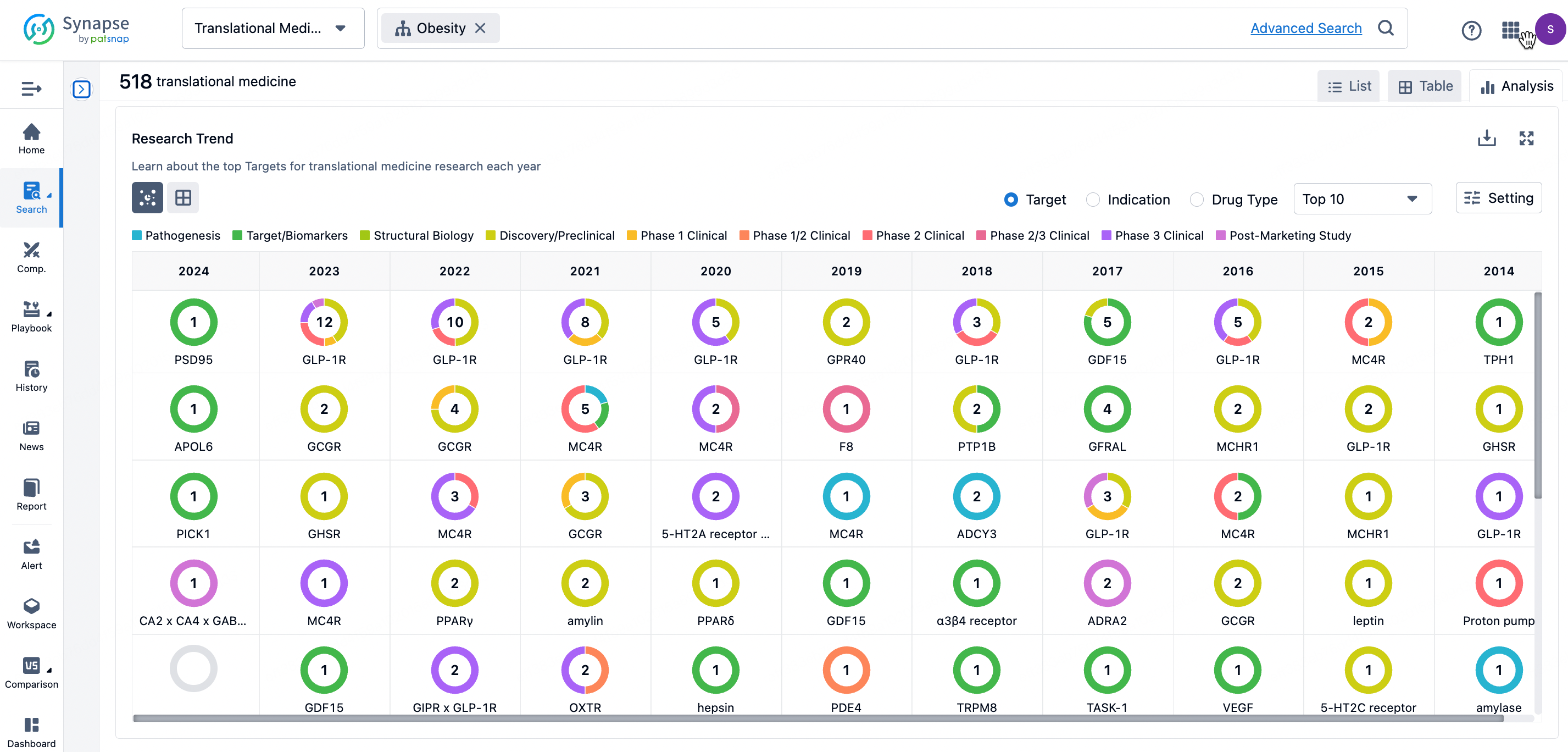
Click on the image below to go directly to the Translational Medicine search interface.