Request Demo
Patent Strategies for AI-Designed Biologics: Current Landscape
9 May 2025
In recent years, the field of biologics has experienced a paradigm shift with the advent of artificial intelligence (AI) technologies. These advancements have changed how biologic drugs are discovered and developed, leading to faster and more efficient processes. However, with these technological innovations come new challenges and opportunities, particularly in the realm of intellectual property. The current landscape for patenting AI-designed biologics is both complex and evolving, requiring a strategic approach to effectively protect innovations while navigating potential legal and ethical considerations.
AI in drug discovery has become a powerful tool, offering unparalleled capabilities in processing vast datasets, predicting molecular behavior, and identifying promising therapeutic candidates. As AI continues to contribute to breakthroughs in biologics, it raises fundamental questions about inventorship and patent eligibility. One of the key challenges is determining the role of AI in the invention process. Traditional patent systems are designed to recognize human inventors, but AI's contributions blur these lines, prompting debates about whether AI itself can be considered an inventor or if the human operators should solely hold that distinction.
To navigate these complexities, companies must first ensure that their AI algorithms and models are well-documented. This includes maintaining comprehensive records of the AI's development process, data inputs, and decision-making pathways. By doing so, organizations can establish a clear link between human input and AI-driven outcomes, supporting claims of human inventorship while acknowledging the AI's role in innovation.
Another critical aspect of patent strategy involves the patentability of AI-designed biologics. Patent offices are still grappling with how to handle these applications, as existing laws were not created with AI in mind. To increase the chances of securing patent protection, applicants should focus on demonstrating the novelty, non-obviousness, and utility of their AI-discovered inventions. This often requires a deep understanding of the technology and its applications, as well as the ability to clearly articulate how the AI has contributed to the discovery of a new biologic entity or method.
Moreover, the competitive landscape for biologics necessitates a proactive approach to patent strategy. Companies should conduct thorough freedom-to-operate analyses to identify any potential infringement risks and consider filing for patent protection in multiple jurisdictions to safeguard their interests globally. Collaborations and partnerships with other entities can also play a pivotal role, providing access to complementary technologies and expertise while sharing the risks associated with development and commercialization.
Ethical considerations are also becoming increasingly relevant as AI-designed biologics advance. Companies need to be mindful of the implications of AI-driven discoveries, particularly regarding data privacy, algorithmic bias, and the ethical use of AI in drug development. By addressing these concerns proactively, organizations can build trust with stakeholders and enhance the credibility of their innovations.
In conclusion, the integration of AI into biologics presents both exciting opportunities and significant challenges for patent strategy. As the landscape continues to evolve, companies must adopt a multifaceted approach to intellectual property management, focusing on clear documentation, strategic patent filings, and ethical considerations. By doing so, they can effectively protect their innovations, position themselves competitively in the market, and contribute to the advancement of AI-driven biologics.
AI in drug discovery has become a powerful tool, offering unparalleled capabilities in processing vast datasets, predicting molecular behavior, and identifying promising therapeutic candidates. As AI continues to contribute to breakthroughs in biologics, it raises fundamental questions about inventorship and patent eligibility. One of the key challenges is determining the role of AI in the invention process. Traditional patent systems are designed to recognize human inventors, but AI's contributions blur these lines, prompting debates about whether AI itself can be considered an inventor or if the human operators should solely hold that distinction.
To navigate these complexities, companies must first ensure that their AI algorithms and models are well-documented. This includes maintaining comprehensive records of the AI's development process, data inputs, and decision-making pathways. By doing so, organizations can establish a clear link between human input and AI-driven outcomes, supporting claims of human inventorship while acknowledging the AI's role in innovation.
Another critical aspect of patent strategy involves the patentability of AI-designed biologics. Patent offices are still grappling with how to handle these applications, as existing laws were not created with AI in mind. To increase the chances of securing patent protection, applicants should focus on demonstrating the novelty, non-obviousness, and utility of their AI-discovered inventions. This often requires a deep understanding of the technology and its applications, as well as the ability to clearly articulate how the AI has contributed to the discovery of a new biologic entity or method.
Moreover, the competitive landscape for biologics necessitates a proactive approach to patent strategy. Companies should conduct thorough freedom-to-operate analyses to identify any potential infringement risks and consider filing for patent protection in multiple jurisdictions to safeguard their interests globally. Collaborations and partnerships with other entities can also play a pivotal role, providing access to complementary technologies and expertise while sharing the risks associated with development and commercialization.
Ethical considerations are also becoming increasingly relevant as AI-designed biologics advance. Companies need to be mindful of the implications of AI-driven discoveries, particularly regarding data privacy, algorithmic bias, and the ethical use of AI in drug development. By addressing these concerns proactively, organizations can build trust with stakeholders and enhance the credibility of their innovations.
In conclusion, the integration of AI into biologics presents both exciting opportunities and significant challenges for patent strategy. As the landscape continues to evolve, companies must adopt a multifaceted approach to intellectual property management, focusing on clear documentation, strategic patent filings, and ethical considerations. By doing so, they can effectively protect their innovations, position themselves competitively in the market, and contribute to the advancement of AI-driven biologics.
Discover Eureka LS: AI Agents Built for Biopharma Efficiency
Stop wasting time on biopharma busywork. Meet Eureka LS - your AI agent squad for drug discovery.
▶ See how 50+ research teams saved 300+ hours/month
From reducing screening time to simplifying Markush drafting, our AI Agents are ready to deliver immediate value. Explore Eureka LS today and unlock powerful capabilities that help you innovate with confidence.
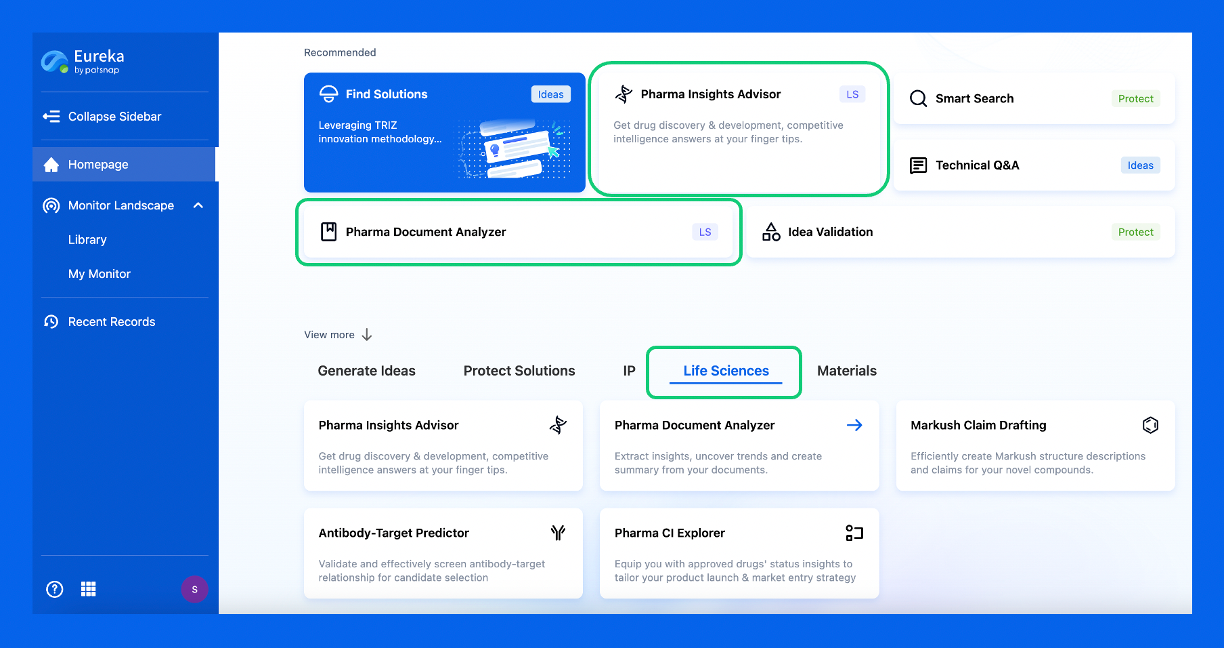
AI Agents Built for Biopharma Breakthroughs
Accelerate discovery. Empower decisions. Transform outcomes.
Get started for free today!
Accelerate Strategic R&D decision making with Synapse, PatSnap’s AI-powered Connected Innovation Intelligence Platform Built for Life Sciences Professionals.
Start your data trial now!
Synapse data is also accessible to external entities via APIs or data packages. Empower better decisions with the latest in pharmaceutical intelligence.