Selective Modulation of Parathyroid Calcium Receptor by Potent Calcimimetics
NPS R-568 was found to enhance the effects of extracellular calcium on cytoplasmic calcium levels and PTH secretion but had no effect in the absence of extracellular calcium. Both compounds were able to shift the concentration-response curves for extracellular calcium to the left, suggesting they act as positive allosteric modulators, increasing the sensitivity of the calcium receptor to extracellular calcium activation. They also increased cytoplasmic calcium levels in HEK 293 cells expressing the human parathyroid calcium receptor without affecting wild-type HEK 293 cells or other G protein-coupled receptors.
These findings indicate that NPS R-467 and NPS R-568 selectively target the calcium receptor and could represent a new class of compounds known as calcimimetics. The discovery of calcimimetics with potent and selective activity opens up a pharmacological approach to regulating plasma PTH levels, offering a potential medical therapy for primary hyperparathyroidism.
How to Use Synapse Database to Search and Analyze Translational Medicine Data?
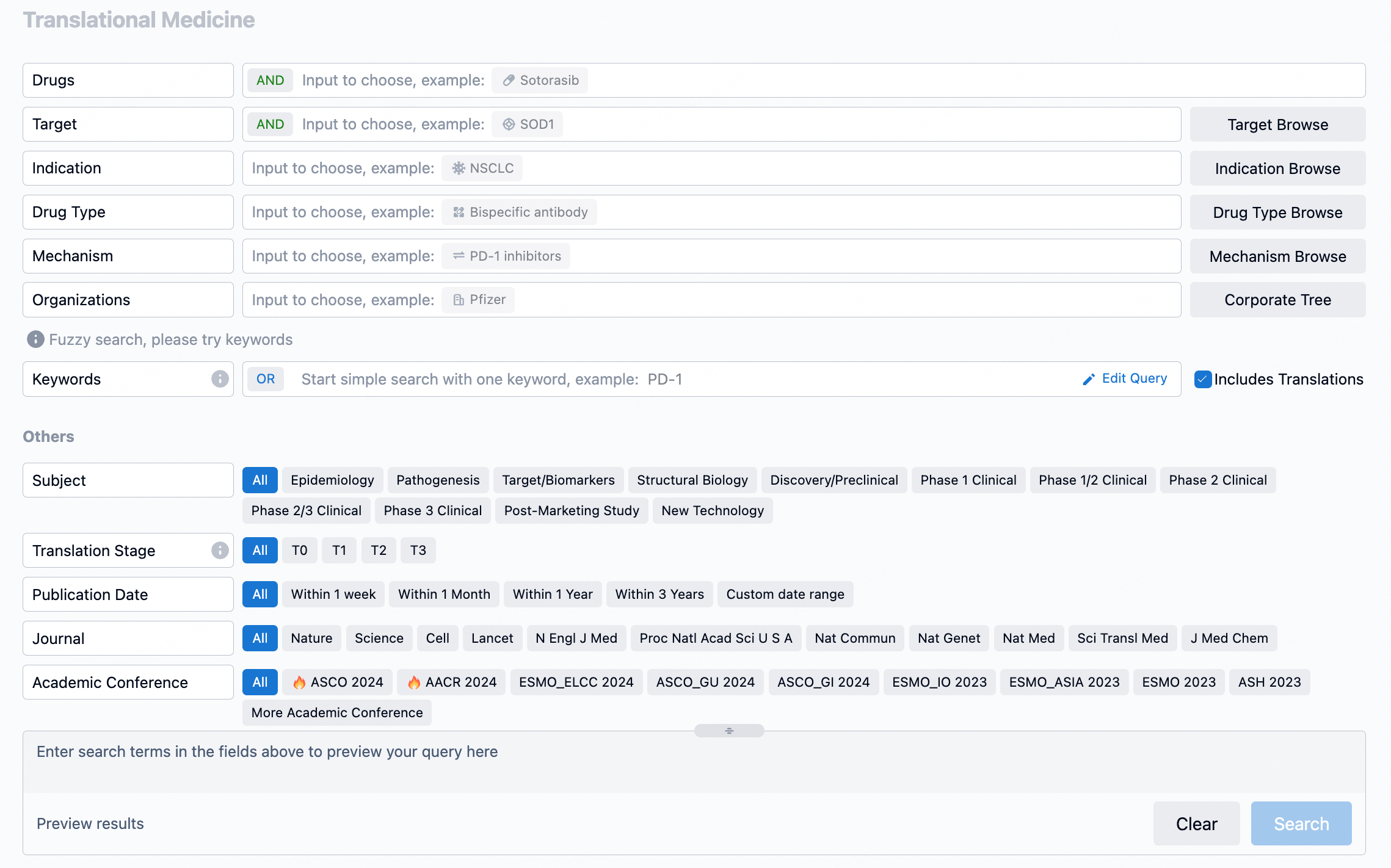
The transational medicine section of the Synapse database supports searches based on fields such as drug, target, and indication, covering the T0-T3 stages of translation. Additionally, it offers a historical conference search function as well as filtering options, view modes, translation services, and highlights summaries, providing you with a unique search experience.
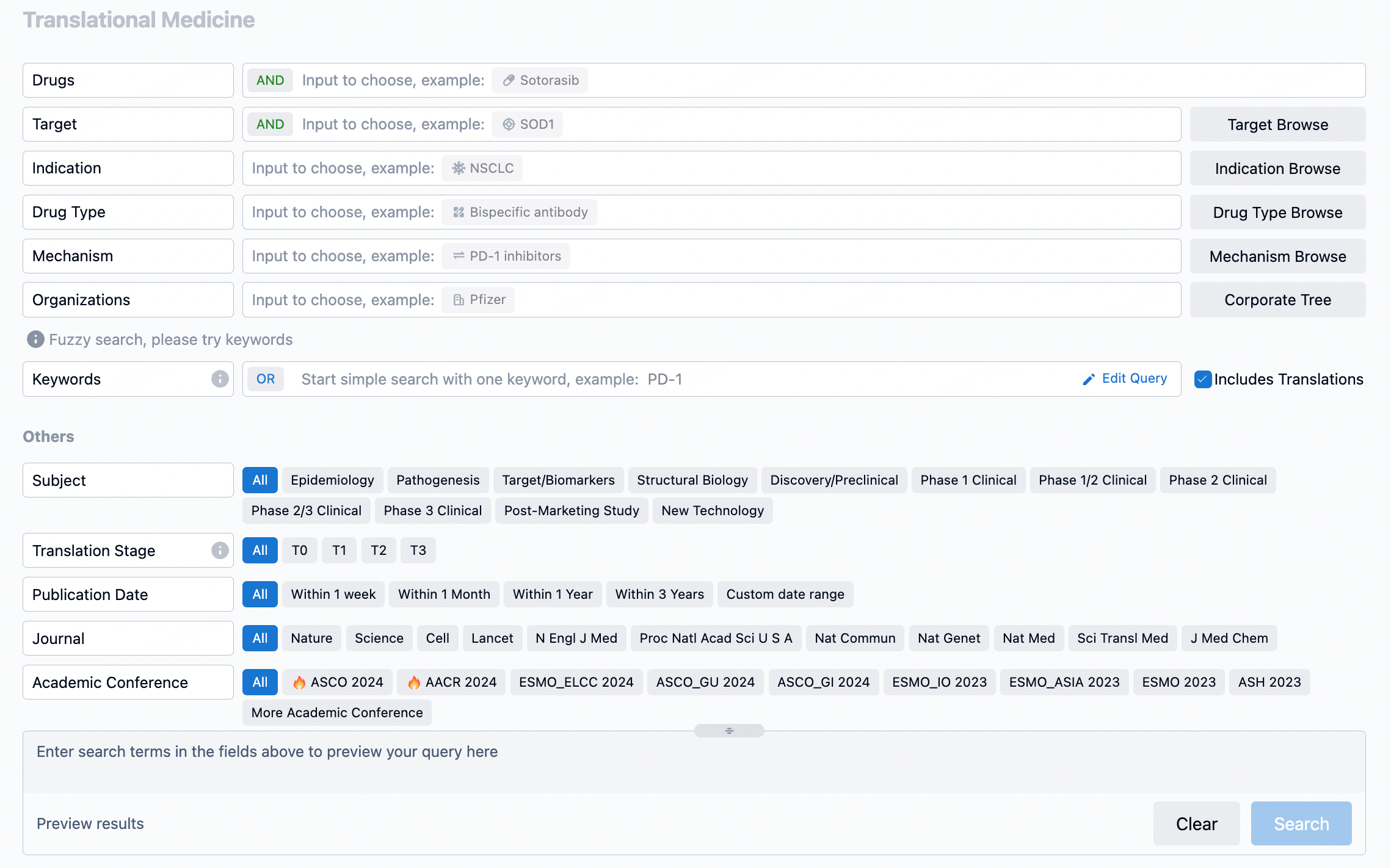
Taking obesity as an example, select "obesity" under the indication category and click search to enter the Translational Medicine results list page. By clicking on the title, you can directly navigate to the original page.
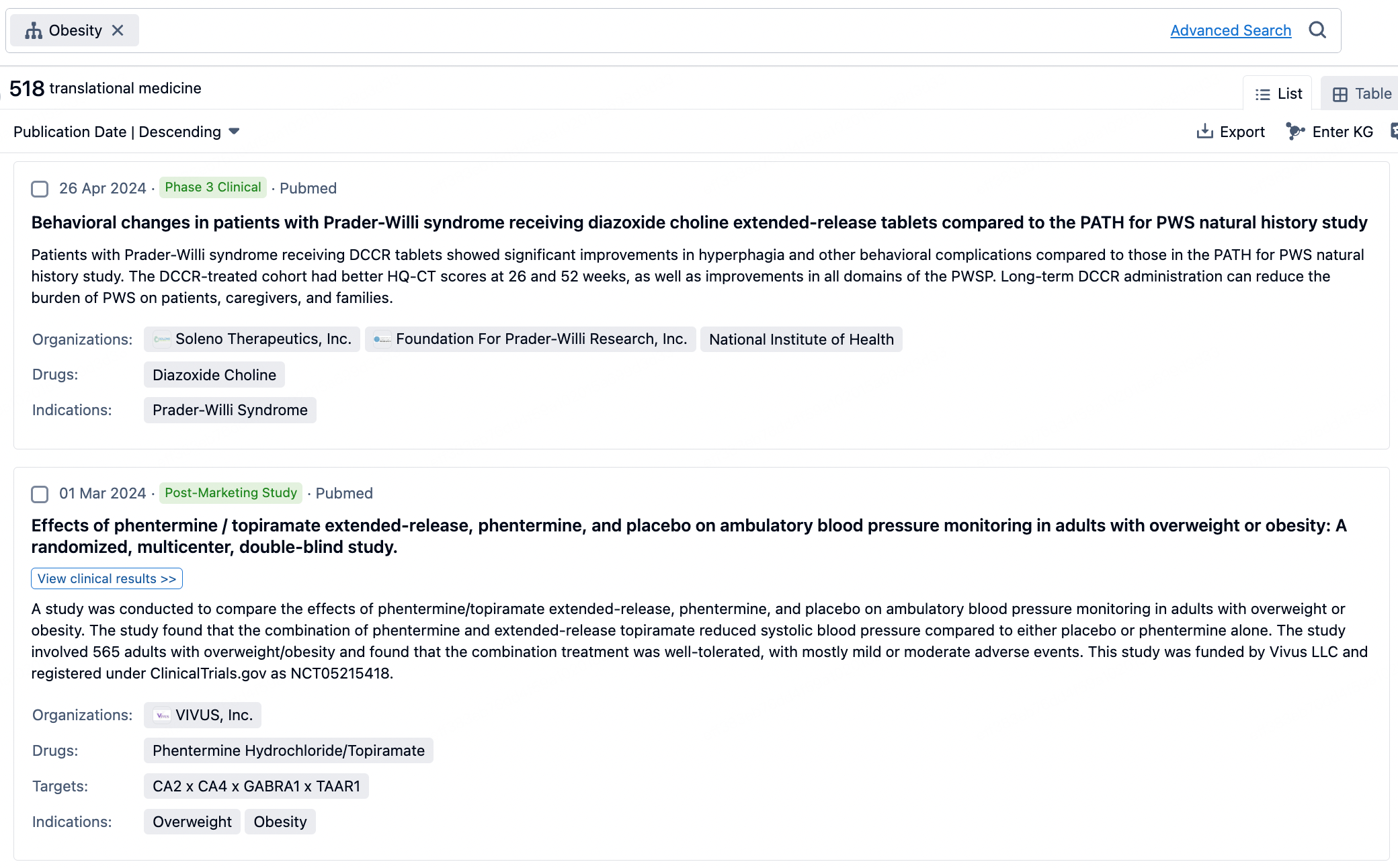
By clicking the analysis button, you can observe that GLP-1R treatment for obesity has gained significant attention over the past three years, with preclinical research still ongoing in 2023. Additionally, there are emerging potential targets, such as GDF15, among others.
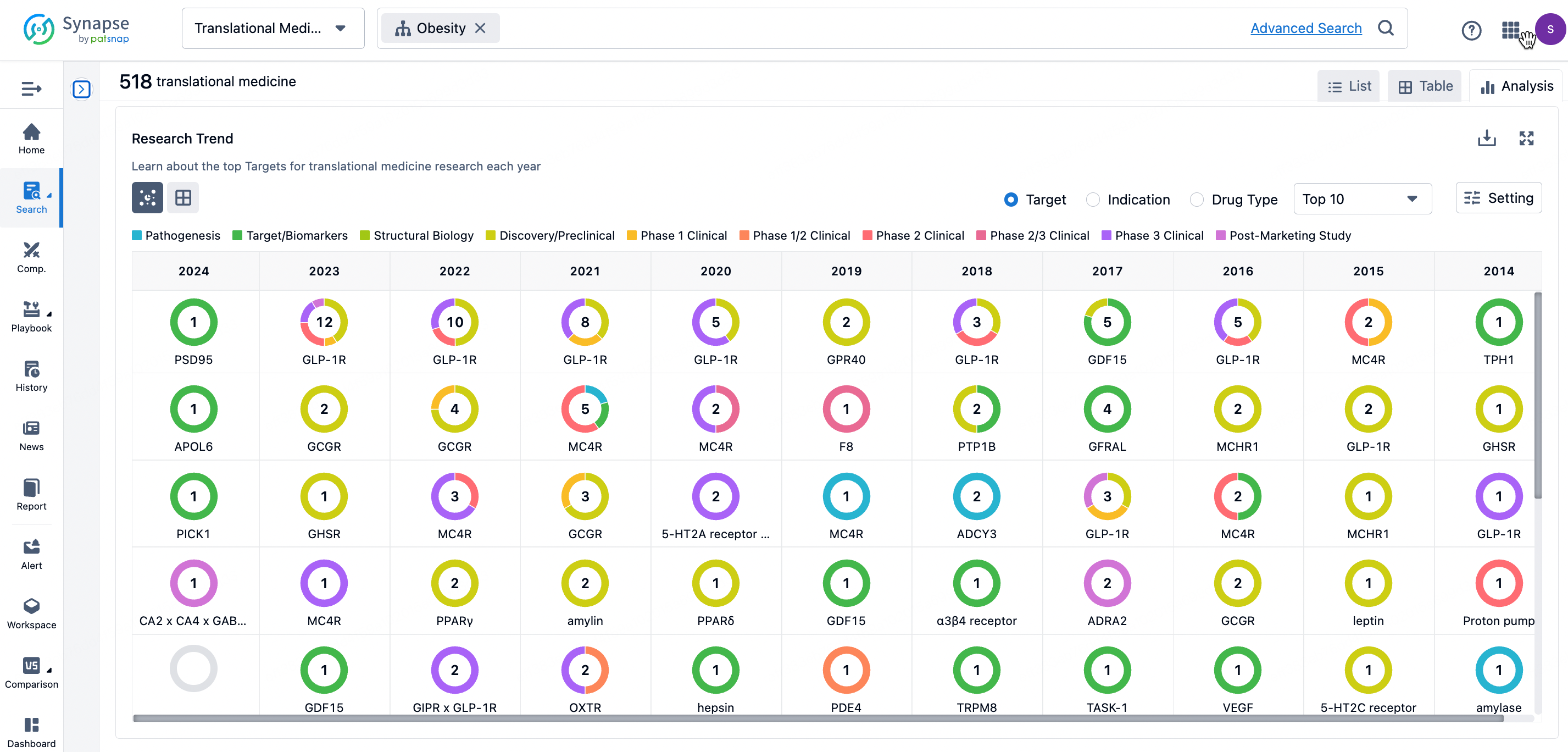
Click on the image below to go directly to the Translational Medicine search interface.