Selective PTEFb/CDK9 Inhibition by BAY 1143572: Targeting MYC to Combat Tumors and Overcome Chemoresistance
BAY 1143572 exhibits strong and specific inhibition of PTEFb-kinase at low nanomolar concentrations, with at least 50 times more selectivity over other CDKs in enzymatic tests. It also demonstrates favorable selectivity against non-CDK kinases. The compound's potent enzymatic activity leads to a broad range of antiproliferative effects against various tumor cell lines with sub-micromolar IC-50 values. The compound inhibits the phosphorylation of RNA polymerase II and reduces MYC mRNA and protein levels, leading to apoptosis induction.
In vivo, BAY 1143572 has shown efficacy at well-tolerated doses in xenograft tumor models, with partial to complete remissions observed in models with different MYC gene alterations. The treatment leads to a temporary decrease in intratumoral MYC mRNA and protein levels and induces apoptosis. The inhibition of MYC mRNA in blood cells of treated rats suggests its potential as a pharmacodynamic marker. The compound's efficacy is enhanced when combined with other chemotherapeutic agents.
Our findings support the clinical development of BAY 1143572 for advanced cancer patients, especially for cancers reliant on MYC transcription and other short-lived survival proteins. The study is published in the proceedings of the American Association for Cancer Research's 106th Annual Meeting.
How to Use Synapse Database to Search and Analyze Translational Medicine Data?
The transational medicine section of the Synapse database supports searches based on fields such as drug, target, and indication, covering the T0-T3 stages of translation. Additionally, it offers a historical conference search function as well as filtering options, view modes, translation services, and highlights summaries, providing you with a unique search experience.
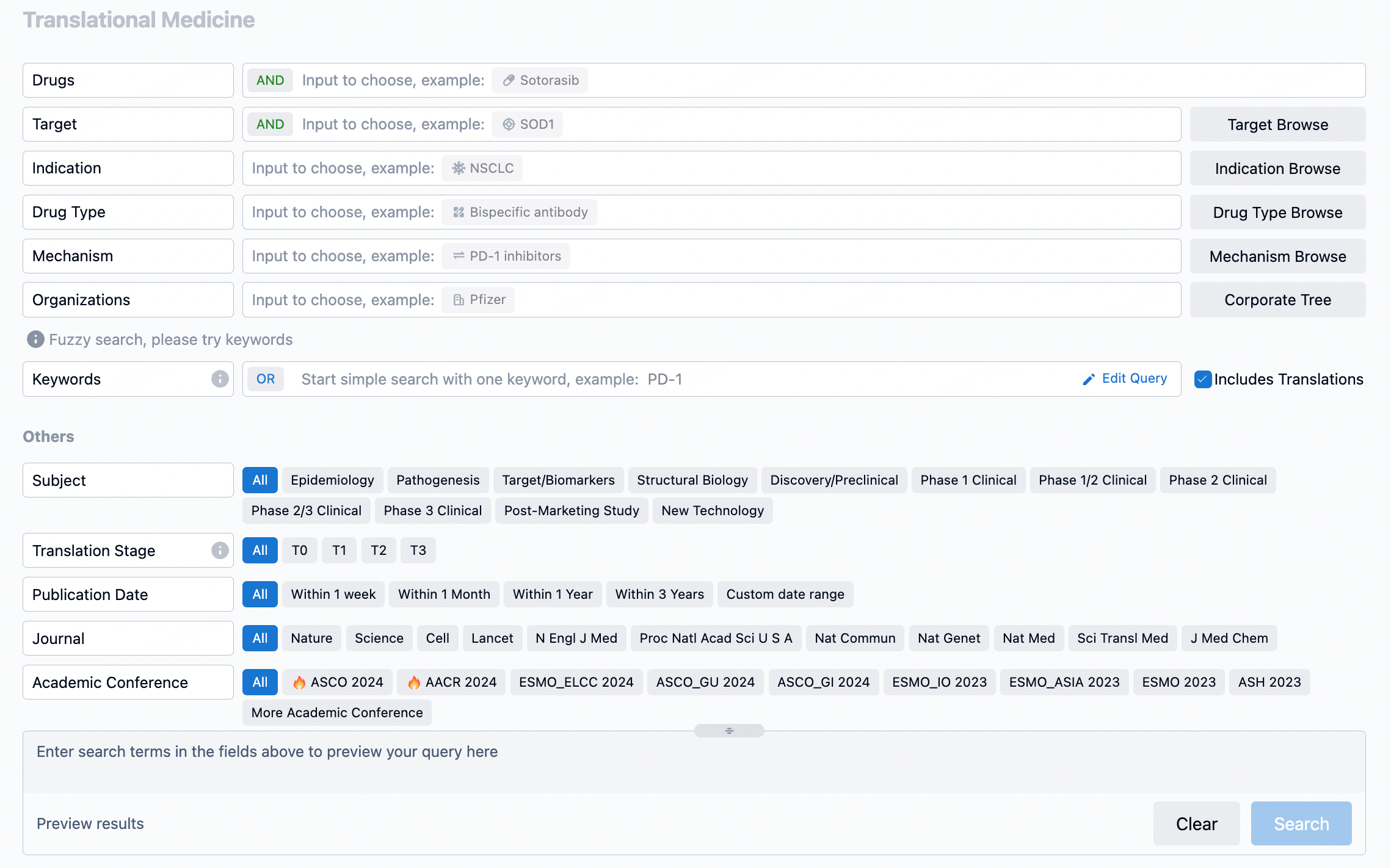
Taking obesity as an example, select "obesity" under the indication category and click search to enter the Translational Medicine results list page. By clicking on the title, you can directly navigate to the original page.
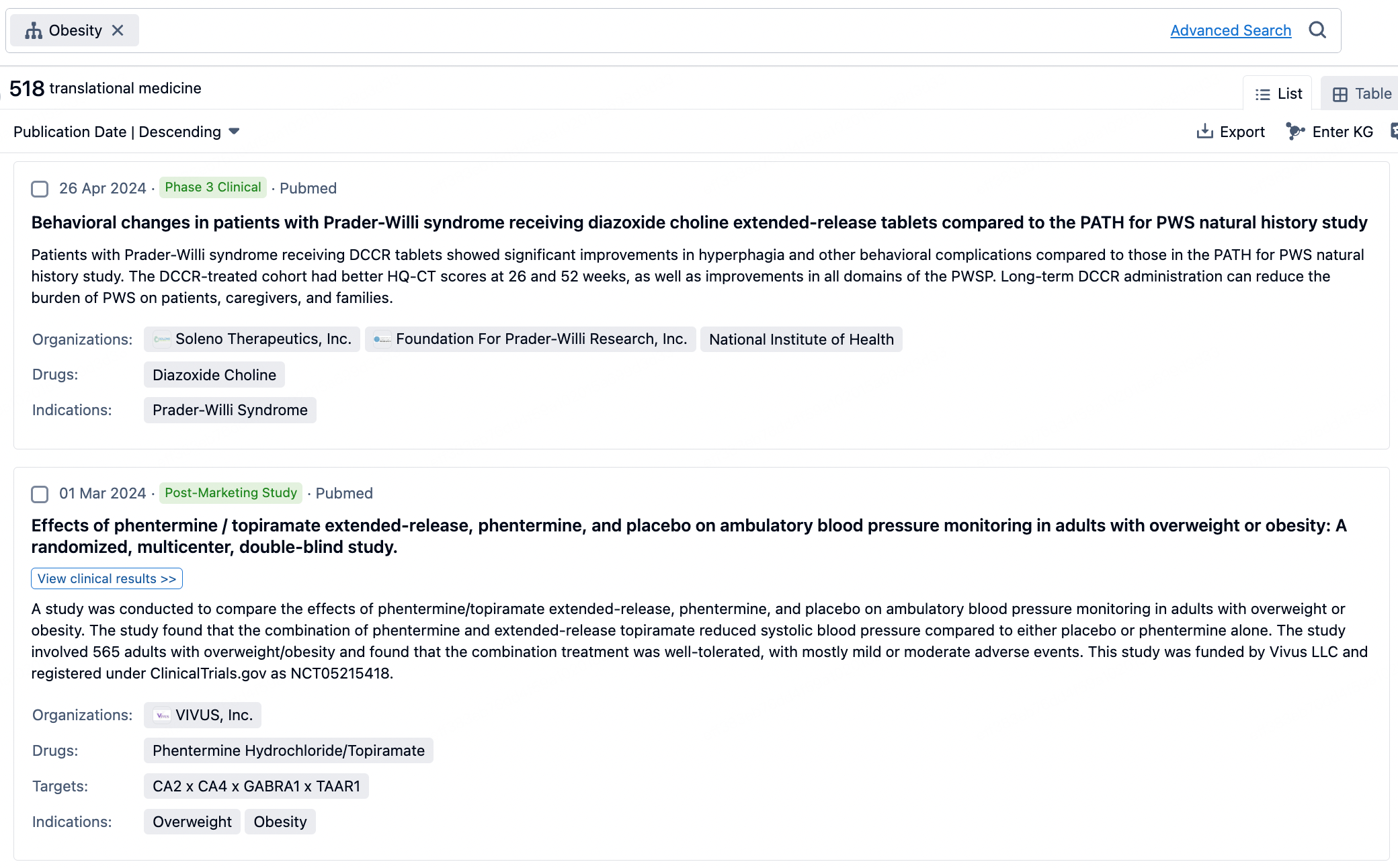
By clicking the analysis button, you can observe that GLP-1R treatment for obesity has gained significant attention over the past three years, with preclinical research still ongoing in 2023. Additionally, there are emerging potential targets, such as GDF15, among others.
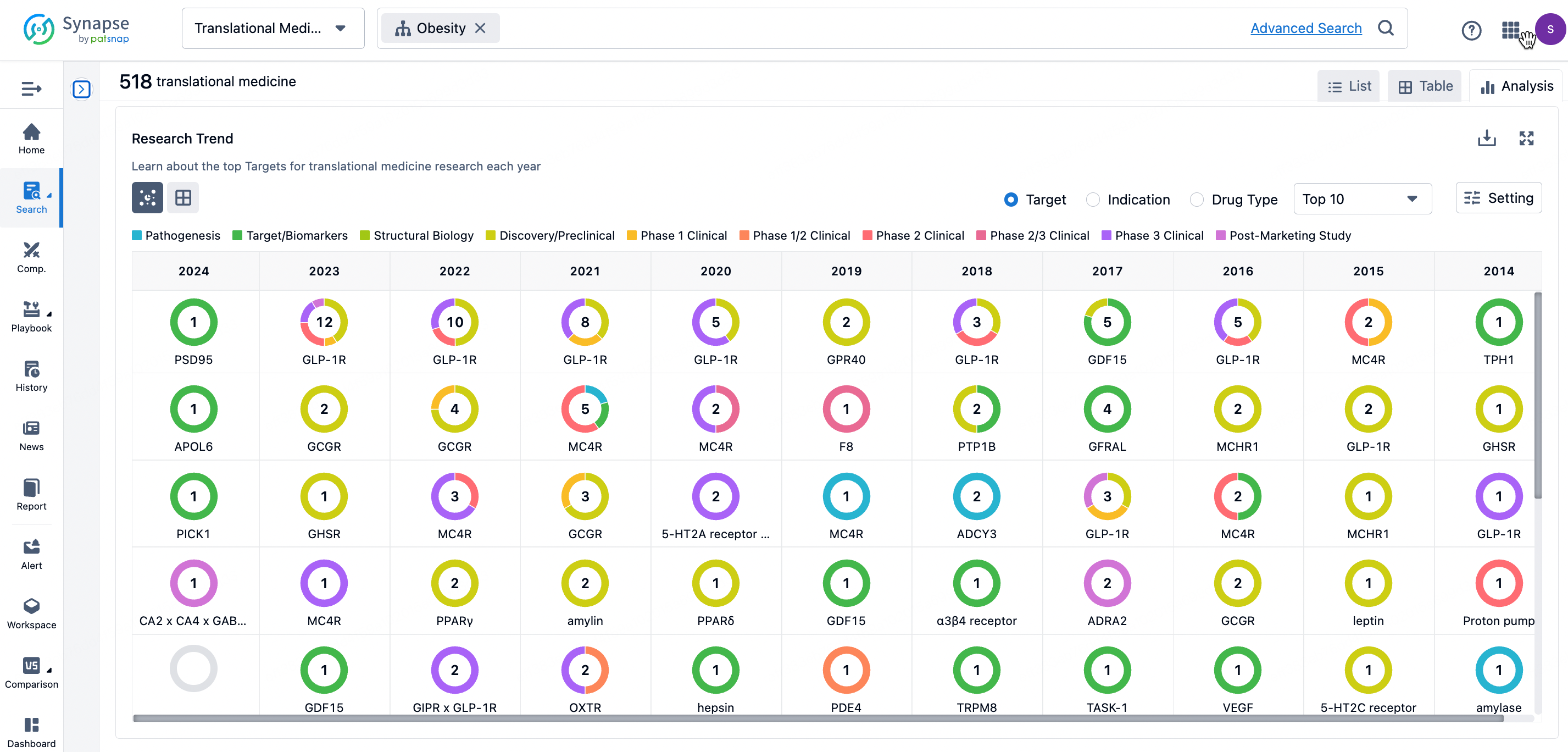
Click on the image below to go directly to the Translational Medicine search interface.