Targeting CEACAM1 with MG1124: Advancing Cancer Immunotherapy and Combination Strategies
CEACAM1 is a unique CEACAM family member found on immune cells like T and NK cells, which can suppress inflammatory responses. It has been linked to cancer progression, and a new monoclonal antibody, MG1124, has been developed to target it. This antibody was tested for its ability to activate T cells and for its efficacy in NK and cytotoxic T cell-mediated killing of tumor cells. The study also looked at MG1124's anti-tumor effects in humanized mouse models and its pharmacokinetics in cynomolgus monkeys.
MG1124 was found to bind specifically to CEACAM1, blocking its homophilic interactions and enhancing immune responses. It increased the activity of NK and cytotoxic T cells and showed anti-tumor effects in mouse models with CEACAM1-expressing NSCLC. The antibody also demonstrated synergistic effects when combined with pembrolizumab in NSCLC models. In monkeys, MG1124 had a half-life of 14 to 17 days and showed dose-proportional pharmacokinetics.
The findings suggest that MG1124 could be a promising therapeutic agent for cancer immunotherapy, particularly in combination with PD-1 blockade, and warrants further clinical development.
How to Use Synapse Database to Search and Analyze Translational Medicine Data?
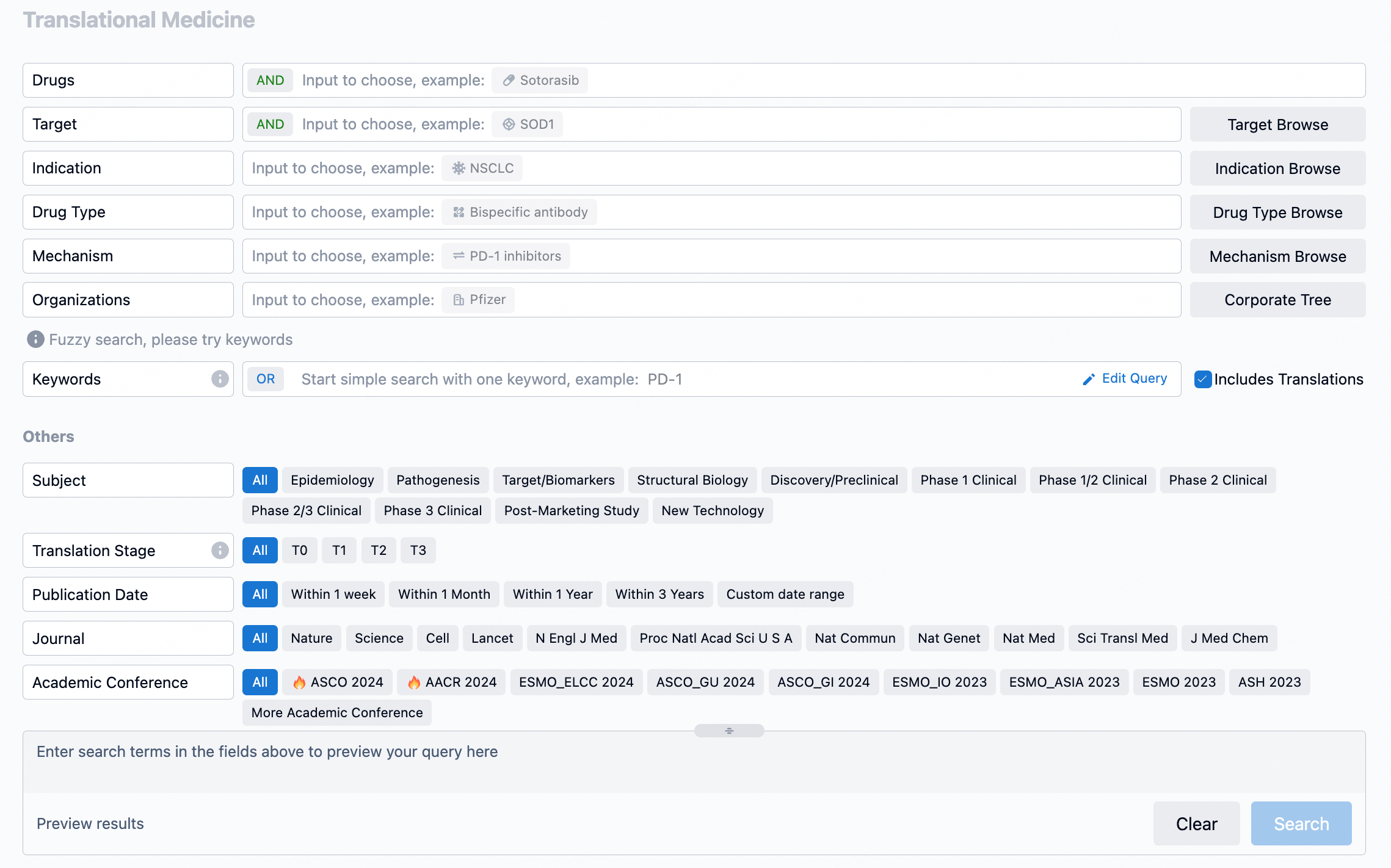
The transational medicine section of the Synapse database supports searches based on fields such as drug, target, and indication, covering the T0-T3 stages of translation. Additionally, it offers a historical conference search function as well as filtering options, view modes, translation services, and highlights summaries, providing you with a unique search experience.
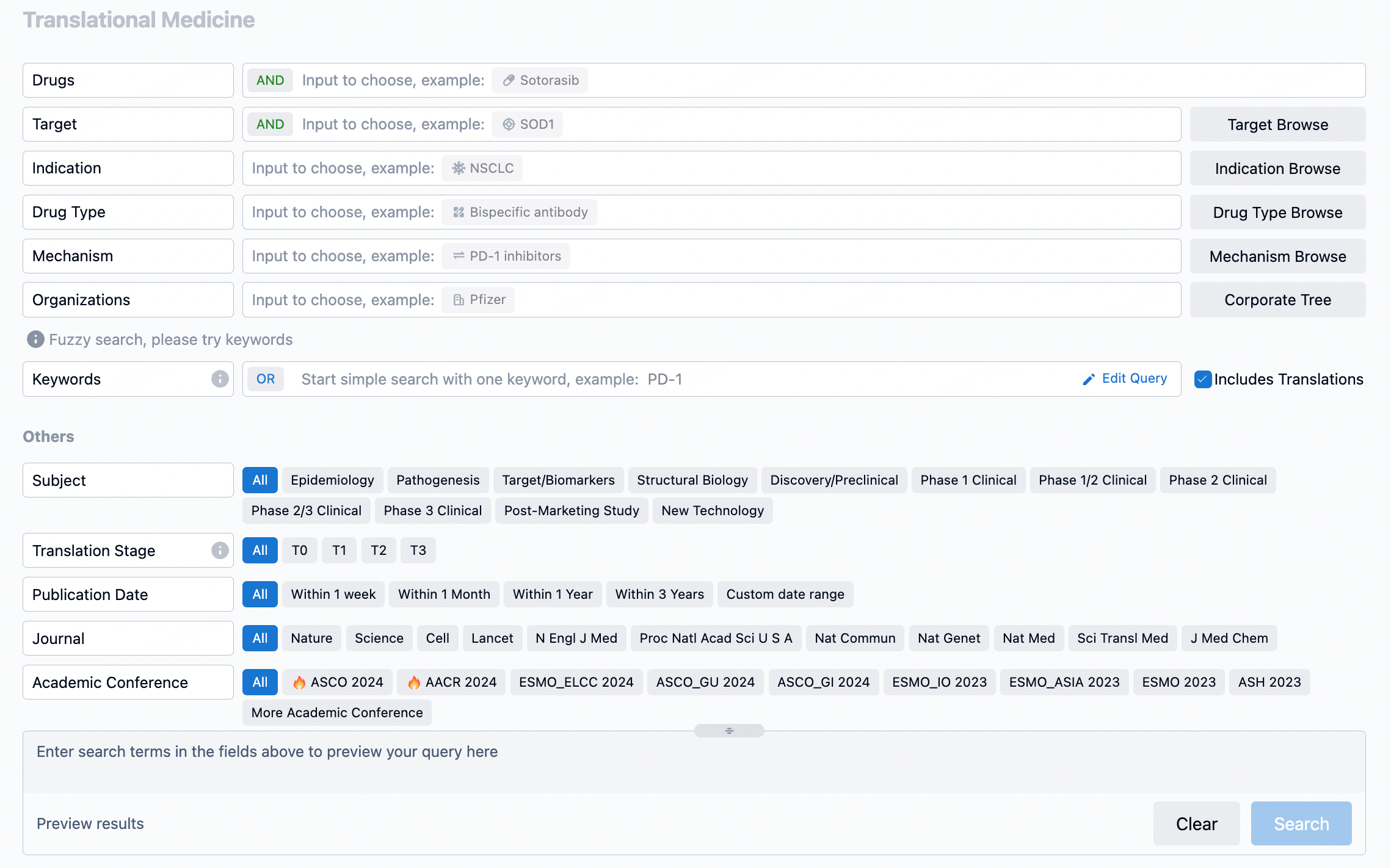
Taking obesity as an example, select "obesity" under the indication category and click search to enter the Translational Medicine results list page. By clicking on the title, you can directly navigate to the original page.
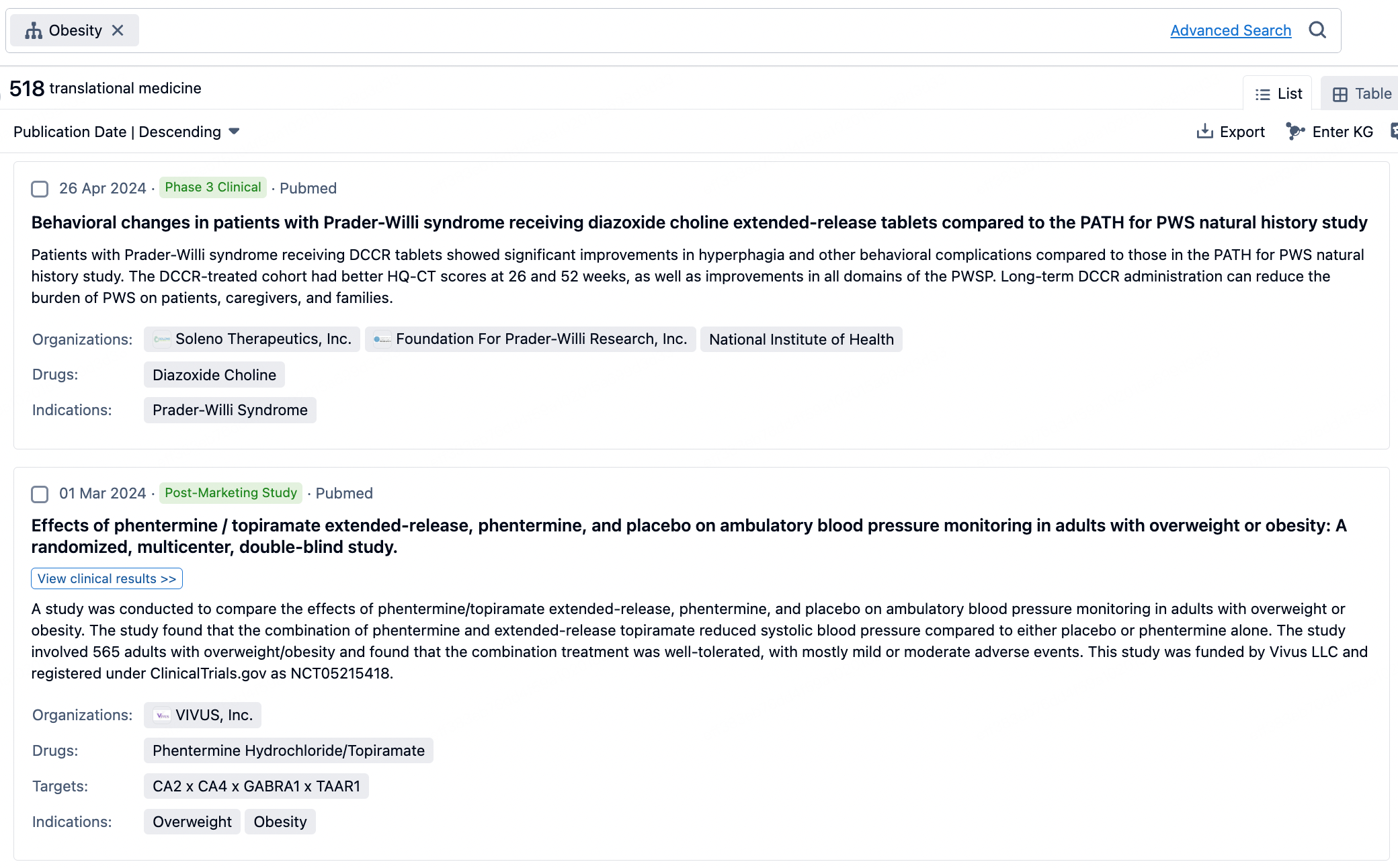
By clicking the analysis button, you can observe that GLP-1R treatment for obesity has gained significant attention over the past three years, with preclinical research still ongoing in 2023. Additionally, there are emerging potential targets, such as GDF15, among others.
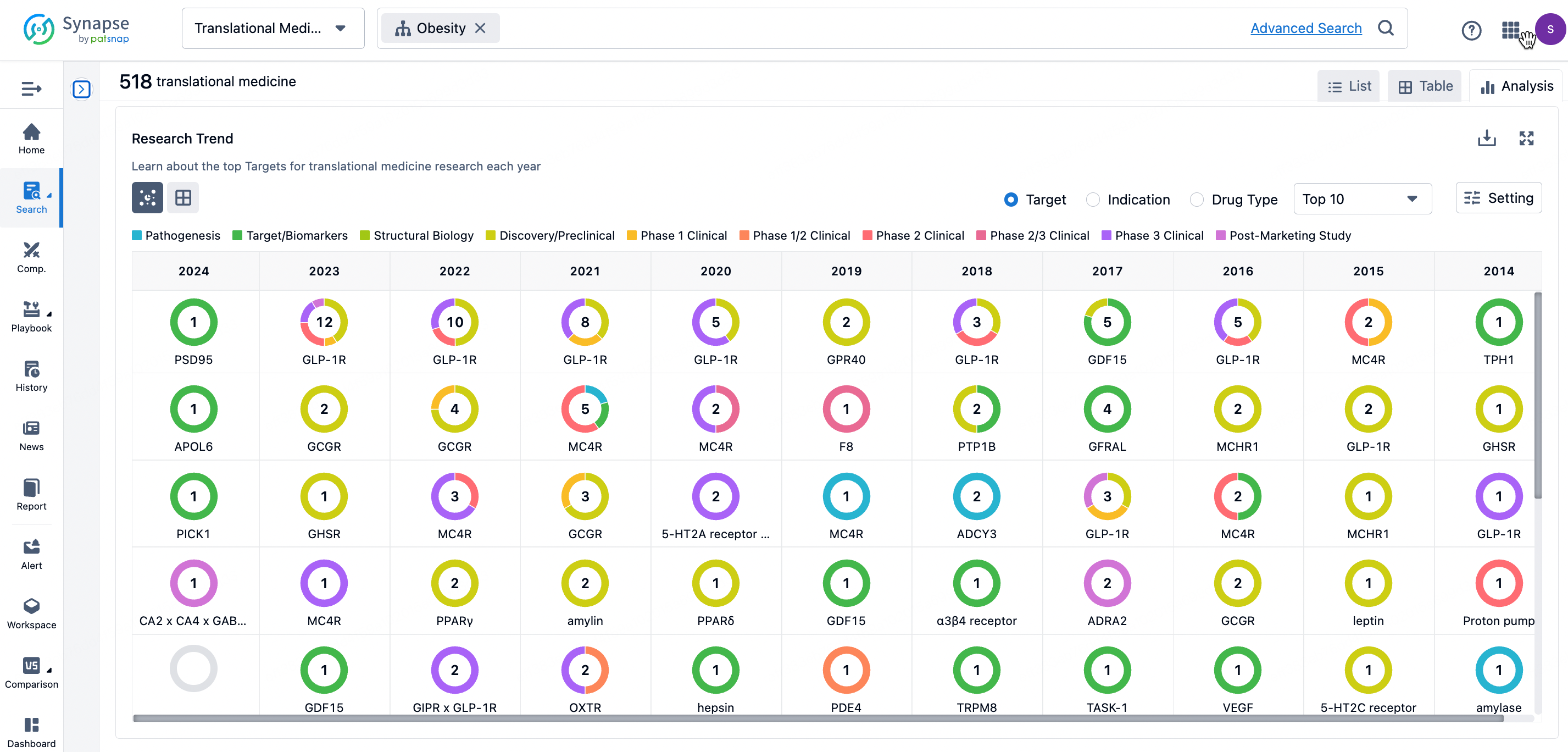
Click on the image below to go directly to the Translational Medicine search interface.