Targeting CRAC Channels: The Antitumor Potential of RP4010 Inhibitor
The potency of RP4010 was evaluated through various assays. In a thapsigargin-induced calcium influx assay using Jurkat cells, RP4010 showed significant efficacy in inhibiting CRAC channel activity, with an IC50 of 60 nM. The compound also reduced NFAT-regulated signaling in a dose-dependent manner, with half-maximal inhibition at 100 nM.
Using the OncoPanel cytotoxicity assay, it was found that RP4010 effectively inhibited the growth of cancer cells from various tumor types, with an EC50 ranging from 1-10 μM. Notably, the compound did not affect the viability of normal lung cells, suggesting its specificity for cancerous cells.
Furthermore, RP4010 was shown to reduce the migration of A549 cells in a dose-dependent manner, indicating its potential to inhibit metastasis. Pharmacokinetic studies revealed that RP4010 has good oral bioavailability and favorable half-life and peak plasma concentrations in mice and dogs.
The findings suggest that RP4010 has therapeutic potential across multiple cancer types by targeting the CRAC channel pathway and modulating NFAT. The study highlights the novel approach of using CRAC channel inhibition for antitumor efficacy, which could mitigate the adverse effects associated with cytotoxic agents.
The citation for this research is: Srikant Viswanadha, Seeta Nyayapathy, Sridhar Veeraraghavan, Swaroop Vakkalanka. Antitumor activity of RP4010, a novel small-molecule inhibitor of the calcium release-activated calcium (CRAC) channel pathway [abstract]. In: Proceedings of the AACR-NCI-EORTC International Conference: Molecular Targets and Cancer Therapeutics; 2017 Oct 26-30; Philadelphia, PA. Philadelphia (PA): AACR; Mol Cancer Ther 2018;17(1 Suppl):Abstract nr B127.
How to Use Synapse Database to Search and Analyze Translational Medicine Data?
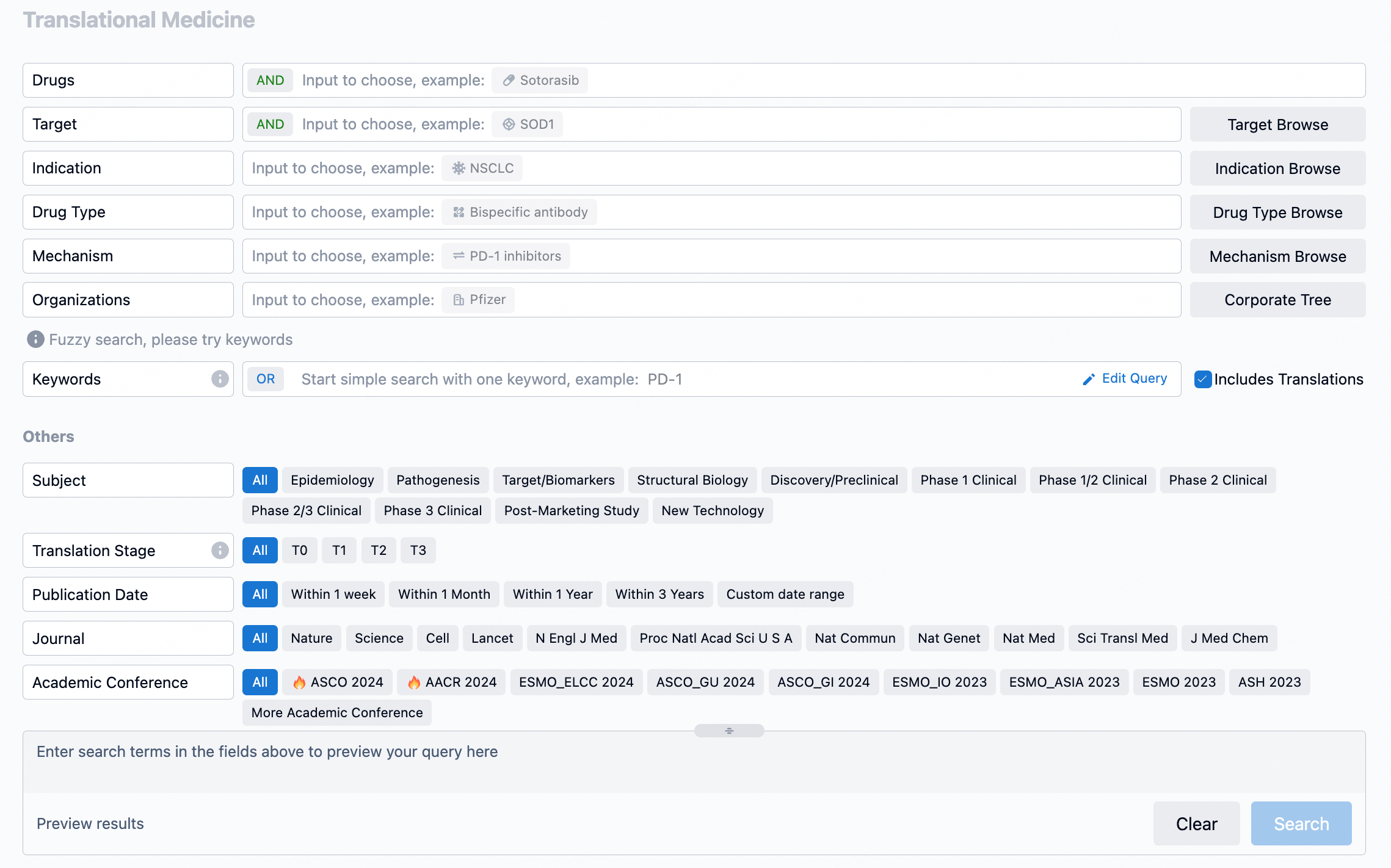
The transational medicine section of the Synapse database supports searches based on fields such as drug, target, and indication, covering the T0-T3 stages of translation. Additionally, it offers a historical conference search function as well as filtering options, view modes, translation services, and highlights summaries, providing you with a unique search experience.
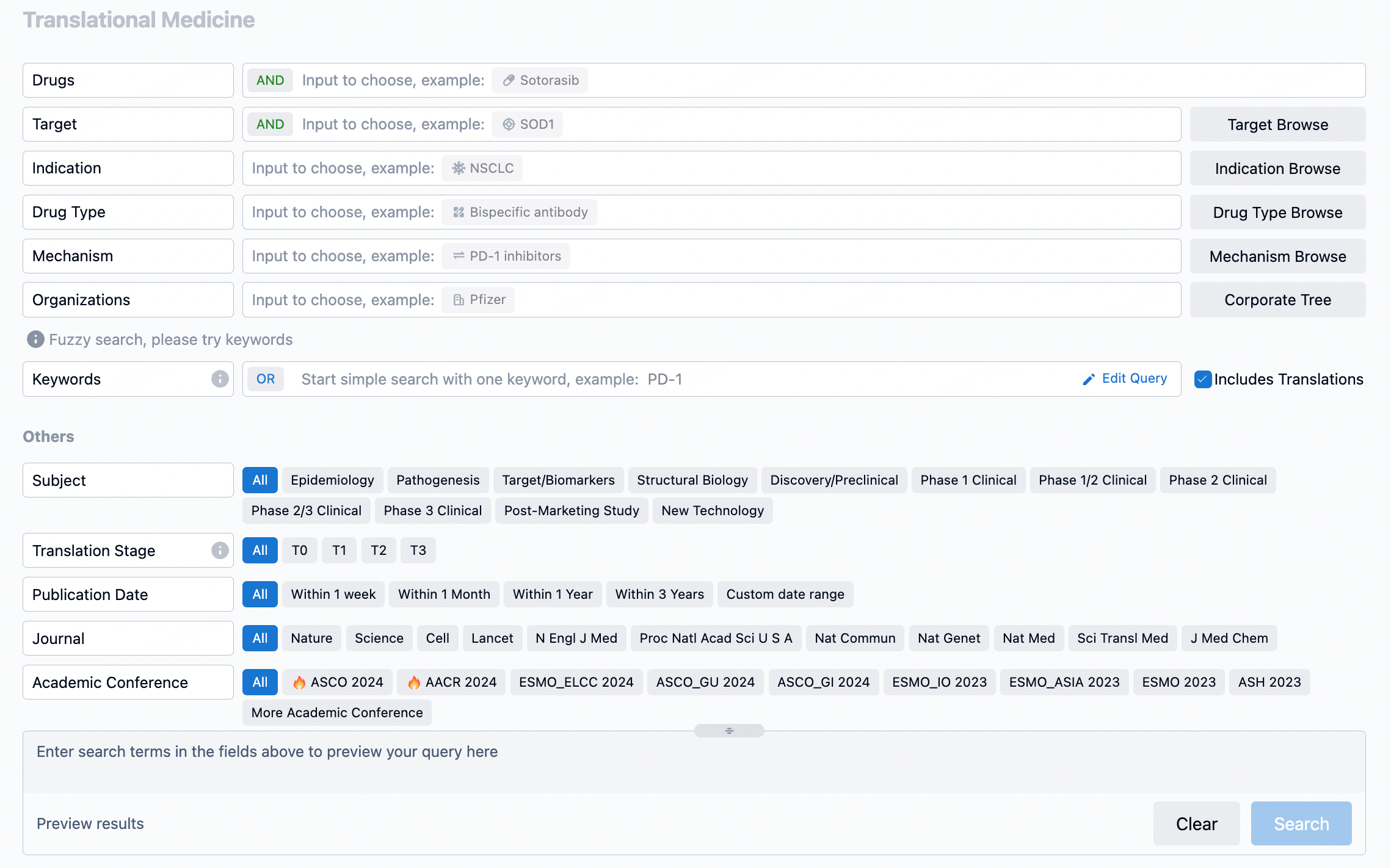
Taking obesity as an example, select "obesity" under the indication category and click search to enter the Translational Medicine results list page. By clicking on the title, you can directly navigate to the original page.
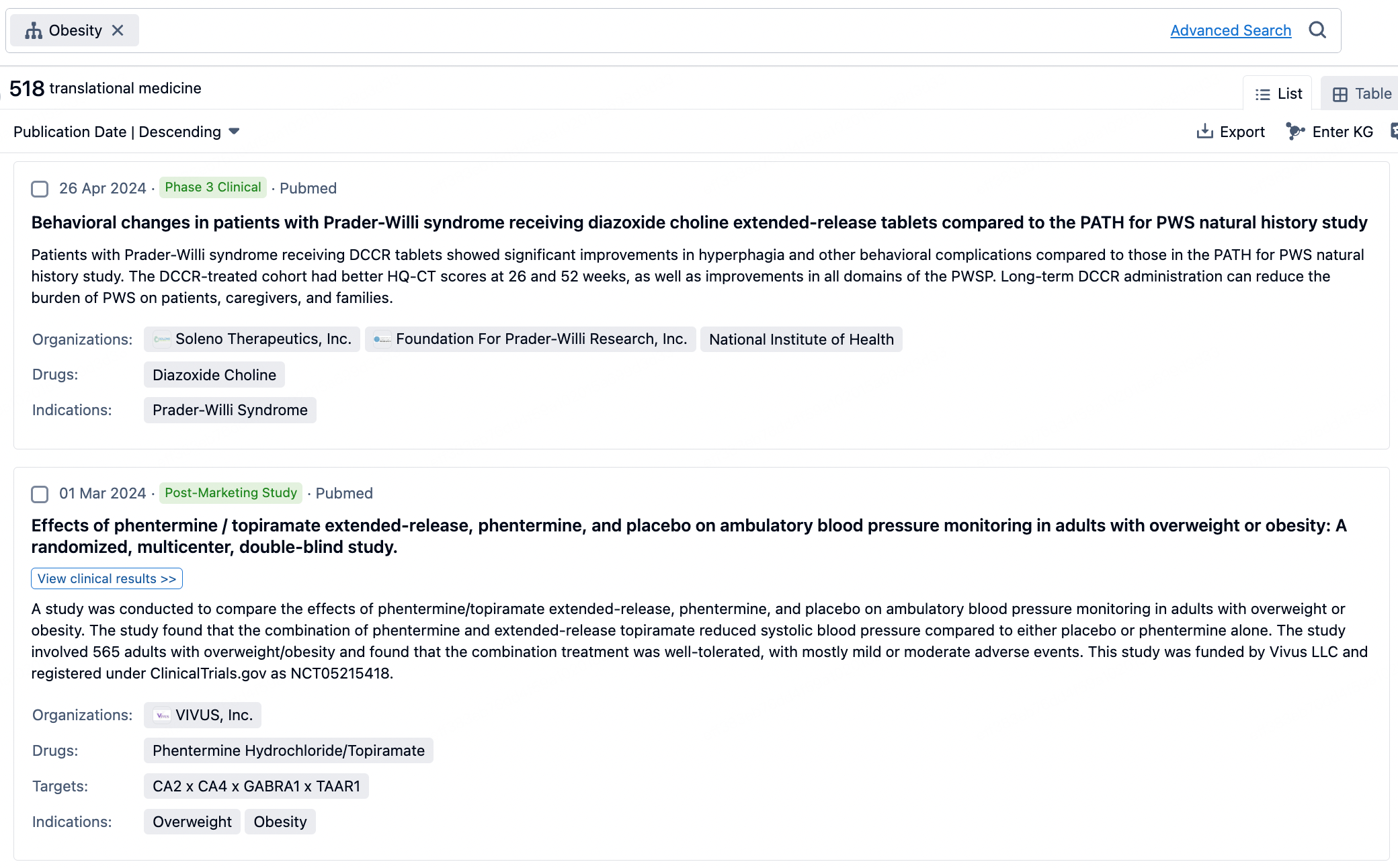
By clicking the analysis button, you can observe that GLP-1R treatment for obesity has gained significant attention over the past three years, with preclinical research still ongoing in 2023. Additionally, there are emerging potential targets, such as GDF15, among others.
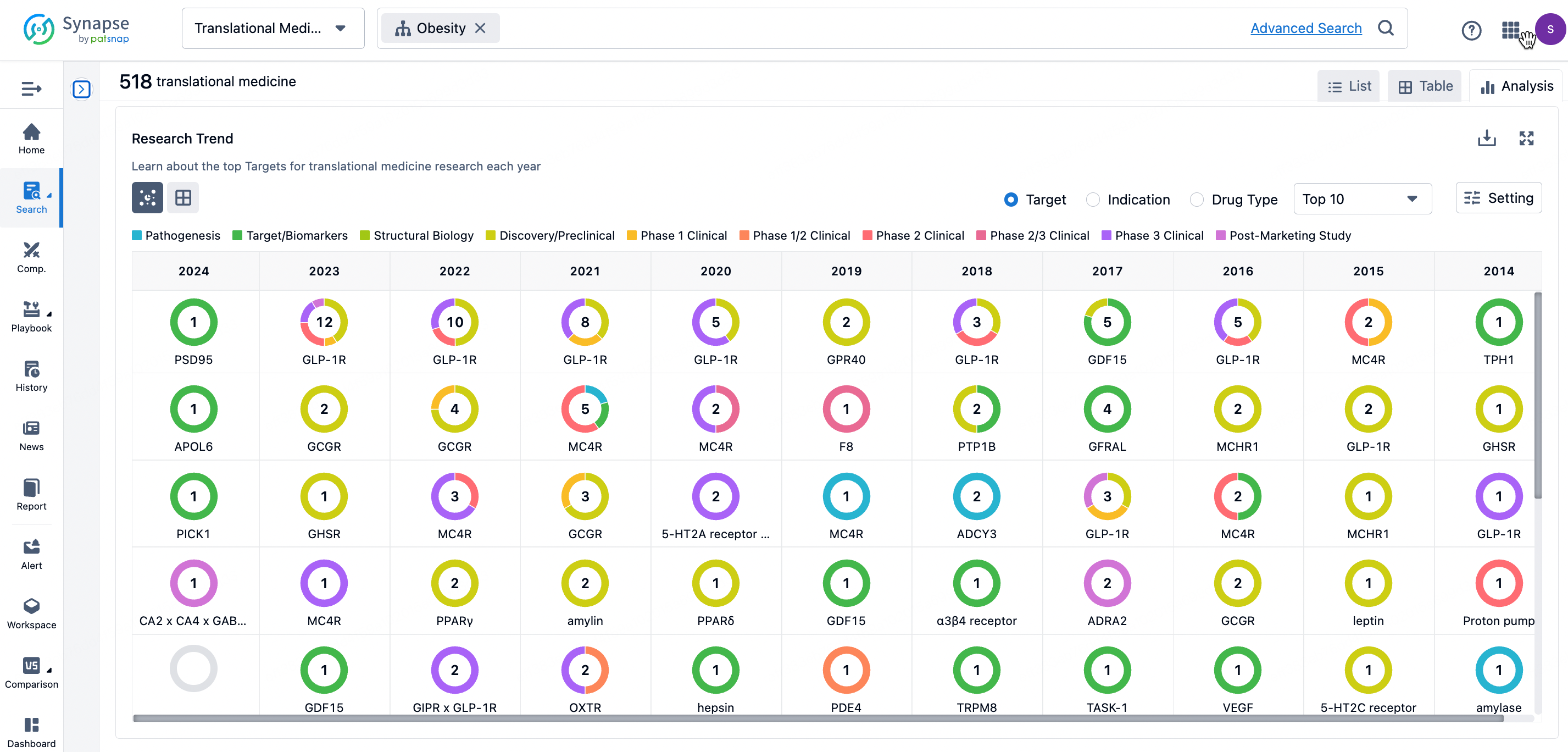
Click on the image below to go directly to the Translational Medicine search interface.