Targeting FGFR3 Alterations: The Efficacy of LY3076226 in Tumor Models with Mutations or Fusions
In vivo studies have shown that LY3076226 can effectively halt or reduce tumor growth in bladder cancer cell lines with FGFR3 mutations or fusions after four weekly doses. Over 90 patient-derived xenograft (PDX) models were assessed for FGFR3 mutations and expression, revealing several models with specific mutations. LY3076226 demonstrated significant antitumor activity in these models, including a lung PDX model with an FGFR3-TACC3 fusion and bladder PDX models with various FGFR3 mutations.
The findings suggest that LY3076226 could be a potential therapy for FGFR3-positive patients with FGFR3 mutations or fusions. The study was presented at the American Association for Cancer Research Annual Meeting in 2019.
How to Use Synapse Database to Search and Analyze Translational Medicine Data?
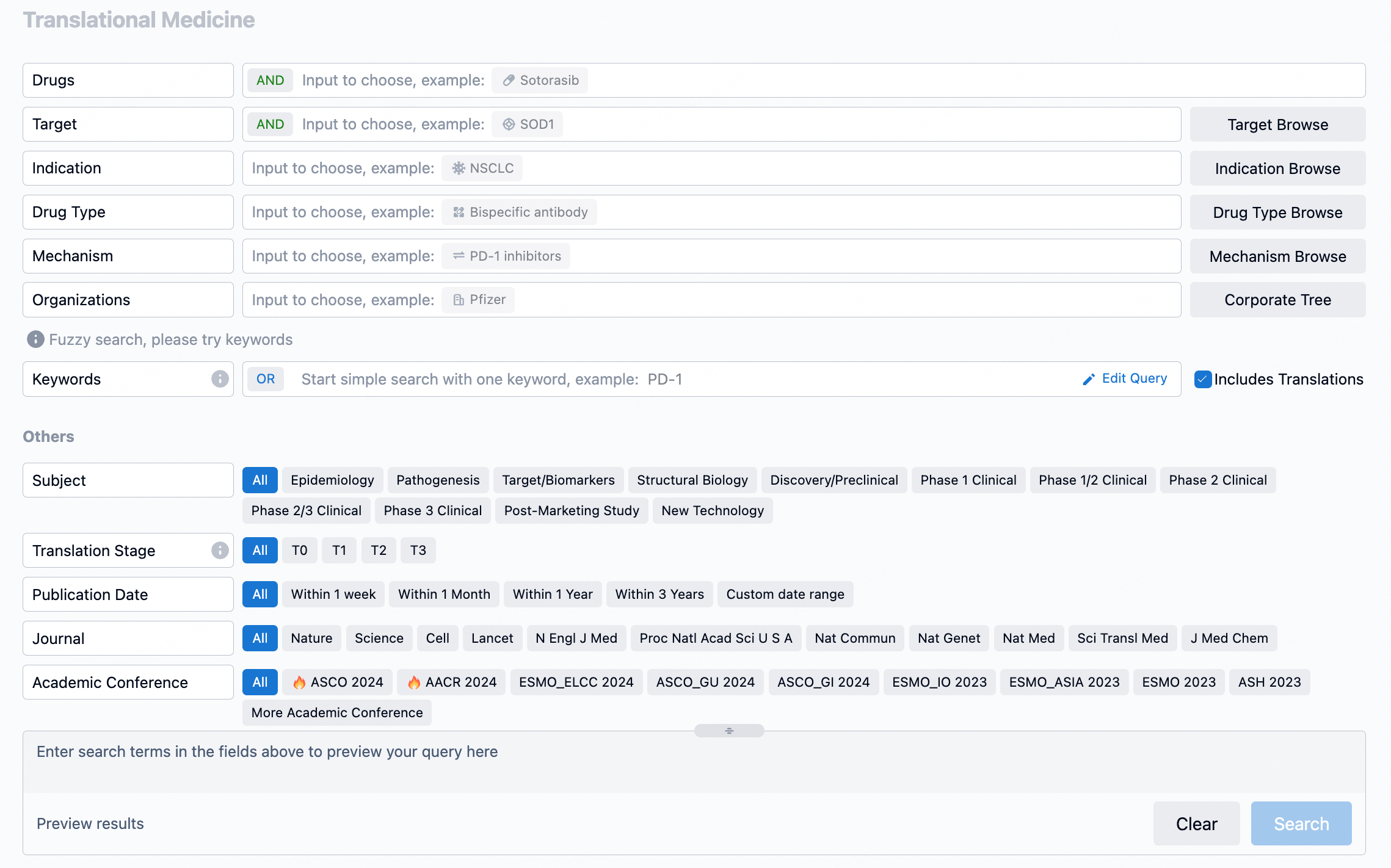
The transational medicine section of the Synapse database supports searches based on fields such as drug, target, and indication, covering the T0-T3 stages of translation. Additionally, it offers a historical conference search function as well as filtering options, view modes, translation services, and highlights summaries, providing you with a unique search experience.
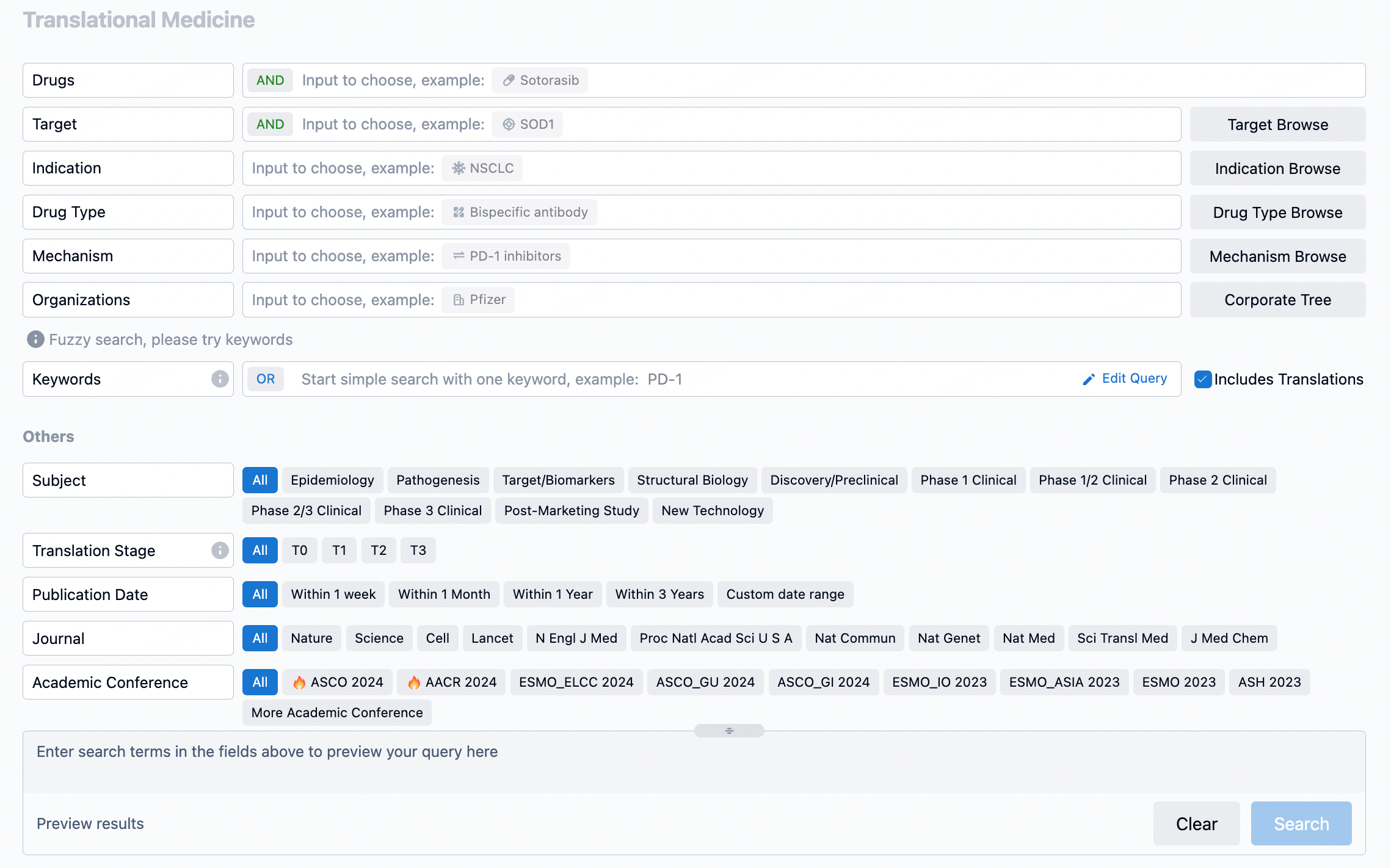
Taking obesity as an example, select "obesity" under the indication category and click search to enter the Translational Medicine results list page. By clicking on the title, you can directly navigate to the original page.
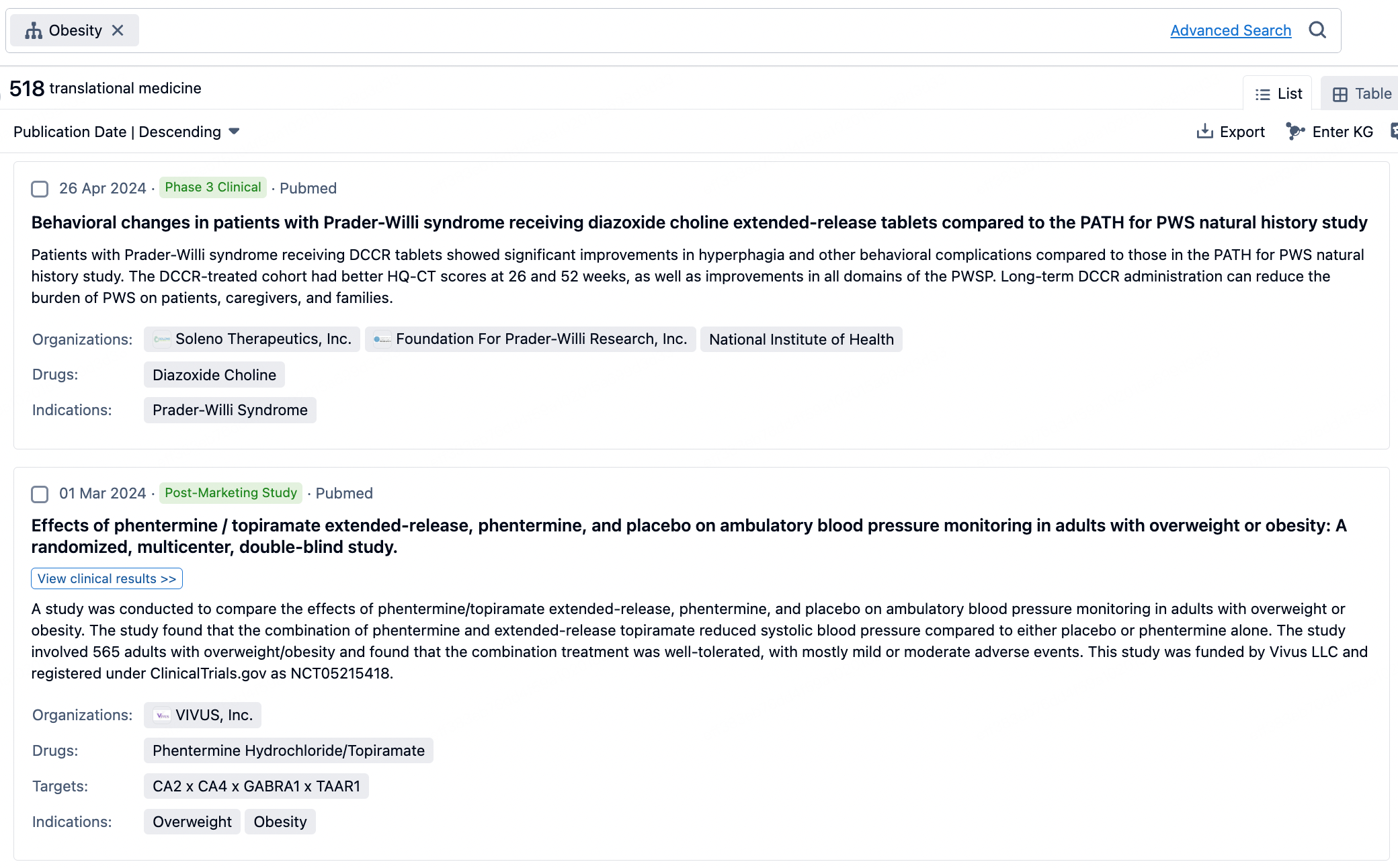
By clicking the analysis button, you can observe that GLP-1R treatment for obesity has gained significant attention over the past three years, with preclinical research still ongoing in 2023. Additionally, there are emerging potential targets, such as GDF15, among others.
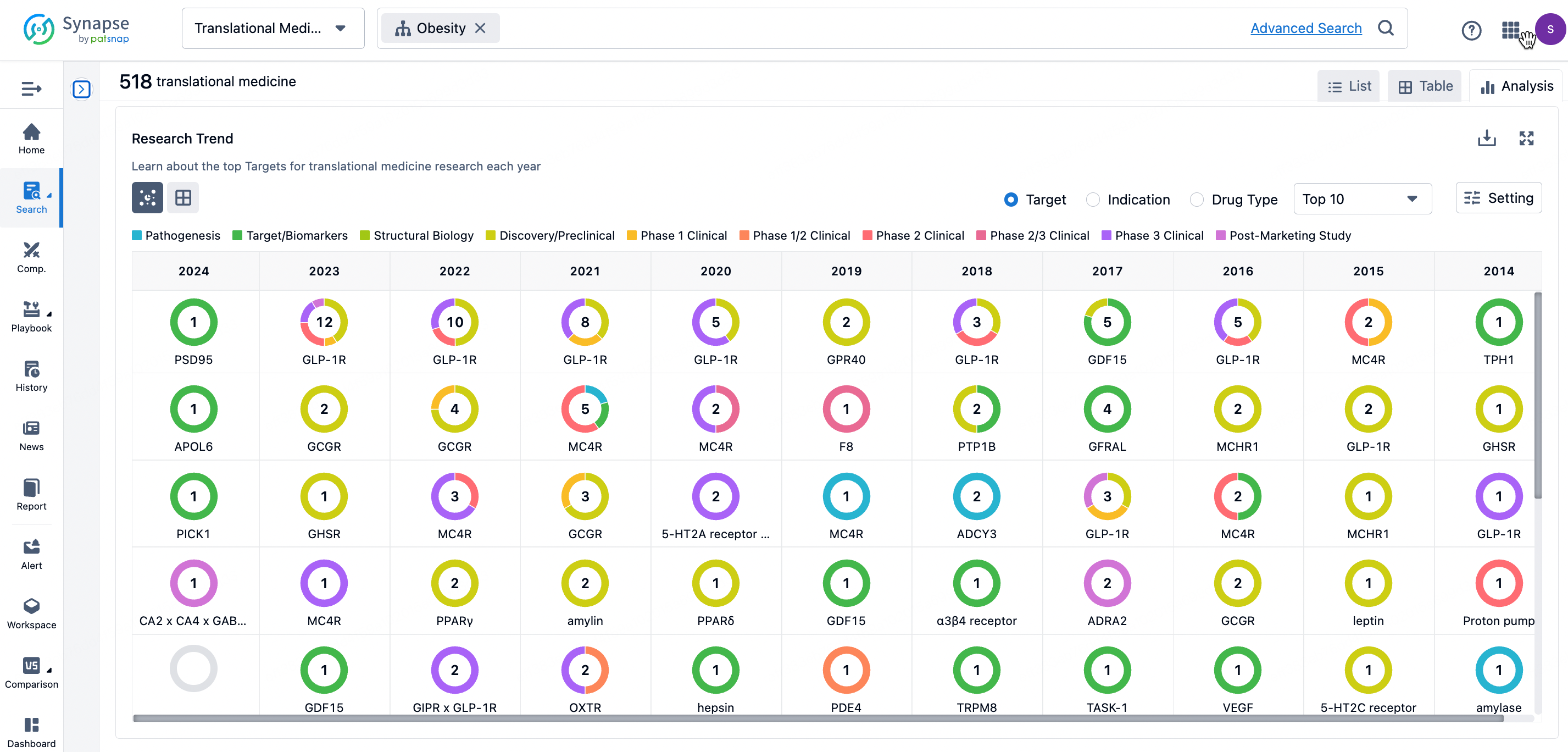
Click on the image below to go directly to the Translational Medicine search interface.