Targeting KRASG12V Mutant Cancers: Profound Anti-Tumor Activity of Novel Tri-Complex Inhibitors in Preclinical Studies
Our research has developed a series of small molecule inhibitors aimed at multiple oncogenic RAS in the GTP-bound state. We present the preclinical findings of KRAS G12V inhibitors that form a tri-complex with cyclophilin A (CypA) and the active GTP-bound form of KRAS G12V. These inhibitors rapidly disrupt the interaction between RAS and its effectors in cancer cells with the KRAS G12V mutation, reducing RAS pathway signaling, inhibiting growth, and inducing cell death.
In vivo studies show that these inhibitors lead to significant and sustained suppression of tumor RAS pathway activation after oral administration. They also exhibit a prolonged pharmacodynamic effect in tumors, possibly due to high affinity binding to CypA and retention in tumor tissue. In xenograft models of NSCLC, CRC, and pancreatic cancers with the KRAS G12V mutation, the inhibitors are well-tolerated and result in significant tumor regressions, with complete responses observed in some cases.
Additionally, these inhibitors reduce the expression of immune checkpoint proteins PD-L1 and CD73 on cancer cells, which could enhance the immune response against tumors. The targeting of the GTP-bound form of KRAS G12V opens up various combination therapy opportunities, especially in cancers where single-agent treatment may not be sufficient. This could include therapies targeting upstream and downstream nodes of the RAS pathway, as well as parallel pathways.
The tri-complex inhibitors targeting the active state of KRAS G12V are expected to counteract resistance mechanisms in cancers that rely heavily on RAS, offering a promising therapeutic strategy for treating cancers with a high unmet medical need.
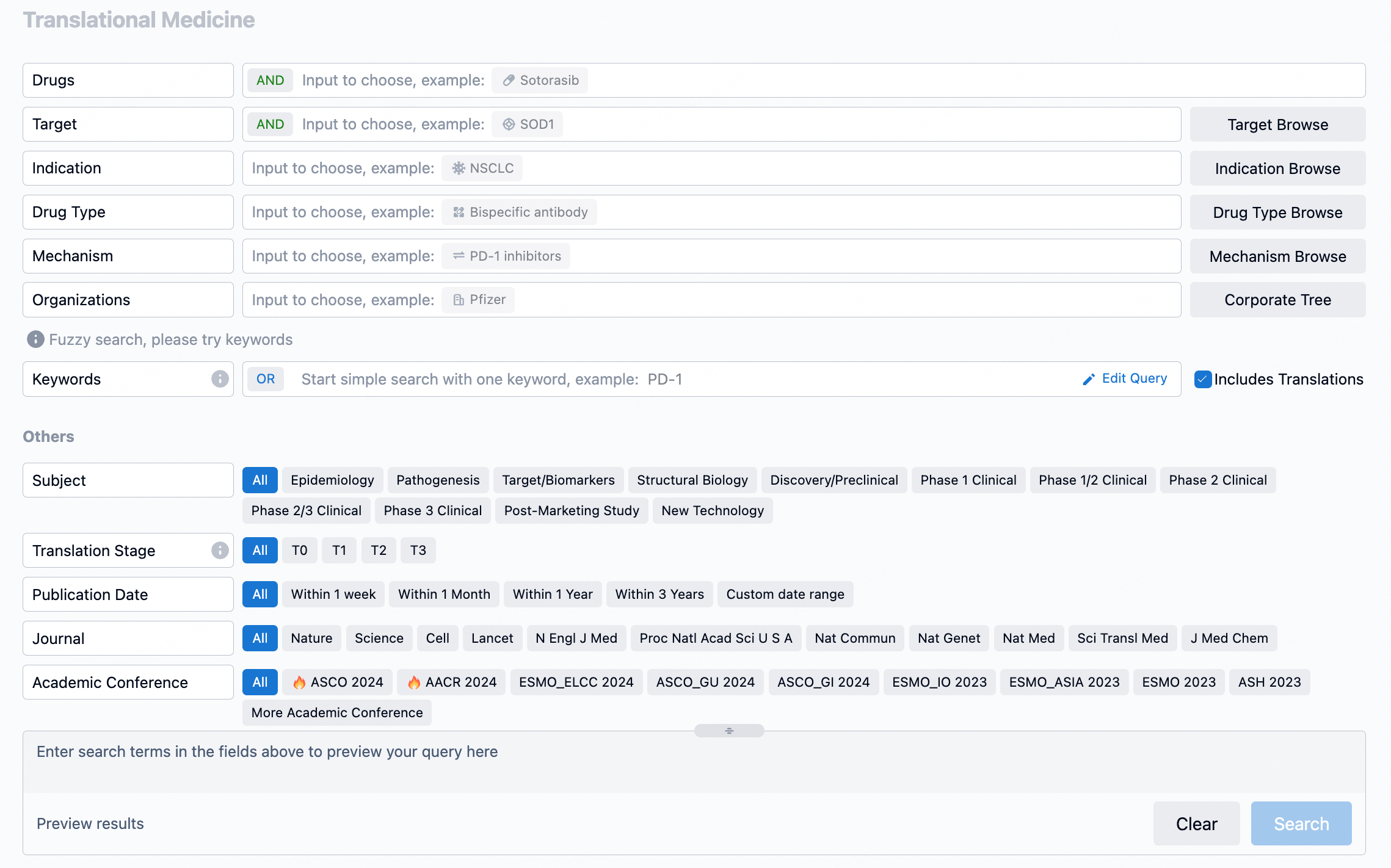
How to Use Synapse Database to Search and Analyze Translational Medicine Data?
The transational medicine section of the Synapse database supports searches based on fields such as drug, target, and indication, covering the T0-T3 stages of translation. Additionally, it offers a historical conference search function as well as filtering options, view modes, translation services, and highlights summaries, providing you with a unique search experience.
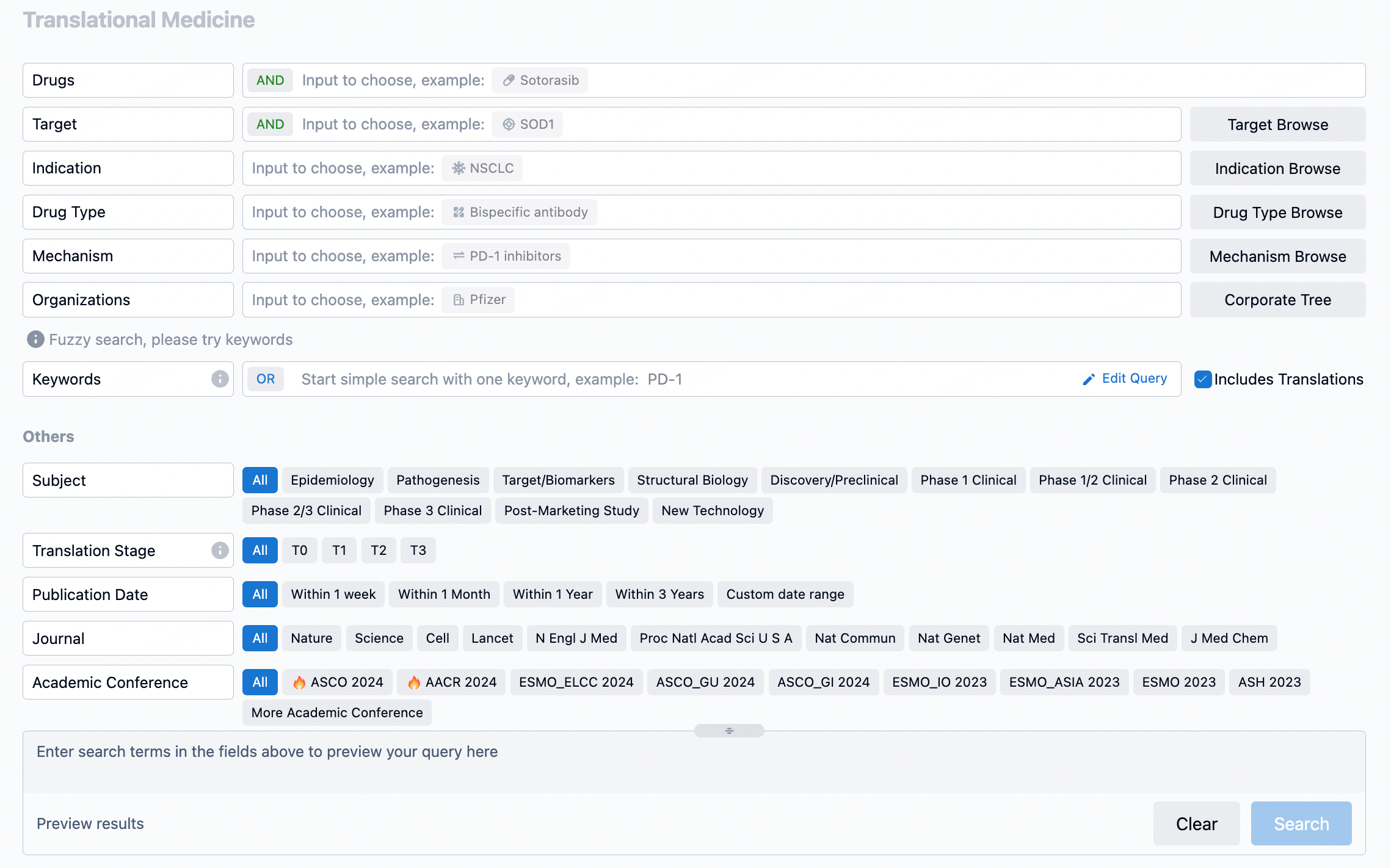
Taking obesity as an example, select "obesity" under the indication category and click search to enter the Translational Medicine results list page. By clicking on the title, you can directly navigate to the original page.
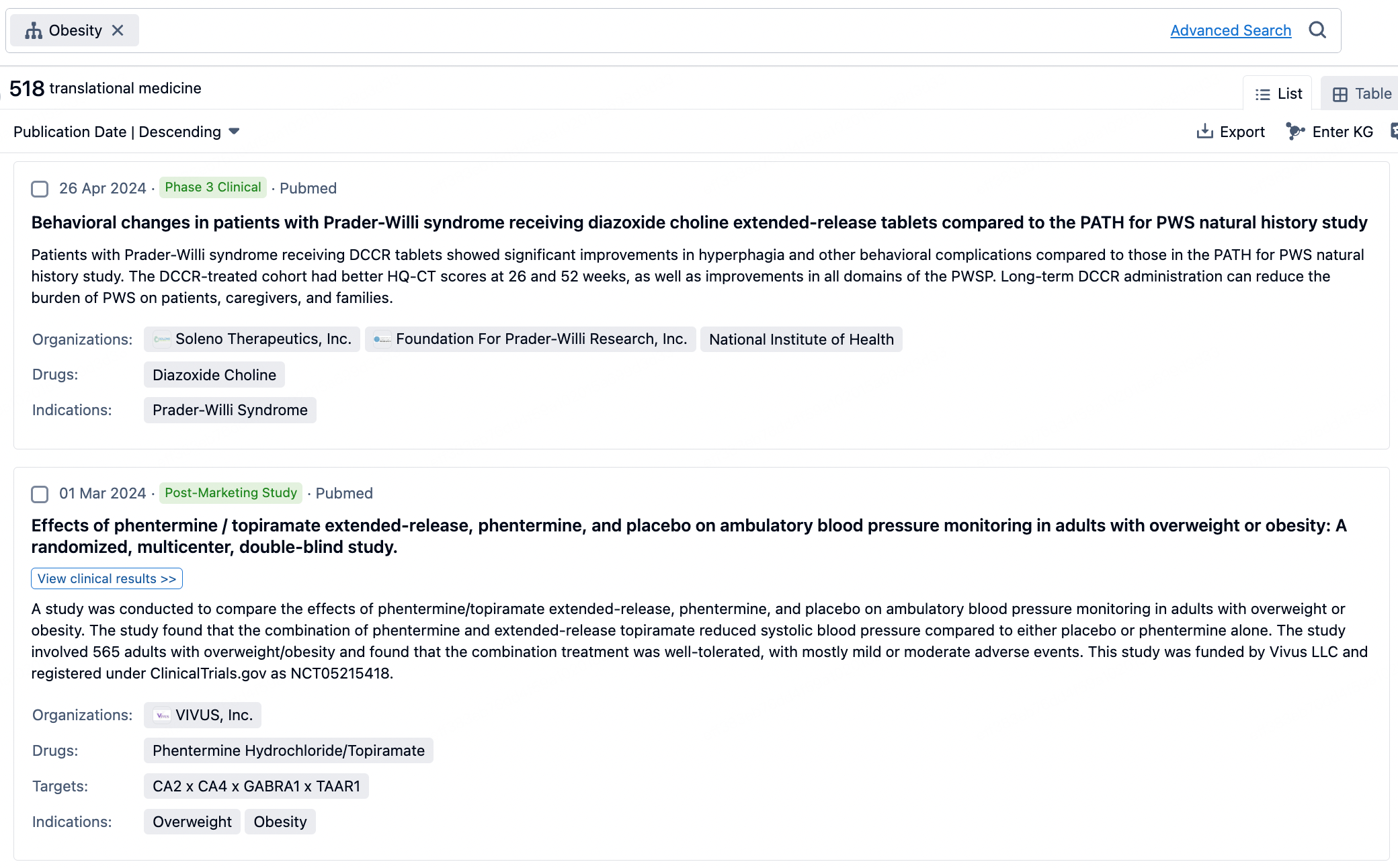
By clicking the analysis button, you can observe that GLP-1R treatment for obesity has gained significant attention over the past three years, with preclinical research still ongoing in 2023. Additionally, there are emerging potential targets, such as GDF15, among others.
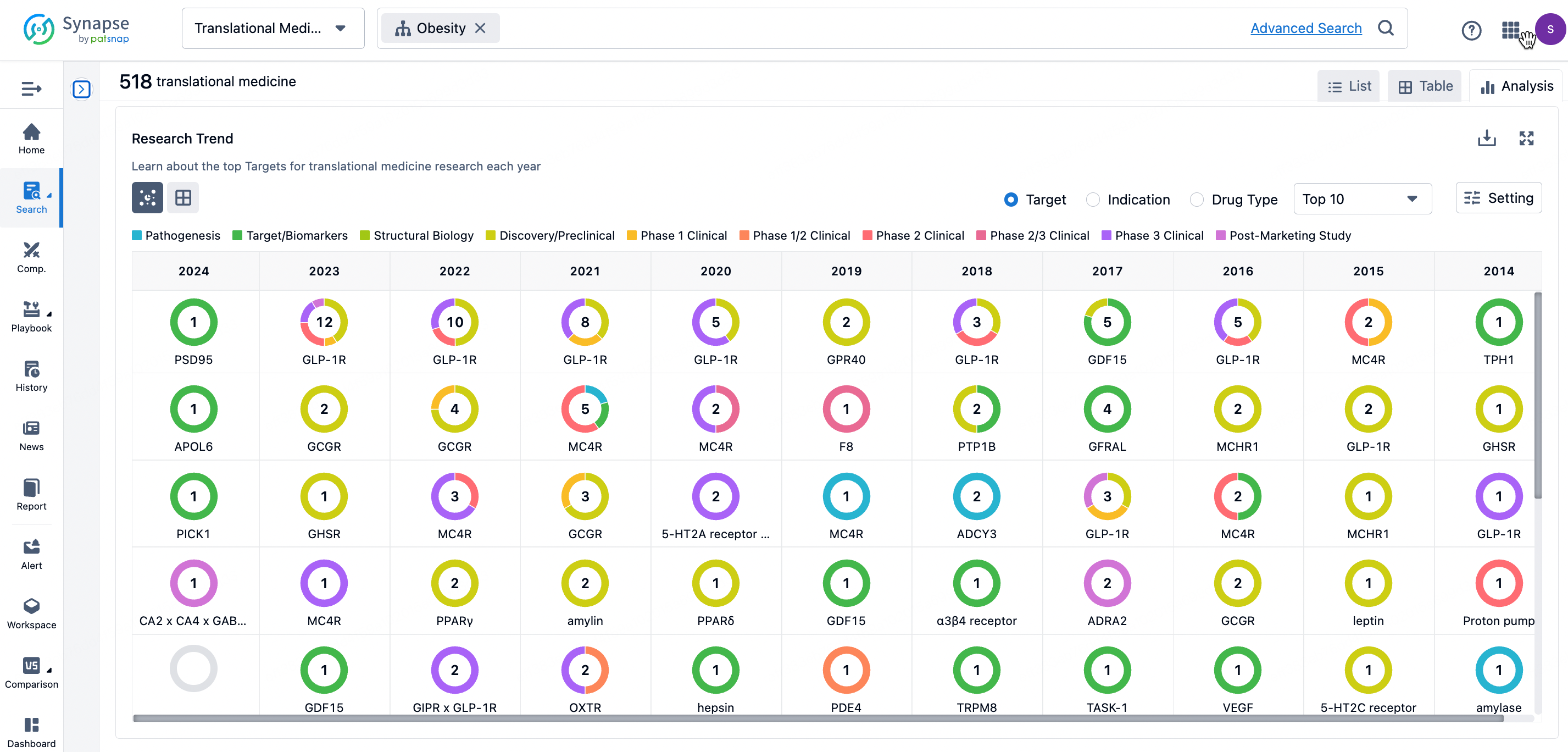
Click on the image below to go directly to the Translational Medicine search interface.