Targeting Tumor Growth: The Potential of BAY 1082439 in PI3Kα-Activated and PTEN-Deficient Cancers
BAY 80-6946 is a potent and selective PI3K inhibitor effective against PIK3CAmut and Her2+ tumors, administered intravenously. In contrast, BAY 1082439 is a novel oral PI3K inhibitor designed for PTEN-loss tumors with specific genetic alterations or activation of PI3Kα. It is a highly selective PI3Kα/α-balanced inhibitor with an IC50 ratio of 1:3, showing greater than 1000-fold selectivity against mTOR kinase.
In cellular assays, BAY 1082439 demonstrated balanced activity in both PI3Kα and PI3Kα-driven tumor cells. In vivo studies revealed its advantages over BAY 80-6946 in PTEN/PI3Kα-driven tumor models. The compound also exhibits unique pharmacokinetic properties, including high plasma free fractions, large volume of distribution, high clearance, and intermediate half-life.
The study explored the relationship between pharmacokinetics and pharmacodynamics, as well as the efficacy of different dosing regimens. BAY 1082439 showed strong p-AKT inhibition at 2 and 5 hours post-treatment, with a return to baseline levels by 24 hours. Notably, once-daily dosing induced tumor regression in some models, suggesting that continuous inhibition of p-AKT may not be essential for anti-tumor effects.
Furthermore, different dosing frequencies were compared, with once-daily and once-weekly dosing showing optimal anti-tumor efficacy. This supports the idea that strong, intermittent pathway inhibition could be more effective than constant inhibition, offering a broader therapeutic window.
In summary, BAY 1082439 is a new PI3K inhibitor with distinct pharmacological and pharmacodynamic characteristics, warranting further investigation in clinical trials.
How to Use Synapse Database to Search and Analyze Translational Medicine Data?
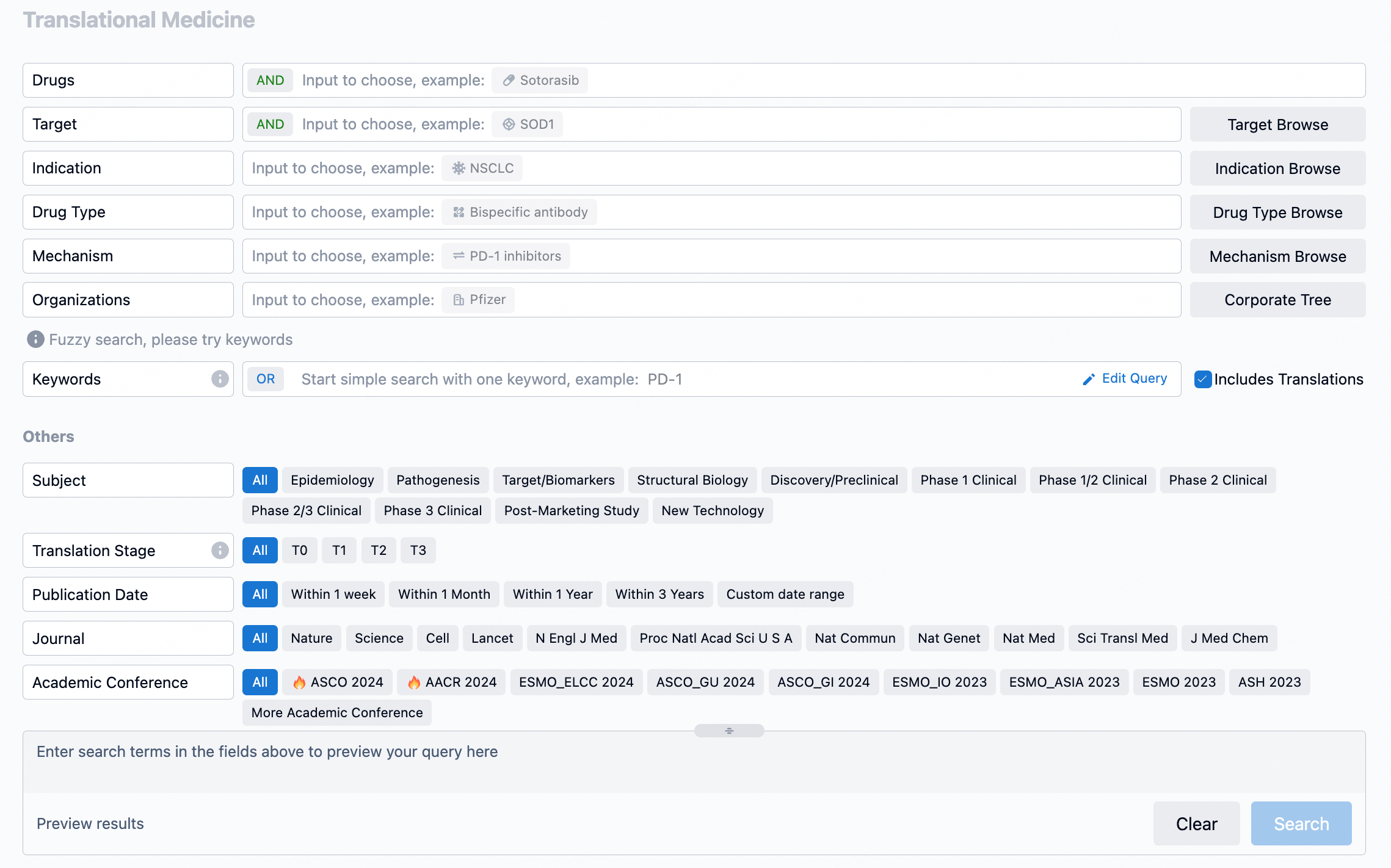
The transational medicine section of the Synapse database supports searches based on fields such as drug, target, and indication, covering the T0-T3 stages of translation. Additionally, it offers a historical conference search function as well as filtering options, view modes, translation services, and highlights summaries, providing you with a unique search experience.
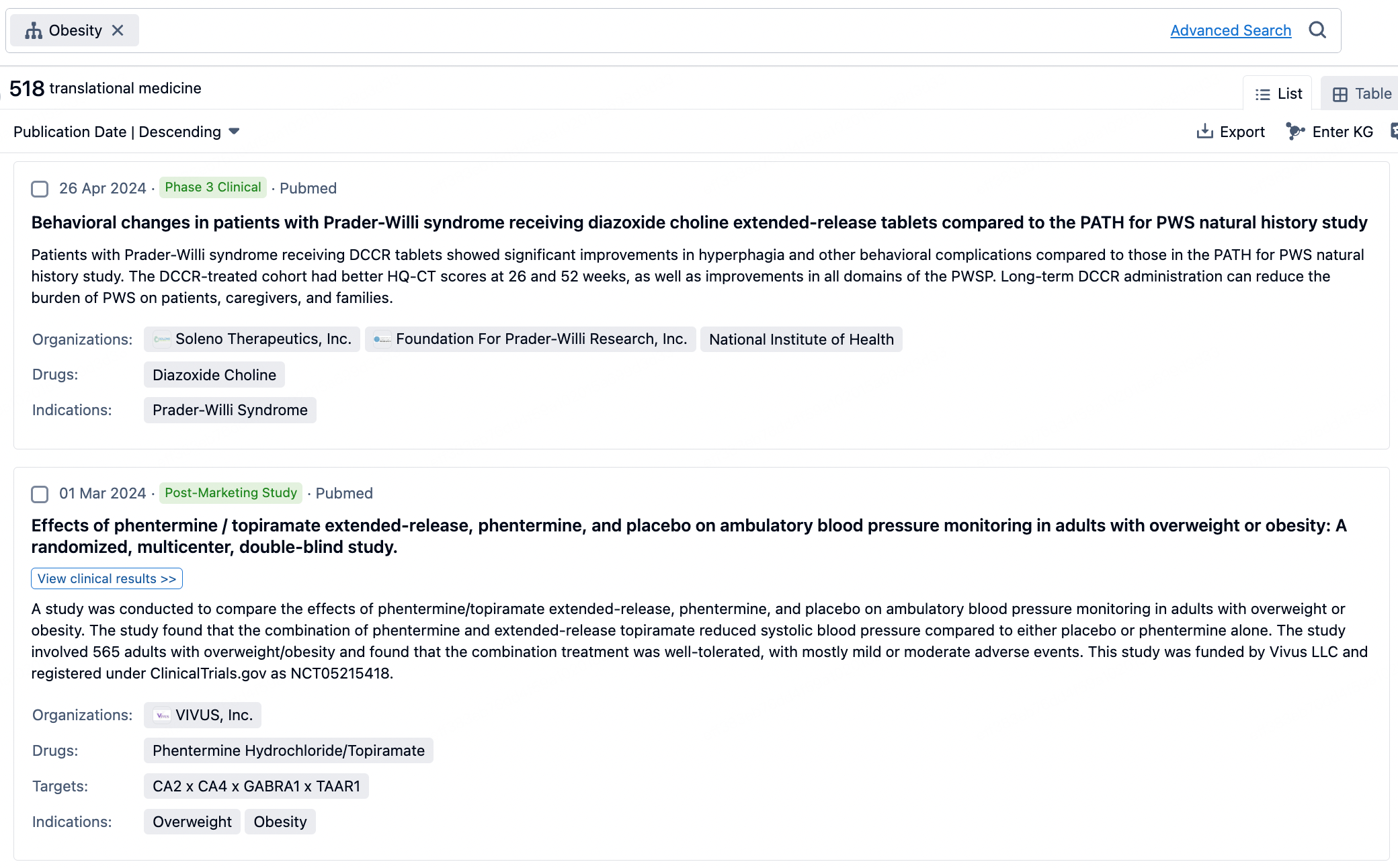
Taking obesity as an example, select "obesity" under the indication category and click search to enter the Translational Medicine results list page. By clicking on the title, you can directly navigate to the original page.
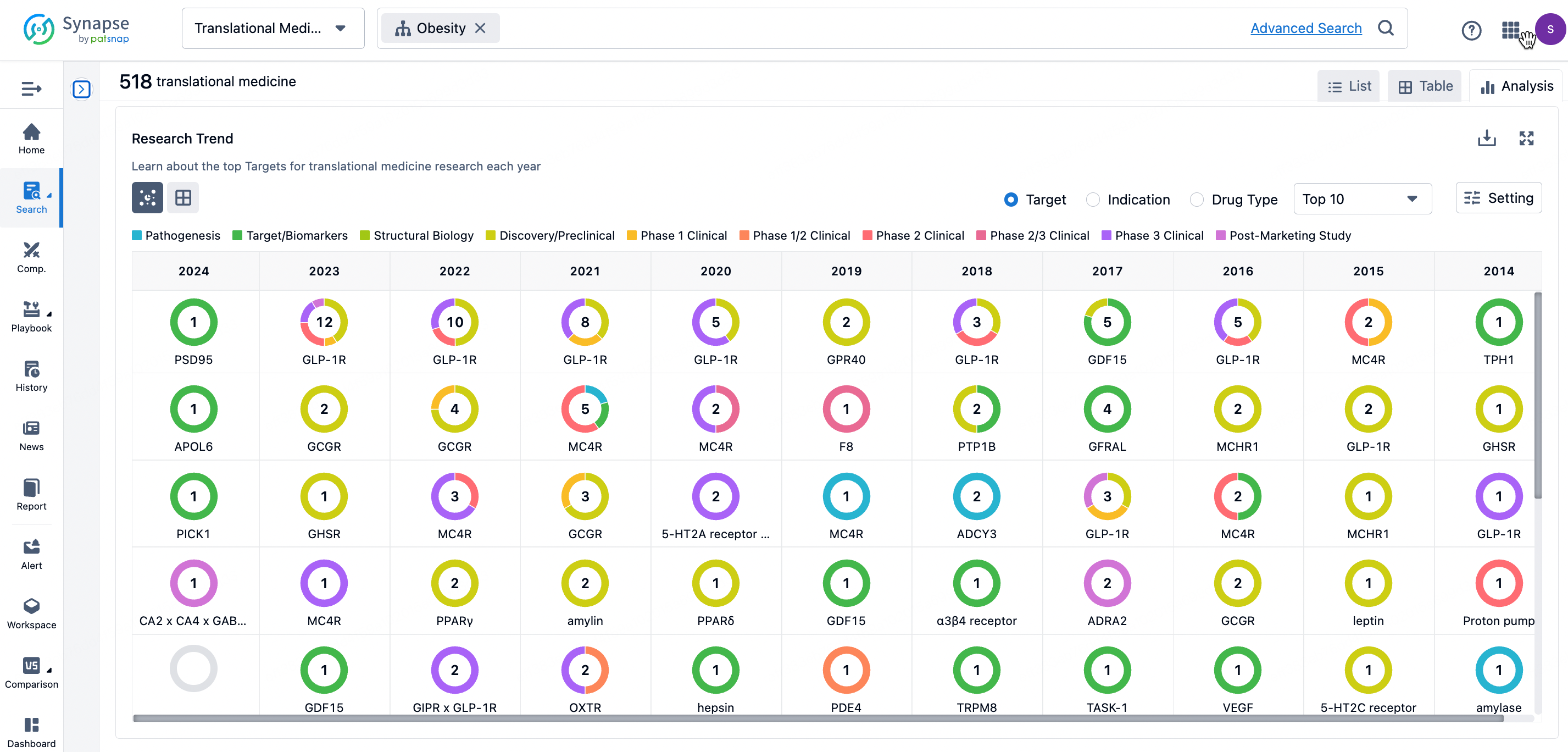
By clicking the analysis button, you can observe that GLP-1R treatment for obesity has gained significant attention over the past three years, with preclinical research still ongoing in 2023. Additionally, there are emerging potential targets, such as GDF15, among others.
Click on the image below to go directly to the Translational Medicine search interface.