Unlocking the Potential of TTI-10001: A Novel STING Agonist for Cancer Immunotherapy
A new non-cyclic dinucleotide (non-CDN) small molecule STING agonist, TTI-10001, has been developed and is being evaluated. TTI-10001 demonstrated strong activity across various human and mouse STING alleles, as evidenced by increased levels of phosphorylated STING and IRF3. The activation of the STING pathway by TTI-10001 was confirmed, and its effects were blocked by a TBK1 inhibitor.
The compound showed a good safety profile, with no impact on hERG channels or major CYP450 enzymes, and was well-tolerated in mice without causing weight loss or significant adverse effects. Upon administration, TTI-10001 led to increased levels of phosphorylated STING and IRF3 in tumors and elevated cytokine expression, including IFNβ, TNFα, and IL-6. This activation of the STING pathway was associated with significant anti-tumor effects in multiple mouse tumor models.
In conclusion, TTI-10001 is a potent non-CDN small molecule STING agonist that shows promise in both in vitro and in vivo studies, with strong activation of the STING pathway and significant anti-tumor activity. These findings suggest that TTI-10001 could be a valuable candidate for further development as a cancer immunotherapy agent.
How to Use Synapse Database to Search and Analyze Translational Medicine Data?
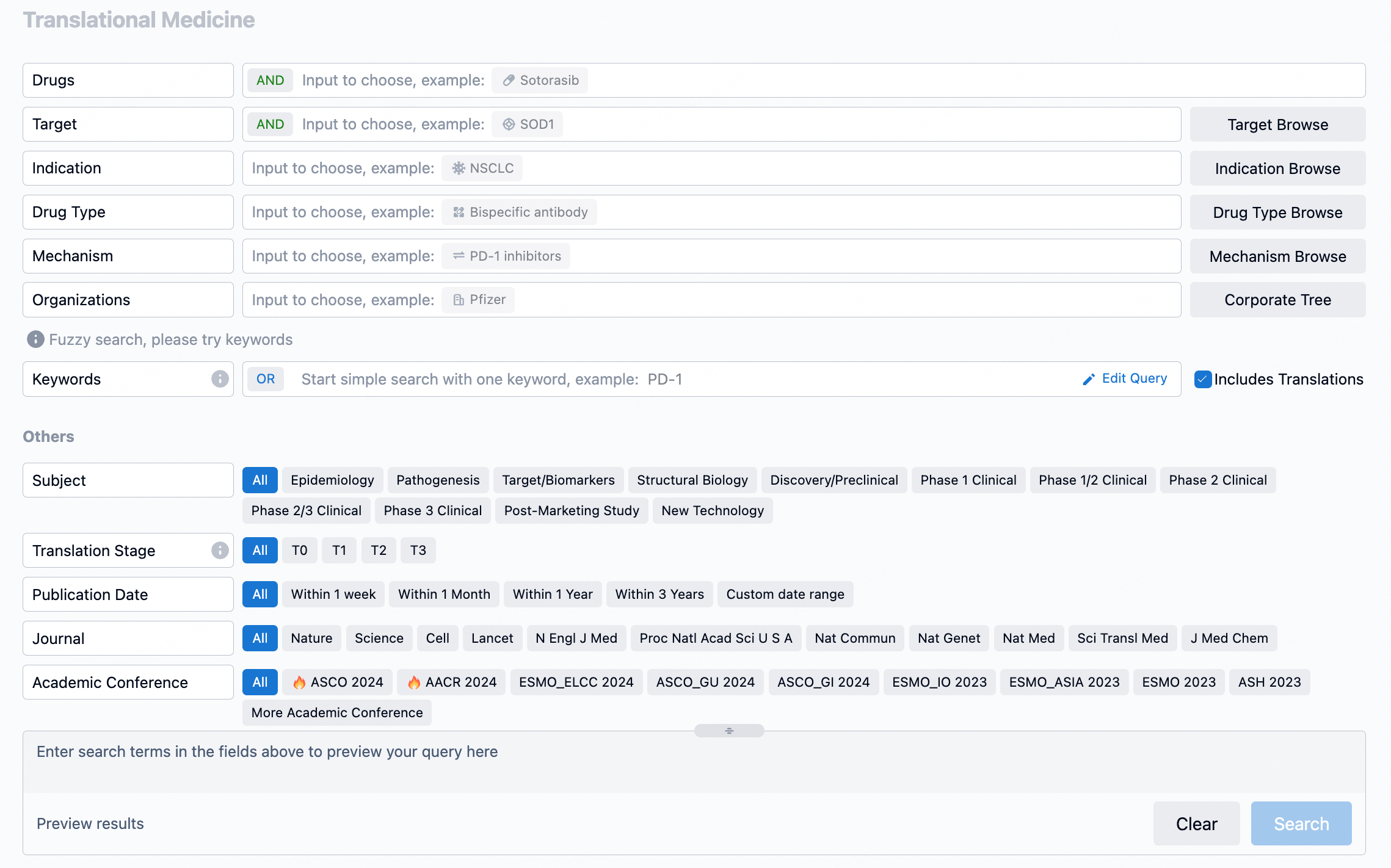
The transational medicine section of the Synapse database supports searches based on fields such as drug, target, and indication, covering the T0-T3 stages of translation. Additionally, it offers a historical conference search function as well as filtering options, view modes, translation services, and highlights summaries, providing you with a unique search experience.
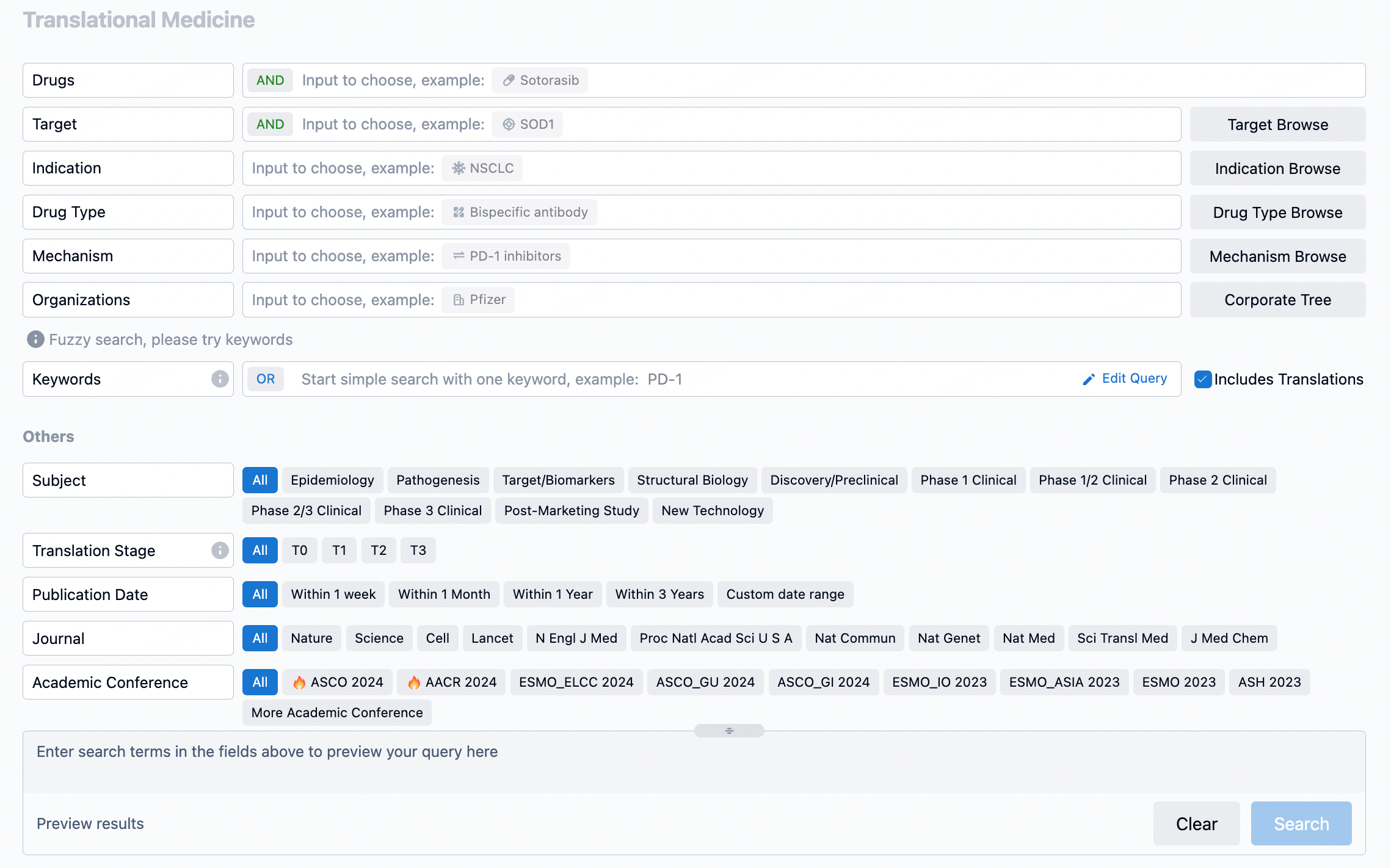
Taking obesity as an example, select "obesity" under the indication category and click search to enter the Translational Medicine results list page. By clicking on the title, you can directly navigate to the original page.
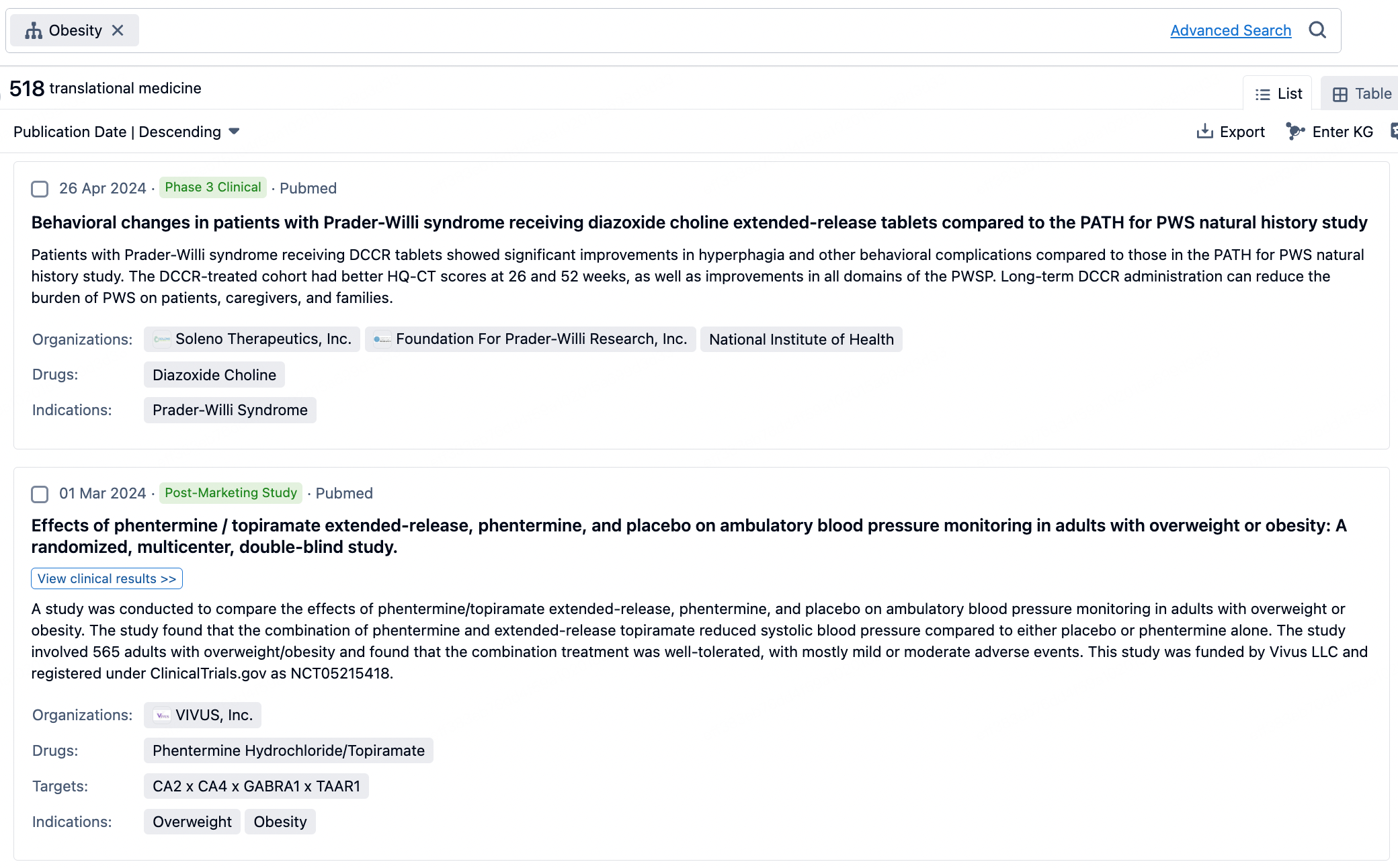
By clicking the analysis button, you can observe that GLP-1R treatment for obesity has gained significant attention over the past three years, with preclinical research still ongoing in 2023. Additionally, there are emerging potential targets, such as GDF15, among others.
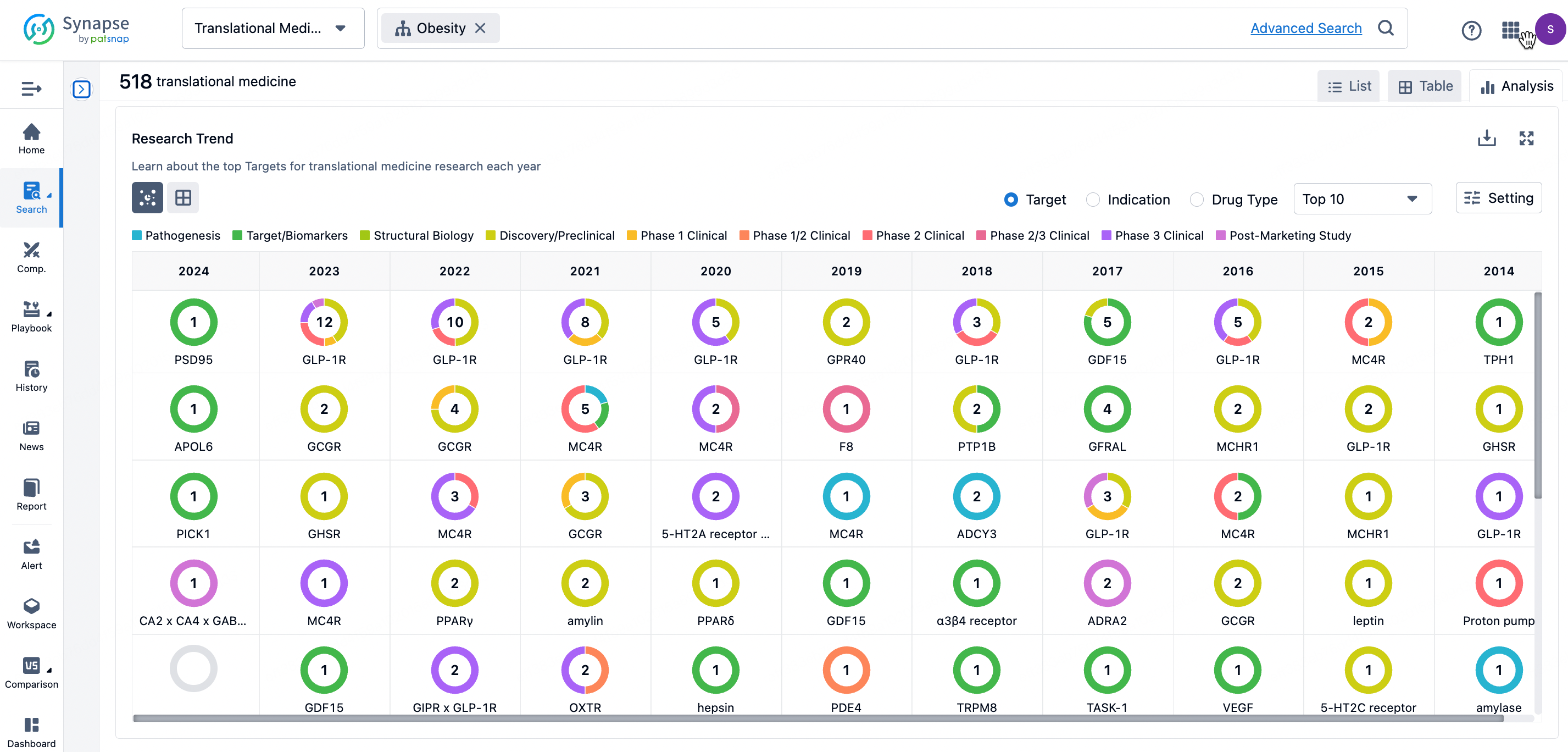
Click on the image below to go directly to the Translational Medicine search interface.