Unveiling the Potential of KT-00113: A Promising EP2/EP4 Dual Antagonist in Cancer Immunotherapy
In the pursuit of evaluating binding affinity for EP2 and EP4, a radioligand binding assay was utilized with HEK293 cells that were transfected with either EP2 or EP4. The cell membrane extracts were mixed with [3H]PGE2, with or without the test compounds. Post incubation, the mixture was filtered through glass fiber filters under vacuum and washed with cold Tris-HCl. The filters were then dried and the radioactivity was measured using a scintillation counter, with results presented as a percentage inhibition compared to the control.
The antagonistic activity of the compounds was assessed using the LANCE Ultra cAMP assay, where HEK293 cells overexpressing EP2 or EP4 were treated with PGE2 and the compounds. After a 30-minute incubation, the cAMP levels were determined using a FRET signal and a plate reader, following the manufacturer's instructions.
The anti-tumor efficacy of KT-00113 was examined using a syngeneic model with LLC1. Mice were administered the compound orally once daily when the tumor volume reached approximately 100 mm^3, and tumor size was monitored bi-weekly.
The systematic investigation of the structure-activity relationship (SAR) led to the identification of novel dual antagonists for EP2 and EP4. The compound KT-00113 emerged as a promising candidate, demonstrating high potency against both receptors while showing high selectivity over other prostanoid receptors. In vitro and in vivo ADMET studies indicated that KT-00113 has a favorable profile, making it suitable for further investigation in cancer models and in the context of immune cell function in tumors.
The conclusion drawn is that KT-00113, a potent and selective dual antagonist of EP2/4, has the potential to be a leading immune suppression lifting agent in cancer immunotherapy and is a candidate for further development for clinical use.
How to Use Synapse Database to Search and Analyze Translational Medicine Data?
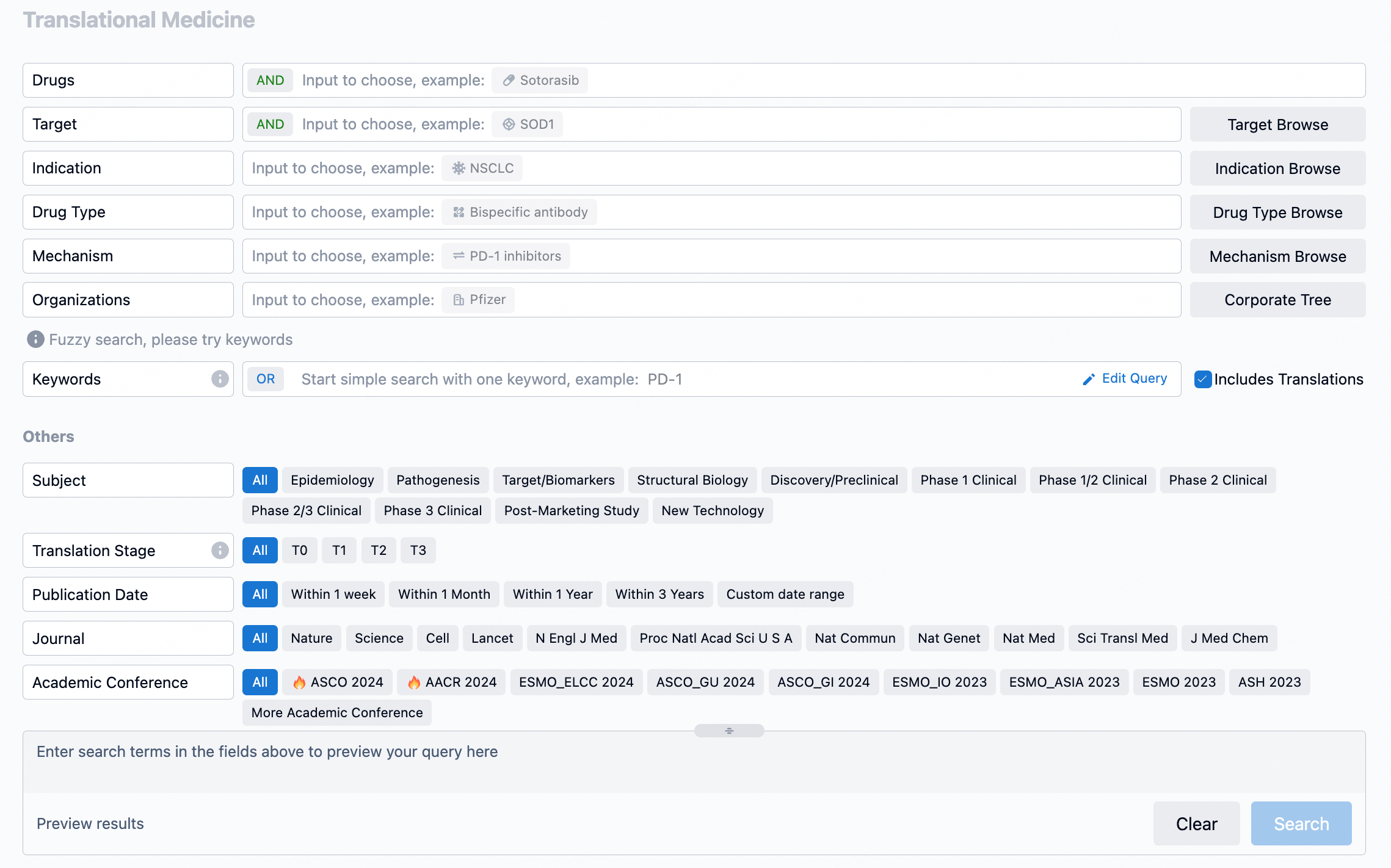
The transational medicine section of the Synapse database supports searches based on fields such as drug, target, and indication, covering the T0-T3 stages of translation. Additionally, it offers a historical conference search function as well as filtering options, view modes, translation services, and highlights summaries, providing you with a unique search experience.
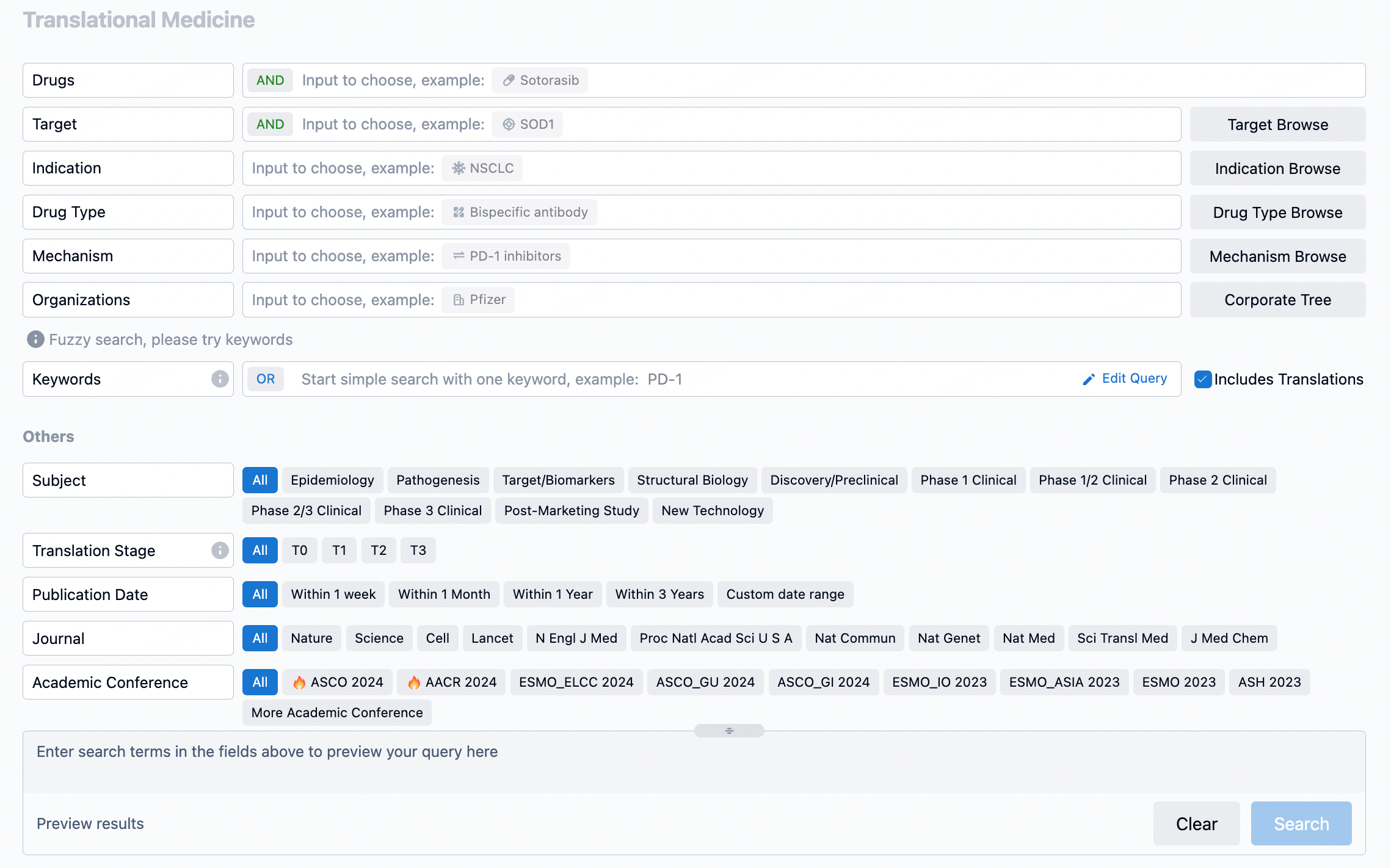
Taking obesity as an example, select "obesity" under the indication category and click search to enter the Translational Medicine results list page. By clicking on the title, you can directly navigate to the original page.
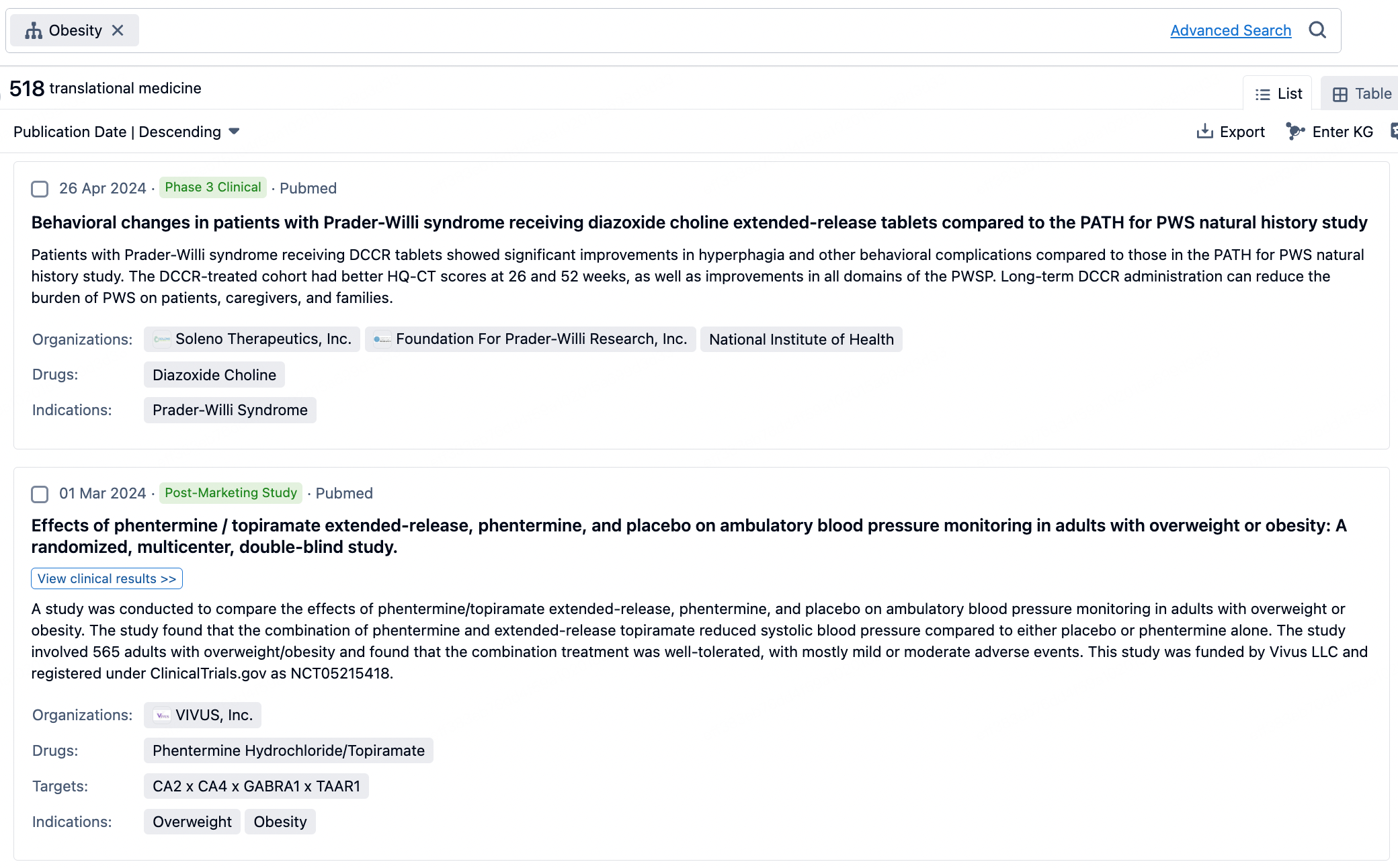
By clicking the analysis button, you can observe that GLP-1R treatment for obesity has gained significant attention over the past three years, with preclinical research still ongoing in 2023. Additionally, there are emerging potential targets, such as GDF15, among others.
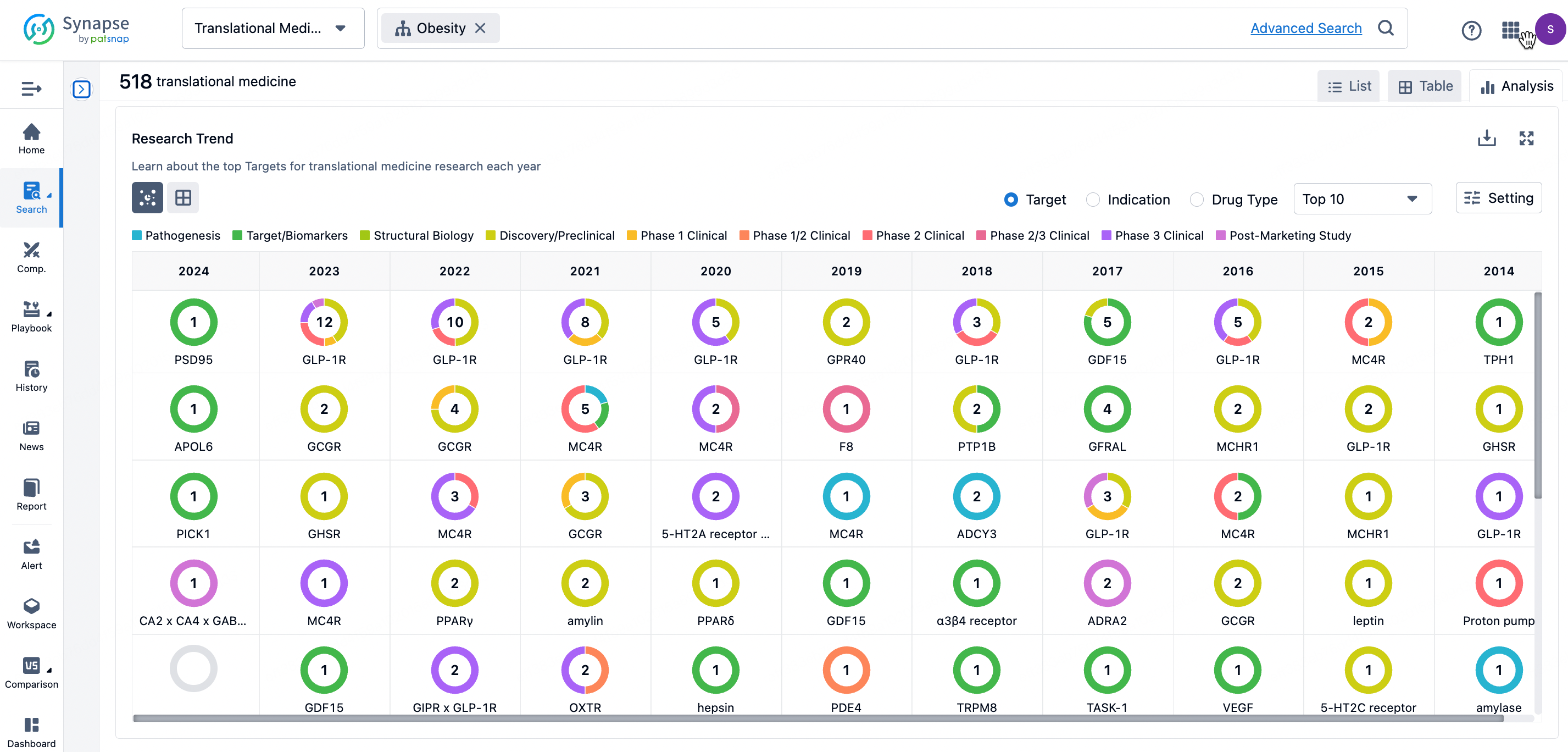
Click on the image below to go directly to the Translational Medicine search interface.