Request Demo
What are 5-HT7 receptor modulators and how do they work?
21 June 2024
Introduction to 5-HT7 receptor modulators
The realm of neuropharmacology continuously unveils fascinating avenues for medical advancement, and 5-HT7 receptor modulators are no exception. These compounds target the 5-HT7 receptor, a subtype of serotonin receptor that is part of the broader family of G protein-coupled receptors (GPCRs). Discovered relatively recently in the 1990s, the 5-HT7 receptor has become an area of intense research due to its involvement in a variety of physiological and pathological processes. Understanding how these modulators work and their potential therapeutic applications can shed light on new treatments for a range of neuropsychiatric and neurodegenerative conditions.
How do 5-HT7 receptor modulators work?
To grasp the significance of 5-HT7 receptor modulators, it is crucial to understand the fundamental role of the 5-HT7 receptor itself. Serotonin, also known as 5-hydroxytryptamine or 5-HT, is a neurotransmitter that plays a pivotal role in regulating mood, cognition, and numerous other physiological processes. The 5-HT7 receptor specifically influences circadian rhythms, thermoregulation, mood, and cognitive function by mediating the effects of serotonin in the central nervous system.
5-HT7 receptor modulators can either act as agonists, which activate the receptor, or antagonists, which inhibit it. Agonists mimic the action of serotonin, binding to the receptor and eliciting a similar physiological response. Antagonists, on the other hand, block serotonin from binding to the receptor, effectively dampening its action. There are also partial agonists that activate the receptor but produce a weaker effect compared to full agonists, as well as inverse agonists that induce the opposite effect of agonists.
The modulation of the 5-HT7 receptor can lead to alterations in intracellular signaling pathways. This includes changes in cyclic adenosine monophosphate (cAMP) levels and subsequent activation of protein kinase A (PKA), which can influence various downstream targets involved in mood regulation, sleep-wake cycles, and neuroplasticity. Therefore, by modulating this receptor, scientists can potentially rectify imbalances in these crucial physiological processes.
What are 5-HT7 receptor modulators used for?
The therapeutic potential of 5-HT7 receptor modulators spans a wide array of medical conditions, primarily due to the receptor’s involvement in diverse physiological functions. One of the most promising areas of application is in the treatment of mood disorders such as depression and anxiety. Preclinical studies have indicated that both agonists and antagonists of the 5-HT7 receptor can have antidepressant and anxiolytic effects. This is presumably due to their action on serotonin pathways, which are often dysregulated in these conditions.
Additionally, 5-HT7 receptor modulators are being investigated for their potential in treating cognitive impairments associated with neurodegenerative diseases like Alzheimer’s disease. By influencing processes such as neuroplasticity and synaptic transmission, these modulators could help alleviate some of the cognitive deficits observed in these conditions. Animal studies have shown that 5-HT7 receptor antagonists can improve memory performance, making this a promising avenue for future research.
Another exciting application is in the realm of sleep disorders. The 5-HT7 receptor plays a role in regulating circadian rhythms and sleep-wake cycles. Modulating this receptor could therefore help address issues such as insomnia or disrupted sleep patterns. Some studies have suggested that 5-HT7 receptor antagonists can promote sleep by enhancing the restorative phases of the sleep cycle.
Pain management is yet another potential application. The 5-HT7 receptor is expressed in various regions of the brain and spinal cord that are involved in pain perception. Modulating this receptor could provide novel analgesic strategies for chronic pain conditions that are often resistant to conventional treatments.
In summary, 5-HT7 receptor modulators represent a burgeoning field of interest with broad therapeutic potential. By targeting the 5-HT7 receptor, these compounds can influence a range of physiological processes, offering new hope for the treatment of mood disorders, cognitive impairments, sleep disturbances, and pain. As research continues to uncover the multifaceted roles of this receptor, the development of effective 5-HT7 receptor modulators could significantly advance the landscape of neuropharmacology.
The realm of neuropharmacology continuously unveils fascinating avenues for medical advancement, and 5-HT7 receptor modulators are no exception. These compounds target the 5-HT7 receptor, a subtype of serotonin receptor that is part of the broader family of G protein-coupled receptors (GPCRs). Discovered relatively recently in the 1990s, the 5-HT7 receptor has become an area of intense research due to its involvement in a variety of physiological and pathological processes. Understanding how these modulators work and their potential therapeutic applications can shed light on new treatments for a range of neuropsychiatric and neurodegenerative conditions.
How do 5-HT7 receptor modulators work?
To grasp the significance of 5-HT7 receptor modulators, it is crucial to understand the fundamental role of the 5-HT7 receptor itself. Serotonin, also known as 5-hydroxytryptamine or 5-HT, is a neurotransmitter that plays a pivotal role in regulating mood, cognition, and numerous other physiological processes. The 5-HT7 receptor specifically influences circadian rhythms, thermoregulation, mood, and cognitive function by mediating the effects of serotonin in the central nervous system.
5-HT7 receptor modulators can either act as agonists, which activate the receptor, or antagonists, which inhibit it. Agonists mimic the action of serotonin, binding to the receptor and eliciting a similar physiological response. Antagonists, on the other hand, block serotonin from binding to the receptor, effectively dampening its action. There are also partial agonists that activate the receptor but produce a weaker effect compared to full agonists, as well as inverse agonists that induce the opposite effect of agonists.
The modulation of the 5-HT7 receptor can lead to alterations in intracellular signaling pathways. This includes changes in cyclic adenosine monophosphate (cAMP) levels and subsequent activation of protein kinase A (PKA), which can influence various downstream targets involved in mood regulation, sleep-wake cycles, and neuroplasticity. Therefore, by modulating this receptor, scientists can potentially rectify imbalances in these crucial physiological processes.
What are 5-HT7 receptor modulators used for?
The therapeutic potential of 5-HT7 receptor modulators spans a wide array of medical conditions, primarily due to the receptor’s involvement in diverse physiological functions. One of the most promising areas of application is in the treatment of mood disorders such as depression and anxiety. Preclinical studies have indicated that both agonists and antagonists of the 5-HT7 receptor can have antidepressant and anxiolytic effects. This is presumably due to their action on serotonin pathways, which are often dysregulated in these conditions.
Additionally, 5-HT7 receptor modulators are being investigated for their potential in treating cognitive impairments associated with neurodegenerative diseases like Alzheimer’s disease. By influencing processes such as neuroplasticity and synaptic transmission, these modulators could help alleviate some of the cognitive deficits observed in these conditions. Animal studies have shown that 5-HT7 receptor antagonists can improve memory performance, making this a promising avenue for future research.
Another exciting application is in the realm of sleep disorders. The 5-HT7 receptor plays a role in regulating circadian rhythms and sleep-wake cycles. Modulating this receptor could therefore help address issues such as insomnia or disrupted sleep patterns. Some studies have suggested that 5-HT7 receptor antagonists can promote sleep by enhancing the restorative phases of the sleep cycle.
Pain management is yet another potential application. The 5-HT7 receptor is expressed in various regions of the brain and spinal cord that are involved in pain perception. Modulating this receptor could provide novel analgesic strategies for chronic pain conditions that are often resistant to conventional treatments.
In summary, 5-HT7 receptor modulators represent a burgeoning field of interest with broad therapeutic potential. By targeting the 5-HT7 receptor, these compounds can influence a range of physiological processes, offering new hope for the treatment of mood disorders, cognitive impairments, sleep disturbances, and pain. As research continues to uncover the multifaceted roles of this receptor, the development of effective 5-HT7 receptor modulators could significantly advance the landscape of neuropharmacology.
How to obtain the latest development progress of all targets?
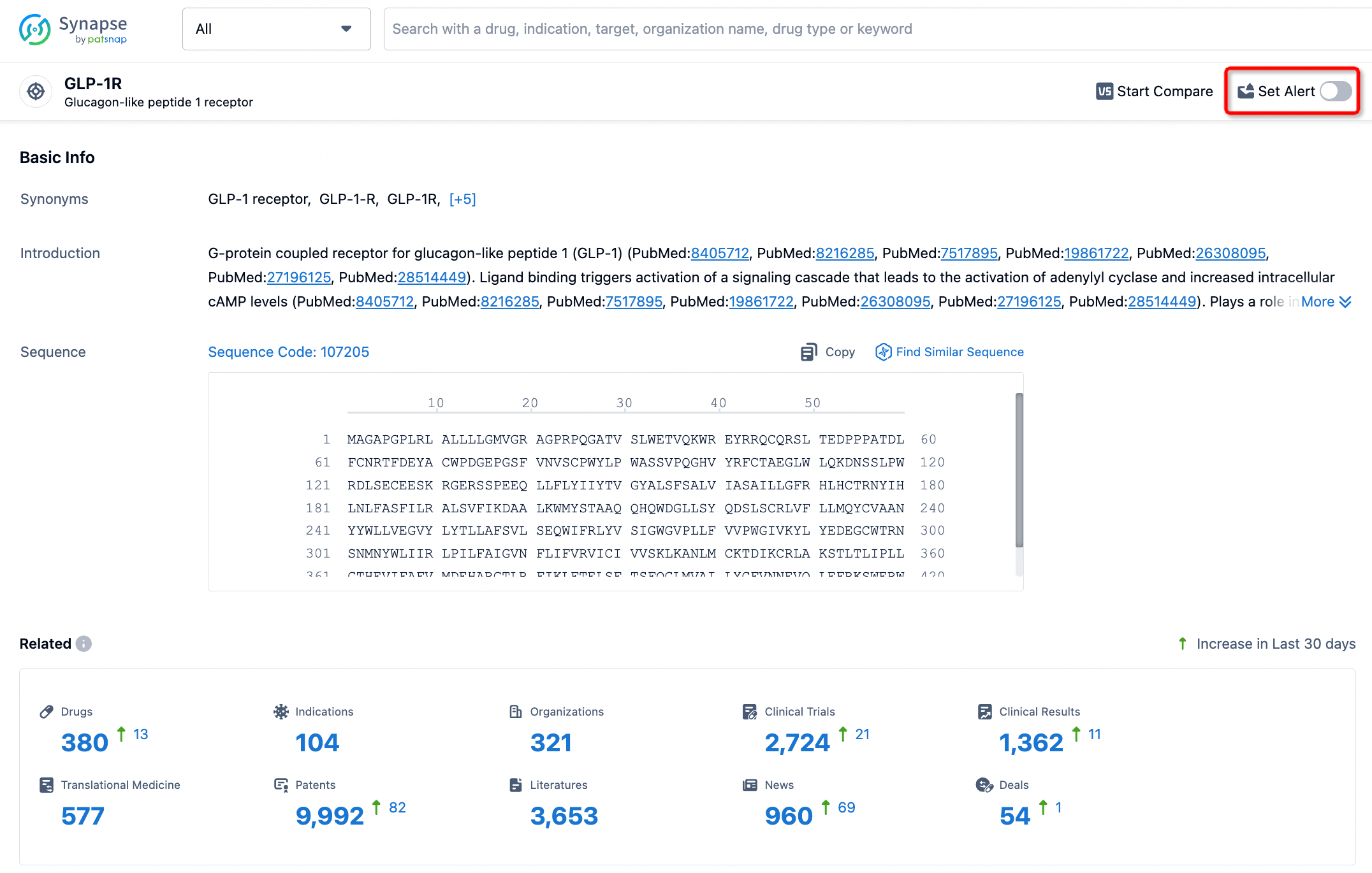
In the Synapse database, you can stay updated on the latest research and development advances of all targets. This service is accessible anytime and anywhere, with updates available daily or weekly. Use the "Set Alert" function to stay informed. Click on the image below to embark on a brand new journey of drug discovery!


AI Agents Built for Biopharma Breakthroughs
Accelerate discovery. Empower decisions. Transform outcomes.
Get started for free today!
Accelerate Strategic R&D decision making with Synapse, PatSnap’s AI-powered Connected Innovation Intelligence Platform Built for Life Sciences Professionals.
Start your data trial now!
Synapse data is also accessible to external entities via APIs or data packages. Empower better decisions with the latest in pharmaceutical intelligence.