Request Demo
What are α2C-AR antagonists and how do they work?
21 June 2024
The world of pharmacology is continually evolving, offering novel solutions to some of the most persistent health issues. Among the emerging areas of interest are α2C-AR antagonists. These compounds hold promise for a variety of therapeutic applications, especially in the realm of neurological and psychiatric disorders. In this blog, we will delve into what α2C-AR antagonists are, how they function, and their potential uses in modern medicine.
At the most basic level, α2C-AR antagonists are compounds that inhibit the action of the α2C adrenergic receptor. To understand their function, we must first appreciate the role of adrenergic receptors in the human body. Adrenergic receptors are a class of G-protein-coupled receptors that are targeted by catecholamines such as adrenaline and noradrenaline. These receptors are divided into α and β subtypes, which are further subdivided into α1, α2, β1, β2, and β3 receptors. Each subtype has unique functions and distribution patterns in the body.
Specifically, α2C-adrenergic receptors are primarily found in the central nervous system, including the brain and spinal cord, as well as in some peripheral tissues. When activated, these receptors typically inhibit the release of neurotransmitters, thereby modulating neuronal activity and contributing to the regulation of blood pressure, pain perception, and emotional responses. By blocking these receptors, α2C-AR antagonists can potentially mitigate some of the effects mediated by excessive adrenergic signaling.
The precise mechanism by which α2C-AR antagonists exert their effects involves blocking the binding of endogenous catecholamines to the α2C receptor. This inhibition prevents the receptor from undergoing the conformational change required to initiate intracellular signaling cascades. As a result, the downstream effects of receptor activation, such as reduced neurotransmitter release and altered neuronal excitability, are diminished. This pharmacological action can lead to various therapeutic outcomes depending on the context in which these antagonists are used.
The therapeutic applications of α2C-AR antagonists are diverse and promising. One of the most extensively studied areas is their potential in treating psychiatric disorders, particularly depression and anxiety. These conditions are often linked to dysregulated adrenergic signaling, and by blocking α2C receptors, these antagonists may help to restore balance and alleviate symptoms. Preclinical studies have shown that α2C-AR antagonists can reduce depressive-like behaviors in animal models, paving the way for potential human trials.
Beyond psychiatric applications, α2C-AR antagonists are also being explored for their role in managing chronic pain. Neuropathic pain, a type of chronic pain resulting from nerve damage, is notoriously difficult to treat with conventional analgesics. α2C-AR antagonists may offer a novel approach by modulating pain pathways at the central level, providing relief where other treatments have failed.
Cardiovascular health is another area where α2C-AR antagonists show promise. Given their role in regulating blood pressure and vascular tone, these compounds could be beneficial in treating conditions like hypertension and heart failure. By inhibiting α2C receptors, the antagonists can potentially reduce vasoconstriction and improve blood flow, contributing to better cardiovascular outcomes.
Additionally, there is emerging interest in the use of α2C-AR antagonists in neurodegenerative diseases such as Parkinson's and Alzheimer's. These conditions are characterized by complex pathophysiological processes, including neuroinflammation and oxidative stress. Preliminary research suggests that α2C-AR antagonists might offer neuroprotective effects, although this area of study is still in its infancy and requires further investigation.
In conclusion, α2C-AR antagonists represent a fascinating and versatile class of compounds with broad therapeutic potential. By blocking the α2C adrenergic receptor, these antagonists can modulate various physiological processes, offering new avenues for the treatment of psychiatric disorders, chronic pain, cardiovascular diseases, and perhaps even neurodegenerative conditions. As research continues to unfold, we may soon witness the translation of these promising findings into real-world clinical applications, bringing hope to millions of patients worldwide.
At the most basic level, α2C-AR antagonists are compounds that inhibit the action of the α2C adrenergic receptor. To understand their function, we must first appreciate the role of adrenergic receptors in the human body. Adrenergic receptors are a class of G-protein-coupled receptors that are targeted by catecholamines such as adrenaline and noradrenaline. These receptors are divided into α and β subtypes, which are further subdivided into α1, α2, β1, β2, and β3 receptors. Each subtype has unique functions and distribution patterns in the body.
Specifically, α2C-adrenergic receptors are primarily found in the central nervous system, including the brain and spinal cord, as well as in some peripheral tissues. When activated, these receptors typically inhibit the release of neurotransmitters, thereby modulating neuronal activity and contributing to the regulation of blood pressure, pain perception, and emotional responses. By blocking these receptors, α2C-AR antagonists can potentially mitigate some of the effects mediated by excessive adrenergic signaling.
The precise mechanism by which α2C-AR antagonists exert their effects involves blocking the binding of endogenous catecholamines to the α2C receptor. This inhibition prevents the receptor from undergoing the conformational change required to initiate intracellular signaling cascades. As a result, the downstream effects of receptor activation, such as reduced neurotransmitter release and altered neuronal excitability, are diminished. This pharmacological action can lead to various therapeutic outcomes depending on the context in which these antagonists are used.
The therapeutic applications of α2C-AR antagonists are diverse and promising. One of the most extensively studied areas is their potential in treating psychiatric disorders, particularly depression and anxiety. These conditions are often linked to dysregulated adrenergic signaling, and by blocking α2C receptors, these antagonists may help to restore balance and alleviate symptoms. Preclinical studies have shown that α2C-AR antagonists can reduce depressive-like behaviors in animal models, paving the way for potential human trials.
Beyond psychiatric applications, α2C-AR antagonists are also being explored for their role in managing chronic pain. Neuropathic pain, a type of chronic pain resulting from nerve damage, is notoriously difficult to treat with conventional analgesics. α2C-AR antagonists may offer a novel approach by modulating pain pathways at the central level, providing relief where other treatments have failed.
Cardiovascular health is another area where α2C-AR antagonists show promise. Given their role in regulating blood pressure and vascular tone, these compounds could be beneficial in treating conditions like hypertension and heart failure. By inhibiting α2C receptors, the antagonists can potentially reduce vasoconstriction and improve blood flow, contributing to better cardiovascular outcomes.
Additionally, there is emerging interest in the use of α2C-AR antagonists in neurodegenerative diseases such as Parkinson's and Alzheimer's. These conditions are characterized by complex pathophysiological processes, including neuroinflammation and oxidative stress. Preliminary research suggests that α2C-AR antagonists might offer neuroprotective effects, although this area of study is still in its infancy and requires further investigation.
In conclusion, α2C-AR antagonists represent a fascinating and versatile class of compounds with broad therapeutic potential. By blocking the α2C adrenergic receptor, these antagonists can modulate various physiological processes, offering new avenues for the treatment of psychiatric disorders, chronic pain, cardiovascular diseases, and perhaps even neurodegenerative conditions. As research continues to unfold, we may soon witness the translation of these promising findings into real-world clinical applications, bringing hope to millions of patients worldwide.
How to obtain the latest development progress of all targets?
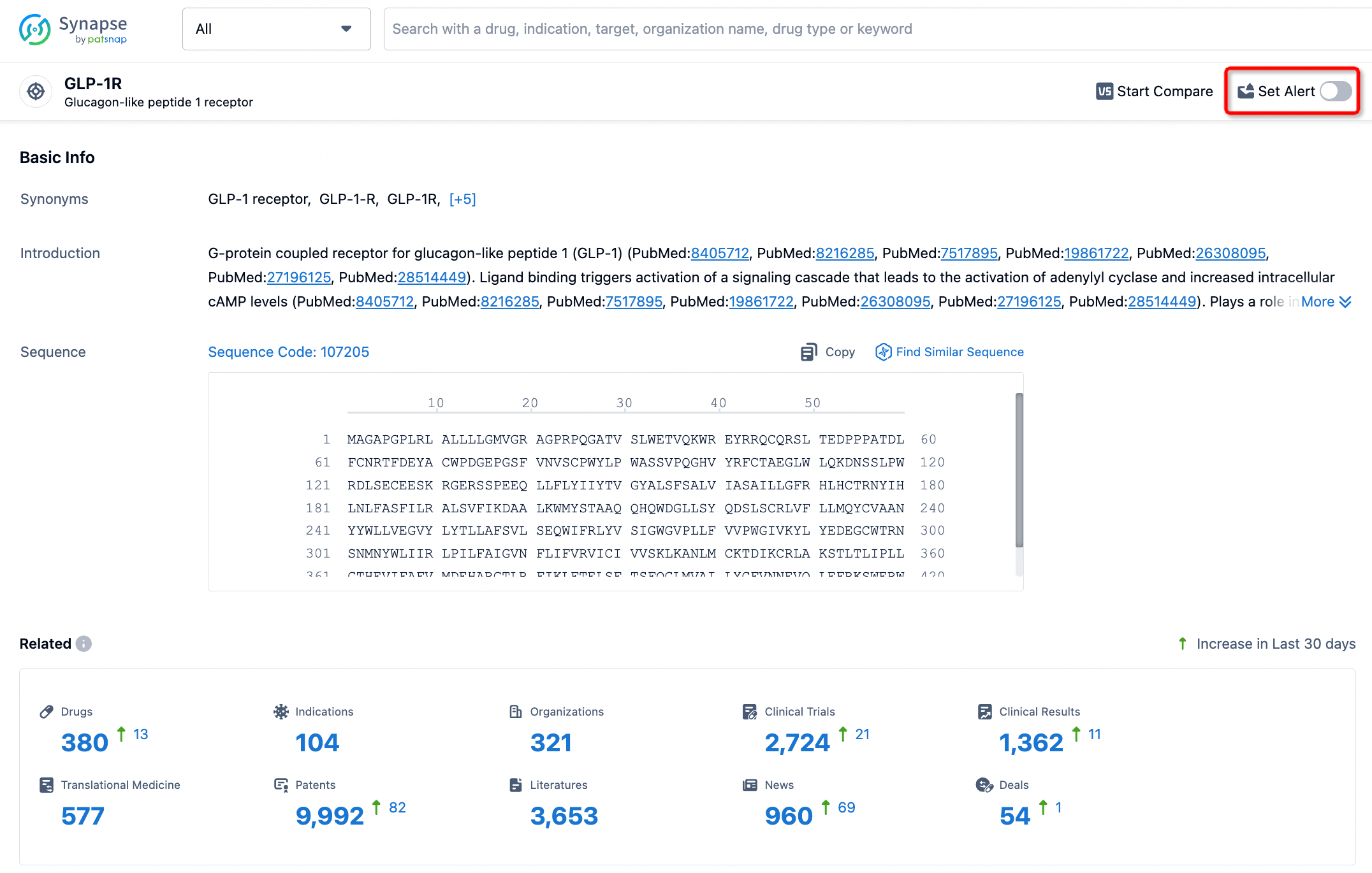
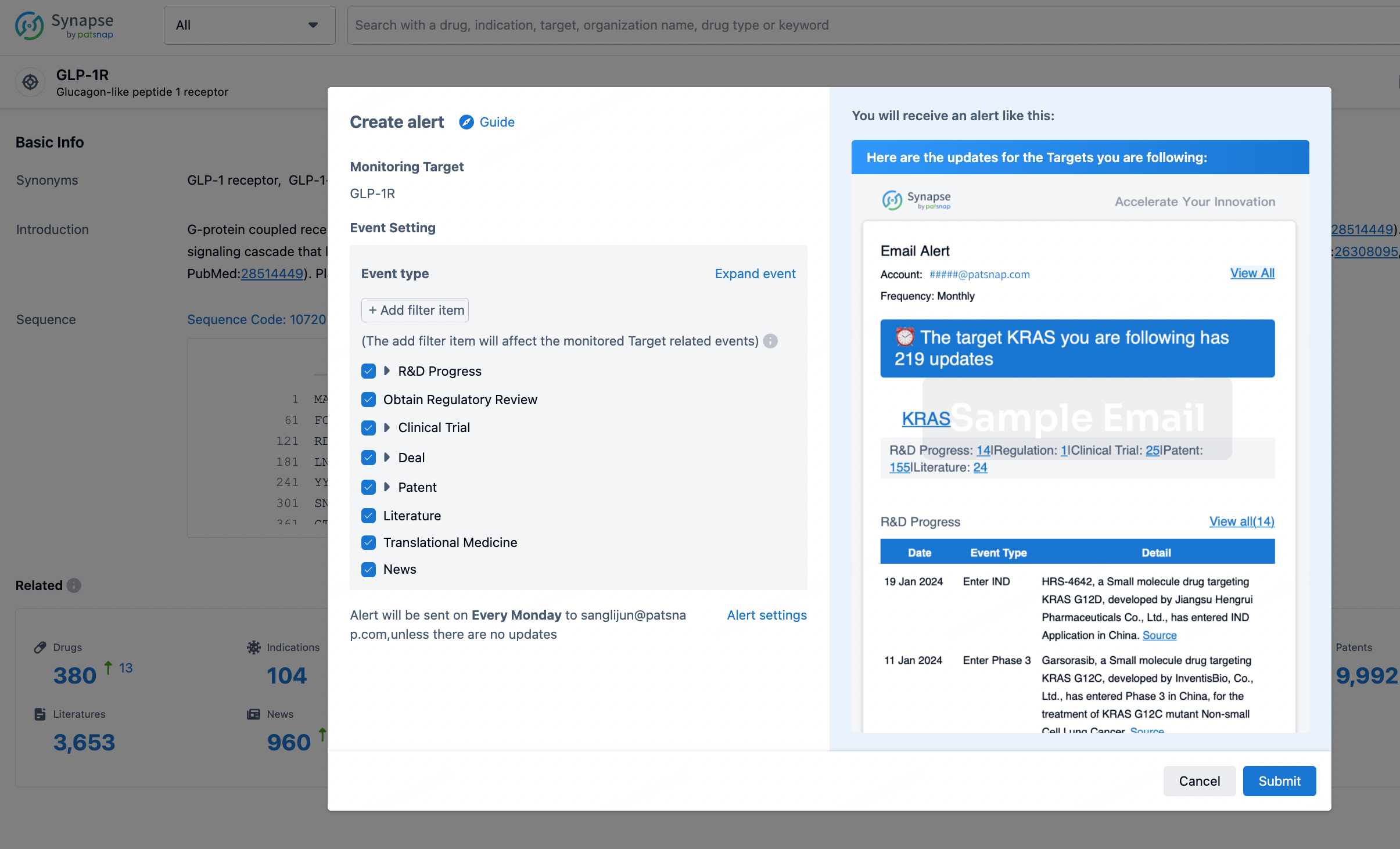
In the Synapse database, you can stay updated on the latest research and development advances of all targets. This service is accessible anytime and anywhere, with updates available daily or weekly. Use the "Set Alert" function to stay informed. Click on the image below to embark on a brand new journey of drug discovery!

AI Agents Built for Biopharma Breakthroughs
Accelerate discovery. Empower decisions. Transform outcomes.
Get started for free today!
Accelerate Strategic R&D decision making with Synapse, PatSnap’s AI-powered Connected Innovation Intelligence Platform Built for Life Sciences Professionals.
Start your data trial now!
Synapse data is also accessible to external entities via APIs or data packages. Empower better decisions with the latest in pharmaceutical intelligence.