Request Demo
What are α7 receptor modulators and how do they work?
21 June 2024
Introduction to α7 receptor modulators
The α7 nicotinic acetylcholine receptor (α7 nAChR) has gained significant attention in recent years due to its potential therapeutic applications in a variety of medical conditions. This receptor, a subtype of the nicotinic acetylcholine receptors, is particularly notable for its high permeability to calcium ions and its distribution in both the central nervous system (CNS) and peripheral tissues. Researchers have been exploring α7 receptor modulators as a promising avenue for treating a range of neurological and psychiatric disorders, as well as inflammatory diseases.
How do α7 receptor modulators work?
To understand the mechanism of action of α7 receptor modulators, it is essential to first grasp the basic function of the α7 nicotinic acetylcholine receptor. The α7 nAChR is a ligand-gated ion channel that, when activated by its natural ligand acetylcholine or other agonists, allows the flow of cations, particularly calcium ions, into the cell. This influx of calcium can trigger various intracellular signaling pathways, which are crucial for processes such as synaptic plasticity, neurotransmitter release, and gene expression.
α7 receptor modulators can be broadly classified into agonists, partial agonists, and antagonists, each having a distinct mode of interaction with the receptor. Agonists, such as GTS-21 (also known as DMXB-A), bind to the receptor and mimic the action of acetylcholine, leading to its activation. Partial agonists, like EVP-6124 (also known as encenicline), also activate the receptor but with less efficacy compared to full agonists. On the other hand, antagonists, such as methyllycaconitine (MLA), bind to the receptor and inhibit its activation by preventing acetylcholine from binding.
In addition to these, there are also positive allosteric modulators (PAMs) that do not directly activate the receptor but enhance its response to acetylcholine. PAMs are particularly intriguing because they can fine-tune the receptor's activity without causing the desensitization often associated with prolonged agonist exposure. For instance, compounds like PNU-120596 have been shown to significantly potentiate the receptor's response to acetylcholine, making them attractive candidates for therapeutic development.
What are α7 receptor modulators used for?
The therapeutic potential of α7 receptor modulators spans several domains, thanks to the diverse physiological roles played by the α7 nAChR. One of the most extensively studied areas is their application in treating cognitive disorders, including Alzheimer's disease and schizophrenia. In Alzheimer's disease, the α7 receptor has been implicated in the pathophysiology due to its role in modulating synaptic plasticity and neuroprotection. Agonists and PAMs of the α7 receptor have shown promise in enhancing cognitive function and reducing amyloid-beta-induced neurotoxicity in preclinical models.
Similarly, in schizophrenia, cognitive deficits are a core feature that is not adequately addressed by current antipsychotic medications. α7 receptor agonists and PAMs have demonstrated potential in improving cognitive function in both animal models and clinical trials, offering hope for better management of the cognitive symptoms associated with schizophrenia.
Beyond cognitive disorders, α7 receptor modulators are being investigated for their anti-inflammatory properties. The α7 nAChR plays a critical role in the cholinergic anti-inflammatory pathway, which regulates the production of pro-inflammatory cytokines. Agonists of the α7 receptor have been shown to reduce inflammation in various models of inflammatory diseases, including sepsis, arthritis, and inflammatory bowel disease. This anti-inflammatory effect opens up new therapeutic avenues for conditions characterized by chronic inflammation.
Moreover, there is growing interest in the potential of α7 receptor modulators in treating neuropathic pain, depression, and even cancer. In neuropathic pain, the modulation of α7 nAChR can influence pain signaling pathways, providing analgesic effects. In depression, the receptor's role in neurotransmitter release and synaptic plasticity suggests that its modulation could offer antidepressant effects. Preliminary studies have also indicated that α7 receptor modulators might impact cancer cell proliferation, though this area is still in the early stages of research.
In conclusion, α7 receptor modulators represent a versatile and promising class of therapeutic agents with applications across a wide range of medical conditions. Ongoing research continues to unravel their full potential, bringing us closer to novel treatments for some of the most challenging diseases affecting humanity today.
The α7 nicotinic acetylcholine receptor (α7 nAChR) has gained significant attention in recent years due to its potential therapeutic applications in a variety of medical conditions. This receptor, a subtype of the nicotinic acetylcholine receptors, is particularly notable for its high permeability to calcium ions and its distribution in both the central nervous system (CNS) and peripheral tissues. Researchers have been exploring α7 receptor modulators as a promising avenue for treating a range of neurological and psychiatric disorders, as well as inflammatory diseases.
How do α7 receptor modulators work?
To understand the mechanism of action of α7 receptor modulators, it is essential to first grasp the basic function of the α7 nicotinic acetylcholine receptor. The α7 nAChR is a ligand-gated ion channel that, when activated by its natural ligand acetylcholine or other agonists, allows the flow of cations, particularly calcium ions, into the cell. This influx of calcium can trigger various intracellular signaling pathways, which are crucial for processes such as synaptic plasticity, neurotransmitter release, and gene expression.
α7 receptor modulators can be broadly classified into agonists, partial agonists, and antagonists, each having a distinct mode of interaction with the receptor. Agonists, such as GTS-21 (also known as DMXB-A), bind to the receptor and mimic the action of acetylcholine, leading to its activation. Partial agonists, like EVP-6124 (also known as encenicline), also activate the receptor but with less efficacy compared to full agonists. On the other hand, antagonists, such as methyllycaconitine (MLA), bind to the receptor and inhibit its activation by preventing acetylcholine from binding.
In addition to these, there are also positive allosteric modulators (PAMs) that do not directly activate the receptor but enhance its response to acetylcholine. PAMs are particularly intriguing because they can fine-tune the receptor's activity without causing the desensitization often associated with prolonged agonist exposure. For instance, compounds like PNU-120596 have been shown to significantly potentiate the receptor's response to acetylcholine, making them attractive candidates for therapeutic development.
What are α7 receptor modulators used for?
The therapeutic potential of α7 receptor modulators spans several domains, thanks to the diverse physiological roles played by the α7 nAChR. One of the most extensively studied areas is their application in treating cognitive disorders, including Alzheimer's disease and schizophrenia. In Alzheimer's disease, the α7 receptor has been implicated in the pathophysiology due to its role in modulating synaptic plasticity and neuroprotection. Agonists and PAMs of the α7 receptor have shown promise in enhancing cognitive function and reducing amyloid-beta-induced neurotoxicity in preclinical models.
Similarly, in schizophrenia, cognitive deficits are a core feature that is not adequately addressed by current antipsychotic medications. α7 receptor agonists and PAMs have demonstrated potential in improving cognitive function in both animal models and clinical trials, offering hope for better management of the cognitive symptoms associated with schizophrenia.
Beyond cognitive disorders, α7 receptor modulators are being investigated for their anti-inflammatory properties. The α7 nAChR plays a critical role in the cholinergic anti-inflammatory pathway, which regulates the production of pro-inflammatory cytokines. Agonists of the α7 receptor have been shown to reduce inflammation in various models of inflammatory diseases, including sepsis, arthritis, and inflammatory bowel disease. This anti-inflammatory effect opens up new therapeutic avenues for conditions characterized by chronic inflammation.
Moreover, there is growing interest in the potential of α7 receptor modulators in treating neuropathic pain, depression, and even cancer. In neuropathic pain, the modulation of α7 nAChR can influence pain signaling pathways, providing analgesic effects. In depression, the receptor's role in neurotransmitter release and synaptic plasticity suggests that its modulation could offer antidepressant effects. Preliminary studies have also indicated that α7 receptor modulators might impact cancer cell proliferation, though this area is still in the early stages of research.
In conclusion, α7 receptor modulators represent a versatile and promising class of therapeutic agents with applications across a wide range of medical conditions. Ongoing research continues to unravel their full potential, bringing us closer to novel treatments for some of the most challenging diseases affecting humanity today.
How to obtain the latest development progress of all targets?
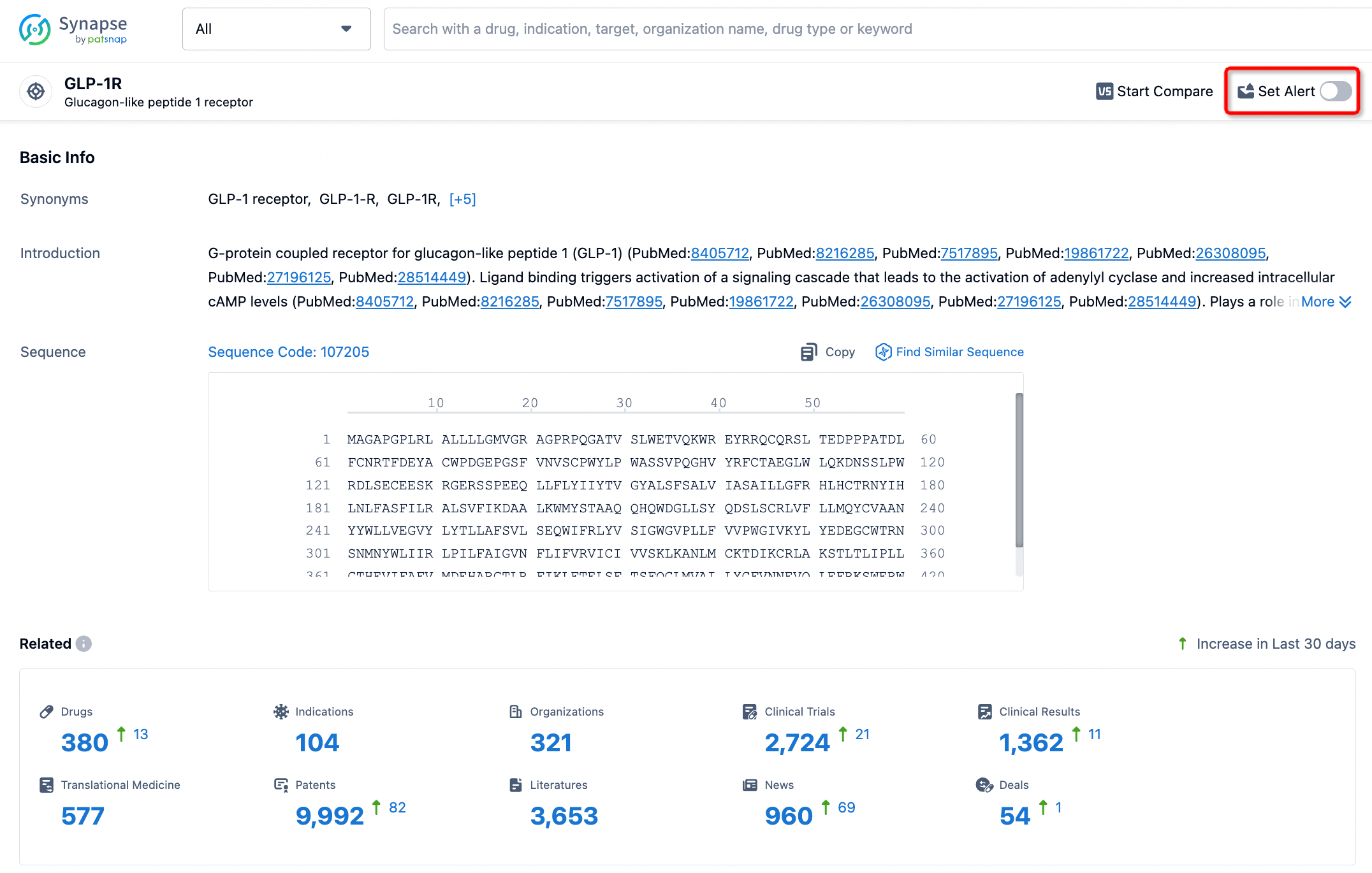
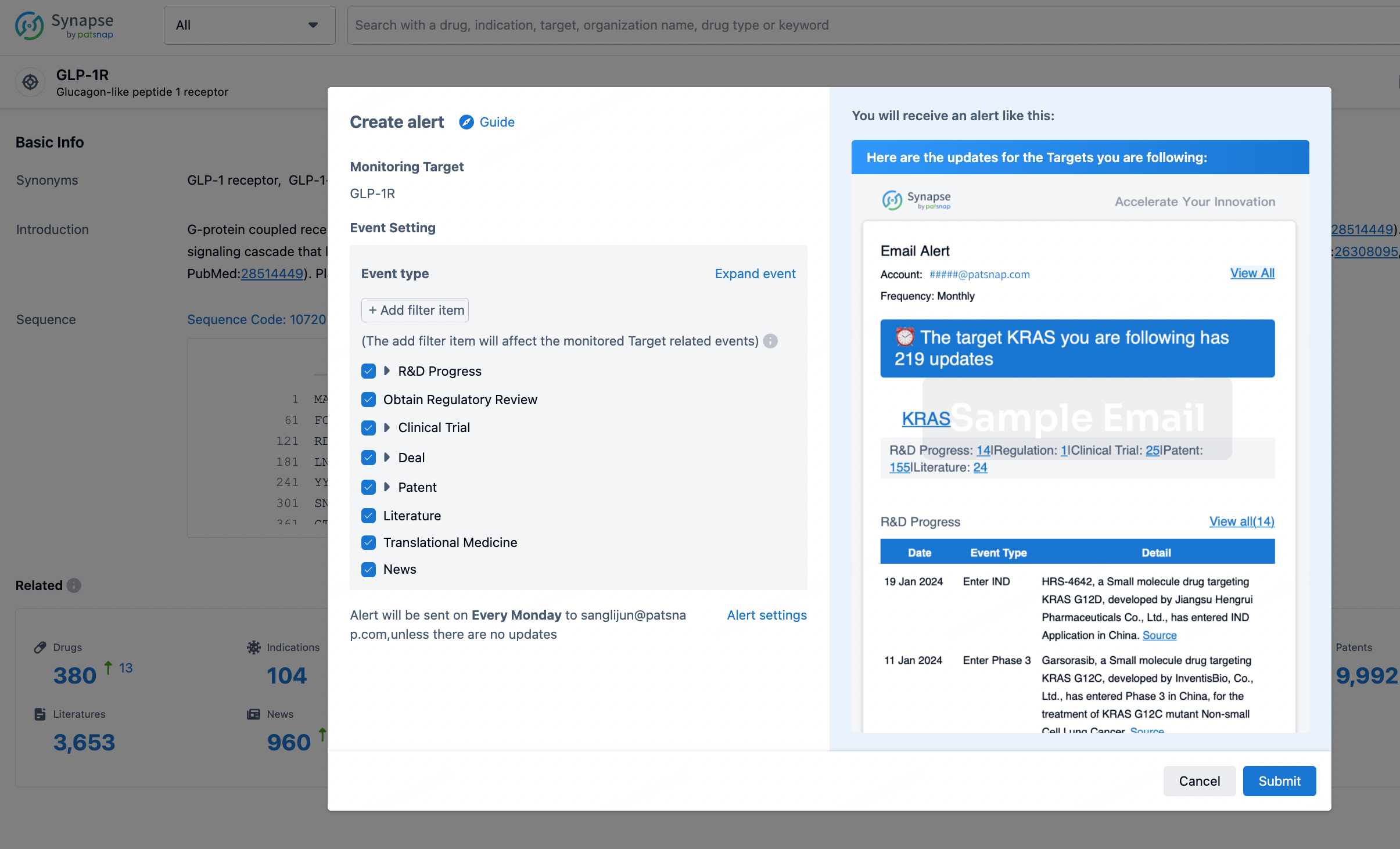
In the Synapse database, you can stay updated on the latest research and development advances of all targets. This service is accessible anytime and anywhere, with updates available daily or weekly. Use the "Set Alert" function to stay informed. Click on the image below to embark on a brand new journey of drug discovery!

AI Agents Built for Biopharma Breakthroughs
Accelerate discovery. Empower decisions. Transform outcomes.
Get started for free today!
Accelerate Strategic R&D decision making with Synapse, PatSnap’s AI-powered Connected Innovation Intelligence Platform Built for Life Sciences Professionals.
Start your data trial now!
Synapse data is also accessible to external entities via APIs or data packages. Empower better decisions with the latest in pharmaceutical intelligence.