Request Demo
What are αvβ3 stimulants and how do they work?
25 June 2024
Introduction to αvβ3 Stimulants
In recent years, the exploration of αvβ3 stimulants has gained considerable traction within the fields of pharmacology and medicine. These stimulants target the αvβ3 integrin, a receptor found on the surface of certain cells that plays a crucial role in cell adhesion, migration, and signal transduction. The αvβ3 integrin is particularly noted for its involvement in angiogenesis, the process by which new blood vessels form from pre-existing ones, which is vital for wound healing, embryonic development, and the progression of certain diseases such as cancer. Understanding and manipulating αvβ3 integrin through stimulants has opened new avenues for therapeutic interventions, offering hope for treatments in various pathological conditions.
How do αvβ3 Stimulants Work?
To grasp the mechanism of αvβ3 stimulants, it is essential to first understand the nature of integrins. Integrins are transmembrane receptors that facilitate cell-extracellular matrix (ECM) adhesion. They are composed of alpha and beta subunits, and the αvβ3 integrin is one of the most studied due to its role in numerous physiological and pathological processes. When αvβ3 integrin binds to its ligands, such as vitronectin and fibronectin, it activates intracellular signaling pathways that influence cell survival, proliferation, and migration.
αvβ3 stimulants work by enhancing the binding affinity or activating the integrin more effectively, thereby amplifying the downstream signaling effects. This can be achieved through various molecular mechanisms, such as altering the integrin's conformation to a high-affinity state or increasing its expression on the cell surface. By stimulating the αvβ3 integrin, these agents can modulate key biological processes, potentially leading to therapeutic benefits in conditions where these processes are dysregulated.
What are αvβ3 Stimulants Used For?
The therapeutic potential of αvβ3 stimulants spans several medical fields, with ongoing research continually uncovering new applications. Here are some of the prominent uses:
1. **Cancer Therapy**: One of the most promising areas for αvβ3 stimulants is in oncology. The αvβ3 integrin is overexpressed in various tumors and is associated with tumor angiogenesis, growth, and metastasis. By stimulating this integrin, researchers aim to enhance the delivery and efficacy of anticancer drugs and to inhibit tumor progression. For example, certain αvβ3 stimulants may be used to increase the uptake of chemotherapeutic agents by tumor cells, improving their effectiveness.
2. **Wound Healing**: Angiogenesis is a critical component of wound healing, as it supplies necessary nutrients and oxygen to the healing tissue. αvβ3 stimulants can promote the formation of new blood vessels, thereby accelerating the healing process. This application is particularly beneficial for chronic wounds, such as diabetic ulcers, where impaired angiogenesis is a major problem.
3. **Cardiovascular Diseases**: In the context of ischemic heart diseases, such as myocardial infarction, the promotion of angiogenesis can help restore blood flow to the affected areas. αvβ3 stimulants may aid in the formation of collateral blood vessels, thus improving cardiac function and reducing tissue damage.
4. **Bone Regeneration**: The αvβ3 integrin is also involved in bone remodeling and regeneration. Stimulants targeting this integrin can enhance the activity of osteoblasts, the cells responsible for bone formation, which could be useful in treating conditions like osteoporosis or in enhancing the healing of bone fractures.
5. **Neurodegenerative Diseases**: Emerging research suggests that αvβ3 stimulants might have neuroprotective effects. In diseases like Alzheimer's, where neurovascular dysfunction is a contributing factor, promoting angiogenesis in the brain could potentially improve cognitive function and slow disease progression.
In conclusion, αvβ3 stimulants represent a versatile and promising class of therapeutic agents with applications ranging from cancer therapy to regenerative medicine. As our understanding of integrin biology continues to evolve, so too will the potential for these stimulants to provide innovative solutions to some of the most challenging medical conditions.
In recent years, the exploration of αvβ3 stimulants has gained considerable traction within the fields of pharmacology and medicine. These stimulants target the αvβ3 integrin, a receptor found on the surface of certain cells that plays a crucial role in cell adhesion, migration, and signal transduction. The αvβ3 integrin is particularly noted for its involvement in angiogenesis, the process by which new blood vessels form from pre-existing ones, which is vital for wound healing, embryonic development, and the progression of certain diseases such as cancer. Understanding and manipulating αvβ3 integrin through stimulants has opened new avenues for therapeutic interventions, offering hope for treatments in various pathological conditions.
How do αvβ3 Stimulants Work?
To grasp the mechanism of αvβ3 stimulants, it is essential to first understand the nature of integrins. Integrins are transmembrane receptors that facilitate cell-extracellular matrix (ECM) adhesion. They are composed of alpha and beta subunits, and the αvβ3 integrin is one of the most studied due to its role in numerous physiological and pathological processes. When αvβ3 integrin binds to its ligands, such as vitronectin and fibronectin, it activates intracellular signaling pathways that influence cell survival, proliferation, and migration.
αvβ3 stimulants work by enhancing the binding affinity or activating the integrin more effectively, thereby amplifying the downstream signaling effects. This can be achieved through various molecular mechanisms, such as altering the integrin's conformation to a high-affinity state or increasing its expression on the cell surface. By stimulating the αvβ3 integrin, these agents can modulate key biological processes, potentially leading to therapeutic benefits in conditions where these processes are dysregulated.
What are αvβ3 Stimulants Used For?
The therapeutic potential of αvβ3 stimulants spans several medical fields, with ongoing research continually uncovering new applications. Here are some of the prominent uses:
1. **Cancer Therapy**: One of the most promising areas for αvβ3 stimulants is in oncology. The αvβ3 integrin is overexpressed in various tumors and is associated with tumor angiogenesis, growth, and metastasis. By stimulating this integrin, researchers aim to enhance the delivery and efficacy of anticancer drugs and to inhibit tumor progression. For example, certain αvβ3 stimulants may be used to increase the uptake of chemotherapeutic agents by tumor cells, improving their effectiveness.
2. **Wound Healing**: Angiogenesis is a critical component of wound healing, as it supplies necessary nutrients and oxygen to the healing tissue. αvβ3 stimulants can promote the formation of new blood vessels, thereby accelerating the healing process. This application is particularly beneficial for chronic wounds, such as diabetic ulcers, where impaired angiogenesis is a major problem.
3. **Cardiovascular Diseases**: In the context of ischemic heart diseases, such as myocardial infarction, the promotion of angiogenesis can help restore blood flow to the affected areas. αvβ3 stimulants may aid in the formation of collateral blood vessels, thus improving cardiac function and reducing tissue damage.
4. **Bone Regeneration**: The αvβ3 integrin is also involved in bone remodeling and regeneration. Stimulants targeting this integrin can enhance the activity of osteoblasts, the cells responsible for bone formation, which could be useful in treating conditions like osteoporosis or in enhancing the healing of bone fractures.
5. **Neurodegenerative Diseases**: Emerging research suggests that αvβ3 stimulants might have neuroprotective effects. In diseases like Alzheimer's, where neurovascular dysfunction is a contributing factor, promoting angiogenesis in the brain could potentially improve cognitive function and slow disease progression.
In conclusion, αvβ3 stimulants represent a versatile and promising class of therapeutic agents with applications ranging from cancer therapy to regenerative medicine. As our understanding of integrin biology continues to evolve, so too will the potential for these stimulants to provide innovative solutions to some of the most challenging medical conditions.
How to obtain the latest development progress of all targets?
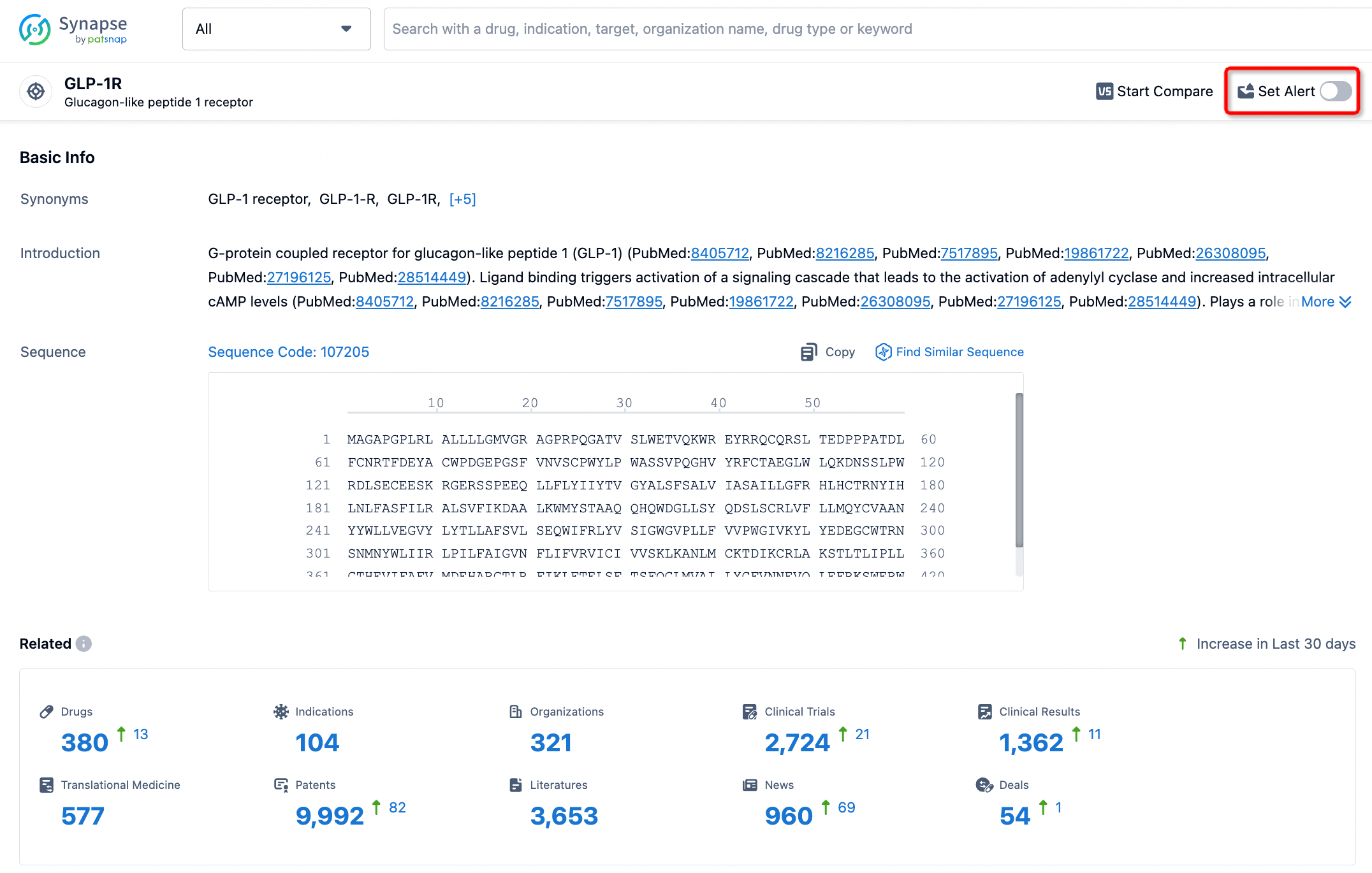
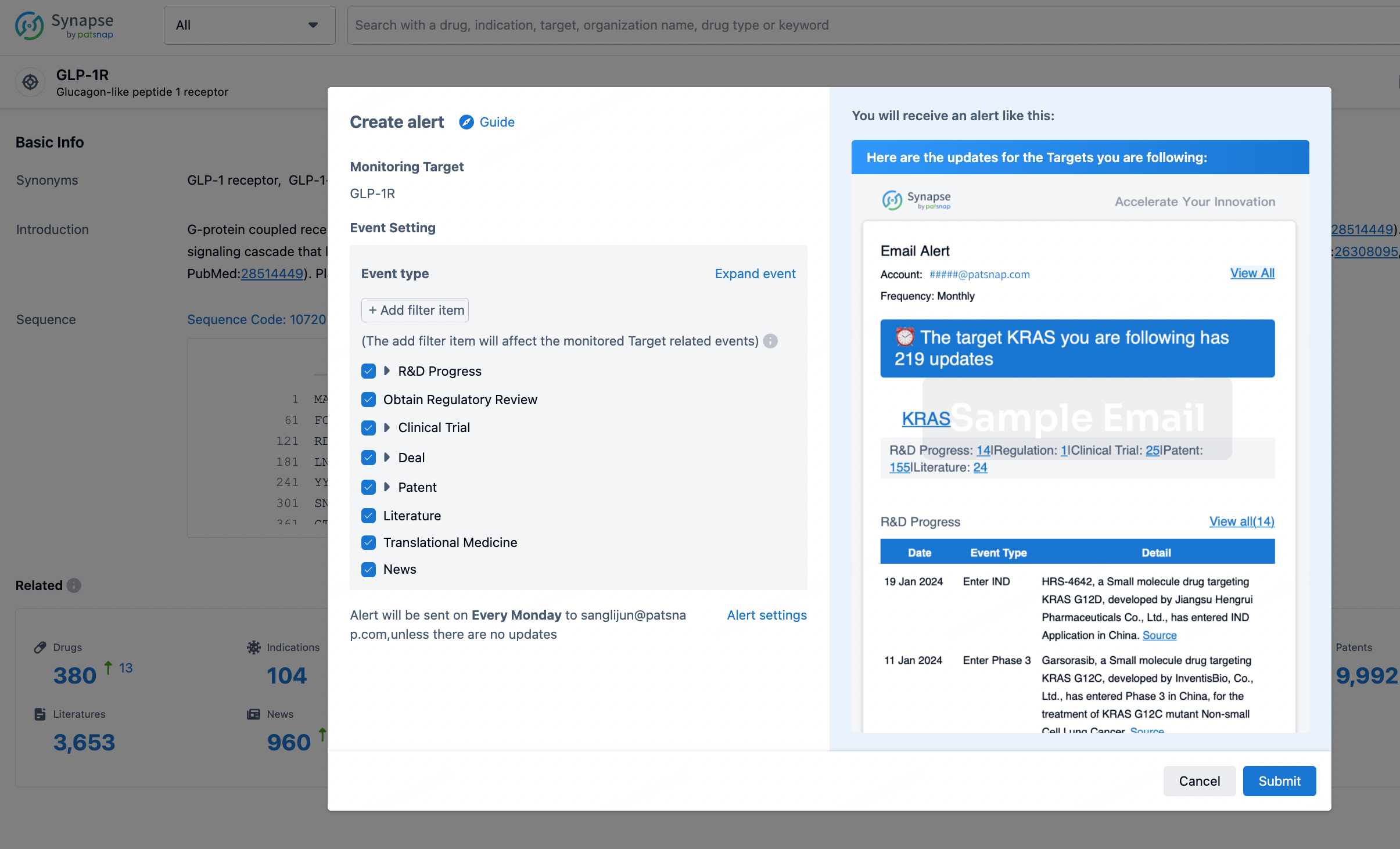
In the Synapse database, you can stay updated on the latest research and development advances of all targets. This service is accessible anytime and anywhere, with updates available daily or weekly. Use the "Set Alert" function to stay informed. Click on the image below to embark on a brand new journey of drug discovery!
AI Agents Built for Biopharma Breakthroughs
Accelerate discovery. Empower decisions. Transform outcomes.
Get started for free today!
Accelerate Strategic R&D decision making with Synapse, PatSnap’s AI-powered Connected Innovation Intelligence Platform Built for Life Sciences Professionals.
Start your data trial now!
Synapse data is also accessible to external entities via APIs or data packages. Empower better decisions with the latest in pharmaceutical intelligence.