Request Demo
What are σ1 receptor antagonists and how do they work?
21 June 2024
The sigma-1 receptor (σ1 receptor) is an intriguing protein that has captured the attention of researchers and clinicians alike. Initially identified as an enigmatic binding site for psychoactive drugs, the σ1 receptor has since been recognized for its multifaceted role in the central nervous system. σ1 receptor antagonists, which are compounds that bind to and inhibit the activity of the σ1 receptor, have emerged as a promising area of study. This post will delve into the function, mechanisms, and potential therapeutic applications of σ1 receptor antagonists.
σ1 receptors are unique in that they are not classical neurotransmitter receptors but rather chaperone proteins predominantly located in the endoplasmic reticulum (ER). They are known to modulate ion channels, neurotransmitter systems, and other receptor functions. The σ1 receptor plays a crucial role in cellular homeostasis, neuroprotection, and modulation of cell signaling pathways. When σ1 receptors are activated, they can influence calcium signaling, protein folding, and the response to cellular stress. Therefore, σ1 receptor antagonists can potentially intervene in various pathological processes by inhibiting these actions.
σ1 receptor antagonists work primarily by binding to the σ1 receptor and obstructing its active sites. By doing so, they prevent the receptor from exerting its modulatory effects on cellular processes. For instance, one of the key roles of the σ1 receptor is to modulate calcium signaling within cells. Upon activation, the σ1 receptor can interact with and regulate other proteins involved in calcium transport, such as the inositol trisphosphate receptor (IP3R). By blocking the σ1 receptor, antagonists can dampen these calcium signaling pathways, which can be beneficial in conditions characterized by excessive calcium influx and excitotoxicity.
Moreover, σ1 receptor antagonists can influence several neurotransmitter systems, including dopaminergic, serotonergic, and glutamatergic pathways. This broad-spectrum modulation enables these antagonists to exert a wide range of effects on brain function and behavior. By inhibiting the σ1 receptor, these compounds can reduce excessive neurotransmitter release, stabilize neuronal activity, and promote neuroprotection.
The therapeutic potential of σ1 receptor antagonists is vast, given the receptor's involvement in numerous physiological and pathological processes. One of the most compelling applications is in the treatment of neurodegenerative diseases such as Alzheimer's and Parkinson's. In these conditions, excessive oxidative stress and calcium dysregulation contribute to neuronal death. σ1 receptor antagonists, by mitigating these deleterious processes, offer a neuroprotective strategy that could slow disease progression and ameliorate symptoms.
Chronic pain is another area where σ1 receptor antagonists show promise. The σ1 receptor is involved in pain perception and modulation, and its inhibition has been shown to reduce pain sensitivity in various preclinical models. This points to potential applications in treating conditions like neuropathic pain, where conventional analgesics often fall short.
Additionally, σ1 receptor antagonists are being investigated for their potential in treating psychiatric disorders, including depression, anxiety, and schizophrenia. Given their role in modulating neurotransmitter systems, these antagonists could help rebalance the dysregulated pathways often seen in these conditions. For example, in depression, overactivation of the σ1 receptor has been linked to increased stress responses and impaired synaptic plasticity. By blocking this receptor, antagonists might restore normal neurotransmitter function and improve mood and cognition.
Emerging evidence also suggests that σ1 receptor antagonists could have a role in cancer therapy. The σ1 receptor is overexpressed in several types of cancer cells and is thought to contribute to tumor growth and metastasis. Inhibiting the σ1 receptor could therefore impair cancer cell viability and enhance the effectiveness of conventional treatments.
In conclusion, σ1 receptor antagonists represent a burgeoning field of research with the potential to address a wide array of medical conditions. By targeting the σ1 receptor, these compounds can modulate critical cellular processes and hold promise for treating neurodegenerative diseases, chronic pain, psychiatric disorders, and even cancer. As research progresses, we expect to gain a deeper understanding of these antagonists and unlock new therapeutic avenues for improving human health.
σ1 receptors are unique in that they are not classical neurotransmitter receptors but rather chaperone proteins predominantly located in the endoplasmic reticulum (ER). They are known to modulate ion channels, neurotransmitter systems, and other receptor functions. The σ1 receptor plays a crucial role in cellular homeostasis, neuroprotection, and modulation of cell signaling pathways. When σ1 receptors are activated, they can influence calcium signaling, protein folding, and the response to cellular stress. Therefore, σ1 receptor antagonists can potentially intervene in various pathological processes by inhibiting these actions.
σ1 receptor antagonists work primarily by binding to the σ1 receptor and obstructing its active sites. By doing so, they prevent the receptor from exerting its modulatory effects on cellular processes. For instance, one of the key roles of the σ1 receptor is to modulate calcium signaling within cells. Upon activation, the σ1 receptor can interact with and regulate other proteins involved in calcium transport, such as the inositol trisphosphate receptor (IP3R). By blocking the σ1 receptor, antagonists can dampen these calcium signaling pathways, which can be beneficial in conditions characterized by excessive calcium influx and excitotoxicity.
Moreover, σ1 receptor antagonists can influence several neurotransmitter systems, including dopaminergic, serotonergic, and glutamatergic pathways. This broad-spectrum modulation enables these antagonists to exert a wide range of effects on brain function and behavior. By inhibiting the σ1 receptor, these compounds can reduce excessive neurotransmitter release, stabilize neuronal activity, and promote neuroprotection.
The therapeutic potential of σ1 receptor antagonists is vast, given the receptor's involvement in numerous physiological and pathological processes. One of the most compelling applications is in the treatment of neurodegenerative diseases such as Alzheimer's and Parkinson's. In these conditions, excessive oxidative stress and calcium dysregulation contribute to neuronal death. σ1 receptor antagonists, by mitigating these deleterious processes, offer a neuroprotective strategy that could slow disease progression and ameliorate symptoms.
Chronic pain is another area where σ1 receptor antagonists show promise. The σ1 receptor is involved in pain perception and modulation, and its inhibition has been shown to reduce pain sensitivity in various preclinical models. This points to potential applications in treating conditions like neuropathic pain, where conventional analgesics often fall short.
Additionally, σ1 receptor antagonists are being investigated for their potential in treating psychiatric disorders, including depression, anxiety, and schizophrenia. Given their role in modulating neurotransmitter systems, these antagonists could help rebalance the dysregulated pathways often seen in these conditions. For example, in depression, overactivation of the σ1 receptor has been linked to increased stress responses and impaired synaptic plasticity. By blocking this receptor, antagonists might restore normal neurotransmitter function and improve mood and cognition.
Emerging evidence also suggests that σ1 receptor antagonists could have a role in cancer therapy. The σ1 receptor is overexpressed in several types of cancer cells and is thought to contribute to tumor growth and metastasis. Inhibiting the σ1 receptor could therefore impair cancer cell viability and enhance the effectiveness of conventional treatments.
In conclusion, σ1 receptor antagonists represent a burgeoning field of research with the potential to address a wide array of medical conditions. By targeting the σ1 receptor, these compounds can modulate critical cellular processes and hold promise for treating neurodegenerative diseases, chronic pain, psychiatric disorders, and even cancer. As research progresses, we expect to gain a deeper understanding of these antagonists and unlock new therapeutic avenues for improving human health.
How to obtain the latest development progress of all targets?
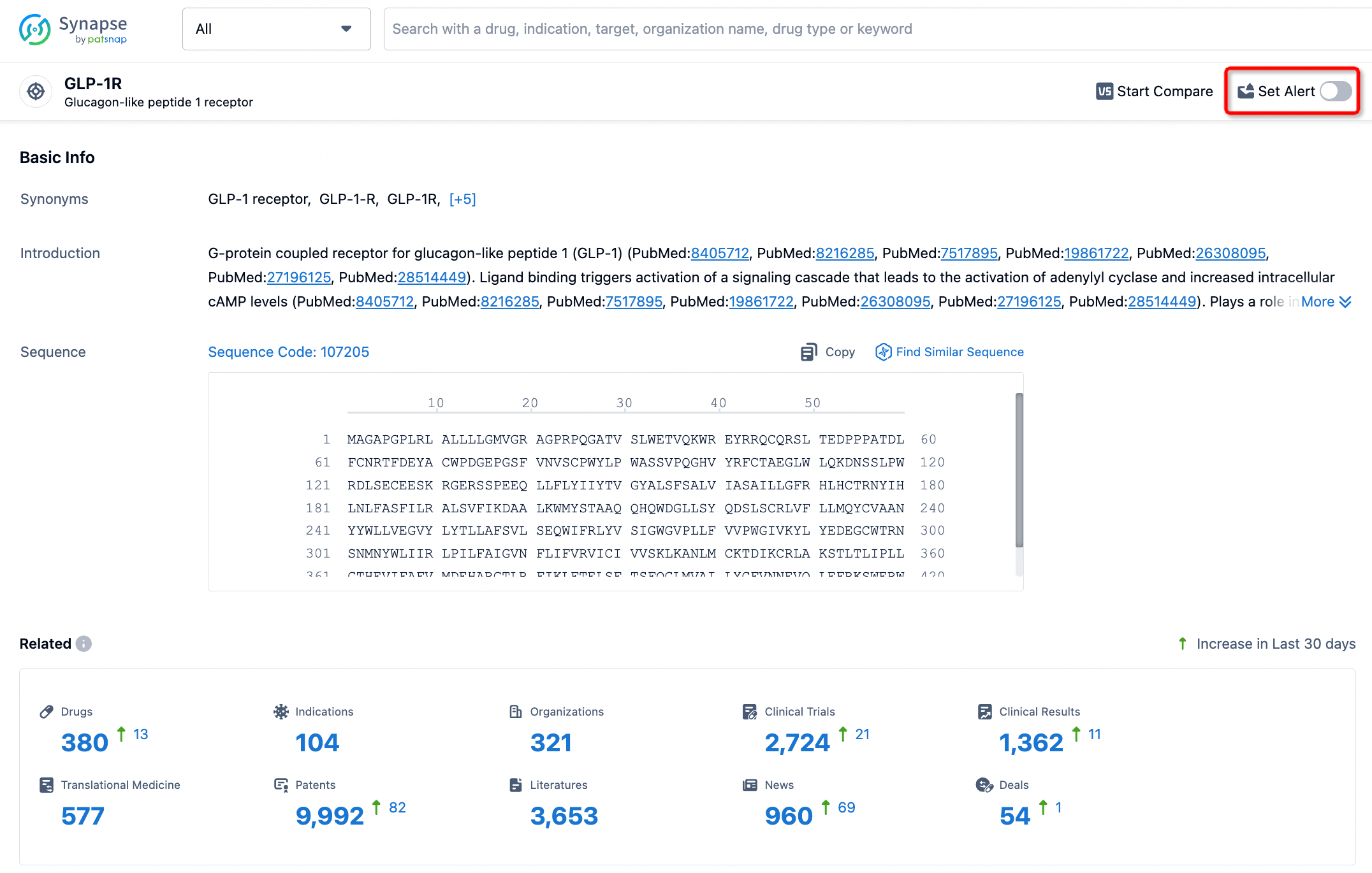
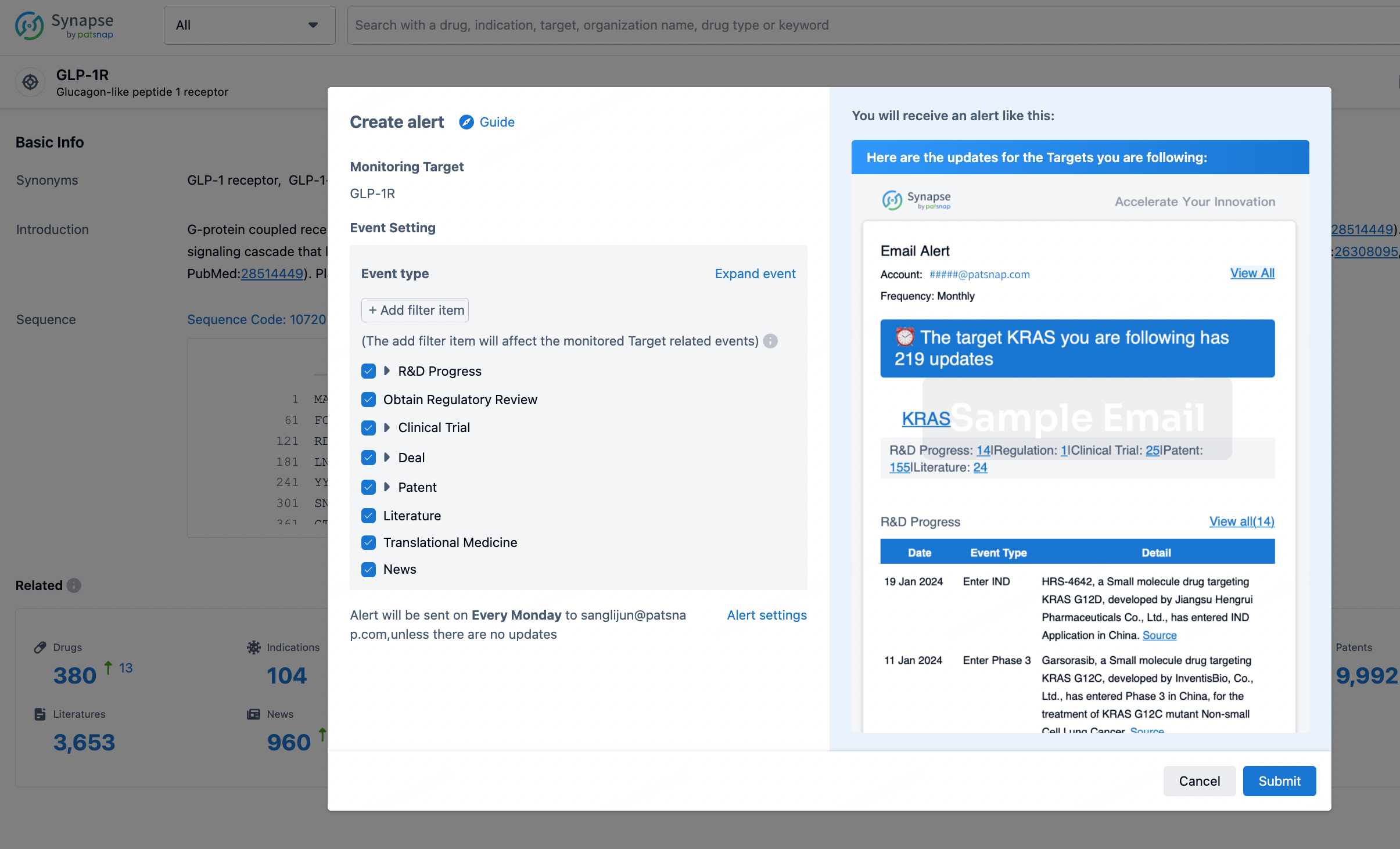
In the Synapse database, you can stay updated on the latest research and development advances of all targets. This service is accessible anytime and anywhere, with updates available daily or weekly. Use the "Set Alert" function to stay informed. Click on the image below to embark on a brand new journey of drug discovery!
AI Agents Built for Biopharma Breakthroughs
Accelerate discovery. Empower decisions. Transform outcomes.
Get started for free today!
Accelerate Strategic R&D decision making with Synapse, PatSnap’s AI-powered Connected Innovation Intelligence Platform Built for Life Sciences Professionals.
Start your data trial now!
Synapse data is also accessible to external entities via APIs or data packages. Empower better decisions with the latest in pharmaceutical intelligence.