Request Demo
What are σ1 receptor modulators and how do they work?
21 June 2024
The discovery and understanding of σ1 receptor modulators have opened new avenues in pharmacological research and therapeutic interventions. These modulators are gaining attention for their unique and multifaceted roles in the central nervous system and beyond. Let's delve into what σ1 receptor modulators are, how they work, and what they are used for.
Sigma-1 (σ1) receptors were initially misclassified as opioid receptors due to their ability to bind certain psychoactive drugs. However, further research revealed that they are distinct from classic neurotransmitter receptors. The σ1 receptor is a chaperone protein located primarily in the endoplasmic reticulum (ER) membrane, where it interacts with various cellular proteins and regulates their functions. These receptors are widely expressed in the brain, heart, liver, and immune cells, underscoring their broad physiological significance.
How do σ1 receptor modulators work? The σ1 receptor modulates a myriad of cellular processes through its chaperone activity. It interacts with ion channels, G protein-coupled receptors (GPCRs), and other signaling proteins, thereby influencing calcium signaling, oxidative stress responses, and cellular survival pathways. Unlike typical neurotransmitter receptors that mediate direct signal transduction, σ1 receptors act as modulators, fine-tuning cellular responses to various stimuli.
One of the primary ways σ1 receptor modulators work is by stabilizing or altering the function of these receptors. Agonists, which activate the receptor, can enhance its chaperone activity, improving cellular resilience to stress. Antagonists, on the other hand, can inhibit these functions. Some modulators exhibit selective activity, acting as agonists in certain cellular contexts and antagonists in others, which makes them particularly versatile tools for research and potential therapeutic agents.
The functional versatility of σ1 receptors and their modulators has led to numerous therapeutic applications. In neurodegenerative diseases like Alzheimer’s and Parkinson’s, σ1 receptor agonists have shown promise in preclinical studies by enhancing neuroprotection and reducing neuroinflammation. These modulators help in maintaining cellular homeostasis and protecting neurons from apoptotic cell death, which are critical factors in the progression of neurodegenerative disorders.
In the realm of mental health, σ1 receptor modulators are being explored for their potential in treating depression, anxiety, and psychosis. The modulation of σ1 receptors affects the dopaminergic and serotonergic systems, which are crucial in mood regulation and cognitive function. Clinical trials with σ1 receptor agonists have demonstrated anxiolytic and antidepressant effects, providing new avenues for patients who do not respond to traditional therapies.
Pain management is another area where σ1 receptor modulators are making significant strides. Chronic pain conditions, including neuropathic pain, often involve complex pathophysiological mechanisms that are not adequately addressed by conventional analgesics. σ1 receptor antagonists can inhibit pain signaling pathways and reduce hyperalgesia, offering potential relief for patients with refractory pain conditions.
Beyond the nervous system, σ1 receptor modulators have potential applications in cancer therapy. Certain cancer cells exploit σ1 receptors to survive under stressful conditions, such as hypoxia and nutrient deprivation. By targeting these receptors with specific modulators, it is possible to sensitize cancer cells to chemotherapy and induce apoptosis, thus enhancing the efficacy of existing treatments.
Cardiovascular diseases also stand to benefit from σ1 receptor modulators. Research indicates that these receptors play a role in cardiomyocyte survival and function. Agonists could potentially protect against ischemia-reperfusion injury and heart failure. Additionally, their anti-inflammatory properties might contribute to the treatment of various inflammatory cardiovascular conditions.
In conclusion, σ1 receptor modulators represent a promising and versatile class of compounds with broad therapeutic potential. Their ability to modulate a variety of cellular processes makes them valuable in treating neurodegenerative diseases, mental health disorders, chronic pain, cancer, and cardiovascular diseases. Ongoing research continues to unveil the complexities of σ1 receptor signaling and its modulation, paving the way for novel therapeutic strategies and improved patient outcomes. As our understanding of these modulators deepens, they may well become integral components of future medical interventions.
Sigma-1 (σ1) receptors were initially misclassified as opioid receptors due to their ability to bind certain psychoactive drugs. However, further research revealed that they are distinct from classic neurotransmitter receptors. The σ1 receptor is a chaperone protein located primarily in the endoplasmic reticulum (ER) membrane, where it interacts with various cellular proteins and regulates their functions. These receptors are widely expressed in the brain, heart, liver, and immune cells, underscoring their broad physiological significance.
How do σ1 receptor modulators work? The σ1 receptor modulates a myriad of cellular processes through its chaperone activity. It interacts with ion channels, G protein-coupled receptors (GPCRs), and other signaling proteins, thereby influencing calcium signaling, oxidative stress responses, and cellular survival pathways. Unlike typical neurotransmitter receptors that mediate direct signal transduction, σ1 receptors act as modulators, fine-tuning cellular responses to various stimuli.
One of the primary ways σ1 receptor modulators work is by stabilizing or altering the function of these receptors. Agonists, which activate the receptor, can enhance its chaperone activity, improving cellular resilience to stress. Antagonists, on the other hand, can inhibit these functions. Some modulators exhibit selective activity, acting as agonists in certain cellular contexts and antagonists in others, which makes them particularly versatile tools for research and potential therapeutic agents.
The functional versatility of σ1 receptors and their modulators has led to numerous therapeutic applications. In neurodegenerative diseases like Alzheimer’s and Parkinson’s, σ1 receptor agonists have shown promise in preclinical studies by enhancing neuroprotection and reducing neuroinflammation. These modulators help in maintaining cellular homeostasis and protecting neurons from apoptotic cell death, which are critical factors in the progression of neurodegenerative disorders.
In the realm of mental health, σ1 receptor modulators are being explored for their potential in treating depression, anxiety, and psychosis. The modulation of σ1 receptors affects the dopaminergic and serotonergic systems, which are crucial in mood regulation and cognitive function. Clinical trials with σ1 receptor agonists have demonstrated anxiolytic and antidepressant effects, providing new avenues for patients who do not respond to traditional therapies.
Pain management is another area where σ1 receptor modulators are making significant strides. Chronic pain conditions, including neuropathic pain, often involve complex pathophysiological mechanisms that are not adequately addressed by conventional analgesics. σ1 receptor antagonists can inhibit pain signaling pathways and reduce hyperalgesia, offering potential relief for patients with refractory pain conditions.
Beyond the nervous system, σ1 receptor modulators have potential applications in cancer therapy. Certain cancer cells exploit σ1 receptors to survive under stressful conditions, such as hypoxia and nutrient deprivation. By targeting these receptors with specific modulators, it is possible to sensitize cancer cells to chemotherapy and induce apoptosis, thus enhancing the efficacy of existing treatments.
Cardiovascular diseases also stand to benefit from σ1 receptor modulators. Research indicates that these receptors play a role in cardiomyocyte survival and function. Agonists could potentially protect against ischemia-reperfusion injury and heart failure. Additionally, their anti-inflammatory properties might contribute to the treatment of various inflammatory cardiovascular conditions.
In conclusion, σ1 receptor modulators represent a promising and versatile class of compounds with broad therapeutic potential. Their ability to modulate a variety of cellular processes makes them valuable in treating neurodegenerative diseases, mental health disorders, chronic pain, cancer, and cardiovascular diseases. Ongoing research continues to unveil the complexities of σ1 receptor signaling and its modulation, paving the way for novel therapeutic strategies and improved patient outcomes. As our understanding of these modulators deepens, they may well become integral components of future medical interventions.
How to obtain the latest development progress of all targets?
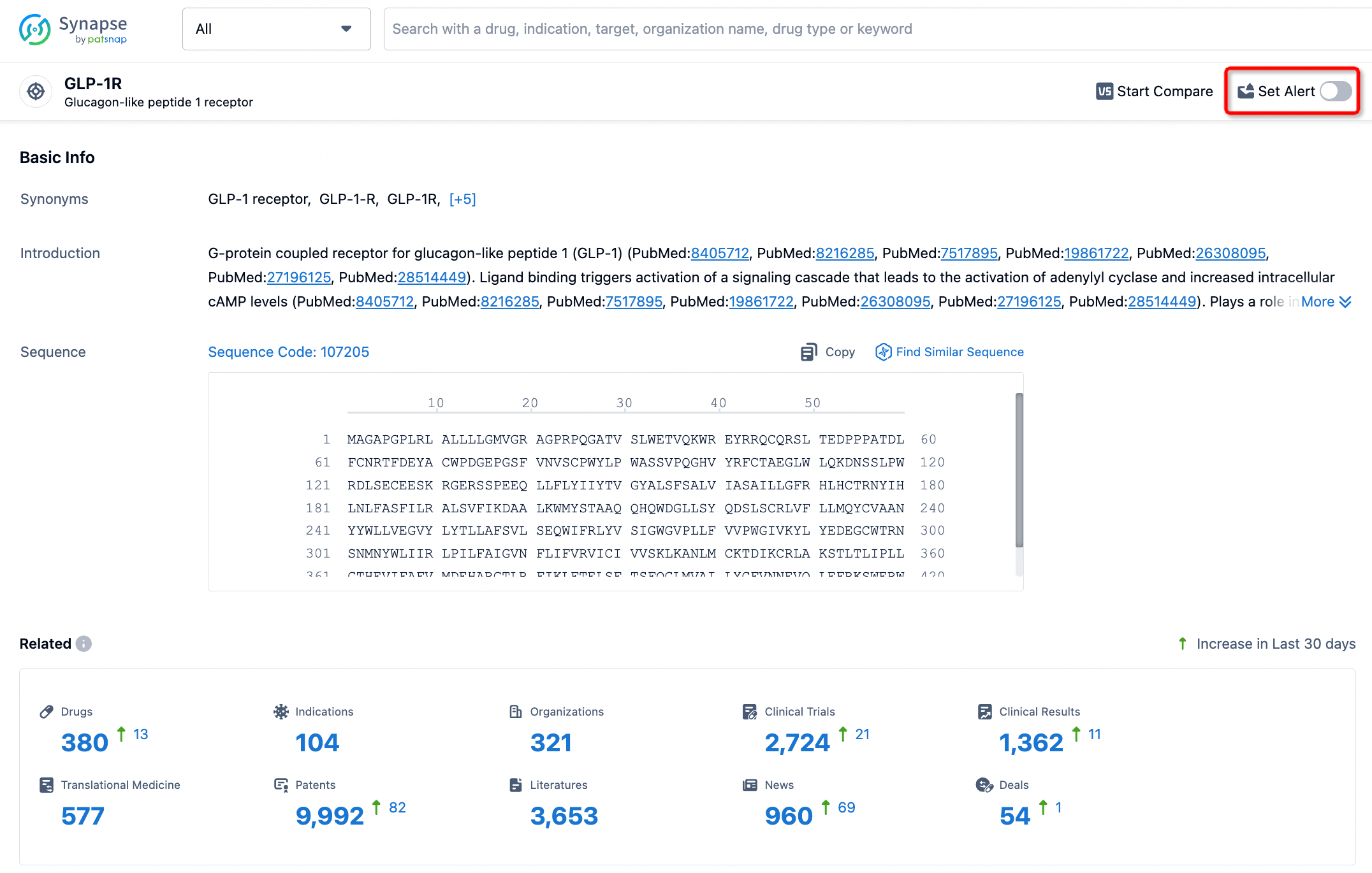
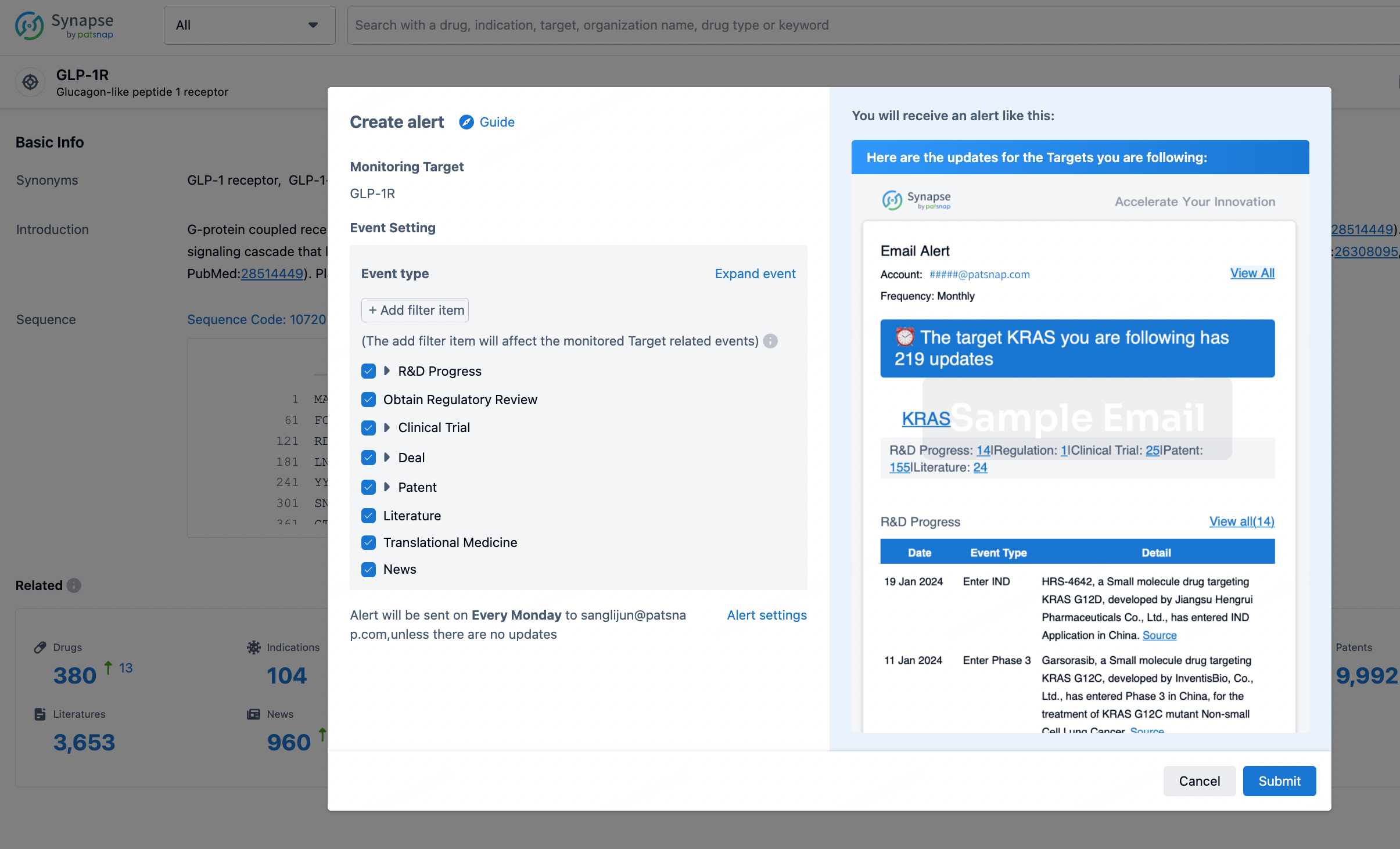
In the Synapse database, you can stay updated on the latest research and development advances of all targets. This service is accessible anytime and anywhere, with updates available daily or weekly. Use the "Set Alert" function to stay informed. Click on the image below to embark on a brand new journey of drug discovery!

Hiro LS Researcher
The AI Search Engine Built to Accelerate Biopharma Decisions
Search across billion-scale life sciences data to uncover signals, validate evidence, and act with confidence.
Ask any biopharma research question→
Get started for free today!
Accelerate Strategic R&D decision making with Synapse, Patsnap’s AI-powered Connected Innovation Intelligence Platform Built for Life Sciences Professionals.
Discover Synapse Data Servers
Synapse data is now integrated into the PatSnap LS Model Context Protocol (MCP) service. Customize your LLM agent now using our MCP server!