Request Demo
What are σ2 receptor antagonists and how do they work?
21 June 2024
The world of pharmacology is ever-evolving, with researchers uncovering new targets for drug development that hold promise for a range of medical conditions. One such target that has garnered substantial interest in recent years is the σ2 receptor. Although initially discovered in the early 1990s, the σ2 receptor has remained an enigma, with its precise functions and mechanisms only beginning to be elucidated. σ2 receptor antagonists, in particular, are emerging as potential therapeutic agents, offering hope for the treatment of various diseases, including cancer, neurodegenerative disorders, and psychiatric conditions. This article delves into the fascinating world of σ2 receptor antagonists, exploring how they work and their potential applications.
σ2 receptors are a subclass of sigma receptors, which are distinct from classical neurotransmitter receptors. While the σ1 receptor has been more extensively studied, the σ2 receptor is increasingly recognized for its role in cellular processes such as proliferation, survival, and apoptosis. Unlike traditional receptors that function primarily through ion channels or G-protein coupled mechanisms, σ2 receptors are believed to be involved in modulating lipid and protein interactions within cell membranes.
σ2 receptor antagonists work by binding to the σ2 receptor, thereby inhibiting its activity. The exact mechanism through which these antagonists exert their effects is still under investigation, but it is believed that they interfere with the receptor's ability to mediate intracellular signaling pathways. This disruption can lead to altered cellular functions, such as changes in calcium homeostasis, oxidative stress responses, and apoptosis. By modulating these pathways, σ2 receptor antagonists can influence cell survival and proliferation, making them particularly interesting for cancer research.
Recent studies suggest that σ2 receptor antagonists can also impact the endoplasmic reticulum (ER) stress response. The ER is responsible for protein folding and secretion, and its stress response plays a critical role in maintaining cellular homeostasis. By modulating ER stress, σ2 receptor antagonists may help restore normal cellular function in diseases characterized by protein misfolding and aggregation, such as Alzheimer's disease and Parkinson's disease.
The therapeutic potential of σ2 receptor antagonists spans several areas of medicine. In oncology, these compounds have shown promise as anti-cancer agents. Preclinical studies have demonstrated that σ2 receptor antagonists can induce apoptosis in cancer cells, inhibit tumor growth, and enhance the efficacy of conventional chemotherapeutic agents. This makes them a compelling option for combination therapy, potentially improving outcomes for patients with various types of cancer.
In the realm of neurodegenerative disorders, σ2 receptor antagonists offer hope for conditions like Alzheimer's and Parkinson's diseases. These disorders are characterized by the accumulation of misfolded proteins and neuronal loss. By modulating ER stress and promoting cellular homeostasis, σ2 receptor antagonists may help mitigate the pathological processes underlying these diseases. Early research indicates that these compounds can improve cognitive function and reduce neuroinflammation, making them a promising avenue for future therapeutic development.
Furthermore, σ2 receptor antagonists are being explored for their potential in treating psychiatric conditions such as depression and anxiety. The σ2 receptor is believed to be involved in mood regulation and stress responses, and its antagonism could help alleviate symptoms of these disorders. Additionally, σ2 receptor antagonists may have fewer side effects compared to traditional psychiatric medications, offering a safer alternative for long-term treatment.
In conclusion, σ2 receptor antagonists represent a burgeoning field of research with significant therapeutic potential. By modulating critical cellular pathways, these compounds offer hope for the treatment of a range of conditions, from cancer to neurodegenerative and psychiatric disorders. As research continues to unravel the complexities of σ2 receptor signaling, we can anticipate the development of novel therapeutics that harness the power of σ2 receptor antagonism, potentially transforming the landscape of modern medicine.
σ2 receptors are a subclass of sigma receptors, which are distinct from classical neurotransmitter receptors. While the σ1 receptor has been more extensively studied, the σ2 receptor is increasingly recognized for its role in cellular processes such as proliferation, survival, and apoptosis. Unlike traditional receptors that function primarily through ion channels or G-protein coupled mechanisms, σ2 receptors are believed to be involved in modulating lipid and protein interactions within cell membranes.
σ2 receptor antagonists work by binding to the σ2 receptor, thereby inhibiting its activity. The exact mechanism through which these antagonists exert their effects is still under investigation, but it is believed that they interfere with the receptor's ability to mediate intracellular signaling pathways. This disruption can lead to altered cellular functions, such as changes in calcium homeostasis, oxidative stress responses, and apoptosis. By modulating these pathways, σ2 receptor antagonists can influence cell survival and proliferation, making them particularly interesting for cancer research.
Recent studies suggest that σ2 receptor antagonists can also impact the endoplasmic reticulum (ER) stress response. The ER is responsible for protein folding and secretion, and its stress response plays a critical role in maintaining cellular homeostasis. By modulating ER stress, σ2 receptor antagonists may help restore normal cellular function in diseases characterized by protein misfolding and aggregation, such as Alzheimer's disease and Parkinson's disease.
The therapeutic potential of σ2 receptor antagonists spans several areas of medicine. In oncology, these compounds have shown promise as anti-cancer agents. Preclinical studies have demonstrated that σ2 receptor antagonists can induce apoptosis in cancer cells, inhibit tumor growth, and enhance the efficacy of conventional chemotherapeutic agents. This makes them a compelling option for combination therapy, potentially improving outcomes for patients with various types of cancer.
In the realm of neurodegenerative disorders, σ2 receptor antagonists offer hope for conditions like Alzheimer's and Parkinson's diseases. These disorders are characterized by the accumulation of misfolded proteins and neuronal loss. By modulating ER stress and promoting cellular homeostasis, σ2 receptor antagonists may help mitigate the pathological processes underlying these diseases. Early research indicates that these compounds can improve cognitive function and reduce neuroinflammation, making them a promising avenue for future therapeutic development.
Furthermore, σ2 receptor antagonists are being explored for their potential in treating psychiatric conditions such as depression and anxiety. The σ2 receptor is believed to be involved in mood regulation and stress responses, and its antagonism could help alleviate symptoms of these disorders. Additionally, σ2 receptor antagonists may have fewer side effects compared to traditional psychiatric medications, offering a safer alternative for long-term treatment.
In conclusion, σ2 receptor antagonists represent a burgeoning field of research with significant therapeutic potential. By modulating critical cellular pathways, these compounds offer hope for the treatment of a range of conditions, from cancer to neurodegenerative and psychiatric disorders. As research continues to unravel the complexities of σ2 receptor signaling, we can anticipate the development of novel therapeutics that harness the power of σ2 receptor antagonism, potentially transforming the landscape of modern medicine.
How to obtain the latest development progress of all targets?
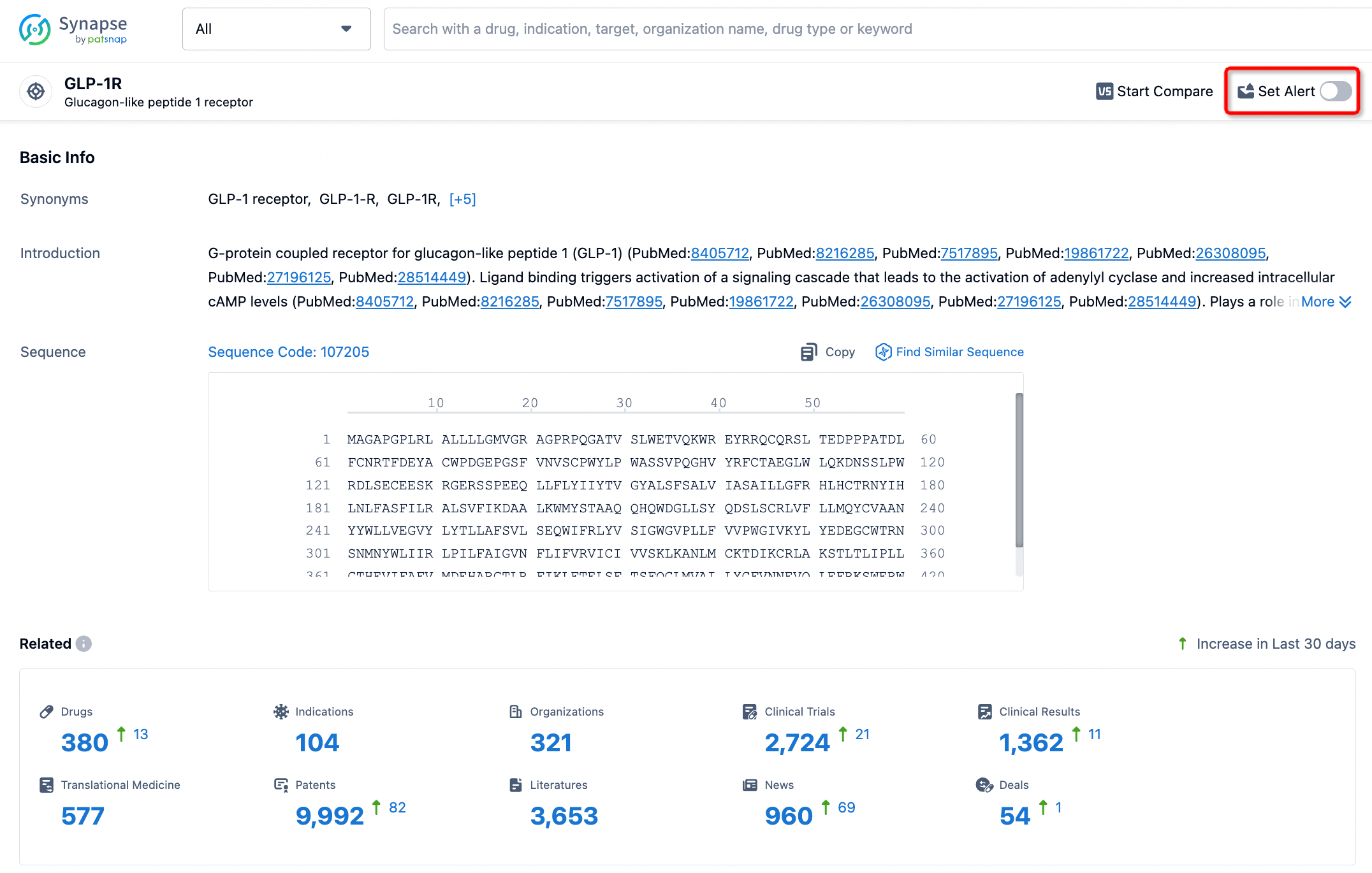
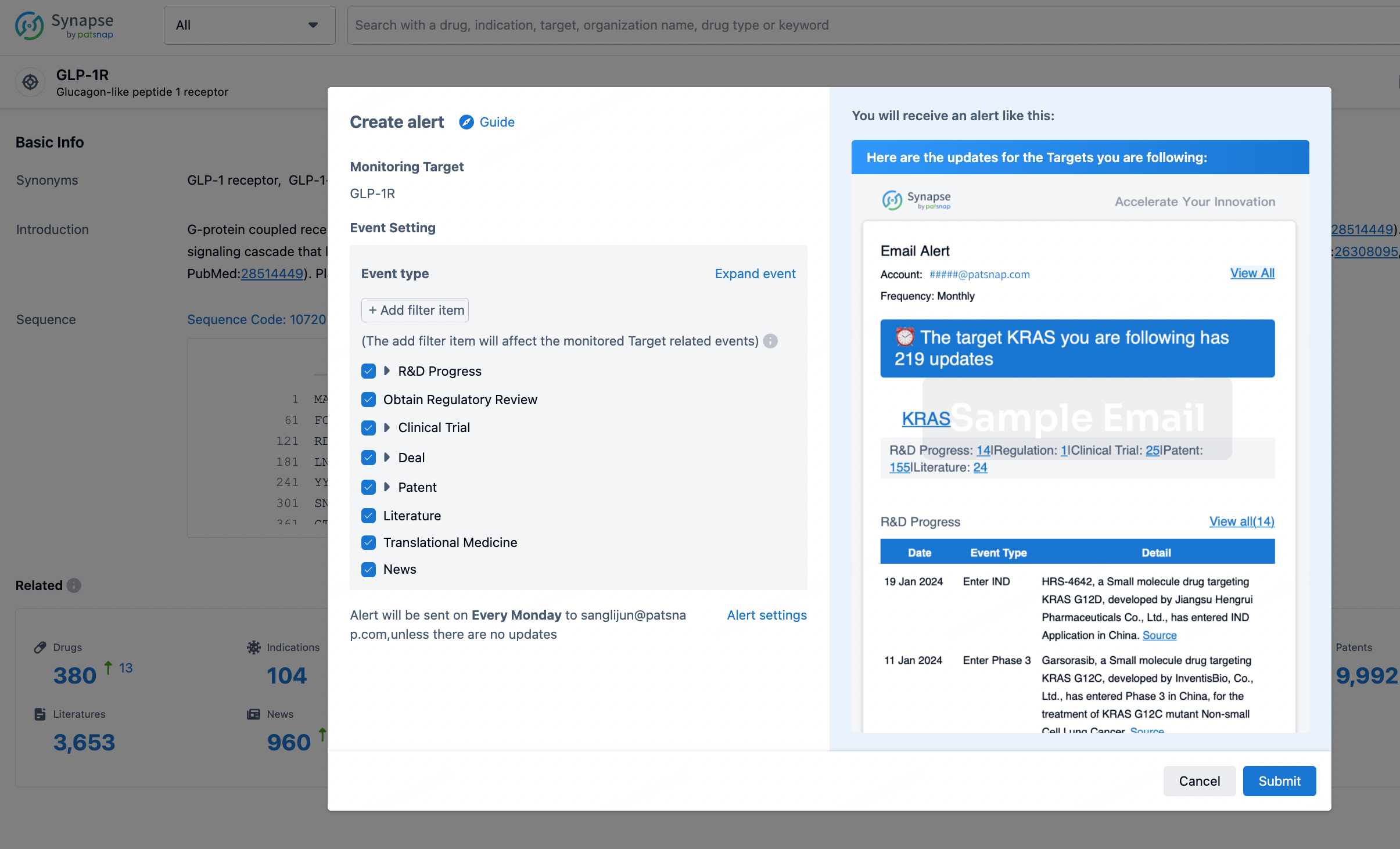
In the Synapse database, you can stay updated on the latest research and development advances of all targets. This service is accessible anytime and anywhere, with updates available daily or weekly. Use the "Set Alert" function to stay informed. Click on the image below to embark on a brand new journey of drug discovery!
Hiro LS Researcher
The AI Search Engine Built to Accelerate Biopharma Decisions
Search across billion-scale life sciences data to uncover signals, validate evidence, and act with confidence.
Ask any biopharma research question→
Get started for free today!
Accelerate Strategic R&D decision making with Synapse, Patsnap’s AI-powered Connected Innovation Intelligence Platform Built for Life Sciences Professionals.
Discover Synapse Data Servers
Synapse data is now integrated into the PatSnap LS Model Context Protocol (MCP) service. Customize your LLM agent now using our MCP server!