Request Demo
What are Acyl CoA synthetase family member inhibitors and how do they work?
26 June 2024
Acyl CoA synthetase (ACS) family member inhibitors represent a burgeoning area of research in biochemical pharmacology. These inhibitors target specific enzymes in the ACS family, which play a crucial role in lipid metabolism. By understanding and manipulating these enzymatic pathways, scientists are uncovering new therapeutic avenues for a variety of diseases, ranging from metabolic disorders to cancer.
Acyl CoA synthetases are pivotal enzymes in the lipid metabolism pathway. They catalyze the conversion of free fatty acids into fatty acyl-CoA esters by coupling fatty acids with coenzyme A (CoA). This reaction is essential for the activation of fatty acids, enabling their subsequent utilization in various metabolic processes, including β-oxidation, lipid biosynthesis, and membrane formation. The ACS family consists of several isoforms, each with specific substrate preferences and tissue distributions. This diversity allows for fine-tuned regulation of lipid metabolism in different cellular contexts.
Acyl CoA synthetase family member inhibitors work by binding to the active site of the ACS enzymes, thereby blocking their ability to catalyze the formation of fatty acyl-CoA. This inhibition can occur through competitive or non-competitive mechanisms. In competitive inhibition, the inhibitor resembles the enzyme's natural substrate and competes for binding at the active site. Non-competitive inhibitors, on the other hand, bind to a different part of the enzyme, inducing conformational changes that reduce the enzyme's activity.
The inhibition of ACS enzymes interrupts the conversion of free fatty acids to fatty acyl-CoA, leading to a decrease in the availability of activated fatty acids for downstream metabolic processes. This can result in an accumulation of free fatty acids and a reduction in lipid synthesis and degradation. Depending on the specific ACS isoform targeted, the metabolic consequences can vary, offering a tailored approach to modulating lipid metabolism in particular tissues or disease states.
The therapeutic potential of Acyl CoA synthetase family member inhibitors is vast, given the central role of lipid metabolism in numerous physiological and pathological processes. One of the most promising applications is in the treatment of metabolic disorders such as obesity, diabetes, and non-alcoholic fatty liver disease (NAFLD). These conditions are often characterized by dysregulated lipid metabolism, leading to the accumulation of harmful lipid intermediates. By inhibiting specific ACS enzymes, it may be possible to restore metabolic balance and alleviate disease symptoms.
Cancer therapy is another area where ACS inhibitors show significant promise. Cancer cells often exhibit altered lipid metabolism to support rapid proliferation and survival. Certain ACS isoforms are overexpressed in various cancers, contributing to the synthesis of lipids that are essential for membrane biogenesis and energy production. Targeting these enzymes with specific inhibitors can disrupt the metabolic adaptations of cancer cells, leading to reduced tumor growth and enhanced sensitivity to conventional therapies.
In addition to metabolic disorders and cancer, ACS inhibitors are being explored for their potential in treating inflammatory diseases. Lipid metabolites play a crucial role in the regulation of inflammation, serving as precursors for pro-inflammatory and anti-inflammatory signaling molecules. By modulating the activity of ACS enzymes, it may be possible to influence the production of these signaling molecules and control inflammatory responses.
The development of ACS family member inhibitors is still in its early stages, with much research needed to fully understand their mechanisms and therapeutic potential. However, several small-molecule inhibitors have already shown promising results in preclinical studies, demonstrating the feasibility of targeting ACS enzymes for therapeutic benefit. As our understanding of lipid metabolism continues to grow, so too will the opportunities for developing novel treatments based on ACS inhibition.
In conclusion, Acyl CoA synthetase family member inhibitors represent a promising new approach to modulating lipid metabolism for therapeutic purposes. By targeting specific ACS enzymes, these inhibitors offer a potential treatment strategy for a wide range of conditions, from metabolic disorders and cancer to inflammatory diseases. Continued research in this area is likely to yield new insights and therapeutic opportunities, paving the way for novel interventions that can improve health and quality of life.
Acyl CoA synthetases are pivotal enzymes in the lipid metabolism pathway. They catalyze the conversion of free fatty acids into fatty acyl-CoA esters by coupling fatty acids with coenzyme A (CoA). This reaction is essential for the activation of fatty acids, enabling their subsequent utilization in various metabolic processes, including β-oxidation, lipid biosynthesis, and membrane formation. The ACS family consists of several isoforms, each with specific substrate preferences and tissue distributions. This diversity allows for fine-tuned regulation of lipid metabolism in different cellular contexts.
Acyl CoA synthetase family member inhibitors work by binding to the active site of the ACS enzymes, thereby blocking their ability to catalyze the formation of fatty acyl-CoA. This inhibition can occur through competitive or non-competitive mechanisms. In competitive inhibition, the inhibitor resembles the enzyme's natural substrate and competes for binding at the active site. Non-competitive inhibitors, on the other hand, bind to a different part of the enzyme, inducing conformational changes that reduce the enzyme's activity.
The inhibition of ACS enzymes interrupts the conversion of free fatty acids to fatty acyl-CoA, leading to a decrease in the availability of activated fatty acids for downstream metabolic processes. This can result in an accumulation of free fatty acids and a reduction in lipid synthesis and degradation. Depending on the specific ACS isoform targeted, the metabolic consequences can vary, offering a tailored approach to modulating lipid metabolism in particular tissues or disease states.
The therapeutic potential of Acyl CoA synthetase family member inhibitors is vast, given the central role of lipid metabolism in numerous physiological and pathological processes. One of the most promising applications is in the treatment of metabolic disorders such as obesity, diabetes, and non-alcoholic fatty liver disease (NAFLD). These conditions are often characterized by dysregulated lipid metabolism, leading to the accumulation of harmful lipid intermediates. By inhibiting specific ACS enzymes, it may be possible to restore metabolic balance and alleviate disease symptoms.
Cancer therapy is another area where ACS inhibitors show significant promise. Cancer cells often exhibit altered lipid metabolism to support rapid proliferation and survival. Certain ACS isoforms are overexpressed in various cancers, contributing to the synthesis of lipids that are essential for membrane biogenesis and energy production. Targeting these enzymes with specific inhibitors can disrupt the metabolic adaptations of cancer cells, leading to reduced tumor growth and enhanced sensitivity to conventional therapies.
In addition to metabolic disorders and cancer, ACS inhibitors are being explored for their potential in treating inflammatory diseases. Lipid metabolites play a crucial role in the regulation of inflammation, serving as precursors for pro-inflammatory and anti-inflammatory signaling molecules. By modulating the activity of ACS enzymes, it may be possible to influence the production of these signaling molecules and control inflammatory responses.
The development of ACS family member inhibitors is still in its early stages, with much research needed to fully understand their mechanisms and therapeutic potential. However, several small-molecule inhibitors have already shown promising results in preclinical studies, demonstrating the feasibility of targeting ACS enzymes for therapeutic benefit. As our understanding of lipid metabolism continues to grow, so too will the opportunities for developing novel treatments based on ACS inhibition.
In conclusion, Acyl CoA synthetase family member inhibitors represent a promising new approach to modulating lipid metabolism for therapeutic purposes. By targeting specific ACS enzymes, these inhibitors offer a potential treatment strategy for a wide range of conditions, from metabolic disorders and cancer to inflammatory diseases. Continued research in this area is likely to yield new insights and therapeutic opportunities, paving the way for novel interventions that can improve health and quality of life.
How to obtain the latest development progress of all targets?
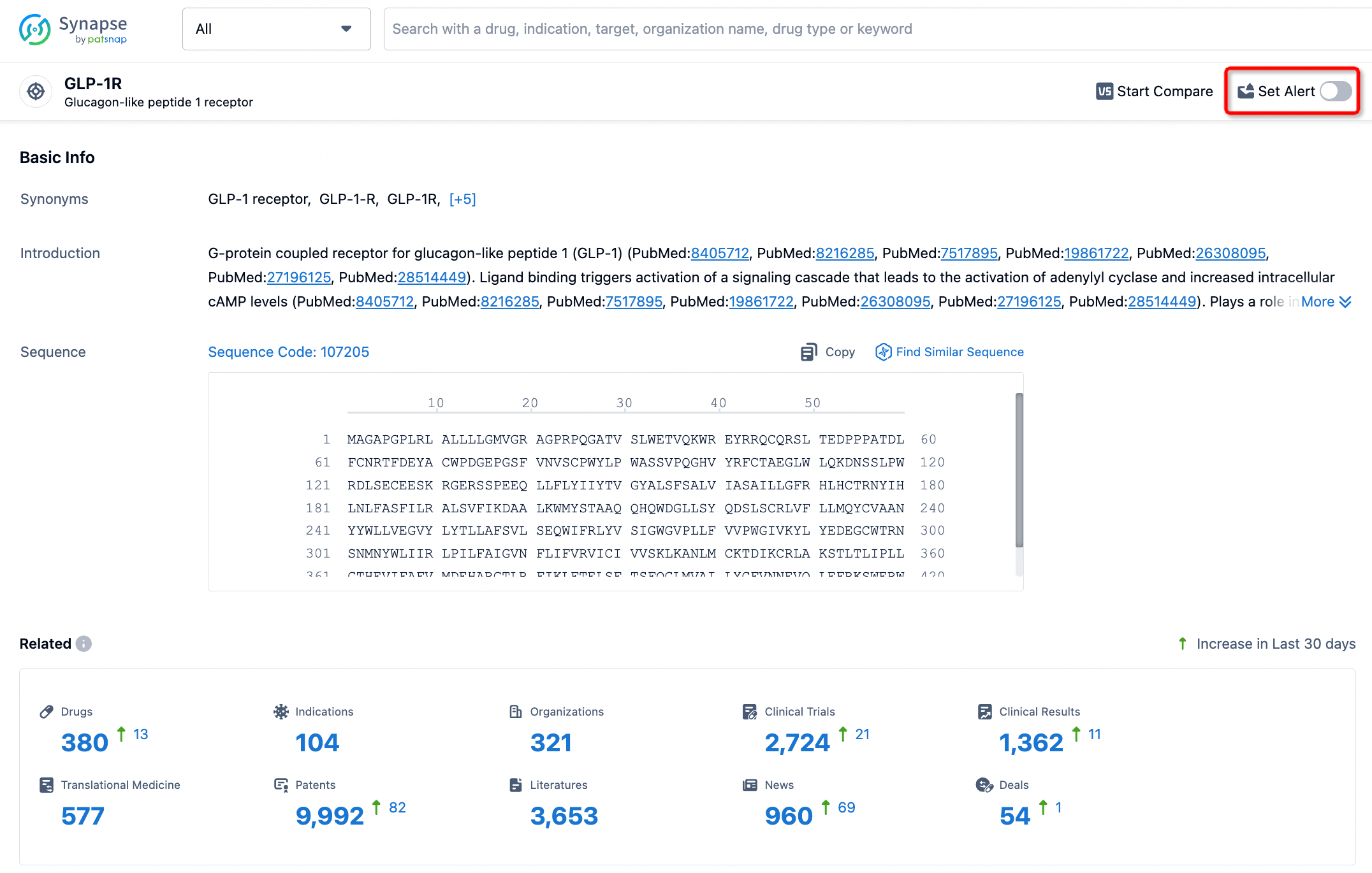
In the Synapse database, you can stay updated on the latest research and development advances of all targets. This service is accessible anytime and anywhere, with updates available daily or weekly. Use the "Set Alert" function to stay informed. Click on the image below to embark on a brand new journey of drug discovery!


AI Agents Built for Biopharma Breakthroughs
Accelerate discovery. Empower decisions. Transform outcomes.
Get started for free today!
Accelerate Strategic R&D decision making with Synapse, PatSnap’s AI-powered Connected Innovation Intelligence Platform Built for Life Sciences Professionals.
Start your data trial now!
Synapse data is also accessible to external entities via APIs or data packages. Empower better decisions with the latest in pharmaceutical intelligence.