Request Demo
What are ADAM8 antagonists and how do they work?
25 June 2024
In the field of medical research, targeting specific proteins for therapeutic purposes has become a promising approach. One such target that has recently garnered attention is ADAM8, a member of the ADAM (A Disintegrin And Metalloprotease) family of proteins. ADAM8 is involved in several physiological and pathological processes, making it a compelling target for drug development. This blog post delves into the fascinating world of ADAM8 antagonists, exploring how they work and their potential applications in medicine.
ADAM8, also known as CD156a, is a transmembrane protein that plays a critical role in various cellular processes, including cell adhesion, migration, and proteolysis. It is particularly noteworthy for its involvement in immune response, inflammation, and cancer metastasis. Given its multifaceted roles, dysregulation of ADAM8 has been linked to a host of diseases, making it a promising target for therapeutic intervention.
ADAM8 antagonists are molecules designed to inhibit the activity of the ADAM8 protein. These antagonists can be classified into different categories, such as small molecules, monoclonal antibodies, and RNA-based therapeutics. The primary mechanism of action for these antagonists involves blocking the protease activity of ADAM8, thereby preventing it from cleaving its substrates. This inhibition can disrupt various signaling pathways and cellular processes that rely on ADAM8 activity.
Small molecule inhibitors of ADAM8 are designed to bind to the active site of the enzyme, thereby preventing substrate access and subsequent proteolysis. These inhibitors are often identified through high-throughput screening of chemical libraries, followed by optimization for increased potency and selectivity.
Monoclonal antibodies, on the other hand, offer a highly specific approach to targeting ADAM8. These antibodies can be engineered to bind to extracellular domains of ADAM8, inhibiting its interaction with substrates and other cell surface molecules. This method can also facilitate the immune-mediated destruction of ADAM8-expressing cells.
RNA-based therapeutics, such as small interfering RNA (siRNA) and antisense oligonucleotides, can be employed to reduce the expression of ADAM8 at the genetic level. These molecules can be designed to target the mRNA transcript of ADAM8, leading to its degradation and subsequent reduction in protein levels.
The therapeutic potential of ADAM8 antagonists spans a wide range of diseases, owing to the diverse roles of ADAM8 in pathophysiology. In cancer, ADAM8 is often overexpressed and associated with increased tumor aggressiveness and metastasis. By inhibiting ADAM8 activity, antagonists can potentially reduce tumor invasiveness and improve the efficacy of existing cancer therapies. Preclinical studies have shown promise in using ADAM8 inhibitors to treat various types of cancer, including breast cancer, pancreatic cancer, and glioblastoma.
Inflammatory diseases are another area where ADAM8 antagonists show significant promise. ADAM8 is known to be upregulated in conditions such as rheumatoid arthritis, asthma, and inflammatory bowel disease. By blocking ADAM8 activity, antagonists can potentially reduce inflammation and mitigate disease symptoms. For instance, in rheumatoid arthritis, ADAM8 antagonists could impede the migration of immune cells to the joints, thereby reducing inflammation and tissue damage.
Neurological diseases also present a potential application for ADAM8 antagonists. ADAM8 has been implicated in neuroinflammatory processes and neurodegenerative conditions such as multiple sclerosis and Alzheimer's disease. Inhibiting ADAM8 could help to modulate neuroinflammation and slow the progression of these debilitating diseases.
In summary, ADAM8 antagonists represent a promising avenue for therapeutic intervention in a variety of diseases. By targeting the protease activity of ADAM8, these antagonists can disrupt pathological processes and offer new treatment options for conditions ranging from cancer and inflammatory diseases to neurological disorders. As research in this field progresses, we may witness the development of novel ADAM8-targeted therapies that significantly improve patient outcomes.
ADAM8, also known as CD156a, is a transmembrane protein that plays a critical role in various cellular processes, including cell adhesion, migration, and proteolysis. It is particularly noteworthy for its involvement in immune response, inflammation, and cancer metastasis. Given its multifaceted roles, dysregulation of ADAM8 has been linked to a host of diseases, making it a promising target for therapeutic intervention.
ADAM8 antagonists are molecules designed to inhibit the activity of the ADAM8 protein. These antagonists can be classified into different categories, such as small molecules, monoclonal antibodies, and RNA-based therapeutics. The primary mechanism of action for these antagonists involves blocking the protease activity of ADAM8, thereby preventing it from cleaving its substrates. This inhibition can disrupt various signaling pathways and cellular processes that rely on ADAM8 activity.
Small molecule inhibitors of ADAM8 are designed to bind to the active site of the enzyme, thereby preventing substrate access and subsequent proteolysis. These inhibitors are often identified through high-throughput screening of chemical libraries, followed by optimization for increased potency and selectivity.
Monoclonal antibodies, on the other hand, offer a highly specific approach to targeting ADAM8. These antibodies can be engineered to bind to extracellular domains of ADAM8, inhibiting its interaction with substrates and other cell surface molecules. This method can also facilitate the immune-mediated destruction of ADAM8-expressing cells.
RNA-based therapeutics, such as small interfering RNA (siRNA) and antisense oligonucleotides, can be employed to reduce the expression of ADAM8 at the genetic level. These molecules can be designed to target the mRNA transcript of ADAM8, leading to its degradation and subsequent reduction in protein levels.
The therapeutic potential of ADAM8 antagonists spans a wide range of diseases, owing to the diverse roles of ADAM8 in pathophysiology. In cancer, ADAM8 is often overexpressed and associated with increased tumor aggressiveness and metastasis. By inhibiting ADAM8 activity, antagonists can potentially reduce tumor invasiveness and improve the efficacy of existing cancer therapies. Preclinical studies have shown promise in using ADAM8 inhibitors to treat various types of cancer, including breast cancer, pancreatic cancer, and glioblastoma.
Inflammatory diseases are another area where ADAM8 antagonists show significant promise. ADAM8 is known to be upregulated in conditions such as rheumatoid arthritis, asthma, and inflammatory bowel disease. By blocking ADAM8 activity, antagonists can potentially reduce inflammation and mitigate disease symptoms. For instance, in rheumatoid arthritis, ADAM8 antagonists could impede the migration of immune cells to the joints, thereby reducing inflammation and tissue damage.
Neurological diseases also present a potential application for ADAM8 antagonists. ADAM8 has been implicated in neuroinflammatory processes and neurodegenerative conditions such as multiple sclerosis and Alzheimer's disease. Inhibiting ADAM8 could help to modulate neuroinflammation and slow the progression of these debilitating diseases.
In summary, ADAM8 antagonists represent a promising avenue for therapeutic intervention in a variety of diseases. By targeting the protease activity of ADAM8, these antagonists can disrupt pathological processes and offer new treatment options for conditions ranging from cancer and inflammatory diseases to neurological disorders. As research in this field progresses, we may witness the development of novel ADAM8-targeted therapies that significantly improve patient outcomes.
How to obtain the latest development progress of all targets?
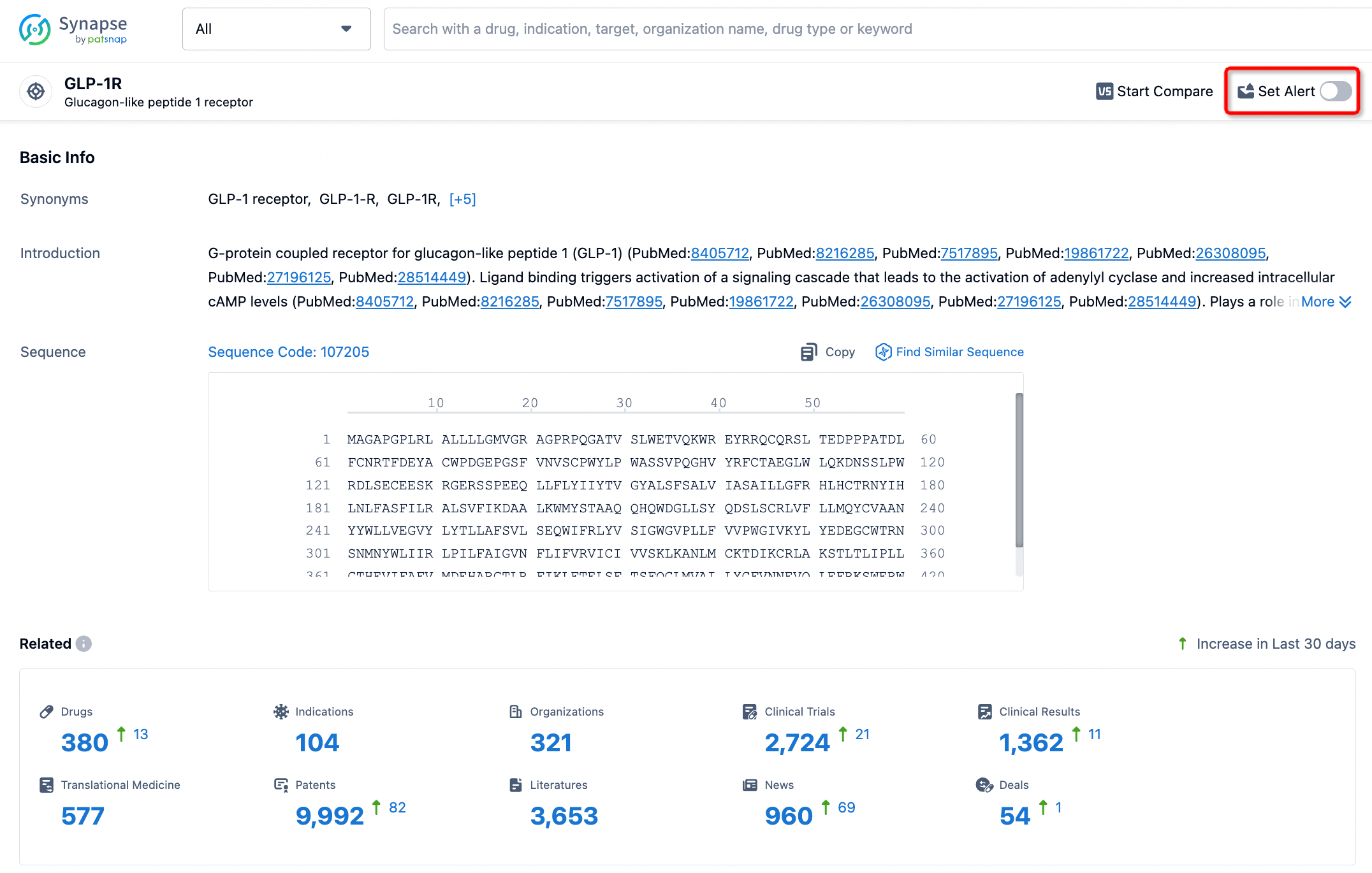
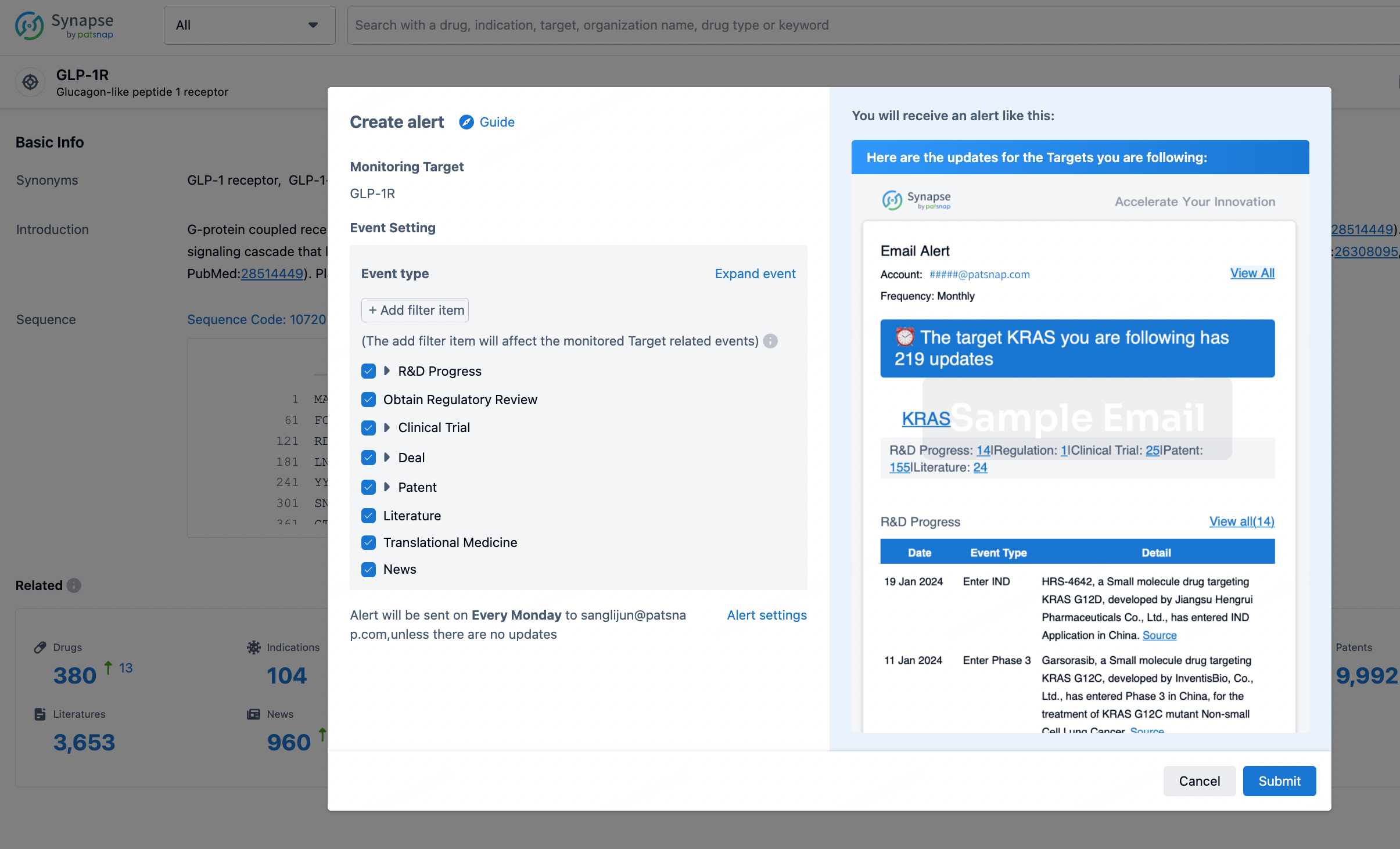
In the Synapse database, you can stay updated on the latest research and development advances of all targets. This service is accessible anytime and anywhere, with updates available daily or weekly. Use the "Set Alert" function to stay informed. Click on the image below to embark on a brand new journey of drug discovery!
Hiro LS Researcher
The AI Search Engine Built to Accelerate Biopharma Decisions
Search across billion-scale life sciences data to uncover signals, validate evidence, and act with confidence.
Ask any biopharma research question→
Get started for free today!
Accelerate Strategic R&D decision making with Synapse, Patsnap’s AI-powered Connected Innovation Intelligence Platform Built for Life Sciences Professionals.
Discover Synapse Data Servers
Synapse data is now integrated into the PatSnap LS Model Context Protocol (MCP) service. Customize your LLM agent now using our MCP server!