Request Demo
What are ADSS2 inhibitors and how do they work?
25 June 2024
ADSS2 inhibitors represent a promising class of therapeutic agents that are garnering significant attention within the medical research community. ADSS2, or Adenylosuccinate Synthetase 2, is a key enzyme involved in the purine nucleotide cycle, particularly in the synthesis of adenylosuccinate from inosine monophosphate (IMP) and aspartate. Given the essential role of purine nucleotides in various cellular processes, inhibiting ADSS2 offers a novel approach to modulating metabolic pathways in several diseases. This article delves into the mechanisms of ADSS2 inhibitors, their therapeutic applications, and the implications for future medical treatments.
ADSS2 inhibitors operate by targeting the catalytic activity of Adenylosuccinate Synthetase 2. This enzyme is responsible for the conversion of IMP and aspartate into adenylosuccinate, a precursor to adenosine monophosphate (AMP). By inhibiting ADSS2, these compounds effectively halt the production of adenylosuccinate, leading to a downstream reduction in AMP and other purine nucleotides. This disruption can have diverse effects depending on the cellular context, as purine nucleotides are vital for DNA and RNA synthesis, energy metabolism, and signal transduction.
The specificity of ADSS2 inhibitors is one of their most compelling features. Unlike broad-spectrum inhibitors, these compounds are designed to interact precisely with the active site of ADSS2, minimizing off-target effects and reducing the likelihood of adverse reactions. This precision is achieved through meticulous structural analysis and high-throughput screening processes that identify molecules capable of binding to the enzyme with high affinity.
ADSS2 inhibitors are being investigated for their potential in treating a range of diseases where purine metabolism is dysregulated. One of the most notable areas of research is in oncology. Cancer cells exhibit a heightened demand for nucleotides to sustain rapid proliferation. By disrupting purine nucleotide synthesis, ADSS2 inhibitors can impede tumor growth and enhance the efficacy of existing chemotherapeutic agents. Preclinical studies have shown promising results, with treated cancer cells exhibiting reduced proliferation and increased sensitivity to other treatments.
In addition to their potential in cancer therapy, ADSS2 inhibitors are being explored for their role in managing metabolic disorders. Conditions such as gout and hyperuricemia, characterized by excessive accumulation of uric acid, could benefit from ADSS2 inhibition. By reducing the availability of purine nucleotides, these inhibitors may help lower uric acid levels and alleviate symptoms. Furthermore, their application extends to rare genetic disorders like adenylosuccinate lyase deficiency, where modulating purine metabolism could offer a therapeutic benefit.
The implications of ADSS2 inhibitors extend beyond these applications. Their ability to modulate purine metabolism could have far-reaching effects on immune function, as purine nucleotides are critical for the proliferation and activation of immune cells. Research is ongoing to determine whether ADSS2 inhibitors could be employed in autoimmune diseases or in transplant medicine to prevent graft rejection.
While the therapeutic potential of ADSS2 inhibitors is vast, it is important to acknowledge the challenges that lie ahead. The precise regulation of purine metabolism is crucial for normal cellular function, and unintended disruptions could lead to adverse effects. Therefore, extensive clinical trials are necessary to fully understand the safety and efficacy of these inhibitors. Additionally, the development of resistance mechanisms by target cells, particularly in the context of cancer therapy, must be carefully monitored.
In conclusion, ADSS2 inhibitors represent a cutting-edge approach to modulating purine metabolism with significant implications for a variety of diseases. Their targeted mechanism of action offers the promise of high efficacy with minimal side effects, making them an exciting area of research. As our understanding of purine metabolism deepens, the development and refinement of ADSS2 inhibitors are likely to play an increasingly important role in the future of medical treatment.
ADSS2 inhibitors operate by targeting the catalytic activity of Adenylosuccinate Synthetase 2. This enzyme is responsible for the conversion of IMP and aspartate into adenylosuccinate, a precursor to adenosine monophosphate (AMP). By inhibiting ADSS2, these compounds effectively halt the production of adenylosuccinate, leading to a downstream reduction in AMP and other purine nucleotides. This disruption can have diverse effects depending on the cellular context, as purine nucleotides are vital for DNA and RNA synthesis, energy metabolism, and signal transduction.
The specificity of ADSS2 inhibitors is one of their most compelling features. Unlike broad-spectrum inhibitors, these compounds are designed to interact precisely with the active site of ADSS2, minimizing off-target effects and reducing the likelihood of adverse reactions. This precision is achieved through meticulous structural analysis and high-throughput screening processes that identify molecules capable of binding to the enzyme with high affinity.
ADSS2 inhibitors are being investigated for their potential in treating a range of diseases where purine metabolism is dysregulated. One of the most notable areas of research is in oncology. Cancer cells exhibit a heightened demand for nucleotides to sustain rapid proliferation. By disrupting purine nucleotide synthesis, ADSS2 inhibitors can impede tumor growth and enhance the efficacy of existing chemotherapeutic agents. Preclinical studies have shown promising results, with treated cancer cells exhibiting reduced proliferation and increased sensitivity to other treatments.
In addition to their potential in cancer therapy, ADSS2 inhibitors are being explored for their role in managing metabolic disorders. Conditions such as gout and hyperuricemia, characterized by excessive accumulation of uric acid, could benefit from ADSS2 inhibition. By reducing the availability of purine nucleotides, these inhibitors may help lower uric acid levels and alleviate symptoms. Furthermore, their application extends to rare genetic disorders like adenylosuccinate lyase deficiency, where modulating purine metabolism could offer a therapeutic benefit.
The implications of ADSS2 inhibitors extend beyond these applications. Their ability to modulate purine metabolism could have far-reaching effects on immune function, as purine nucleotides are critical for the proliferation and activation of immune cells. Research is ongoing to determine whether ADSS2 inhibitors could be employed in autoimmune diseases or in transplant medicine to prevent graft rejection.
While the therapeutic potential of ADSS2 inhibitors is vast, it is important to acknowledge the challenges that lie ahead. The precise regulation of purine metabolism is crucial for normal cellular function, and unintended disruptions could lead to adverse effects. Therefore, extensive clinical trials are necessary to fully understand the safety and efficacy of these inhibitors. Additionally, the development of resistance mechanisms by target cells, particularly in the context of cancer therapy, must be carefully monitored.
In conclusion, ADSS2 inhibitors represent a cutting-edge approach to modulating purine metabolism with significant implications for a variety of diseases. Their targeted mechanism of action offers the promise of high efficacy with minimal side effects, making them an exciting area of research. As our understanding of purine metabolism deepens, the development and refinement of ADSS2 inhibitors are likely to play an increasingly important role in the future of medical treatment.
How to obtain the latest development progress of all targets?
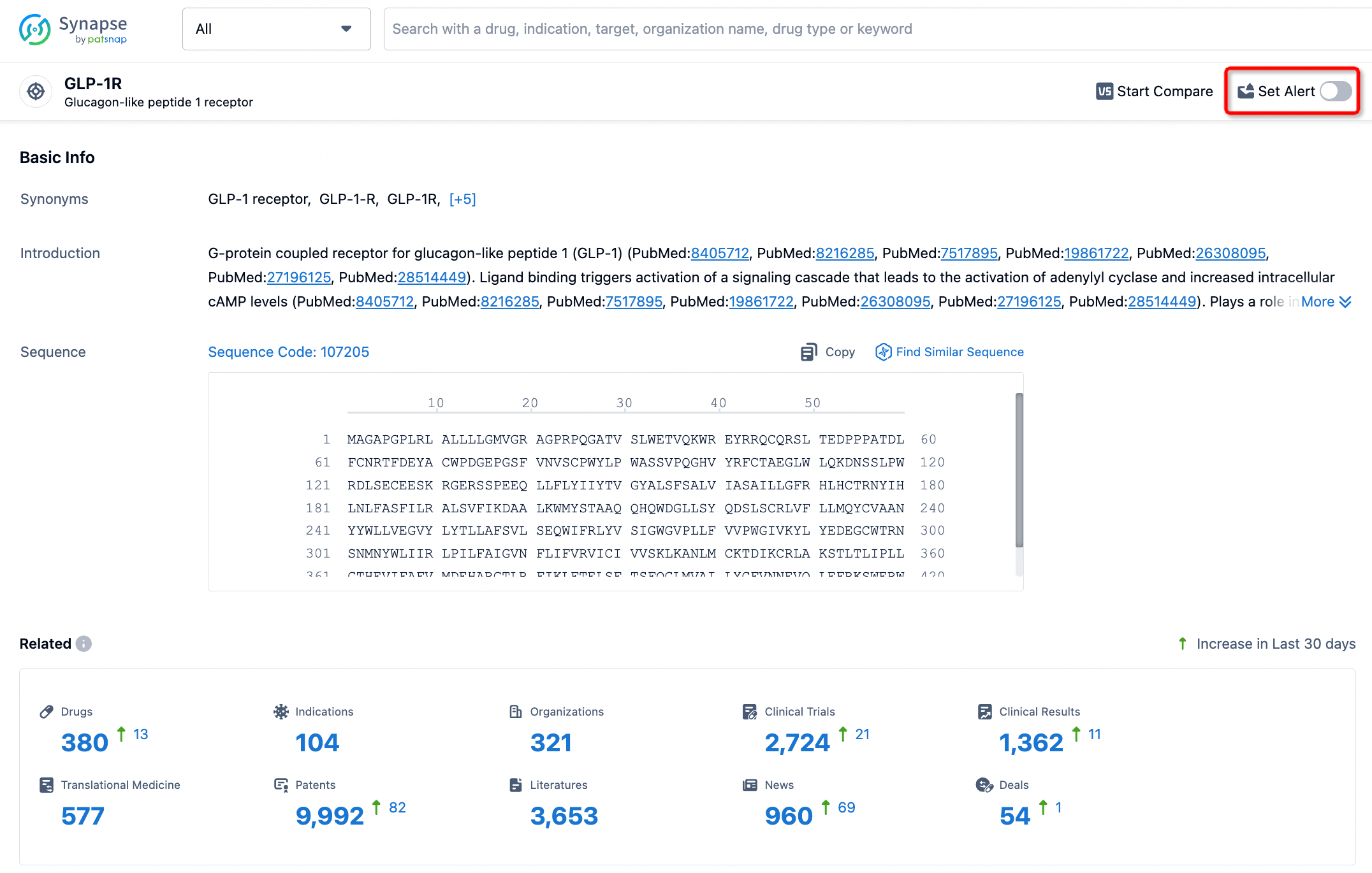
In the Synapse database, you can stay updated on the latest research and development advances of all targets. This service is accessible anytime and anywhere, with updates available daily or weekly. Use the "Set Alert" function to stay informed. Click on the image below to embark on a brand new journey of drug discovery!

AI Agents Built for Biopharma Breakthroughs
Accelerate discovery. Empower decisions. Transform outcomes.
Get started for free today!
Accelerate Strategic R&D decision making with Synapse, PatSnap’s AI-powered Connected Innovation Intelligence Platform Built for Life Sciences Professionals.
Start your data trial now!
Synapse data is also accessible to external entities via APIs or data packages. Empower better decisions with the latest in pharmaceutical intelligence.