Request Demo
What are Advanced glycation end product agonists and how do they work?
26 June 2024
Advanced glycation end products (AGEs) are harmful compounds formed when proteins or lipids become glycated as a result of exposure to sugars. AGEs have been linked to numerous health issues, particularly those related to chronic diseases like diabetes, cardiovascular diseases, and neurodegenerative disorders. While much of the focus has been on the detrimental effects of AGEs, there is an emerging interest in understanding the role of advanced glycation end product agonists, which are agents that can bind to AGE receptors and influence their activity. In this blog post, we will delve into what AGE agonists are, how they function, and their potential applications.
AGEs form through a non-enzymatic reaction between sugars and proteins or lipids, a process known as glycation. Over time, these glycated molecules accumulate and contribute to the structural and functional decline in tissues. The effects of AGEs are mediated through receptors known as RAGE (Receptor for Advanced Glycation End Products). When AGEs bind to RAGE, they trigger a cascade of cellular responses, such as the activation of pro-inflammatory pathways, oxidative stress, and the promotion of cellular damage. AGE agonists are compounds that can interact with these receptors, potentially modulating their activity.
AGE agonists function by binding to RAGE, mimicking the effect of AGEs, or in some cases, modifying RAGE's behavior to produce a different outcome. These interactions can trigger signal transduction pathways that may either exacerbate or mitigate the effects of AGEs, depending on the context and the specific agonist involved. For instance, certain AGE agonists may activate immune responses that help in clearing AGEs more effectively, while others might inhibit inflammatory processes, thereby reducing tissue damage.
The exact mechanism of action of AGE agonists varies widely. Some are thought to upregulate the expression of antioxidative enzymes, thereby reducing oxidative stress. Others might influence gene expression related to inflammatory cytokines, essentially dampening the inflammatory response typically associated with AGE-RAGE interactions. The diversity in these mechanisms makes AGE agonists a highly versatile and intriguing area of study, as different agonists could be tailored for specific therapeutic needs.
Advanced glycation end product agonists hold promise in various therapeutic areas. One of the most significant potential applications is in the management of diabetes-related complications. Diabetic patients often have elevated levels of AGEs, which contribute to complications such as nephropathy, retinopathy, and neuropathy. By modulating the activity of RAGE, AGE agonists could potentially reduce the burden of these complications, offering a novel approach to diabetes care.
Cardiovascular diseases are another area where AGE agonists might prove beneficial. AGEs are implicated in the pathogenesis of atherosclerosis, a condition characterized by the hardening and narrowing of arteries due to plaque buildup. By interacting with AGE receptors, certain agonists could potentially reduce plaque formation and stabilize existing plaques, thereby mitigating the risk of heart attacks and strokes.
Neurodegenerative diseases like Alzheimer's also show promising links to AGE research. Elevated AGE levels are found in the brains of Alzheimer's patients and are believed to contribute to the disease's progression through oxidative stress and inflammation. AGE agonists that can modulate these pathways might offer a new therapeutic avenue for slowing down or even preventing the progression of such neurodegenerative conditions.
Moreover, AGE agonists could also have applications in the field of aging and longevity. Accumulation of AGEs is a hallmark of aging, contributing to the decline in physiological functions. By modulating RAGE activity, AGE agonists could potentially slow down the aging process, improve healthspan, and reduce the incidence of age-related diseases.
In conclusion, advanced glycation end product agonists represent a fascinating and burgeoning field of research with significant therapeutic potential. By understanding how these agents work and their possible applications, we can pave the way for new treatments for a variety of chronic diseases and age-related conditions. As research continues to unravel the complexities of AGE-RAGE interactions, we are likely to see more innovative approaches that harness the power of AGE agonists to improve human health.
AGEs form through a non-enzymatic reaction between sugars and proteins or lipids, a process known as glycation. Over time, these glycated molecules accumulate and contribute to the structural and functional decline in tissues. The effects of AGEs are mediated through receptors known as RAGE (Receptor for Advanced Glycation End Products). When AGEs bind to RAGE, they trigger a cascade of cellular responses, such as the activation of pro-inflammatory pathways, oxidative stress, and the promotion of cellular damage. AGE agonists are compounds that can interact with these receptors, potentially modulating their activity.
AGE agonists function by binding to RAGE, mimicking the effect of AGEs, or in some cases, modifying RAGE's behavior to produce a different outcome. These interactions can trigger signal transduction pathways that may either exacerbate or mitigate the effects of AGEs, depending on the context and the specific agonist involved. For instance, certain AGE agonists may activate immune responses that help in clearing AGEs more effectively, while others might inhibit inflammatory processes, thereby reducing tissue damage.
The exact mechanism of action of AGE agonists varies widely. Some are thought to upregulate the expression of antioxidative enzymes, thereby reducing oxidative stress. Others might influence gene expression related to inflammatory cytokines, essentially dampening the inflammatory response typically associated with AGE-RAGE interactions. The diversity in these mechanisms makes AGE agonists a highly versatile and intriguing area of study, as different agonists could be tailored for specific therapeutic needs.
Advanced glycation end product agonists hold promise in various therapeutic areas. One of the most significant potential applications is in the management of diabetes-related complications. Diabetic patients often have elevated levels of AGEs, which contribute to complications such as nephropathy, retinopathy, and neuropathy. By modulating the activity of RAGE, AGE agonists could potentially reduce the burden of these complications, offering a novel approach to diabetes care.
Cardiovascular diseases are another area where AGE agonists might prove beneficial. AGEs are implicated in the pathogenesis of atherosclerosis, a condition characterized by the hardening and narrowing of arteries due to plaque buildup. By interacting with AGE receptors, certain agonists could potentially reduce plaque formation and stabilize existing plaques, thereby mitigating the risk of heart attacks and strokes.
Neurodegenerative diseases like Alzheimer's also show promising links to AGE research. Elevated AGE levels are found in the brains of Alzheimer's patients and are believed to contribute to the disease's progression through oxidative stress and inflammation. AGE agonists that can modulate these pathways might offer a new therapeutic avenue for slowing down or even preventing the progression of such neurodegenerative conditions.
Moreover, AGE agonists could also have applications in the field of aging and longevity. Accumulation of AGEs is a hallmark of aging, contributing to the decline in physiological functions. By modulating RAGE activity, AGE agonists could potentially slow down the aging process, improve healthspan, and reduce the incidence of age-related diseases.
In conclusion, advanced glycation end product agonists represent a fascinating and burgeoning field of research with significant therapeutic potential. By understanding how these agents work and their possible applications, we can pave the way for new treatments for a variety of chronic diseases and age-related conditions. As research continues to unravel the complexities of AGE-RAGE interactions, we are likely to see more innovative approaches that harness the power of AGE agonists to improve human health.
How to obtain the latest development progress of all targets?
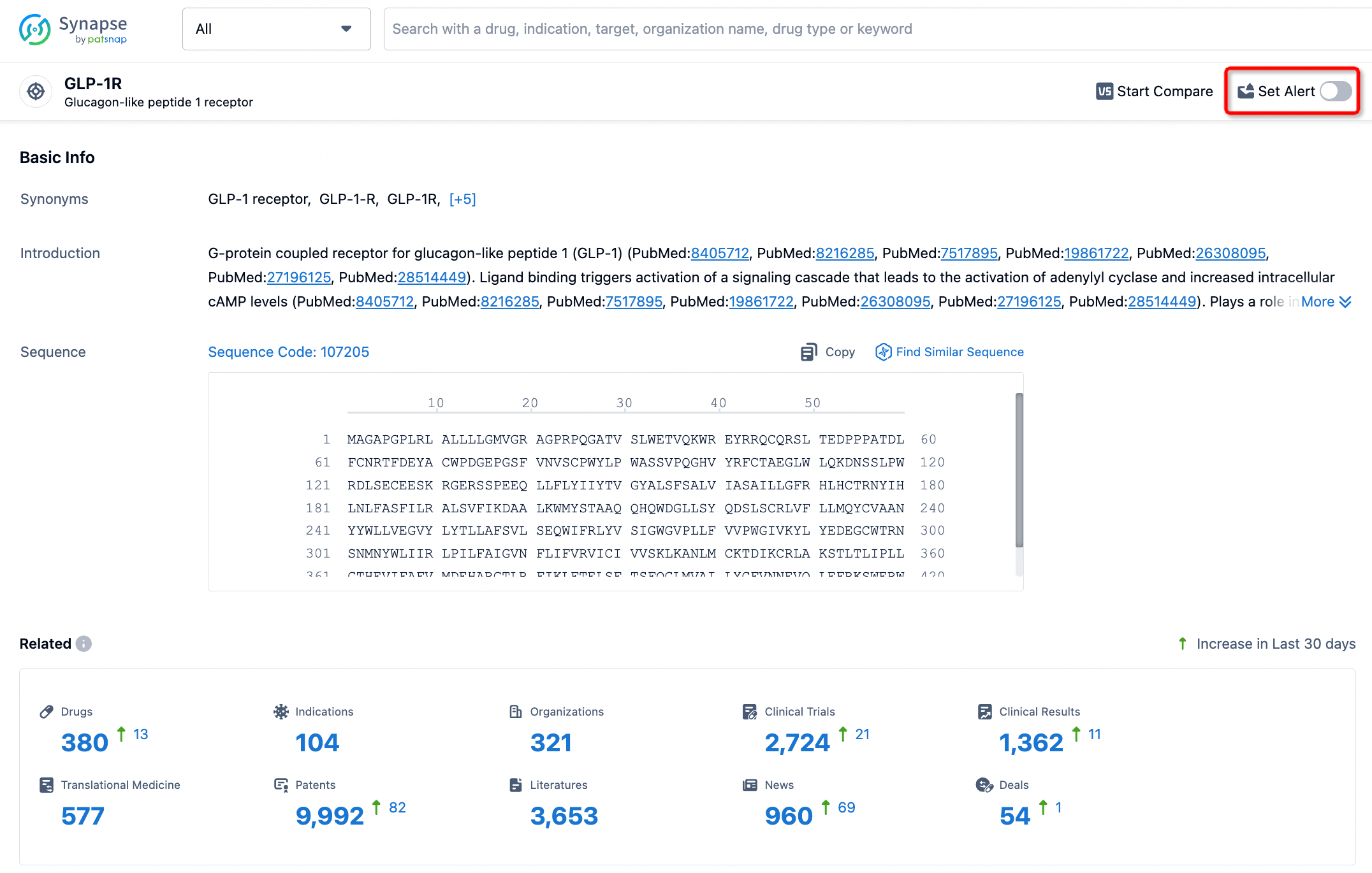
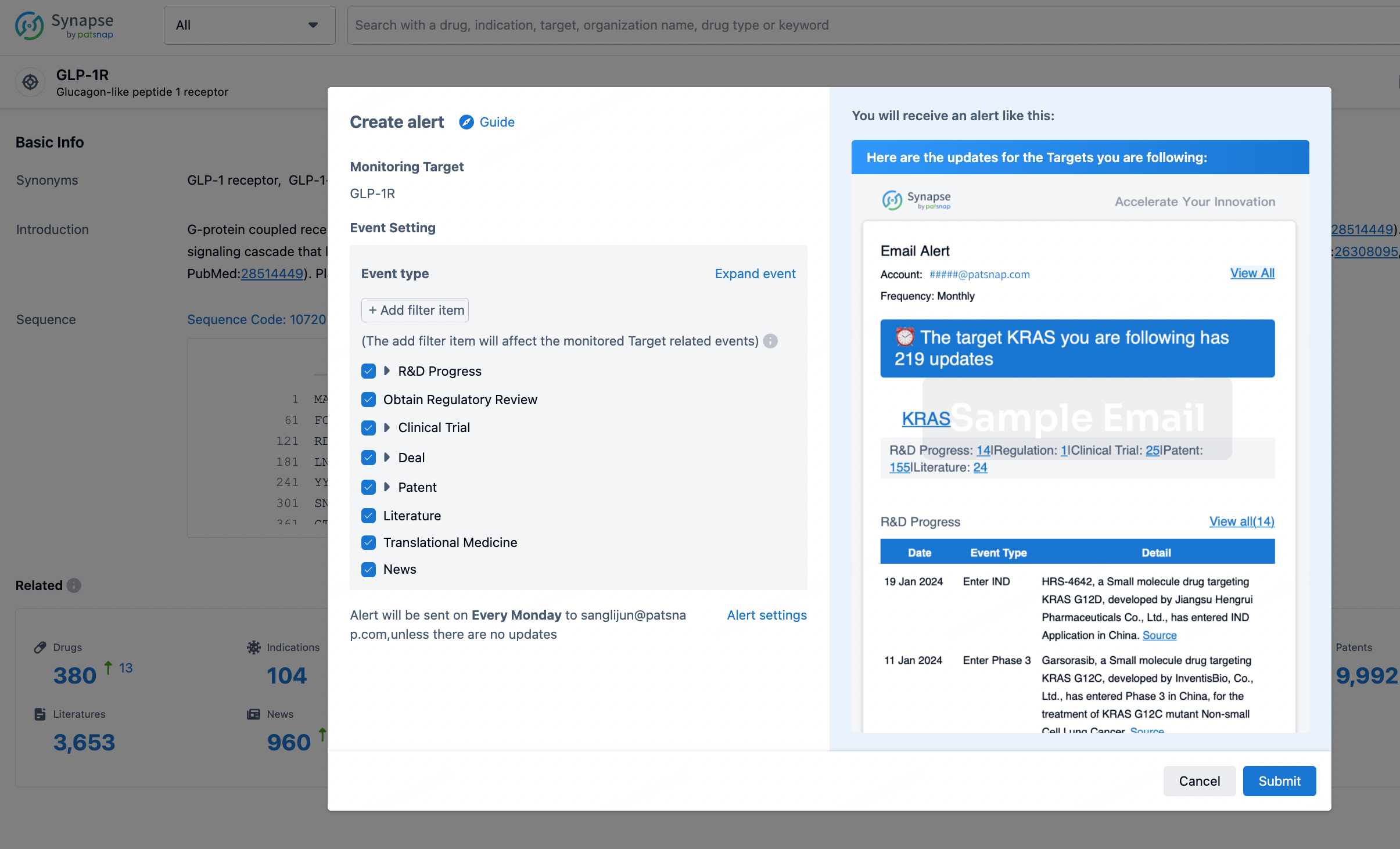
In the Synapse database, you can stay updated on the latest research and development advances of all targets. This service is accessible anytime and anywhere, with updates available daily or weekly. Use the "Set Alert" function to stay informed. Click on the image below to embark on a brand new journey of drug discovery!
AI Agents Built for Biopharma Breakthroughs
Accelerate discovery. Empower decisions. Transform outcomes.
Get started for free today!
Accelerate Strategic R&D decision making with Synapse, PatSnap’s AI-powered Connected Innovation Intelligence Platform Built for Life Sciences Professionals.
Start your data trial now!
Synapse data is also accessible to external entities via APIs or data packages. Empower better decisions with the latest in pharmaceutical intelligence.