Request Demo
What are ALK4 modulators and how do they work?
25 June 2024
In recent years, the field of biomedical research has been buzzing with interest around ALK4 modulators. These compounds have captured the attention of scientists and healthcare professionals due to their potential applications in treating various medical conditions. As we delve deeper into the realm of ALK4 modulators, it becomes evident that these compounds could revolutionize the way we approach certain diseases.
ALK4, or Activin Receptor-Like Kinase 4, is a type of receptor that belongs to the transforming growth factor-beta (TGF-β) superfamily of receptors. These receptors are critical for various cellular processes, including growth, differentiation, and apoptosis. ALK4 specifically mediates signals from ligands such as activins and nodal, which are involved in a wide array of physiological processes. Understanding the intricacies of ALK4 and its modulators is essential for unlocking new therapeutic avenues.
How do ALK4 modulators work? To comprehend the mechanism of action of ALK4 modulators, it is imperative to first understand the signaling pathways they influence. ALK4 is a serine/threonine kinase receptor that, upon ligand binding, forms a complex with type II receptors. This complex then phosphorylates and activates Smad proteins, which translocate to the nucleus to regulate gene expression. By modulating this pathway, ALK4 modulators can either enhance or inhibit the downstream signaling events, thereby affecting cellular outcomes.
ALK4 modulators can be broadly classified into two categories: agonists and antagonists. Agonists are compounds that enhance the activity of ALK4, leading to an upregulation of the signaling pathway. On the other hand, antagonists inhibit the activity of ALK4, thereby downregulating the signaling pathway. The precise modulation of ALK4 activity is crucial, as both excessive and insufficient signaling can lead to pathological conditions.
What are ALK4 modulators used for? The therapeutic potential of ALK4 modulators spans a wide range of medical conditions, making them an exciting area of research.
1. **Cancer Therapy**: One of the most promising applications of ALK4 modulators is in the realm of oncology. Certain cancers, such as colorectal and pancreatic cancers, have been found to exhibit aberrant ALK4 signaling. By using ALK4 antagonists, researchers aim to inhibit the pro-tumorigenic signaling pathways, thereby slowing down or even halting the progression of the disease. Conversely, in some contexts, ALK4 agonists might be used to induce differentiation in cancer stem cells, reducing their proliferative capacity.
2. **Fibrosis Treatment**: Fibrosis, characterized by excessive tissue scarring and extracellular matrix deposition, is another area where ALK4 modulators show promise. In conditions such as liver fibrosis, pulmonary fibrosis, and renal fibrosis, dysregulated ALK4 signaling contributes to the fibrotic process. ALK4 antagonists can potentially mitigate fibrosis by inhibiting the signaling pathways that lead to excessive scarring.
3. **Reproductive Health**: Activins, which signal through ALK4, play a significant role in reproductive physiology. ALK4 modulators can be utilized to address conditions like polycystic ovary syndrome (PCOS) and infertility. By fine-tuning ALK4 signaling, it may be possible to restore normal reproductive function in affected individuals.
4. **Musculoskeletal Disorders**: ALK4 modulators also hold potential in the treatment of musculoskeletal disorders. Conditions such as muscle wasting and osteoporosis are associated with imbalances in signaling pathways regulated by ALK4. By modulating these pathways, researchers hope to develop therapies that can promote muscle growth and bone density.
5. **Neurodegenerative Diseases**: Emerging evidence suggests that ALK4 signaling might be involved in neurodegenerative diseases such as Alzheimer's and Parkinson's. Although this area of research is still in its infancy, the potential for ALK4 modulators to influence neuronal survival and function offers a tantalizing glimpse into future therapeutic strategies.
In conclusion, the exploration of ALK4 modulators is a rapidly evolving field with immense therapeutic potential. By understanding how these compounds work and their applications in various medical conditions, researchers are laying the groundwork for innovative treatments that could significantly improve patient outcomes. As we continue to unravel the complexities of ALK4 signaling, the future of ALK4 modulators looks incredibly promising.
ALK4, or Activin Receptor-Like Kinase 4, is a type of receptor that belongs to the transforming growth factor-beta (TGF-β) superfamily of receptors. These receptors are critical for various cellular processes, including growth, differentiation, and apoptosis. ALK4 specifically mediates signals from ligands such as activins and nodal, which are involved in a wide array of physiological processes. Understanding the intricacies of ALK4 and its modulators is essential for unlocking new therapeutic avenues.
How do ALK4 modulators work? To comprehend the mechanism of action of ALK4 modulators, it is imperative to first understand the signaling pathways they influence. ALK4 is a serine/threonine kinase receptor that, upon ligand binding, forms a complex with type II receptors. This complex then phosphorylates and activates Smad proteins, which translocate to the nucleus to regulate gene expression. By modulating this pathway, ALK4 modulators can either enhance or inhibit the downstream signaling events, thereby affecting cellular outcomes.
ALK4 modulators can be broadly classified into two categories: agonists and antagonists. Agonists are compounds that enhance the activity of ALK4, leading to an upregulation of the signaling pathway. On the other hand, antagonists inhibit the activity of ALK4, thereby downregulating the signaling pathway. The precise modulation of ALK4 activity is crucial, as both excessive and insufficient signaling can lead to pathological conditions.
What are ALK4 modulators used for? The therapeutic potential of ALK4 modulators spans a wide range of medical conditions, making them an exciting area of research.
1. **Cancer Therapy**: One of the most promising applications of ALK4 modulators is in the realm of oncology. Certain cancers, such as colorectal and pancreatic cancers, have been found to exhibit aberrant ALK4 signaling. By using ALK4 antagonists, researchers aim to inhibit the pro-tumorigenic signaling pathways, thereby slowing down or even halting the progression of the disease. Conversely, in some contexts, ALK4 agonists might be used to induce differentiation in cancer stem cells, reducing their proliferative capacity.
2. **Fibrosis Treatment**: Fibrosis, characterized by excessive tissue scarring and extracellular matrix deposition, is another area where ALK4 modulators show promise. In conditions such as liver fibrosis, pulmonary fibrosis, and renal fibrosis, dysregulated ALK4 signaling contributes to the fibrotic process. ALK4 antagonists can potentially mitigate fibrosis by inhibiting the signaling pathways that lead to excessive scarring.
3. **Reproductive Health**: Activins, which signal through ALK4, play a significant role in reproductive physiology. ALK4 modulators can be utilized to address conditions like polycystic ovary syndrome (PCOS) and infertility. By fine-tuning ALK4 signaling, it may be possible to restore normal reproductive function in affected individuals.
4. **Musculoskeletal Disorders**: ALK4 modulators also hold potential in the treatment of musculoskeletal disorders. Conditions such as muscle wasting and osteoporosis are associated with imbalances in signaling pathways regulated by ALK4. By modulating these pathways, researchers hope to develop therapies that can promote muscle growth and bone density.
5. **Neurodegenerative Diseases**: Emerging evidence suggests that ALK4 signaling might be involved in neurodegenerative diseases such as Alzheimer's and Parkinson's. Although this area of research is still in its infancy, the potential for ALK4 modulators to influence neuronal survival and function offers a tantalizing glimpse into future therapeutic strategies.
In conclusion, the exploration of ALK4 modulators is a rapidly evolving field with immense therapeutic potential. By understanding how these compounds work and their applications in various medical conditions, researchers are laying the groundwork for innovative treatments that could significantly improve patient outcomes. As we continue to unravel the complexities of ALK4 signaling, the future of ALK4 modulators looks incredibly promising.
How to obtain the latest development progress of all targets?
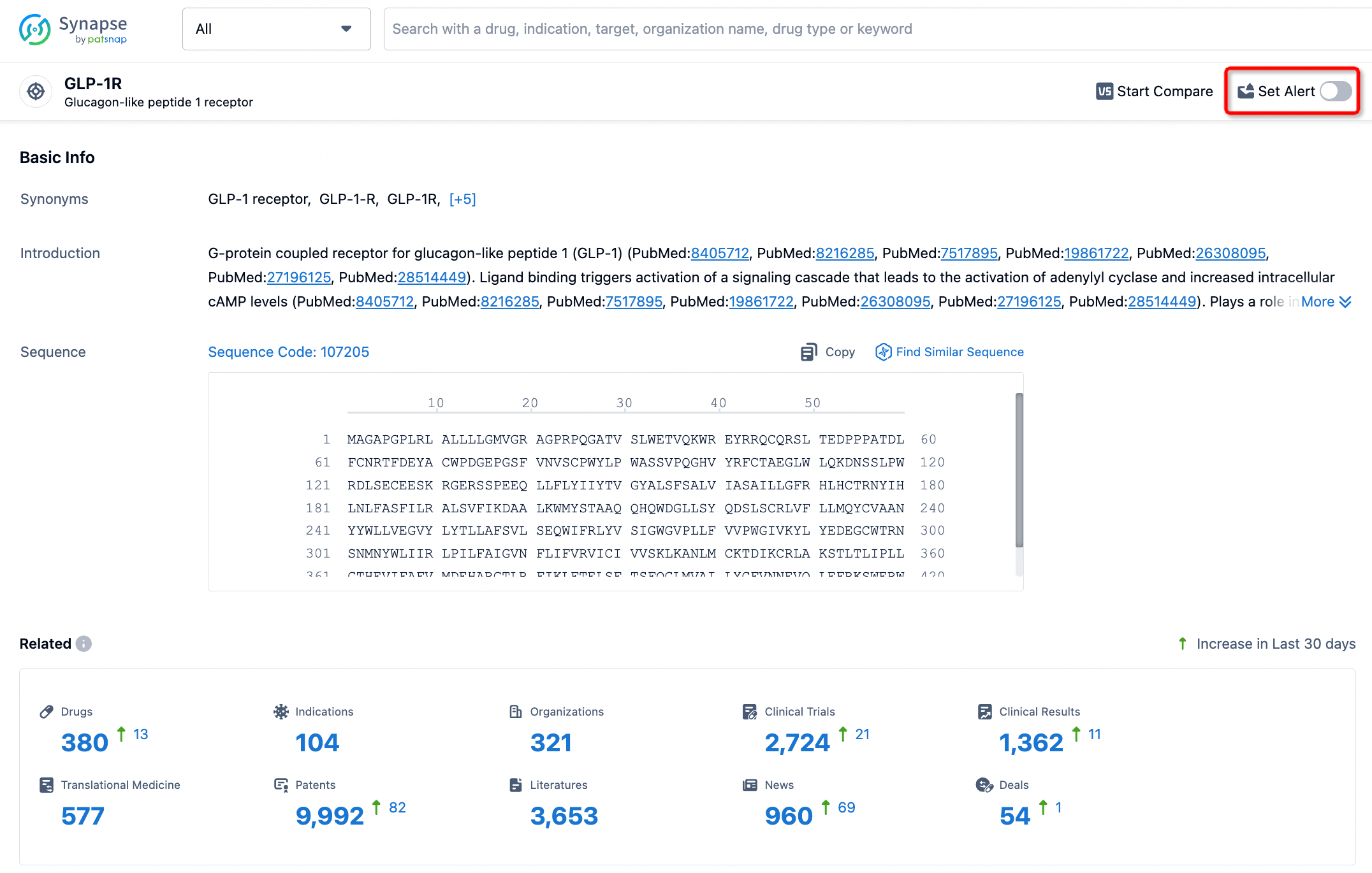
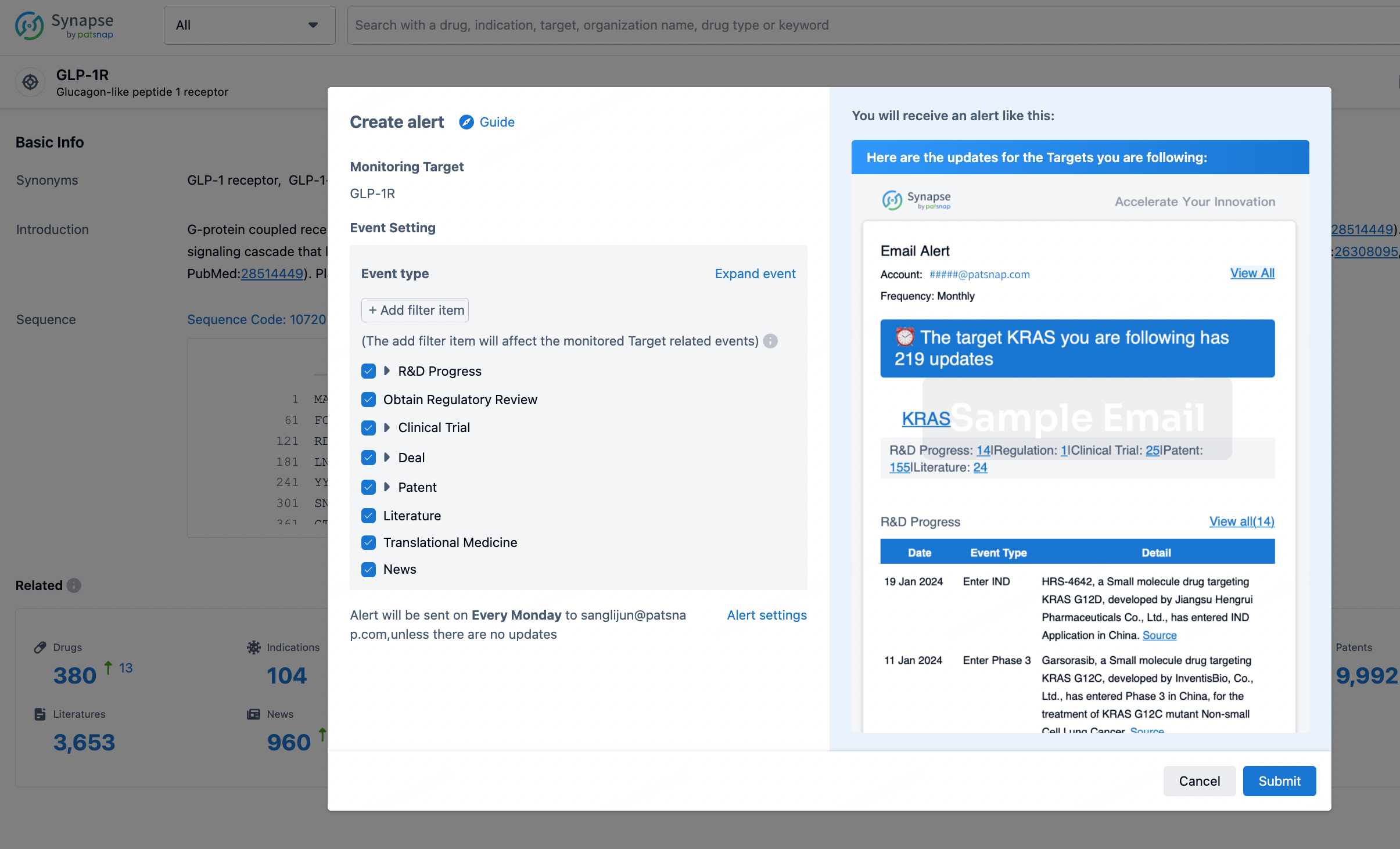
In the Synapse database, you can stay updated on the latest research and development advances of all targets. This service is accessible anytime and anywhere, with updates available daily or weekly. Use the "Set Alert" function to stay informed. Click on the image below to embark on a brand new journey of drug discovery!
Hiro LS Researcher
The AI Search Engine Built to Accelerate Biopharma Decisions
Search across billion-scale life sciences data to uncover signals, validate evidence, and act with confidence.
Ask any biopharma research question→
Get started for free today!
Accelerate Strategic R&D decision making with Synapse, Patsnap’s AI-powered Connected Innovation Intelligence Platform Built for Life Sciences Professionals.
Discover Synapse Data Servers
Synapse data is now integrated into the PatSnap LS Model Context Protocol (MCP) service. Customize your LLM agent now using our MCP server!